
Give us a Call
+1 (915) 412-6680
Send us a Message
[email protected]
Opening Hours
Mon-Thu: 7 AM - 7 PM
Fri - Sun: Closed

Welcome to Chiromed’s resource hub for Traumatic Brain Injuries (TBI)—including concussions, post-concussion syndrome, and whiplash-related head injuries. This category brings together evidence-informed guidance on TBI symptoms, concussion recovery, and integrative rehabilitation so you can navigate healing with clarity and confidence.

You’ll find easy-to-read articles on how TBIs happen—from sports collisions and falls to motor vehicle accidents—and what to watch for next: headaches, dizziness, neck pain, light and noise sensitivity, brain fog, and sleep disruption. We describe how the way your neck moves affects brain recovery, why exercises for balance and eye coordination are important, and how specific chiropractic and soft-tissue treatments can help lessen neck issues that often make symptoms last longer.

Our TBI content outlines a clear plan: gentle chiropractic adjustments to help joints move better and reduce pain signals; training for balance and eye coordination; breathing and posture techniques to help the nervous system; and simple nutrition advice—like staying hydrated, eating omega-3s, and choosing anti-inflammatory foods—to support brain recovery. We also cover safe return-to-learn and return-to-play progressions, red-flag warning signs, and when to seek imaging or specialist referral.

Whether you’re new to concussion care or managing lingering symptoms, this category is designed to help you:

Understand TBI timelines and realistic recovery expectations

Identify root contributors (neck, vision, vestibular, sleep, stress)

Build a stepwise, patient-centered plan that supports long-term brain health

Explore the latest posts below to learn how integrative chiropractic care fits into comprehensive post-concussion rehabilitation, and discover actionable steps you can start today. If you’re recovering from a recent head or neck injury, begin with our “TBI Basics” and “Neck & Concussion Connection” guides to create a safer, smarter path back to normal.

ChiroMed: Traumatic Brain Injury & Posture

ChiroMed: Traumatic Brain Injury & Posture

Traumatic Brain Injury & Posture: From Subtle Balance Changes to Abnormal Posturing — and How Integrative Chiropractic Care Can Help

Traumatic brain injuries (TBIs) can quietly change how you balance and stand, even months after a mild concussion. In the most serious cases, TBIs can trigger rigid reflex body positions called decorticate or decerebrate posturing, which are medical emergencies. These posture changes often stem from problems in how the brain uses sensory, visual, and vestibular (inner ear) signals. Neck and upper-back (cervical and upper thoracic) strain can exacerbate the problem by disrupting head-neck alignment and irritating nerves, which may worsen headaches and dizziness. An integrative plan that includes medical oversight, chiropractic adjustments, and sensory–motor therapies may help restore better alignment, reduce symptom drivers, and support safer balance over time (as part of a team approach). Mount Sinai Health System+3braininjurycanada.ca+3Brain Injury Association of America+3


Why TBIs Affect Posture

The brain’s balance triangle: vision, vestibular system, and body sense

Good balance depends on three main inputs working together: eyes (vision), the inner ear (vestibular system), and proprioception (your body’s internal sense of position). After a TBI, even a mild one, the brain may process these signals less efficiently. That can leave you feeling unsteady, dizzy, or “off,” especially during walking, turning the head, or in busy visual settings (like grocery aisles). Large groups of people with brain injuries report issues with balance, showing how common this problem can be. (Brain Injury Canada explains that balance integrates strength, vision, and inner-ear function and that balance problems are frequently reported after brain injury.) braininjurycanada.ca

Mild TBI: subtle but persistent postural-control changes

Research reviews show that after a concussion, people can have lingering deficits in postural control that routine tests sometimes miss. Nonlinear balance metrics and instrumented measures can detect differences even when symptoms appear to be improved. In other words, you might feel “almost fine,” but objective measures still pick up changes in sway, gait, or dynamic stability. PMC+1

Moderate to severe TBI: larger balance impairments

In moderate-to-severe TBI, studies document more obvious balance asymmetries and mobility limitations, which often require targeted, progressive rehab to improve safety and independence. OUP Academic


When Posture Becomes an Emergency: Abnormal Posturing

In rare but severe brain injuries, the body can assume reflex, rigid positions that signal deep brain dysfunction and require immediate medical care.

  • Decorticate posturing: arms flexed toward the chest with clenched fists; legs extended and rigid. It’s a sign of serious brain damage affecting pathways in the cerebral cortex, thalamus, or upper midbrain. Call emergency services at once if you see this. (Cleveland Clinic; Mount Sinai.) Cleveland Clinic+1
  • Decerebrate posturing: arms and legs extended, toes pointed down, head/neck arched backward, with rigid muscles—often linked to lower midbrain or pontine involvement. This also demands urgent care. (Cleveland Clinic; Mount Sinai.) Cleveland Clinic+1

Abnormal posturing is typically evaluated in conjunction with other signs using tools such as the Glasgow Coma Scale (GCS) during emergency assessments. NCBI


The Neck–Brain Link: How Cervical and Upper Thoracic Issues Can Worsen Symptoms

TBIs often occur with whiplash or neck strain, which can disturb joint motion, muscle tone, and head-on-neck position. In some patients, this can contribute to cervicogenic dizziness, headaches, and neck-related balance problems—especially when turning the head or maintaining upright posture. Clinical discussions from Dr. Jimenez’s team describe how cervical dysfunction and upper thoracic stiffness may aggravate dizziness and balance challenges after head/neck trauma. El Paso, TX Doctor Of Chiropractic+2El Paso, TX Doctor Of Chiropractic+2

  • Dr. Jimenez, DC, APRN, FNP-BC, emphasizes that a careful examination of posture, cervical range of motion, and joint motion can reveal overlooked factors contributing to headaches and dizziness, and that progress often includes cervical stabilization and vestibular drills, alongside other care. El Paso, TX Doctor Of Chiropractic+1

What Symptoms Might You Notice?

  • Feeling wobbly, light-headed, or “tilted,” especially in visually busy places
  • Headaches (often starting at the neck or base of the skull), neck pain, and eye strain
  • Dizziness when turning the head, rolling in bed, or after long screen time
  • Fatigue, brain fog, or irritability that worsens as the day goes on
  • Slower walking, shorter steps, or veering off line

These align with common post-concussion complaints (headache, dizziness, fatigue) and with mobility/balance challenges described in the brain-injury literature. PMC+1

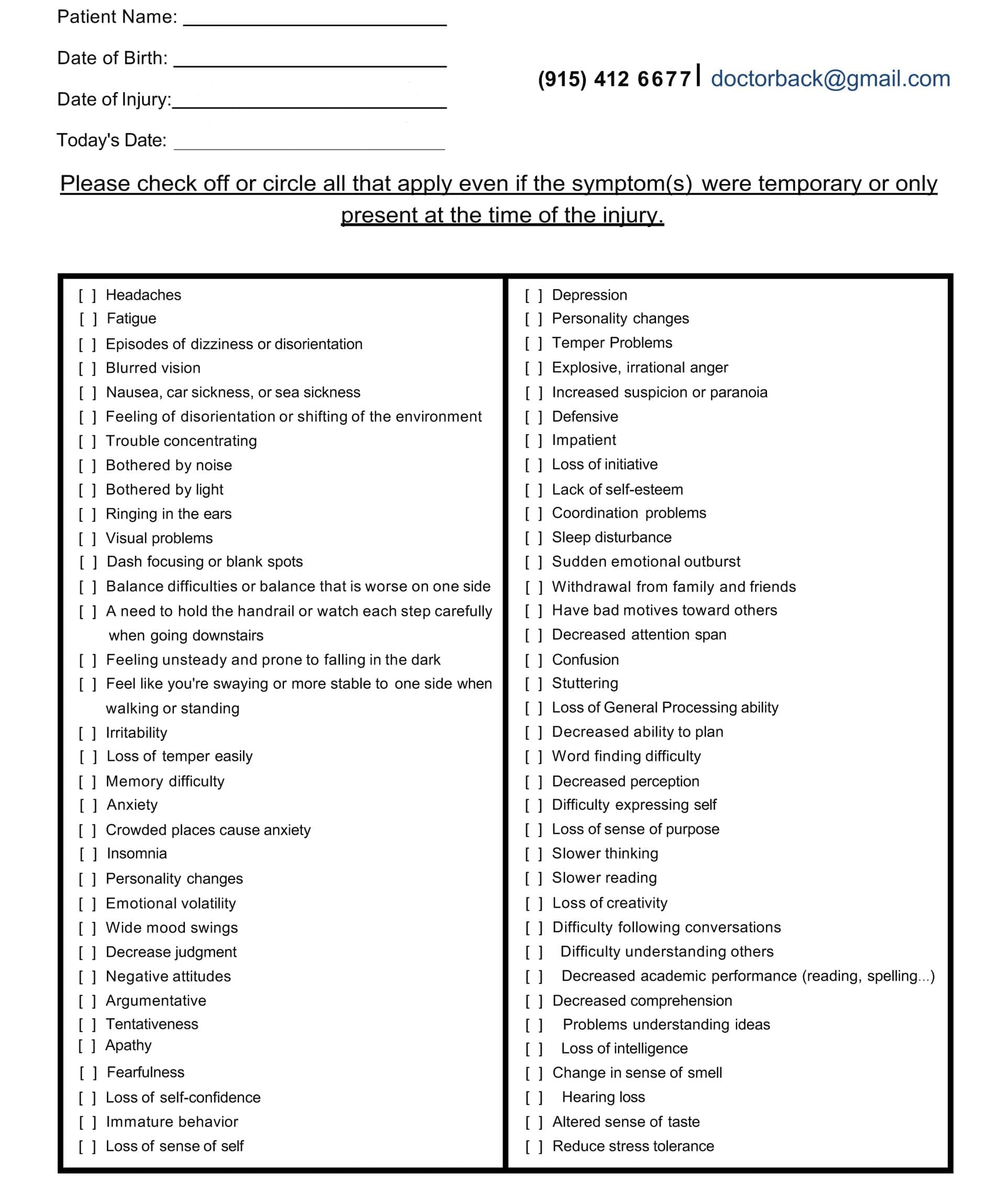
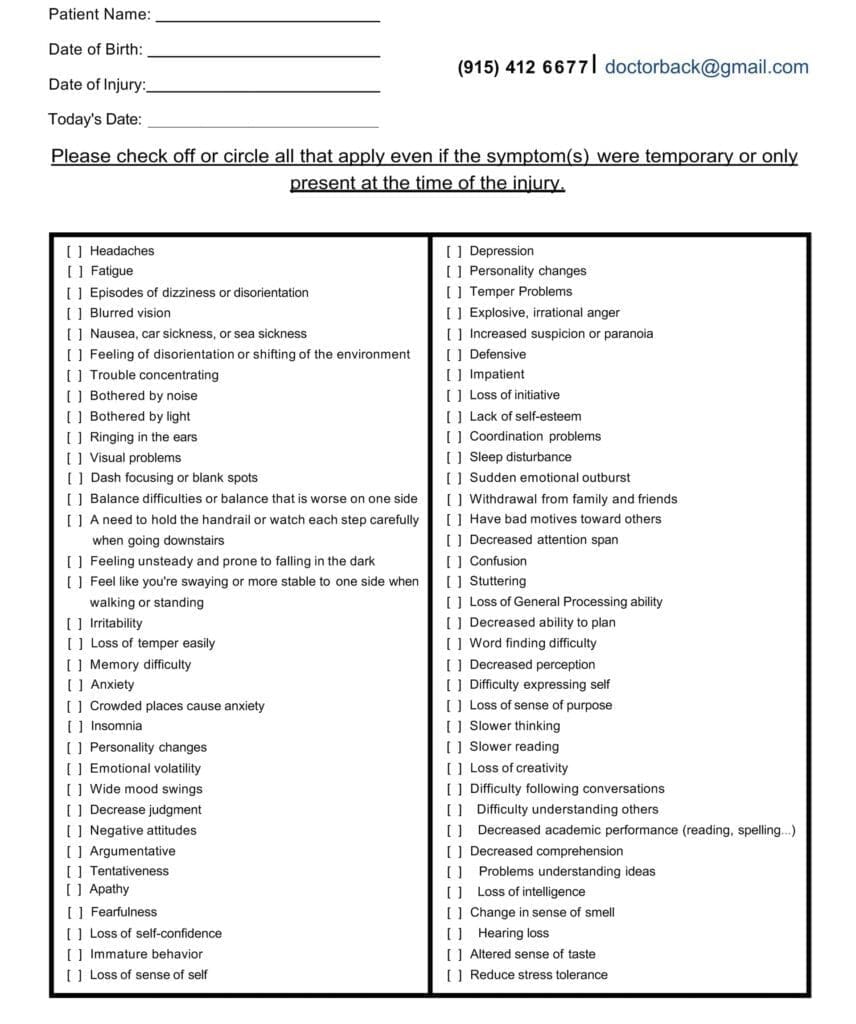
Symptom Questionnaire:

How Integrative Chiropractic Care Can Fit Into a TBI Recovery Plan

Important: Chiropractic care does not treat the brain injury itself and should not replace medical diagnosis or urgent care. It may, however, support symptom management and functional recovery when coordinated with your medical team (neurology, primary care, vestibular/physical therapy). Bergeron Clifford LLP

1) Restoring better spinal mechanics and alignment (especially upper neck)

Gentle, carefully selected spinal adjustments can reduce joint restrictions and muscle guarding in the cervical and upper thoracic regions. For some patients, improving head–neck alignment can reduce neck-related headaches and dizziness, which can indirectly improve balance and posture. Dr. Jimenez’s clinical materials and other chiropractic sources describe these goals and report symptom relief in select cases where the neck is a contributing factor. El Paso, TX Doctor Of Chiropractic+2El Paso, TX Doctor Of Chiropractic+2

2) Supporting neurophysiology and fluid dynamics (theoretical/adjunctive)

Some clinics note that adjustments may improve blood and cerebrospinal fluid (CSF) circulation, potentially aiding brain recovery by optimizing the environment around neural tissue. The evidence here is preliminary and should be framed as “may help” within a broader rehabilitation plan; still, it’s a common adjunctive rationale in clinical practice. Impact Medical Group+1

3) Sensory–motor rehabilitation to rebuild coordination

Integrative chiropractic and functional-neurology clinics often pair adjustments with targeted sensory and movement therapies: gaze stabilization, saccade/pursuit drills, balance progressions (wide base → narrow base → head turns), dual-task walking, and cervical proprioception exercises. These aim to retrain the brain (neuroplasticity) and calibrate vision–vestibular–proprioceptive inputs. HML Functional Care

4) Team-based care improves outcomes and safety

Medical guidance identifies red flags, rules out dangerous causes, and directs imaging or vestibular testing when needed. Rehabilitation professionals measure postural control, gait, and mobility using validated tools to demonstrate progress over time. Observational and review data indicate that balance changes occur after concussion, supporting the need for a structured assessment to guide rehabilitation. PMC+1


A Step-By-Step Care Pathway (What This Can Look Like)

  1. Medical evaluation first (especially if symptoms are new, severe, or worsening). Providers check for red flags and determine whether urgent care or imaging is necessary. Abnormal posturing = emergency. Mount Sinai Health System+1
  2. Baseline function check: vision, vestibular function, neck exam, simple balance tests. archives-pmr.org
  3. Cervical and upper thoracic care: gentle mobilization/adjustments (as appropriate), soft-tissue work, and home exercises to restore motion and reduce headache/neck-related dizziness. El Paso, TX Doctor Of Chiropractic
  4. Sensory–motor retraining: vestibular and oculomotor drills, graded balance tasks, gait training; progress in small, safe steps. HML Functional Care
  5. Lifestyle and pacing: sleep, graded activity, hydration, and symptom-paced screens/exercise—often supported by nurse-practitioner-led coaching in integrative settings. (Dr. Jimenez’s practice materials emphasize whole-person plans and steady progression.) El Paso, TX Doctor Of Chiropractic

How TBIs Can Lead to Spinal Misalignments and Symptom Flares

  • Impact mechanics (falls, crashes, sports) can strain facet joints, discs, and deep neck muscles.
  • The body may then adopt protective postures (chin jutting, shoulder guarding), which can irritate cervical nerves and muscle trigger points.
  • These patterns may worsen headaches and dizziness by disturbing cervical proprioception and upper-neck mobility—especially around C0–C2, a frequent source of cervicogenic symptoms after whiplash/TBI. Clinical articles on cervicogenic dizziness echo these links and suggest appropriate manual care and stabilization when indicated (after medical clearance). El Paso, TX Doctor Of Chiropractic+1

When Symptoms Become “Rigid Posturing”

Remember: decorticate or decerebrate posturing means severe brain dysfunction. The person is typically unconscious and in a coma; both patterns require 911/emergency care now. (Do not attempt chiropractic or rehab; call for medical help immediately.) Cleveland Clinic+1


Tests and Tools for TBI & Postural Problems (From Simplest to Most Advanced)

Note: Your exact pathway depends on symptoms and safety. Start with medical evaluation and add tests as needed.

Bedside & Screening (simplest)

  • History and neuro exam (headache, dizziness, nausea, vision changes, sleep, mood, neck pain; cranial nerves; coordination).
  • Glasgow Coma Scale (GCS) in acute settings to rate eye, verbal, and motor responses. NCBI
  • Symptom scales (e.g., post-concussion symptom checklists). Mayo Clinic
  • Basic balance screens (Romberg, tandem stance, timed up-and-go), and observation of gait and turns.
  • Cervical exam: range of motion, segmental motion, palpation, and joint position error tests for proprioception when appropriate. (Dr. Jimenez highlights posture and cervical mechanics in clinical content.) El Paso, TX Doctor Of Chiropractic

Clinic-level functional tests

  • BESS (Balance Error Scoring System) and instrumented postural sway for more sensitive detection of balance deficits after concussion. PMC
  • Community Balance & Mobility Scale (CB&M) for higher-level balance and mobility challenges (validated in brain injury populations). PMC
  • Vestibular/Oculomotor screening (e.g., smooth pursuit, saccades, vestibulo-ocular reflex/gaze stabilization, visual motion sensitivity).
  • Cervical/vestibular differentiation tests (to help sort inner-ear vs. neck-driven dizziness).

Specialized vestibular & ocular testing

  • Videonystagmography (VNG), calorics, rotary chair, and dynamic visual acuity tests to quantify vestibular deficits.
  • Eye-tracking or computerized oculomotor measures for pursuit/saccades.
  • Computerized posturography/force-plate is utilized for objective sway and strategy analysis, while center-of-mass measures aid in characterizing dynamic postural control following a concussion. IJSPT

Neurocognitive assessment

  • Standardized tests of attention, processing speed, memory, and executive function are used in concussion management (clinic-dependent).

Imaging & electrophysiology (advanced)

  • CT (acute bleed/fracture) and MRI (structural injury).
  • Diffusion Tensor Imaging (DTI) (white-matter pathways) and functional MRI in research/selected clinical contexts.
  • EEG if seizures or atypical episodes are suspected. (Mount Sinai lists EEG among tests for abnormal posturing workups; emergency pathways decide timing.) Mount Sinai Health System+1
  • PET/SPECT in select specialty centers; blood biomarkers (e.g., GFAP, UCH-L1) may be used in emergency algorithms.

Evidence Snapshots: What Research and Clinical Sources Say

  • Postural control can remain impaired after concussion; sophisticated metrics can reveal deficits not obvious on quick screens. PMC
  • Dynamic postural control, as measured by center-of-mass, is a useful outcome within one year post-concussion. IJSPT
  • Balance limitations after TBI are common and affect independence; better sitting balance early in rehab predicts better self-care after discharge. Brain Injury Association of America
  • Cervicogenic dizziness and neck-related headache can follow whiplash/head trauma; carefully managed manual therapy and cervical stabilization may reduce symptom drivers. (Clinical sources, including Dr. Jimenez’s site.) El Paso, TX Doctor Of Chiropractic+1
  • Chiropractic care should be adjunctive—not a replacement for medical treatment—and may help selected patients as part of a team plan, especially when cervical dysfunction contributes to symptoms. Bergeron Clifford LLP
  • Some clinics suggest that adjustments may help with blood and cerebrospinal fluid flow; however, this idea remains a theory and should be clearly explained to patients and used as part of a medically supervised plan. Impact Medical Group+1

A Practical, Integrated Plan (Example)

Built around safety, simplicity, and steady progress—and coordinated with your medical team.

  1. Protect & screen: See a clinician first. Urgent signs (worsening severe headache, repeated vomiting, loss of consciousness, new weakness/vision loss, abnormal posturing) need emergency care. Mount Sinai Health System+1
  2. Calm the neck: Gentle manual therapy and mobility work for the cervical/upper thoracic regions to reduce joint restriction and muscle guarding. Add home drills (chin nods, scapular setting, breathing) and progress slowly. El Paso, TX Doctor Of Chiropractic
  3. Recalibrate balance systems: Start with a wide-base stance, eyes open → eyes closed; then narrow base; then add head turns and dual-task steps. Integrate gaze stabilization (VOR) and visual motion tolerance exercises as symptoms allow. HML Functional Care
  4. Train real-life tasks: Gentle walking on level ground → turns → uneven terrain; keep sessions short and frequent. Measure progress with CB&M or instrumented sway when available. PMC
  5. Whole-person support: Sleep regularity, hydration, anti-inflammatory nutrition, and pacing (breaks between screens/reading). Clinics like Dr. Jimenez’s emphasize collaborative care—chiropractic care, nurse practitioner oversight, and vestibular/physical therapy—ensuring each domain is covered. El Paso, TX Doctor Of Chiropractic

When to Call Right Away (Red Flags)

  • Abnormal posturing (decorticate/decerebrate), severe confusion, or unresponsiveness
  • Worsening severe headache, repeated vomiting, seizures, new weakness/numbness, or vision loss
  • Neck pain with fever, sudden stiff neck, or neurological deficits

These signs need emergency evaluation—not clinic-based care. Mount Sinai Health System+1


How Dr. Alexander Jimenez’s Team Applies This Locally (El Paso)

Dr. Jimenez, DC, APRN, FNP-BC, highlights a dual-scope approach: identifying cervical drivers of headache/dizziness, rebuilding posture with gentle adjustments and stabilization, and combining this with vestibular drills, balance progressions, and lifestyle support. His clinical articles emphasize the importance of careful posture and cervical motion exams, stepwise progress, and collaborative plans with medical and rehabilitation partners. El Paso, TX Doctor Of Chiropractic+1


The Bottom Line

  • Mild TBI can leave behind subtle balance problems; severe TBI can cause abnormal posturing—an emergency. PMC+2Cleveland Clinic+2
  • These changes stem from how the brain integrates vision, vestibular input, and body sense, and they can be worsened by neck/upper-back dysfunction. braininjurycanada.ca+1
  • Integrative care—encompassing medical oversight, targeted chiropractic adjustments for cervical mechanics, and sensory–motor rehabilitation—offers a practical path to safer posture and stability. HML Functional Care+1

References

Brain Injury Association of America. (n.d.). [Factors associated with sitting and standing balance]. https://biausa.org/ Brain Injury Association of America

Brain Injury Association of America. (n.d.). [Sitting balance in rehabilitation is a good predictor of the amount of assistance that will be required]. https://biausa.org/ Brain Injury Association of America

Brain Injury Canada. (n.d.). [Balance]. https://braininjurycanada.ca/ braininjurycanada.ca

Brain Injury Canada. (n.d.). [Mobility]. https://braininjurycanada.ca/ braininjurycanada.ca

Cleveland Clinic. (2023, May 9). [Decerebrate posturing: What it is, causes, & treatment]. https://my.clevelandclinic.org/ Cleveland Clinic

Cleveland Clinic. (2023, May 9). [Decorticate posturing: What it is, causes, & treatment]. https://my.clevelandclinic.org/ Cleveland Clinic

Inness, E. L., et al. (2011). [Measuring balance and mobility after traumatic brain injury: Validation of the Community Balance and Mobility Scale (CB&M)]. Journal of Neurosurgery, 114(6). https://pmc.ncbi.nlm.nih.gov/ PMC

Mount Sinai Health Library. (2025, Apr 16). [Decerebrate posture]. https://www.mountsinai.org/ Mount Sinai Health System

Mount Sinai Health Library. (2025, Apr 16). [Decorticate posture]. https://www.mountsinai.org/ Mount Sinai Health System

Patejak, S., et al. (2021). [A systematic review of center of mass as a measure of dynamic postural control following concussion]. International Journal of Sports Physical Therapy. https://ijspt.scholasticahq.com/ IJSPT

Permenter, C. M., et al. (2023). [Postconcussive syndrome]. StatPearls. https://www.ncbi.nlm.nih.gov/books/ NCBI

Sosnoff, J. J., et al. (2011). [Previous mild traumatic brain injury and postural-control dynamics]. Journal of Athletic Training. https://pmc.ncbi.nlm.nih.gov/ PMC

Buckley, T. A., et al. (2016). [Postural control deficits identify lingering post-concussion neurological deficits]. Journal of Athletic Training. https://pmc.ncbi.nlm.nih.gov/ PMC

Jain, S., et al. (2023). [Glasgow Coma Scale]. StatPearls. https://www.ncbi.nlm.nih.gov/books/ NCBI

Flint Rehab. (2021). [Posturing after brain injury: Types and recovery outlook]. https://www.flintrehab.com/ Flint Rehab

HML Functional Care. (2025, Jul 22). [How chiropractic neurology supports brain healing]. https://hmlfunctionalcare.com/ HML Functional Care

Impact Medical Group. (2024, Jun 26). [Can chiropractic care help with mild traumatic brain injuries?] https://www.impactmedicalgroup.com/ Impact Medical Group

Northwest Florida Physicians Group. (2025). [Using chiropractic care to treat traumatic brain injuries]. https://northwestfloridaphysiciansgroup.com/ Northwest Florida Physicians Group

Pinnacle Health Chiropractic. (2025). [Six ways chiropractic care supports healing after TBI]. https://www.pinnaclehealthchiro.com/ pinnaclehealthchiro.com

ThinkVida. (2025). [Treating concussions with chiropractic care]. https://thinkvida.com/ Vida Integrated Health

Jimenez, A. (n.d.). [Finding hidden TBI symptoms: Signs you might miss]. dralexjimenez.com. https://dralexjimenez.com/ El Paso, TX Doctor Of Chiropractic

Jimenez, A. (n.d.). [Neck pain and feeling dizzy: Cervicogenic/cervical vertigo]. dralexjimenez.com. https://dralexjimenez.com/ El Paso, TX Doctor Of Chiropractic

Jimenez, A. (n.d.). [Cervicogenic dizziness from whiplash]. dralexjimenez.com. https://dralexjimenez.com/ El Paso, TX Doctor Of Chiropractic

Jimenez, A. (2025). [Traumatic brain injury: Understanding the long-term effects]. dralexjimenez.com. https://dralexjimenez.com/ El Paso, TX Doctor Of Chiropractic
Hidden Traumatic Brain Injury Symptoms: Signs Missed

Hidden Traumatic Brain Injury Symptoms: Signs Missed

Hidden Traumatic Brain Injury (TBI) Symptoms: How an Integrative Chiropractic + Nurse Practitioner Team Finds What Others Miss

Overview

Many traumatic brain injuries (TBIs)—especially mild TBIs or concussions—go unnoticed at first. Symptoms can be subtle, delayed, or brushed off as stress, fatigue, or “just getting older.” A careful clinician can catch what others miss by taking a thorough patient history and asking targeted questions that explore cognitive, emotional, sensory, sleep, and balance changes. (Mayo Clinic, n.d.; BrainLine, 2017). Mayo Clinic+1

This article explains:

  • A chiropractor or nurse practitioner may uncover hidden symptoms through a thorough history and structured questioning.
  • Why TBIs get missed, and how to avoid that.
  • A step-by-step diagnostic ladder, from basic screens to advanced tools, matched to symptom complexity.
  • An integrative care plan, combining chiropractic care for the spine, neck, and vestibular system with nurse practitioner (NP) medical oversight for whole-person recovery.

We also provide clinical insights that align with the combined approach of Dr. Alexander Jimenez, DC, APRN, FNP-BC, who focuses on thorough patient history, functional exams, and gradual plans for returning to work and activities (DrAlexJimenez.com; LinkedIn). El Paso, TX Doctor Of Chiropractic+1


Why TBIs Are Easy to Miss

  1. Symptoms can be delayed or vague. People may notice headaches, brain fog, irritability, or sleep changes days or weeks after the event. Sensory issues such as changes in smell or taste and sensitivity to light or noise also occur, and patients often don’t connect them to a past bump, crash, or whiplash. (BrainLine, 2017; Mayo Clinic, n.d.). BrainLine+1
  2. Imaging can be normal. Standard CT or MRI may look fine in mild TBI, yet symptoms persist. That’s why history and examination are crucial—and why advanced tools are sometimes needed later. (Mayo Clinic, n.d.). Mayo Clinic
  3. Invisible wounds. Military and civilian clinicians stress that TBIs often present as “invisible injuries.” Without active screening, they are easy to overlook. (Hanscom AFB/AFMS; Health.mil). Hanscom Air Force Base+1

Hidden Symptoms To Ask About (And Why)

A skilled chiropractor or NP will conduct a thorough examination. Along with open-ended conversation, they use symptom checklists and guided probes that reveal patterns across body systems.

Cognitive and emotional

  • Trouble focusing, slowed thinking, memory lapses, “losing the thread” mid-task
  • Irritability, mood swings, anxiety, or depression
  • Feeling “not like myself,” “foggy,” or overwhelmed in busy environments
    (BrainLine, 2017). BrainLine

Sensory

  • Loss or change in smell or taste
  • Light/noise sensitivity; blurred vision; “seeing stars”
  • Ringing in the ears (tinnitus)
    (BrainLine, 2017). BrainLine

Physical

  • Headaches (especially new, worsening, or “pressure-type”)
  • Dizziness, vertigo, balance problems, coordination changes
  • Fatigue; neck pain that worsens with screens or reading
    (Mayo Clinic, n.d.; BrainLine, 2017). Mayo Clinic+1

Sleep and autonomic

  • Difficulty falling or staying asleep; unusual daytime drowsiness
  • Symptoms include orthostatic intolerance, which causes lightheadedness upon standing, as well as palpitations and heat or cold intolerance.
    (Mayo Clinic, n.d.). Mayo Clinic

Key point: These symptoms are common after mild TBI—even with a normal CT—and they often overlap. A structured, curious interview is the quickest path to the right diagnosis. (Mayo Clinic, n.d.; Hanscom AFB). Mayo Clinic+1


The Power of a Thorough History: What to Ask

Example of Symptom Questionnaire:

Below is a practical set of targeted questions clinicians use to uncover hidden TBI patterns. Patients and families can use this as a self-checklist to bring to appointments.

Mechanism and timeline

  • What happened? (fall, car crash, sports, blast, whiplash, strike to head/neck?)
  • Did you black out, feel dazed, or lose memory of events?
  • When did symptoms begin—immediately, hours later, or days later? (Mayo Clinic, n.d.). Mayo Clinic

Headache and neck

  • New or changing headaches? What triggers them (screens, reading, exercise, lack of sleep)?
  • Neck pain or stiffness, pain during head movements, and neck fatigue throughout the day are all associated with cervicogenic headaches and vestibular problems. (Mayo Clinic, n.d.; BrainLine, 2017). Mayo Clinic+1

Cognition and mood

  • Are you experiencing difficulty concentrating, slowed processing, or short-term memory slips?
  • Are you experiencing irritability, mood swings, anxiety, depression, or emotional “numbness”? (BrainLine, 2017; Health.mil). BrainLine+1

Sensory

  • Has there been a change in your sense of smell or taste?
  • Have you noticed any new sensitivity to light or noise, experienced blurred or double vision, or experienced eye strain when reading? (BrainLine, 2017). BrainLine

Balance and dizziness

  • Dizziness, vertigo, poor balance, and motion sensitivity (in a car or in a store) are common symptoms. Falls? (BrainLine, 2017). BrainLine

Sleep

  • Trouble falling asleep, frequent waking, and feeling unrefreshed? (BrainLine, 2017; Mayo Clinic, n.d.). BrainLine+1

Function and safety

  • Are you comfortable driving at night or at high speeds on the highway?
  • Screen tolerance (work, school, phone)?
  • Return to work/sport issues?

Red flags (urgent referral)

  • Symptoms that require urgent referral include worsening headache, repeated vomiting, weakness or numbness, slurred speech, seizures, extreme drowsiness, new confusion, and unequal pupils. (Mayo Clinic, n.d.). Mayo Clinic

Where Chiropractic Care Fits (with NP Supervision)

Chiropractors often see patients after car crashes, sports injuries, and falls. They evaluate the cervical spine, posture, proprioception, and vestibular-ocular systems—all of which can drive headaches, dizziness, and cognitive fatigue after TBI. A growing body of interprofessional work suggests that chiropractors can play a role in screening, referral, and rehabilitative care for concussion-related neck and balance disorders, especially when working as part of a team. (NW Health/Chiropractic Economics piece; peer commentary on chiropractors’ role in SRC). Northwestern Health Sciences University+1

Nurse practitioners provide medical oversight, screen for red flags, coordinate imaging and lab tests, and manage sleep, mood, metabolic, and medication issues that often complicate recovery. Nursing literature emphasizes neuromonitoring, family education, and prevention of secondary injury, even outside the ICU. (Figueiredo et al., 2024). MDPI

A collaborative care model improves symptom tracking and coordination—especially for chronic pain and persistent symptoms after TBI. (Curran et al., 2024; Ilkhani et al., 2024). PMC+1

Clinical note (consistent with Dr. Jimenez’s approach): Combine careful history and targeted exams with staged spinal care, vestibular/oculomotor rehab, aerobic re-conditioning, and nutrition/sleep coaching—while the NP manages medical needs and coordinates imaging or biomarkers when indicated. (DrAlexJimenez.com). El Paso, TX Doctor Of Chiropractic


Diagnostic Tools for TBI: From Basic to Advanced

Think of assessment as a ladder. Start simple; climb only as needed, based on red flags, symptom persistence, and functional limits.

1) Basic bedside screening (every visit)

  • Symptom scales
    • PCSS (Post-Concussion Symptom Scale) – quick 22-item rating; easy to trend over time. (Intermountain Health PDF; Langevin et al., 2022). Intermountain Healthcare+1
    • RPQ (Rivermead Post-Concussion Symptoms Questionnaire) – useful if scored as RPQ-3 and RPQ-13 subscales. (Eyres et al., 2005; Zeldovich et al., 2023). PubMed+1
  • Sport Concussion Assessment Tool (SCAT5) – standardized sideline/clinic tool (13+ years); includes PCSS, balance, and cognitive screens. (BJSM SCAT5; BMX SCAT5). British Journal of Sports Medicine+1
  • Cognitive screen
    • MoCA (Montreal Cognitive Assessment) – sensitive for subtle deficits; faster and more sensitive than MMSE in TBI populations. (Waldron-Perrine et al., 2019). PMC
  • Vestibular-ocular screen
    • VOMS – brief test provoking symptoms with pursuits/saccades, near-point convergence, and vestibulo-ocular reflex. Highly practical after a concussion. (Mucha et al., 2014). PMC
  • Balance
    • BESS (Balance Error Scoring System) – simple stance tests scored by errors. (NCAA/Atrium manuals; APTA summary). fs.ncaa.org+2Atrium Health+2
  • Cranial nerve + smell/taste queries
    • Ask directly about smell/taste changes, and test if possible. These sensory shifts are common but under-reported. (BrainLine, 2017). BrainLine

Why this matters: Many mild TBIs won’t show on CT/MRI. These low-cost tools at the point of care catch patterns and guide next steps. (Mayo Clinic, n.d.). Mayo Clinic


2) Intermediate testing (when symptoms persist or are complex)

  • Comprehensive vestibular assessment
    • Videonystagmography (VNG), oculomotor testing, and computerized dynamic posturography / Sensory Organization Test (SOT) to quantify balance control and track rehab response. (UHC policy summary; RehabMeasures; related trial). UHC Provider+2Shirley Ryan AbilityLab+2
  • Neurocognitive testing
    • If cognitive loads (work, school, and driving) remain limited, consider using formal batteries (clinic-based or computerized). (SCAT5 framework). British Journal of Sports Medicine
  • Mental health screening
    • Depression, anxiety, and PTSD screens to address “invisible” sequelae early—important for prognosis and adherence. (Health.mil). Military Health System

3) Advanced diagnostics (selected cases)

  • Conventional neuroimaging
    • Non-contrast CT for acute red flags (rule out bleed/skull fracture).
    • MRI (with appropriate sequences) if symptoms persist or focal deficits appear. (Mayo Clinic, n.d.). Mayo Clinic
  • Advanced MRI sequences
    • DTI (Diffusion Tensor Imaging): detects white matter microstructural changes not seen on routine MRI; can improve prognostic models in mTBI with normal CT. (Patil et al., 2025; Richter et al., 2024; Paolini et al., 2025). PMC+2The Lancet+2
    • SWI (Susceptibility-Weighted Imaging): sensitive to traumatic microbleeds and diffuse axonal injury; the presence of microbleeds may relate to persistent complaints in some patients. (Hsu et al., 2023; Hageman et al., 2022; Eldeş et al., 2020). PubMed+2PubMed+2
    • fMRI (task-based or resting-state): research and selected clinical programs use it to map functional disruptions after concussion. (Irimia et al., 2015; Jantzen et al., 2004). PMC+1
  • Electrophysiology
    • EEG/qEEG plays an evolving role in detecting or monitoring changes in networks associated with traumatic brain injury (TBI) and should be conducted according to professional guidelines, with interpretations placed in a clinical context. (Haneef et al., 2013; ACNS guideline, 2020; Stevens et al., 2024). PMC+2acns.org+2
  • Blood biomarkers
    • Blood tests for GFAP and UCH-L1 are FDA-approved to help determine whether adults with suspected mild traumatic brain injury need a CT scan, and labs are now offering these tests (JAMA Netw Open, 2024; bioMérieux press release, 2024). JAMA Network+1

Bottom line: Start with history and bedside tools. Escalate to advanced testing when symptoms persist, red flags emerge, or functional demands require precise guidance.


The Integrative Plan: Chiropractic + Nurse Practitioner

Goals

  1. Reduce symptoms (headache, dizziness, neck pain, cognitive fatigue).
  2. Restore systems (cervical, vestibular-ocular, autonomic).
  3. Rebuild capacity (sleep, mood, fitness, cognition).
  4. Return to life (drive, work/school, sports) with safe progressions.

Chiropractic care (examples)

  • Cervical spine evaluation and treatment to reduce neck-driven headaches and improve proprioception—often key for balance and eye-head coordination. (NW Health/Chiropractic Economics; Denver Chiropractic overview). Northwestern Health Sciences University+1
  • Vestibular and oculomotor exercises (gaze stabilization, smooth pursuits, saccades, and convergence work) were built from VOMS findings. (Mucha et al., 2014). PMC
  • Soft-tissue therapy and graded mobility to decrease pain-guarding patterns and improve movement tolerance for daily tasks.

Note: Some clinics describe additional mechanisms (e.g., effects on CSF flow). Evidence for such claims varies, and treatment plans should focus on function, symptoms, and measurable gains. (Pinnacle; Apex; NorthWest Florida Physicians Group). pinnaclehealthchiro.com+2Apex Chiropractic+2

Nurse practitioner oversight

  • Medical screening & safety: identify red flags; determine need for CT/MRI; manage post-traumatic headache, sleep issues, and mood symptoms. (Mayo Clinic; Figueiredo et al., 2024). Mayo Clinic+1
  • Metabolic support: address blood pressure, glucose, thyroid, anemia, hydration, and nutrition that affect brain recovery; coordinate referrals. (Figueiredo et al., 2024). MDPI
  • Education and pacing should guide cognitive and physical pacing, facilitate a graded return to tasks, and provide family support. (Health.mil; Figueiredo et al., 2024). Military Health System+1

Collaborative care pays off. TBI programs using team-based models show better coordination and patient-centered outcomes, especially when pain and mood complicate recovery. (Curran et al., 2024; Ilkhani et al., 2024). PMC+1


How a Thorough Approach Uncovers the Missed Diagnosis

  1. History finds the pattern. A patient with “new headaches and irritability” might also report loss of smell, motion sensitivity in stores, and neck stiffness—indicating strong post-concussive and cervical/vestibular involvement. (BrainLine, 2017). BrainLine
  2. Bedside tests confirm direction. An abnormal VOMS (symptom spikes on saccades or VOR) and BESS errors cement the vestibular-ocular target for therapy. (Mucha et al., 2014; NCAA/Atrium). PMC+1
  3. Escalate only when needed. If symptoms persist despite progress—or if work/sport demands are high—consider advanced MRI (DTI/SWI), qEEG, or biomarkers to refine prognosis and guide next steps. (Patil et al., 2025; Hsu et al., 2023; ACNS, 2020; JAMA, 2024). JAMA Network+3PMC+3PubMed+3

A Practical, Staged Care Roadmap

This is a general template. Your plan should be individualized based on findings and safety.

Weeks 0–2: Calm and orient

  • Education on pacing, hydration, and sleep hygiene; light neck mobility; sub-symptom aerobic activity (e.g., easy walks).
  • Begin cervical care and gentle vestibular/oculomotor drills if tolerated.
  • NP manages headache/sleep, screens mood, and ensures no red flags. (Mayo Clinic; Figueiredo et al., 2024). Mayo Clinic+1

Weeks 2–6: Re-train systems

  • Progress cervical stabilization and posture work; expand gaze stabilization and convergence tasks; add balance progressions.
  • Short bouts of cognitive-physical dual tasking (e.g., reciting while walking) as symptoms allow.
  • Use PCSS or RPQ weekly to track trend lines. (Intermountain PCSS; Eyres et al., 2005). Intermountain Healthcare+1

Weeks 6–12: Build capacity

  • Increase aerobic exercise toward moderate intensity; integrate return-to-drive and return-to-work checklists.
  • If plateaus persist, consider intermediate/advanced assessments (SOT/posturography; DTI/SWI in selected cases). (RehabMeasures SOT; Patil et al., 2025). Shirley Ryan AbilityLab+1

Beyond 12 weeks: Persistent symptoms

  • Titrate therapies; address mood/sleep/autoimmune or endocrine drivers; consider collaborative pain programs. (Curran et al., 2024). PMC

Where Local Chiropractic or Functional Neurology Clinics Fit

Community clinics frequently educate patients about post-concussion care and offer combined chiropractic + vestibular/oculomotor programs under medical supervision. These clinics emphasize neck care, balance/eye-movement drills, and staged activity. (Denver Chiropractic; Calibration Chiropractic + Functional Health; HML Functional Care). Denver Integrated Spine Center+2calibrationmansfield.com+2

Clinical observation (aligned with Dr. Jimenez’s posts): Patients often report that a combined neck + vestibular/ocular approach reduces headache frequency, steadies vision, and improves stamina for work or driving. (DrAlexJimenez.com). El Paso, TX Doctor Of Chiropractic


Safety Reminders

  • If you develop a worsening headache, repeated vomiting, seizure, weakness, confusion, or unequal pupils, seek emergency care immediately. (Mayo Clinic, n.d.). Mayo Clinic
  • Spinal manipulation is not used in unstable injuries. Care should follow a full exam, with imaging or referrals when indicated.

Take-Home Messages

  • Hidden symptoms are common after TBI. They span thinking, mood, senses, sleep, and balance. (BrainLine, 2017; Mayo Clinic, n.d.). BrainLine+1
  • A thorough history and targeted questions are the most powerful diagnostic tools.
  • Use a ladder of tests, from PCSS/RPQ, VOMS, BESS, and MoCA to SOT, advanced MRI (DTI/SWI), EEG/qEEG, and GFAP/UCH-L1 biomarkers, based on complexity. (Mucha et al., 2014; ACNS, 2020; JAMA, 2024; Patil et al., 2025). PMC+3PMC+3acns.org+3
  • An integrative teamchiropractor + NP—covers structure, neurology, and overall health, improving safety and continuity of care. (Figueiredo et al., 2024; Curran et al., 2024). MDPI+1

References

BrainLine. (2017, December 1). Symptoms of traumatic brain injury (TBI). BrainLine

BrainLine. (2017, June 21). TBI 101: Physical symptoms. BrainLine

Curran, M. C., et al. (2024). Chronic pain after traumatic brain injury: A collaborative care intervention (TBI Care). PMC

Eyres, S., Carey, A., Gilworth, G., Neumann, V., & Tennant, A. (2005). Construct validity and reliability of the Rivermead Post-Concussion Symptoms Questionnaire (RPQ). PubMed

Figueiredo, R., Castro, C., & Fernandes, J. B. (2024). Nursing interventions to prevent secondary injury in critically ill patients with traumatic brain injury: A scoping review. Journal of Clinical Medicine, 13(8), 2396. MDPI

Haneef, Z., Levin, H., & Masel, B. (2013). Electroencephalography and quantitative EEG in mild traumatic brain injury. PMC

Hanscom Air Force Base Public Affairs. (2017, March 17). TBI recognition critical to treating invisible wounds. Hanscom Air Force Base

Health.mil. (2022, February 4). Air Force Invisible Wounds Initiative helps build a supportive culture. Military Health System

Hsu, C. C. T., et al. (2023). The current state of susceptibility-weighted imaging and its clinical applications in TBI. PubMed

Ilkhani, S., et al. (2024). Beyond surviving: A scoping review of collaborative care models to inform the future of post-discharge trauma care. PMC

Intermountain Health. (2024). Post-Concussion Symptom Scale (PCSS). Intermountain Healthcare

Irimia, A., et al. (2015). Functional neuroimaging of traumatic brain injury: Advances and clinical utility. PMC

JAMA Network Open. (2024). Papa, L., et al. Diagnostic performance of GFAP, UCH-L1, and MAP-2 for TBI evaluation. JAMA Network

Jantzen, K. J., et al. (2004). A prospective fMRI study of mild traumatic brain injury. PMC

Mayo Clinic. (n.d.). Traumatic brain injury—Symptoms & causes. Mayo Clinic

Mayo Clinic. (n.d.). Traumatic brain injury—Diagnosis & treatment. Mayo Clinic

Mucha, A., et al. (2014). Brief Vestibular/Ocular Motor Screening (VOMS). PMC

NW Health Sciences University. (2022). Chiropractic and traumatic brain injuries: Bringing value for TBI and concussion patients. Northwestern Health Sciences University

Patil, S., et al. (2025). Clinical utility of diffusion tensor imaging in sport-related concussion. PMC

Paolini, F., et al. (2025). Diffusion tensor imaging as a neurologic predictor in TBI. MDPI

Richter, S., et al. (2024). Predicting recovery in mild TBI with DTI and biomarkers. The Lancet

Shirley Ryan AbilityLab. (2013). Sensory Organization Test (SOT). Shirley Ryan AbilityLab

Sports Concussion Assessment Tool—SCAT5. (2017). Official SCAT5 form (BJSM). British Journal of Sports Medicine

Tenney, J. R., et al. (2020). American Clinical Neurophysiology Society. Use of quantitative EEG for mTBI—Practice guideline. acns.org

UHC Policy Note. (2024). Computerized dynamic posturography—Medical policy summary. UHC Provider

Zeldovich, M., et al. (2023). Factorial validity of the RPQ across languages (CENTER-TBI). SpringerOpen

Additional clinic/education sources referenced in context

Dr. Alexander Jimenez (clinical perspective & education)

Industry update (biomarkers)