
Sciatica Self-Massage at Home: Integrative Approach

Tennis balls, foam rollers, and calf-release techniques are effective for self-massage.
Sciatica is not a single diagnosis. It is a symptom pattern—often burning, sharp, or “electric” pain that can start in the low back or buttock and travel down the leg. Some people also feel tingling or numbness. At ChiroMed, sciatica is usually discussed as a signal problem: something is irritating or sensitizing nerve tissues, and the body reacts with pain, tightness, and protective muscle guarding. (ChiroMed, 2025a)
Self-massage can be a helpful tool because many sciatica flare-ups include tight muscles and trigger points in the low back, glutes, hips, and the piriformis muscle. When these tissues tighten, they can increase pressure around sensitive areas and prolong symptoms. (Healthline, 2021)
Below is a practical, safe, “easy-to-follow” self-massage plan that matches what many people use at home—tennis balls, foam rollers, and gentle calf work—plus how these tools often fit into a whole-person chiropractic plan at ChiroMed. (ChiroMed, 2025b)
The #1 Safety Rule: Stay in the “Hurts Good” Zone
Self-massage should feel like helpful pressure, not intense pain.
Use this simple rule:
- 0–3 out of 10 discomfort: okay (“hurts good”)
- 4–10 out of 10: too much (back off)
- Sharp zaps, burning, or increasing numbness: stop right away
This approach aligns with common guidance for piriformis massage: start gently, avoid excessive pressure, and discontinue if symptoms worsen. (Healthline, 2021)
Important: Do not apply intense pressure directly over the area where you feel the “electric line” of sciatic symptoms. The goal is to release muscle tension around the area, not to crush a nerve. (HSS, 2024)
Why These Areas Matter for Sciatica
Most effective self-massage targets the “hot spots” that commonly tighten during sciatica:
- Low back muscles (especially near the pelvis)
- Glutes (buttock muscles)
- Piriformis (a deep hip muscle)
- The calf is often tight due to compensation or referred pain.
Piriformis tension is a common reason people feel buttock pain and leg symptoms that look like sciatica. (Healthline, 2021)
Tool 1: Tennis Ball Release for Glutes and Piriformis
A tennis ball is useful because it can quickly locate a tight point. Many sciatica massage guides recommend using a ball to target trigger points in the gluteal/piriformis area. (Massage Chair Store, 2021; Healthline, 2021)
How to do it (simple floor method)
- Sit on the floor and place a tennis ball under one buttock.
- Lean your body weight slightly into the ball.
- Slowly roll a few inches until you find a tender spot.
- Apply light pressure for 20–45 seconds; breathe slowly.
- Move off the spot and repeat 2–4 times.
- Switch sides if needed.
What you want to feel:
- Dull ache, pressure, warmth = okay
What you do not want: - If you experience a sharp shooting pain down your leg or an increase in numbness, you should stop immediately (Healthline, 2021).
“Peanut” trick (two tennis balls)
Some people tape two balls together (or put them in a sock) to create a “peanut.” This can help you apply pressure on both sides of soft tissue—not the spine. (Massage Chair Store, 2021)
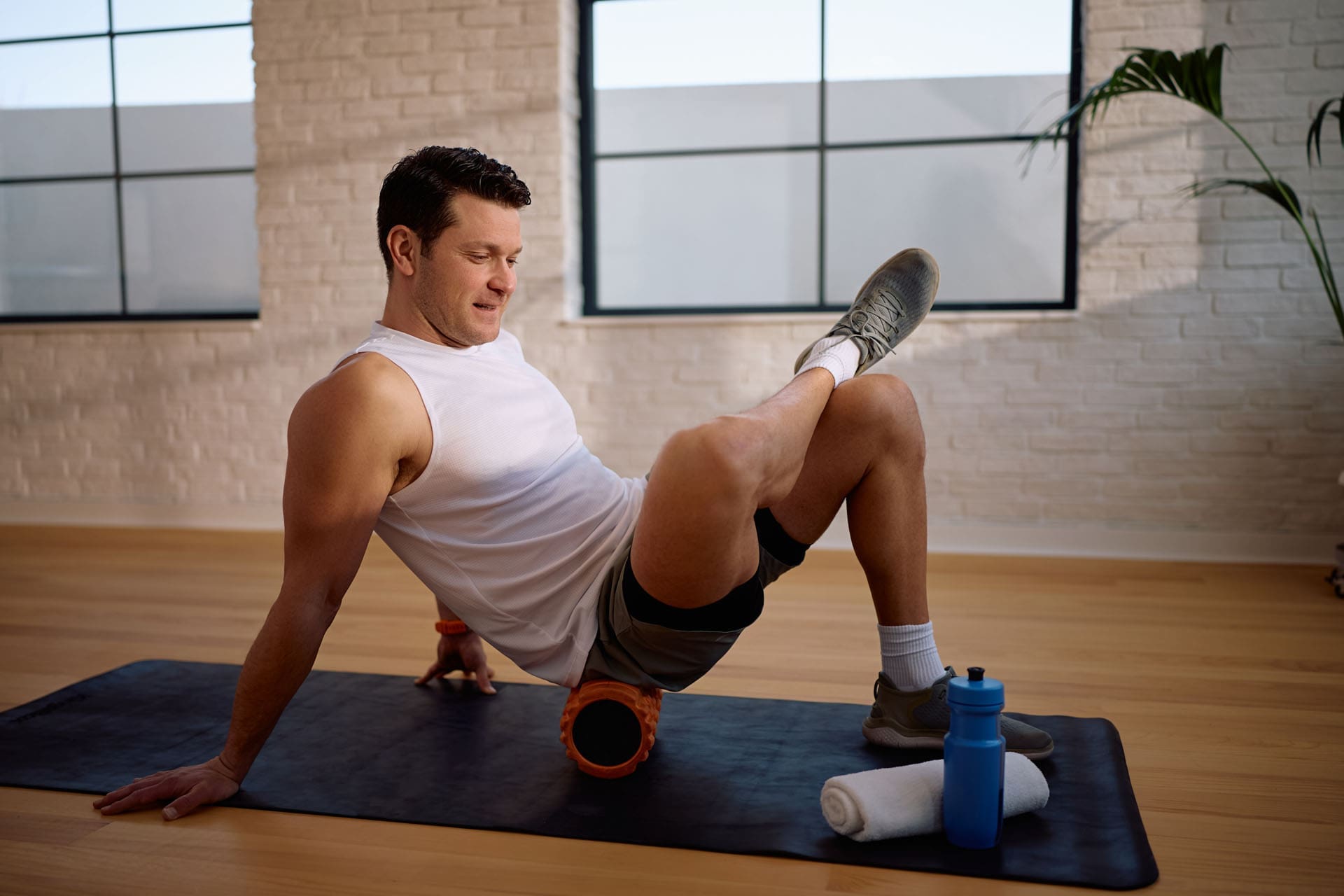
Tool 2: Foam Roller for Broader, Gentler Pressure
Foam rolling distributes pressure over a larger area than a ball, which may feel safer on sensitive days. It is often used for myofascial release, meaning the application of slow pressure to relax tight muscles and fascia. (Dorsal Health, 2020)
Best foam roller targets for sciatica patterns
- Glutes (roll slowly, small range)
- Outer hip muscles
- Upper hamstrings (avoid behind the knee)
Simple foam rolling dose:
- 30–60 seconds per area
- 1–2 rounds total
- Keep discomfort ≤3/10 (Dorsal Health, 2020)
Calf Massage for Referred Pain and “Compensation Tightness”
Sciatica symptoms often alter a person’s gait, stance, and leg loading. That can make the calf feel tight, sore, or crampy—even if the main issue is higher up. Gentle calf massage can lower muscle guarding and improve comfort while you work on the hip and low back. (Chicago Pain Control, n.d.)
Simple calf massage (hands-only)
- Sit comfortably and support your leg.
- Use your thumbs and palms to knead the calf slowly.
- Work from mid-calf toward the ankle and back up.
- Stop if you feel sharp nerve sensations.
Add Heat to Improve Results
Heat can relax tissues and make self-massage feel more effective. Many home-care routines for sciatica recommend applying heat before soft-tissue work to reduce muscle guarding. (HSS, 2024)
Try:
- Heat 10–15 minutes
- Then self-massage for 5–8 minutes
- Then a short walk, 3–10 minutes if tolerated
What ChiroMed Often Adds: An Integrative Plan for Long-Term Relief
Self-massage is helpful, but many people need more than symptom relief. A longer-term plan often focuses on **-two goals:
- Lower nerve irritation
- Fix the mechanical patterns that keep stress on tissues
ChiroMed’s content frequently emphasizes combining chiropractic care, soft-tissue work, and rehabilitation strategies so patients are not merely chasing pain day to day. (ChiroMed, 2025b)
Common integrative elements include:
- Focused chiropractic adjustments to improve motion and reduce joint stress (Fremont Chiropractic, n.d.)
- Myofascial release/trigger point therapy to calm tight muscles and improve movement (Pinnacle Hill Chiropractic, 2023)
- Spinal decompression (when appropriate) to reduce pressure and support disc-related cases (Posture Perfect PH, n.d.)
- Rehab and mobility exercises to build stability and reduce flare-ups (Bend Total Body Chiropractic, n.d.)
Clinical perspective reflected in Dr. Alexander Jimenez’s published education
Dr. Alexander Jimenez, DC, APRN, FNP-BC, often describes sciatica care as a “systems” problem—muscles, joints, discs, inflammation, and movement habits can all contribute. His educational posts emphasize combining hands-on care with guided self-care to support function rather than merely providing temporary relief. (Jimenez, n.d.-a; Jimenez, n.d.-b)
When to Stop Self-Massage and Get Evaluated
Seek medical evaluation urgently if you have:
- New or worsening leg weakness
- Loss of bowel/bladder control
- Numbness in the groin/saddle area
- Severe pain that is rapidly worsening
These signs may indicate more severe nerve involvement and should not be managed with home massage alone. (ChiroMed, 2026)
A Simple 7-Minute Routine (Daily or During Flares)
- Heat: 10 minutes (optional) (HSS, 2024)
- Tennis ball glute/piriformis: 2 minutes total (Healthline, 2021)
- Foam roll glutes/outer hip: 2 minutes total (Dorsal Health, 2020)
- Calf massage: 2 minutes total (Chicago Pain Control, n.d.)
- Easy walk: 3–10 minutes if tolerated (ChiroMed, 2025a)
Keep it gentle, stay in the 0–3/10 range, and avoid pressing directly into sharp nerve pain.
References
- Sciatica Without Low Back Pain Symptoms (ChiroMed, 2025a).
- Chiropractic Telemedicine for Sciatica Relief (ChiroMed, 2025b).
- Tag: Sciatica Relief El Paso (ChiroMed, 2026).
- Piriformis Massage: Self-Massage and Stretches for Piriformis Syndrome (Healthline, 2021).
- 10 Massage Techniques for Sciatica Pain Relief (Harley Street Specialist Hospital, 2024).
- Massage for Sciatica: Tennis Ball Massage and More (Massage Chair Store, 2021).
- Massage Sciatica to Reduce Leg Pain Fast (Chicago Pain Control, n.d.).
- Fascia Massage (Dorsal Health, 2020).
- Massage Therapy for Sciatica Pain (Pinnacle Hill Chiropractic, 2023).
- Chiropractic Massage for Sciatica: A Natural Treatment to Relief (Posture Perfect PH, n.d.).
- How Massage Therapy Complements Chiropractic Care for Sciatica Relief (Bend Total Body Chiropractic, n.d.).
- Relief From Sciatica Pain (Fremont Chiropractic, n.d.).
- Sciatica Relief with Chiropractic Care (Jimenez, n.d.-a).
- Outcome: Sciatica Decompression Therapy (Jimenez, n.d.-b).
Post Disclaimer
General Disclaimer, Licenses and Board Certifications *
Professional Scope of Practice *
The information herein on "Sciatica Self-Massage at Home: Integrative Approach" is not intended to replace a one-on-one relationship with a qualified health care professional or licensed physician and is not medical advice. We encourage you to make healthcare decisions based on your research and partnership with a qualified healthcare professional.
Blog Information & Scope Discussions
Welcome to El Paso's Premier Wellness and Injury Care Clinic & Wellness Blog, where Dr. Alex Jimenez, DC, FNP-C, a Multi-State board-certified Family Practice Nurse Practitioner (FNP-BC) and Chiropractor (DC), presents insights on how our multidisciplinary team is dedicated to holistic healing and personalized care. Our practice aligns with evidence-based treatment protocols inspired by integrative medicine principles, similar to those on this site and on our family practice-based chiromed.com site, focusing on naturally restoring health for patients of all ages.
Our areas of multidisciplinary practice include Wellness & Nutrition, Chronic Pain, Personal Injury, Auto Accident Care, Work Injuries, Back Injury, Low Back Pain, Neck Pain, Migraine Headaches, Sports Injuries, Severe Sciatica, Scoliosis, Complex Herniated Discs, Fibromyalgia, Chronic Pain, Complex Injuries, Stress Management, Functional Medicine Treatments, and in-scope care protocols.
Our information scope is multidisciplinary, focusing on musculoskeletal and physical medicine, wellness, contributing etiological viscerosomatic disturbances within clinical presentations, associated somato-visceral reflex clinical dynamics, subluxation complexes, sensitive health issues, and functional medicine articles, topics, and discussions.
We provide and facilitate clinical collaboration with specialists across disciplines. Each specialist is governed by their professional scope of practice and licensure jurisdiction. We use functional health & wellness protocols to treat and support care for musculoskeletal injuries or disorders.
Our videos, posts, topics, and insights address clinical matters and issues that are directly or indirectly related to our clinical scope of practice.
Our office has made a reasonable effort to provide supportive citations and has identified relevant research studies that support our posts. We provide copies of supporting research studies upon request to regulatory boards and the public.
We understand that we cover matters that require an additional explanation of how they may assist in a particular care plan or treatment protocol; therefore, to discuss the subject matter above further, please feel free to ask Dr. Alex Jimenez, DC, APRN, FNP-BC, or contact us at 915-850-0900.
We are here to help you and your family.
Blessings
Dr. Alex Jimenez DC, MSACP, APRN, FNP-BC*, CCST, IFMCP, CFMP, ATN
email: [email protected]
Multidisciplinary Licensing & Board Certifications:
Licensed as a Doctor of Chiropractic (DC) in Texas & New Mexico*
Texas DC License #: TX5807, Verified: TX5807
New Mexico DC License #: NM-DC2182, Verified: NM-DC2182
Multi-State Advanced Practice Registered Nurse (APRN*) in Texas & Multi-States
Multi-state Compact APRN License by Endorsement (42 States)
Texas APRN License #: 1191402, Verified: 1191402 *
Florida APRN License #: 11043890, Verified: APRN11043890 *
Colorado License #: C-APN.0105610-C-NP, Verified: C-APN.0105610-C-NP
New York License #: N25929, Verified N25929
License Verification Link: Nursys License Verifier
* Prescriptive Authority Authorized
ANCC FNP-BC: Board Certified Nurse Practitioner*
Compact Status: Multi-State License: Authorized to Practice in 40 States*
Graduate with Honors: ICHS: MSN-FNP (Family Nurse Practitioner Program)
Degree Granted. Master's in Family Practice MSN Diploma (Cum Laude)
Dr. Alex Jimenez, DC, APRN, FNP-BC*, CFMP, IFMCP, ATN, CCST
My Digital Business Card
Licenses and Board Certifications:
DC: Doctor of Chiropractic
APRN: Advanced Practice Registered Nurse
FNP-BC: Family Practice Specialization (Multi-State Board Certified)
RN: Registered Nurse (Multi-State Compact License)
CFMP: Certified Functional Medicine Provider
MSN-FNP: Master of Science in Family Practice Medicine
MSACP: Master of Science in Advanced Clinical Practice
IFMCP: Institute of Functional Medicine
CCST: Certified Chiropractic Spinal Trauma
ATN: Advanced Translational Neutrogenomics
Memberships & Associations:
TCA: Texas Chiropractic Association: Member ID: 104311
AANP: American Association of Nurse Practitioners: Member ID: 2198960
ANA: American Nurse Association: Member ID: 06458222 (District TX01)
TNA: Texas Nurse Association: Member ID: 06458222
NPI: 1205907805
| Primary Taxonomy | Selected Taxonomy | State | License Number |
|---|---|---|---|
| No | 111N00000X - Chiropractor | NM | DC2182 |
| Yes | 111N00000X - Chiropractor | TX | DC5807 |
| Yes | 363LF0000X - Nurse Practitioner - Family | TX | 1191402 |
| Yes | 363LF0000X - Nurse Practitioner - Family | FL | 11043890 |
| Yes | 363LF0000X - Nurse Practitioner - Family | CO | C-APN.0105610-C-NP |
| Yes | 363LF0000X - Nurse Practitioner - Family | NY | N25929 |
Dr. Alex Jimenez, DC, APRN, FNP-BC*, CFMP, IFMCP, ATN, CCST
My Digital Business Card