Give us a Call
+1 (915) 412-6680
Send us a Message
[email protected]
Opening Hours
Mon-Thu: 7 AM - 7 PM
Fri - Sun: Closed

Integrative Treatment and Management for Hyperparathyroidism

Learn about holistic approaches to hyperparathyroidism integrative treatment that promote overall well-being and balance

Educational Abstract: Integrative Insights on Primary Hyperparathyroidism, Quality of Life, and Multidisciplinary Care

Welcome to this comprehensive educational guide on hyperparathyroidism, a condition often characterized by the overproduction of parathyroid hormone (PTH), which plays a crucial role in regulating calcium levels in our blood and bones. In this post, we will embark on a detailed, evidence-based journey to understand the intricacies of hyperparathyroidism, starting with its primary symptom: hypercalcemia, or elevated calcium levels. I will explain how calcium, vitamin D, and PTH regulate human physiology; how laboratory and imaging modalities clarify diagnosis; and how surgical and medical strategies are selected, sequenced, and personalized. We will delve into the different types of hyperparathyroidism—primary, secondary, and tertiary—and discuss the clinical criteria that guide treatment decisions, particularly the indications for surgery, which remains the only definitive cure.
This post will also cover medical management options, including medications like Cinacalcet (Sensipar) and bisphosphonates, and highlight the importance of an integrated, multidisciplinary approach. I will explain how our unique practice model at the Injury Medical Clinic PA in El Paso, Texas, brings together the expertise of Dr. Maria Guadalupe Cardenas, MD, a highly experienced board-certified internist serving as our Medical Director, with my own background in chiropractic, functional medicine, and as a Family Nurse Practitioner. This collaborative framework allows us to provide holistic, evidence-based care that addresses the musculoskeletal, metabolic, and systemic aspects of hyperparathyroidism. Join me as we explore the latest findings from leading researchers, translate them into actionable clinical protocols, and share real-world observations from my practice to turn “calcium chaos” into clarity.

Calcium Chaos Made Understandable: A First-Person Educational Journey

I have spent decades observing how subtle shifts in calcium physiology reverberate through the nervous system, musculoskeletal integrity, kidney function, and cognitive well-being. What may appear as a simple “high calcium” on a routine lab can conceal years of bone remodeling imbalance, silent nephrolithiasis, accelerating vascular calcification, and progressive neurocognitive changes. When I first encountered patients with unexplained fatigue, recurrent musculoskeletal pain, and vague gastrointestinal symptoms, I noticed a pattern—”normal” ranges did not explain their day-to-day experience. That realization led me to dig into the physiology behind calcium chaos and build a multidisciplinary pathway with medical, functional, and chiropractic expertise, guided by rigorous research.
In this educational post, I will:

  • Define primary hyperparathyroidism and differentiate it from secondary and tertiary forms.
  • Explain the physiological roles of calcium, vitamin D (D3 and D2), PTH, and phosphorus.
  • Discuss laboratory tests including serum calcium, albumin-adjusted calcium, ionized calcium, PTH, 25-hydroxyvitamin D, 1,25-dihydroxyvitamin D, urinary calcium excretion, and phosphorus.
  • Review imaging modalities: neck ultrasound, sestamibi scintigraphy, 4D-CT, and MRI.
  • Outline medical management strategies, including hydration, antiresorptives, and cinacalcet.
  • Detail indications and protocols for parathyroidectomy, with modern minimally invasive methods.
  • Illustrate how integrative chiropractic care fits into comprehensive management—addressing posture, pain, fracture prevention, and rehabilitation.
  • Integrate functional medicine frameworks for root-cause investigation, including nutrition, microbiome, and stress physiology.
  • Present personal injury considerations and case-style narratives connecting physiological insights to clinical decisions.
  • Cite leading researchers, synthesize current literature, and provide APA-7 in-text citations with linked references.

My goal is to make this journey readable and relatable: to take you step-by-step across the terrain of hyperparathyroidism and its practical, integrative care.

Meet Our Collaborative Team: Internal Medicine and Chiropractic in an Integrative Clinic

At the Injury Medical Clinic PA, also known as Mission Plaza Injury Medical Clinic, in El Paso, Texas, we have cultivated a unique, multidisciplinary environment dedicated to providing comprehensive and patient-centered care. A cornerstone of our practice is the collaborative relationship between me, Dr. Alex Jimenez, and our esteemed Medical Director and Collaborative Physician, Dr. Maria Guadalupe Cardenas, MD. Dr. Cardenas is a board-certified internist with an impressive career spanning over 40 years (NPI #1164426749, Texas MD License #J2933). Her vast experience and deep understanding of internal medicine provide the essential medical oversight that underpins our integrative model.
This partnership allows us to blend the best of multiple disciplines. My expertise as a Doctor of Chiropractic (DC) and an Advanced Practice Registered Nurse (APRN) specializing as a Family Nurse Practitioner (FNP-BC), combined with advanced certifications in functional and integrative medicine, focuses on the body’s structure, function, and underlying metabolic pathways. Dr. Cardenas’s role as the supervising physician is crucial. She provides the medical direction necessary to diagnose and manage complex internal conditions like PHPT, prescribe medications, order labs and imaging, and ensure that all aspects of our patients’ care meet the highest medical standards. This setup is common in leading-edge integrative and injury care clinics, where the synergistic expertise of a Medical Doctor (MD) and a Doctor of Chiropractic (DC) creates a powerful therapeutic alliance.
Together, our team integrates:

  • Medical Diagnosis and Management (Dr. Cardenas): Providing primary medical assessment, oversight of complex endocrine conditions, and prescription management.
  • Chiropractic Care (Dr. Jimenez): Focusing on spinal and joint alignment, nervous system function, and biomechanical health to reduce pain and improve mobility.
  • Functional Medicine (Dr. Jimenez): Investigating the root causes of chronic illness by analyzing genetics, lifestyle, and environmental factors to create personalized health strategies.
  • Rehabilitation and Personal Injury Care: Developing customized programs to help patients recover from injuries, restore function, and prevent future issues.
  • Nutritional and Lifestyle Counseling: Guiding patients toward optimal health through diet, exercise, and stress management techniques.

This integrated model ensures that when a patient presents with a condition like hyperparathyroidism, we can address it from multiple angles. While Dr. Cardenas oversees the medical diagnosis and management of the endocrine disorder, I can implement supportive chiropractic and functional medicine protocols to manage associated symptoms like bone pain, muscle weakness, and fatigue, and to optimize overall metabolic health. This holistic approach empowers our patients on their journey to wellness.

The Historical Perspective: Early Recognition and Surgical Milestones

The first diagnosis of hyperparathyroidism was documented in 1926 by Dr. Eugene Dubois, whose patient, Captain Charles Martel, suffered progressive skeletal disease and repeated surgeries until a parathyroid adenoma was discovered. His case, dramatic and tragic, foreshadowed the intimate link between parathyroid pathology and bone. Historically, before the widespread use of routine biochemical screening that began around 1970, this condition was known by the memorable triad of “bones, stones, and abdominal groans.” Patients were often symptomatic, presenting with bone pain, kidney stones, and gastrointestinal issues. Today, surgical finesse and biochemical understanding enable earlier identification and curative procedures, reducing the severe bone and renal complications that tormented early patients.

Identifying High Calcium: The First Step in the Diagnostic Journey

When we begin to investigate conditions like hyperparathyroidism, our journey often starts with a simple, yet profoundly important, lab finding: hypercalcemia, or an elevated level of calcium in the blood. While hyperparathyroidism is a primary suspect, it is by no means the only cause. As a clinician, my first responsibility is to consider a broad differential diagnosis to ensure we are not overlooking other serious conditions. High calcium levels, particularly those exceeding 12 mg/dL, demand a thorough and systematic evaluation.
Here are some of the critical conditions we must consider when a patient presents with hypercalcemia:

  • Hypercalcemia of Malignancy: This is one of the most serious considerations. Certain cancers can produce a substance called parathyroid hormone-related peptide (PTHrP), which mimics the action of PTH and causes calcium to be released from the bones. Other malignancies, such as multiple myeloma or cancers that have metastasized to the bone, can directly destroy bone tissue, releasing calcium into the bloodstream.
  • Vitamin D or Vitamin A Toxicity: In our modern world of supplements, it’s not uncommon for individuals to overdo it. Excessive intake of vitamin D can increase calcium absorption from the gut, resulting in hypercalcemia. Similarly, though less common, vitamin A toxicity can also affect bone metabolism and elevate calcium levels.
  • Milk-Alkali Syndrome: This condition arises from the ingestion of large amounts of calcium and absorbable alkali, typically from over-the-counter antacids. I recall a recent case in our clinic that perfectly illustrates this point. A patient presented with significantly high calcium levels. During our detailed consultation, a crucial part of the functional medicine approach, we explore every aspect of a patient’s lifestyle, including supplements. When I asked her specifically about any over-the-counter products she was taking, she mentioned using Tums for indigestion. The follow-up question is always about quantity. When I asked how many she was taking, she revealed she was consuming about thirty Tums per day. This crucial piece of information immediately pointed us toward the cause of her hypercalcemia. It underscores the absolute necessity of asking detailed, quantified questions during the patient history.
  • Other Potential Causes: The list of possibilities extends further. We also consider:
    • Prolonged Immobilization: Patients who are bedridden for long periods can experience increased bone resorption, leading to a release of calcium.
    • Hyperthyroidism: An overactive thyroid gland can accelerate bone turnover and cause mild hypercalcemia.
    • Granulomatous Diseases: Conditions like sarcoidosis or tuberculosis (TB) can lead to the formation of granulomas, which can activate vitamin D and subsequently raise calcium levels.
    • Medications: Certain drugs like thiazide diuretics and lithium can disrupt calcium homeostasis.
    • Adrenal Insufficiency: A deficiency in adrenal hormones can sometimes be associated with hypercalcemia.
    • Total Parenteral Nutrition (TPN): Patients receiving all their nutrition intravenously can sometimes develop imbalances in their calcium levels.

Understanding this broad landscape is the first step in a precise and effective diagnostic process.

Clinical Pearls for Navigating an Elevated Calcium Result

When routine lab work reveals an elevated serum calcium level, it’s essential not to jump to conclusions. A calm, methodical approach is key. Here are some “clinical pearls”—practical steps and considerations—that I follow in my practice to navigate this finding effectively.

The First Step: Recheck and Confirm

The very first action I take when I see an isolated elevated serum calcium result is simple: recheck it. Lab errors can happen, and transient fluctuations can occur. I will have the patient come back for a repeat blood draw, ideally under controlled conditions (e.g., fasting). If the repeat test comes back normal and there are no other red flags in the patient’s history or exam, we can often monitor the situation. I might say, “Let’s move on for now, but we’ll keep an eye on this in future lab panels.” If the elevation reappears on a subsequent test down the line, then a more thorough investigation is warranted. However, if a single repeat test normalizes, we can often avoid an unnecessary and potentially costly workup.

The Second Step: Deepen the Investigation

If the repeat calcium level is also elevated, our investigation deepens. This is the point where we need more data to understand the underlying physiology. The next logical and crucial test to add is a parathyroid hormone (PTH) level. This single test is the most important differentiator. The relationship between calcium and PTH tells us a story:

  • High Calcium + High PTH: This combination strongly suggests primary hyperparathyroidism, where the parathyroid glands are autonomously overproducing the hormone.
  • High Calcium + Low PTH: This pattern indicates that the parathyroid glands are functioning correctly—they are trying to shut down production in response to the high calcium. This points us toward other causes, such as malignancy or vitamin D toxicity.

Considering Ionized Calcium

You might also consider ordering an ionized calcium level. Total serum calcium, which is what is measured in a standard metabolic panel, is about 50% bound to proteins, primarily albumin. The other 50% is the “free” or “ionized” calcium, which is the biologically active form. Ionized calcium directly interacts with the calcium-sensing receptor (CaSR) on parathyroid chief cells, guiding PTH secretion. Changes in albumin levels can affect the total calcium measurement without changing the active ionized calcium. For instance, in a dehydrated patient with high albumin, the total calcium might appear falsely elevated.
We often use a formula to calculate a “corrected calcium” based on the albumin level. However, ordering a direct ionized calcium test can sometimes provide a more accurate picture, especially when albumin is abnormal, acid-base status is unstable, or when clinical symptoms diverge from total calcium readings. It’s important to remember, though, that in a relatively healthy individual with a normal acid-base status, the corrected calcium is often sufficient.

The Physiology of Calcium: Roles, Regulation, and Resonance

Calcium is more than a bone mineral; it is a signaling ion orchestrating countless processes.

  • Cardiac conduction: Calcium influx drives the plateau phase of action potentials; abnormalities can precipitate arrhythmias.
  • Neuromuscular function: Calcium binds troponin C, enabling muscle contraction. Hypercalcemia can alter excitability, causing weakness or fatigue.
  • Neurotransmission: Presynaptic calcium influx triggers synaptic vesicle release; dysregulation affects cognition and mood.
  • Coagulation: Calcium (Factor IV) is essential for activating various clotting cascades.
  • Bone remodeling: Calcium combines with phosphate in hydroxyapatite; osteoclast and osteoblast balance hinges on PTH and vitamin D.

Serum calcium exists in three fractions:

  • Protein-bound (mostly to albumin): Not bioactive; shifts with albumin changes.
  • Complexed (bound to anions such as citrate, phosphate).
  • Ionized (free): The bioactive fraction; tightly regulated, it reflects the true physiologic impact.

Symptoms of Hypercalcemia: Thresholds and Clinical Nuance

  • Mild elevations (around 10–11 mg/dL): Often asymptomatic or subtle—fatigue, constipation, mild mood changes.
  • Moderate elevations (>11 mg/dL): Nausea, abdominal pain, anorexia, cognitive changes, dehydration, decreased exercise tolerance.
  • Severe elevations (≥12–14 mg/dL): Neurocognitive impairment, acute kidney injury, arrhythmias, altered mental status; can become life-threatening.

In emergency settings, patients may be obtunded with acute renal compromise. Rapid stabilization—IV hydration, loop diuretics (after volume repletion), calcitonin, and consideration of bisphosphonates—is essential. Our integrated team prioritizes assessment of the underlying cause: PHPT, malignancy, granulomatous disease, thyrotoxicosis, drug-induced hypercalcemia, immobilization, vitamin A toxicity, and milk-alkali syndrome.

Understanding the Types of Hyperparathyroidism: Primary, Secondary, and Tertiary

Hyperparathyroidism is not a single entity. It is categorized into three distinct types—primary, secondary, and tertiary—each with a different underlying cause and physiological mechanism. Understanding these distinctions is fundamental to accurate diagnosis and treatment.

Primary Hyperparathyroidism

Primary hyperparathyroidism (PHPT) is the focus of our discussion. In this condition, the problem originates within the parathyroid glands themselves. One or more of the four parathyroid glands develops a benign tumor, called an adenoma, or, less commonly, becomes enlarged, a condition known as hyperplasia. This abnormal gland tissue becomes autonomous and produces an excessive amount of parathyroid hormone (PTH), irrespective of the body’s actual calcium levels.
The normal feedback loop is broken. In a healthy individual, high blood calcium would signal the parathyroid glands to stop producing PTH. In PHPT, the adenoma continues to churn out PTH, leading to a classic biochemical signature:

  • High Serum Calcium
  • High or Inappropriately Normal PTH

Secondary Hyperparathyroidism

In secondary hyperparathyroidism, the parathyroid glands are not the source of the problem. They are actually functioning correctly, but they are responding to another underlying disease state that is causing low calcium levels (hypocalcemia). The glands become enlarged and overproduce PTH as a compensatory mechanism to try and raise the blood calcium back to normal.
The most common causes of secondary hyperparathyroidism are:

  • Chronic Kidney Disease (CKD): This is the most prevalent cause. As kidney function declines, the kidneys are unable to excrete phosphate effectively and lose the ability to activate vitamin D. The combination of low calcium and high phosphate creates a powerful stimulus for the parathyroid glands to produce massive amounts of PTH.
  • Vitamin D Deficiency: A severe and prolonged deficiency of vitamin D leads to poor calcium absorption from the diet, triggering the parathyroid glands to ramp up PTH production.

The biochemical profile of secondary hyperparathyroidism is typically: Low or Normal Serum Calcium and High PTH.

Tertiary Hyperparathyroidism

Tertiary hyperparathyroidism is a complication that arises from long-standing, severe secondary hyperparathyroidism, most often in patients with end-stage renal disease. After years of constant stimulation, the parathyroid glands become so enlarged and hyperplastic that they begin to function autonomously, similar to a primary adenoma. They continue to secrete massive amounts of PTH even if the original problem is corrected (e.g., after a kidney transplant), leading to significant hypercalcemia.
The biochemical profile of tertiary hyperparathyroidism is: High Serum Calcium and Very High PTH.

Differentiating the Causes of Elevated Calcium and PTH

When we have confirmed that a patient has both elevated calcium and elevated parathyroid hormone (PTH), we have significantly narrowed our differential diagnosis. The primary culprit we focus on is primary hyperparathyroidism. However, before finalizing this diagnosis, it’s crucial to rule out other factors that can create a similar lab profile.

The Role of Medications

  • Thiazide Diuretics: Medications like hydrochlorothiazide (HCTZ) increase the reabsorption of calcium from the urine back into the blood. This can lead to elevated serum calcium levels and a slightly elevated PTH. In such cases, if clinically appropriate, I work with the patient’s primary care provider to temporarily hold the diuretic and recheck labs.
  • Lithium: This medication, used for bipolar disorder, increases the “set point” for calcium, desensitizing the parathyroid glands to calcium. The result is both hypercalcemia and elevated PTH. Managing this requires close collaboration with the patient’s mental health provider.

Rare Genetic Conditions

  • Familial Hypocalciuric Hypercalcemia (FHH): This is a benign autosomal dominant genetic disorder that affects the calcium-sensing receptor (CaSR). This leads to lifelong mild hypercalcemia, inappropriately normal or mildly elevated PTH, and low urinary calcium excretion (hypocalciuria). The key diagnostic test is a 24-hour urine calcium collection. A very low result (calcium-to-creatinine clearance ratio < 0.01) points to FHH, a condition that does not benefit from parathyroid surgery.
  • Familial Hyperparathyroidism and Multiple Endocrine Neoplasia (MEN) Syndromes: If I encounter a patient with primary hyperparathyroidism who is under the age of 30, a red flag is immediately raised. This early onset suggests a possible genetic predisposition, such as Multiple Endocrine Neoplasia (MEN) type 1 (Parathyroid, Pituitary, Pancreatic tumors) or type 2A (Medullary thyroid cancer, Pheochromocytoma, Parathyroid hyperplasia). These patients often have multi-gland involvement and require genetic testing and lifelong screening.

A Visual Guide to Interpreting Lab Results

To simplify the process of differentiating these conditions, I find visual aids to be incredibly helpful. The following breakdown provides a clear framework for interpreting the key lab values: calcium and PTH.

Serum CalciumParathyroid Hormone (PTH)Probable Diagnosis
HighHigh or NormalPrimary Hyperparathyroidism or Tertiary Hyperparathyroidism
NormalHighNormocalcemic Primary Hyperparathyroidism or Secondary Hyperparathyroidism
LowHighSecondary Hyperparathyroidism
HighLowHypercalcemia of Malignancy, Vitamin D Toxicity, etc.
LowLowHypoparathyroidism

A Closer Look at Normocalcemic Primary Hyperparathyroidism

One of the more challenging diagnostic puzzles is Normocalcemic Primary Hyperparathyroidism (NPHPT). This is a distinct subgroup of patients who have persistently elevated PTH levels but consistently normal total and ionized calcium levels. Diagnosing NPHPT requires a careful and systematic process of exclusion. We must be certain that we are not dealing with a case of secondary hyperparathyroidism.
The key criteria for diagnosing NPHPT are:

  1. Normal Calcium Levels: Confirmed over several tests.
  2. Elevated Parathyroid Hormone (PTH): Confirmed on at least two separate occasions.
  3. Exclusion of All Secondary Causes: This is the most critical step and involves a comprehensive workup to rule out Vitamin D Deficiency (level must be >30 ng/mL), Renal Insufficiency (GFR must be >60 mL/min), and the influence of medications or malabsorption issues.

Only after this exhaustive process can we confidently diagnose NPHPT. It is considered an early form of primary hyperparathyroidism, and studies have shown that a significant percentage of these patients will eventually progress to develop hypercalcemia over time.

The Essential Diagnostic Workup for Primary Hyperparathyroidism

Once we suspect primary hyperparathyroidism, a structured and comprehensive workup is necessary to confirm the diagnosis, assess its severity, and determine the best course of treatment.

Crucial Laboratory Tests

  1. Comprehensive Metabolic Panel (CMP): Provides Serum Calcium, Albumin (to calculate corrected calcium), and Renal Function (Creatinine/eGFR).
  2. Intact Parathyroid Hormone (PTH): The cornerstone test. An elevated or “inappropriately normal” PTH level in the presence of high calcium confirms the diagnosis.
  3. 25-Hydroxy Vitamin D: Essential to rule out vitamin D deficiency as a cause of secondary hyperparathyroidism.
  4. Serum Phosphorus: Often low or low-normal in PHPT because PTH causes the kidneys to waste phosphate.
  5. 24-Hour Urine Collection for Calcium and Creatinine: Vital to assess kidney stone risk and to differentiate PHPT from Familial Hypocalciuric Hypercalcemia (FHH).

Essential Imaging Tests

These imaging studies are not used to diagnose the condition, but to stage its severity and help determine if a patient meets criteria for surgery.

  1. DEXA Scan (Dual-Energy X-ray Absorptiometry): A bone mineral density scan is crucial to evaluate for osteoporosis. We must specifically request a measurement of the distal one-third radius (the forearm), a site rich in cortical bone, which is preferentially affected by high PTH levels.
  2. Renal Imaging (Ultrasound, CT, or X-ray): We need to look for evidence of kidney stones (nephrolithiasis) or calcium deposits in the kidney tissue (nephrocalcinosis).
  3. Pre-operative Localization Imaging (Neck Ultrasound and Sestamibi Scan): These tests are ordered only after the decision for surgery is made. Their sole purpose is to help the surgeon locate the abnormal parathyroid gland(s) before the operation. 4D-CT and MRI are other options for challenging cases.

“Cracking the Low Thyroid Code: A Comprehensive Assessment Guide”- Video

Global Differences in PHPT Presentation: The Tale of Two Cities

In a comparative study that I refer to as “The Tale of Two Cities,” investigators evaluated PHPT presentations among cohorts in the United States and Beijing, China. The findings reveal striking contrasts:
United States:

  • Typical presentation: asymptomatic hypercalcemia, often in postmenopausal women.
  • Average vitamin D: roughly 21 ng/mL.
  • Kidney stone incidence: 15–20%.
  • Skeletal involvement: primarily detected by bone densitometry.

Beijing, China:

  • Average age: ~37 years, significantly younger.
  • Average calcium and PTH levels are much higher.
  • Average vitamin D: ~8.8 ng/mL, profoundly low.
  • Radiologic osteitis fibrosa cystica is evident in ~60% of patients.
  • Pathologic fractures are common (~35%).

Interpretation: Vitamin D deficiency appears as a major amplifying factor, intensifying skeletal turnover and disease severity. This highlights the importance of screening for and treating vitamin D deficiency in all PHPT patients.

Determining the Need for Surgery: Key Indications

The only definitive cure for primary hyperparathyroidism is a parathyroidectomy. However, not every patient needs surgery. International consensus guidelines have established specific criteria to identify who is most likely to benefit. A patient should be offered surgery if they meet any one of the following criteria:

Indication for SurgeryExplanation
Age < 50 yearsYounger patients have a longer lifetime to suffer the consequences of untreated hypercalcemia, such as bone loss and kidney damage.
Serum Calcium LevelA serum calcium level that is more than 1.0 mg/dL above the upper limit of the laboratory’s normal range.
Bone Mineral DensityA T-score of -2.5 or lower at any of the three measured sites (lumbar spine, femoral neck, or distal 1/3 radius), which indicates osteoporosis, or a history of a fragility fracture.
Kidney InvolvementReduced Kidney Function (eGFR of less than 60 mL/min) OR High Urine Calcium & Stone Risk (24-hour urinary calcium excretion > 400 mg/day or presence of kidney stones on imaging).

Observation vs. Surgery: Personalized Pathways and Quality of Life

For asymptomatic patients who do not meet surgical criteria, watchful waiting can be a valid approach. In fact, a significant study I often share with patients examined whether parathyroidectomy improves quality of life compared with observation. Over ten years of prospective, randomized follow-up, the study found that while surgery cured the biochemical abnormalities, it did not necessarily improve overall quality of life compared to the observation group. This empowers patients to consider non-surgical observation and teaches clinicians to avoid overpromising global life-quality improvements from surgery, while still acknowledging the clear benefits for bone and kidney health.
This is why we create a personalized plan that includes:

  • Regular labs: calcium, PTH, creatinine/eGFR, vitamin D.
  • Periodic DEXA scans for bone health.
  • Renal ultrasounds if stone risk is present.
  • Lifestyle strategies: hydration, mobility, nutrition.

The Surgical Solution and the Importance of an Experienced Surgeon

When a patient meets the criteria for surgery, the next step is a referral to a high-volume, experienced parathyroid surgeon. This cannot be overstated. These specialist surgeons have significantly higher success rates and lower complication rates.

The Surgical Procedure

The procedure, a parathyroidectomy, is highly effective, achieving a biochemical cure in approximately 98% of patients. In about 80-90% of cases, PHPT is caused by a single benign parathyroid adenoma, which can be removed through a minimally invasive approach. To confirm success, surgeons use intraoperative PTH monitoring. Since PTH has a short half-life (~3–5 minutes), a >50% drop from the baseline level after the gland is removed confirms that the source of the excess hormone has been eliminated.

The Benefits of Surgery

  • Normalization of Lab Values: Serum calcium, PTH, and urinary calcium levels return to normal.
  • Improvement in Bone Density: Bone density begins to improve, reducing long-term fracture risk.
  • Decreased Risk of Kidney Stones: The risk of forming future kidney stones is significantly reduced.
  • Potential Improvement in Neurocognitive Symptoms: Many patients report a significant improvement in fatigue, “brain fog,” and mood.

Medical Management: When Surgery Isn’t the Answer

For patients who are not surgical candidates or choose a non-surgical path, we transition to a strategy of medical management and active surveillance.

Pharmacological Intervention: Cinacalcet and Bisphosphonates

  • Cinacalcet (Sensipar): For patients with significantly high calcium levels, this medication can be a game-changer. Cinacalcet is a calcimimetic, meaning it “mimics” the action of calcium. It binds to the calcium-sensing receptors on the parathyroid glands, tricking them into thinking calcium is high and causing them to decrease PTH production. This lowers both PTH and serum calcium levels. The typical starting dose is 30 mg twice a day, which can be titrated upwards based on the patient’s response.
  • Antiresorptives (Bisphosphonates or Denosumab): If a patient has co-existing osteoporosis, they should be treated for it. Medications like bisphosphonates (e.g., alendronate, zoledronic acid) are effective at increasing bone density by inhibiting the osteoclasts that break down bone.

Essential Patient Education

  • Hydration is Non-Negotiable: Dehydration concentrates blood calcium and can cause a dangerous spike. Patients must be vigilant about drinking plenty of fluids.
  • Stay Active: Regular, weight-bearing physical activity is essential for maintaining bone health.
  • Be Smart About Calcium Intake: Patients should stop taking calcium supplements. However, they should not go on a low-calcium diet, as this can backfire and further stimulate PTH production. A moderate intake of 1,000 to 1,200 mg per day from dietary sources is a reasonable goal.

The Role of Integrative Chiropractic Care in Hyperparathyroidism

While medical management focuses on controlling calcium and PTH, an integrative approach that includes chiropractic care can be profoundly beneficial for addressing the widespread musculoskeletal symptoms of the disease.
Key components of our integrative chiropractic care include:

  • Biomechanical Assessment and Gentle Manual Therapy: We evaluate and treat spinal alignment, pelvic tilt, and compensatory patterns resulting from bone density changes or chronic pain. We use soft-tissue work and low-force adjustments (e.g., instrument-assisted techniques) to reduce pain and improve range of motion without stressing osteopenic bones.
  • Fracture Risk Mitigation and Safety: We avoid high-velocity thrusts in patients with severe bone loss. Safety in manual therapy is paramount; we emphasize soft tissue release, joint mobilization, and motor control training over aggressive maneuvers.
  • Neuromuscular Stabilization and Posture Retraining: We target deep stabilizing muscles to protect the spine and improve functional movement. We also provide ergonomic coaching and encourage movement variety to prevent immobilization-related hypercalcemia.
  • Balance and Fall Prevention: Proprioceptive and vestibular training are crucial to reduce fracture risk, especially in older adults.
  • Rehabilitation Integration: We design progressive resistance exercise programs tailored to bone health status. Load management through mechanotransduction is a powerful signal for improving bone strength.

My clinical observations show that coordinated manual therapy and targeted exercise significantly reduce pain and improve daily function for PHPT patients. Each intervention is selected with bone health in mind, protecting fragile structures while restoring resilience.

Functional Medicine Integration: Addressing Root Causes and Systems Biology

Our functional medicine approach complements medical and chiropractic care by addressing the whole person.

  • Nutrition Strategy: We focus on adequate protein for the bone matrix, Vitamin K2 to help guide calcium to bone, magnesium sufficiency for PTH regulation, and omega-3 fatty acids to modulate inflammation.
  • Gut Health: We address dysbiosis or malabsorption issues that can alter vitamin and mineral absorption.
  • Sleep and Circadian Rhythm: We provide strategies to improve sleep architecture, as poor sleep impacts endocrine balance.
  • Stress Physiology: We use mind-body practices like meditation and diaphragmatic breathing to reduce the negative impact of chronic stress on bone remodeling.
  • Environmental and Medication Review: We identify and mitigate contributors to hypercalcemia, such as certain medications or excessive supplement intake.

Personal Injury Care: Calcium and PTH in the Context of Trauma

Injury settings introduce unique dynamics. Immobilization increases bone resorption, raising calcium and potentially dysregulating PTH. Our protocol for personal injury patients involves early mobilization plans, hydration strategies, regular lab monitoring during recovery, and nutritional support to counter catabolic stress. Dr. Cardenas’s internal medicine oversight ensures safe integration of all care, while my team provides hands-on rehabilitation to restore function without overloading weakened bone.

Case Narratives: Translating Physiology into Practice

I believe case narratives bring science to life. Here are a few that illustrate our integrative approach.

Case 1: An 85-Year-Old Female with Severe Hypercalcemia

An 85-year-old female with dementia presented to the ER with weakness and confusion, with a calcium level of 15.8 mg/dL. After ruling out malignancy, her family elected for non-surgical management. Under Dr. Cardenas’s direction, she was managed with a maximum dose of cinacalcet (90 mg twice daily), intermittent infusions of zoledronic acid, and aggressive hydration. My team focused on caregiver education, fall prevention, and gentle mobility to maintain function and safety. This case highlights how rigorous medical management can stabilize frail, high-risk patients.

Case 2: A 68-Year-Old Male with Cardiovascular Disease and PHPT

This patient was referred by his cardiologist. He met surgical criteria and underwent a successful parathyroidectomy. Post-operatively, he reported immediate improvement in energy. However, his PTH remained elevated. We identified ongoing vitamin D insufficiency as a likely contributor. Under Dr. Cardenas’s oversight, we initiated vitamin D repletion. From the chiropractic side, we supported his return to activity with a graded plan focusing on thoracic mobility and respiratory mechanics to support his cardiovascular endurance.

Case 3: A 57-Year-Old Male Pilot with PHPT and Chronic Foot Pain

This patient had elevated calcium, a non-obstructing kidney stone, and long-standing, significant bilateral foot pain. After a successful parathyroidectomy, his calcium and PTH normalized, and he reported a dramatic improvement in his chronic foot pain. This illustrates how chronic skeletal pain can be amplified by hypercalcemia. Post-operatively, I managed the mechanics of his foot and ankle, focusing on gait and strengthening, which allowed him to recover fully. Musculoskeletal pain often reflects systems biology—aligning surgical cure with biomechanical rehabilitation yields substantial functional gains.
My clinical observations and professional experience can be further explored at:

Frequently Asked Questions: Patient-Friendly Explanations

  • Why do I feel fine if my calcium is high? Mild elevations can be “silent.” Over time, subtle symptoms emerge; early management prevents complications.
  • Is surgery always necessary? Not always. Indications depend on symptoms, calcium level, bone and kidney status, and patient preference.
  • Should I take vitamin D? Many benefit from careful repletion, but dosing must be personalized and monitored to avoid worsening hypercalcemia.
  • What does chiropractic add? Pain relief, posture improvement, safe movement, fall prevention, and rehabilitation tailored to bone health, integrated with medical oversight.
  • Will exercise help? Yes—properly dosed exercise strengthens bone and stabilizes musculoskeletal function. We design safe, progressive plans.

Closing Reflections: From Calcium Chaos to Clarity

Hyperparathyroidism spans an intricate network of bones, kidneys, nerves, and hormones. The promise of modern care—rooted in leading research and delivered through multidisciplinary integration—is that we can turn calcium chaos into clarity. With internal medicine leadership from Dr. Maria Guadalupe Cardenas and integrative chiropractic and functional medicine care at Injury Medical Clinic PA, we help patients regain control, relieve symptoms, protect their bones and kidneys, and thrive.

References

SEO Tags: hyperparathyroidism, primary hyperparathyroidism, parathyroid hormone, PTH, hypercalcemia, calcium, ionized calcium, vitamin D, cholecalciferol, ergocalciferol, calcitriol, nephrolithiasis, osteoporosis, parathyroidectomy, sestamibi, 4D-CT, cinacalcet, bisphosphonates, denosumab, functional medicine, chiropractic care, integrative medicine, internal medicine, Dr. Alex Jimenez, Dr. Maria Cardenas, Injury Medical Clinic PA, Mission Plaza Injury Medical Clinic, El Paso TX, osteitis fibrosa cystica, multiple endocrine neoplasia, MEN syndrome, familial hypocalciuric hypercalcemia, FHH, DEXA scan, quality of life, observation vs surgery, rehabilitation

Telemedicine for Optimal Health in Regenerative Therapy

Understand the role of regenerative therapy through telemedicine in modern healthcare and its potential for improved outcomes.

Abstract

I am Dr. Alex Jimenez, DC, APRN, FNP-BC, CFMP, IFMCP, ATN, CCST. In this educational post, I share how our multidisciplinary team at Injury Medical Clinic PA (also known as Mission Plaza Injury Medical Clinic) in El Paso, Texas brings together integrative chiropractic care, internal medicine oversight, functional medicine, rehabilitation, and personal injury (PI) services to guide patients from injury to recovery. I explain our modern, ethical patient acquisition and qualifying systems; how Dr. Maria Guadalupe Cardenas, MD (Board Certified in Internal Medicine; NPI #1164426749; Texas MD License #J2933) collaborates as our Medical Director and Collaborative Physician; and the physiological foundations behind our treatment protocols, including inflammation biology, neurophysiology, proprioception, and tissue remodeling. I present the latest findings from leading researchers and show how evidence-based chiropractic methods fit within a comprehensive care model. You will see how we transform a digital inquiry into a human relationship, and why this integrative approach delivers safer, faster, and more resilient outcomes.

A Multidisciplinary Clinic Built for Modern Personal Injury Care

I have spent decades caring for injured patients in El Paso, and our practice has grown into a 20,000-square-foot multidisciplinary clinic with a full gym and fitness center. We care for nearly 400 patients per week, offering a one-stop continuum for non-surgical musculoskeletal and systemic health needs. Our scope includes:

  • Personal Injury and Workers’ Compensation
  • Integrative Chiropractic Care and Soft Tissue Therapies
  • Medical oversight with diagnostics, pharmacology, and referrals
  • Platelet-Rich Plasma (PRP) injections, trigger point injections, and interventional options
  • Rehabilitation with progressive loading and sensorimotor retraining
  • Functional medicine and targeted IV nutritional therapy
  • Aesthetics and wellness support where appropriate

What makes our model powerful is that multiple disciplines coordinate within a single plan of care. As a Doctor of Chiropractic and Advanced Practice Registered Nurse (FNP-BC), I align biomechanical corrections and rehabilitation with systems biology and medical safety. Our Medical Director, Dr. Maria Guadalupe Cardenas, MD, brings over 40 years of internal medicine experience with an unwavering focus on quality, compliance, and patient-centered care. This MD-chiropractor collaboration is a hallmark of modern integrative injury clinics and ensures that complex cases receive the right treatment at the right time.

Ethical, Data-Driven Patient Acquisition: From Digital Lead to Human Contact

Modern Outreach, Compliance, and Hyper-Targeting

Over the years, patient outreach has evolved from outdated practices toward compliant, patient-initiated digital engagement. In Texas, rules rightly guard against direct solicitation. Today, the free market—and platforms like Meta (Facebook/Instagram)—allow hyper-targeting without violating ethical standards when the patient initiates contact. Advanced algorithms can identify language patterns and behaviors that suggest someone has been in a recent accident, often within a 12- to 72-hour window. This window matters clinically: it is when acute inflammation escalates, symptoms develop, and early intervention can change the trajectory away from chronic problems.
The messaging we support is educational and value-driven, not aggressive. We focus on helping individuals understand their symptoms and options, then invite them to choose care.

Rigorous Qualifying: Turning Information into Clinical Readiness

A name and phone number do not equal a patient. We require a structured qualifying sequence that functions like pre-clinical triage:

  • Accident details (mechanism, timing, location)
  • Fault status (impacts insurance and care coordination)
  • Role in accident (driver, passenger, pedestrian)
  • Symptom inventory (neck pain, headaches, back stiffness, dizziness, paresthesia)
  • Prior treatment (ER, urgent care, imaging)
  • Insurance information (PIP, MedPay, third-party auto coverage)
  • Legal representation (attorney details, claim/case number)

By the time an injured person appears on our schedule, we have a comprehensive file that reduces administrative friction and allows us to start care with clinical precision. Our internal sales agents (ISAs) and care coordinators act as an extension of the front desk, bilingual when needed, and ensure cultural and language access—critical in our US–Mexico border community.

Lead vs. Contact: Speed and Relationship

We distinguish between a lead (digital or phone inquiry) and a contact (someone who physically comes to the clinic). Leads receive nurturing—introductory materials, forms, reminders—until they commit. Once they walk through our doors, the status changes, our attrition drops, and the emphasis shifts from transaction to relationship. Looking patients in the eye, listening deeply, and crafting a clear, personalized plan is how we build trust quickly. That is where technology ends, and the art of medicine begins.

Bilingual Engagement Near the Border: Access Is Clinical Quality

In El Paso, bilingual care is part of clinical quality. Approximately 70% of our patients are primarily English-speaking, 30% Spanish-speaking, and 5–7% Spanish-only—often older adults who need a more deliberate, culturally sensitive approach. We ensure:

  • Spanish-speaking ISAs and coordinators for intake, consent, and scheduling
  • Simplified explanations to reinforce home exercises and recovery steps
  • Family inclusion to support adherence and outcomes

This improves conversion, retention, and most importantly, patient outcomes.

The Physiological Foundations of Injury and Recovery

The Acute Cascade: Inflammation, Nociception, and Autonomic Stress

Trauma triggers an acceleration-deceleration impact that often leads to whiplash-associated disorders (WAD). Biologically, several processes unfold:

  • Soft tissue injury: micro-tears in ligaments, tendons, and muscle fibers, especially in the cervical spine.
  • Inflammatory cascade: release of pro-inflammatory cytokines (e.g., TNF-α, IL-6), prostaglandins, and chemokines that drive pain, swelling, and altered movement.
  • Neurologic disruption: nerve root stretch/compression, altered conduction, and sometimes mild traumatic brain injury (mTBI) or concussion.
  • Proprioceptive deficits: damaged mechanoreceptors disturb body position sense, leading to dizziness, imbalance, and compensatory guarding.
  • Sympathetic overdrive: the fight-or-flight response elevates cortisol and adrenaline, increasing muscle tone and pain sensitivity while disrupting sleep and recovery.

Early intervention matters. As researchers note, WAD is multifactorial, requiring a biopsychosocial-informed approach to prevent chronicity (Sterling, 2014).

Central Sensitization and Pain Modulation

Persistent nociceptive input can amplify dorsal horn excitability, a process called central sensitization. The longer the nervous system receives maladaptive signals from restricted joints and irritated tissues, the more the spinal cord and brain recalibrate toward heightened pain. Interventions that restore normal afferent signaling—including chiropractic adjustments and proprioceptive training—can reduce aberrant input and support descending inhibitory pathways, decreasing pain amplification (Wong et al., 2016).

Tissue Remodeling and Biotensegrity

Healing depends on coordinated inflammatory and reparative processes: fibroblasts lay down collagen while enzymes remodel and align fibers according to mechanical load. This dynamic follows principles of biotensegrity, where fascia, ligaments, and muscles balance tension across segments. Proper graded loading through chiropractic care, manual therapy, and rehabilitation directs collagen orientation, improves tensile strength, and restores motion.

The Chiropractic Approach for Pain Relief- Video

Integrative Chiropractic Care: Why It Is Central to Recovery

As a chiropractor and nurse practitioner, my role is to restore joint mechanics, normalize neuromuscular control, and modulate pain within a medically safe framework.

Techniques with Rationale

  • Spinal Adjustments (High-Velocity, Low-Amplitude; graded mobilizations)
    • Why: Restricted zygapophyseal joints produce aberrant mechanoreceptor signaling, which increases protective muscle guarding and pain.
    • Physiology: Adjustments stimulate mechanoreceptors, normalize proprioceptive input, and may invoke gate control mechanisms that inhibit pain transmission. They also influence descending pain modulation and recalibrate segmental reflexes, improving motor control.
  • Soft Tissue Therapies (Myofascial Release, IASTM, Therapeutic Massage)
    • Why: Micro-tears and adhesions reduce sliding surfaces, impair recruitment patterns, and perpetuate stiffness.
    • Physiology: Targeted pressure and shear forces improve fascial glide, increase local circulation, reduce nociceptive drivers, and enhance nutrient delivery to the extracellular matrix.
  • Rehabilitation and Neuromuscular Re-education
    • Why: After injury, stabilizers like multifidus and transverse abdominis often become inhibited, disrupting segmental stiffness regulation.
    • Physiology: Carefully sequenced activation restores movement economy, improves joint position sense, and consolidates manual therapy gains through mechanotransduction.
  • Kinesiology Taping and Short-Term Bracing
    • Why: External cueing can decrease edema and guard against poor mechanics during early phases.
    • Physiology: Light tension stimulates cutaneous mechanoreceptors, influencing motor patterns and supporting proprioceptive feedback.

These methods form the manual therapy core of our approach. Evidence indicates that combined manual therapy and exercise outperform passive strategies for neck and back pain, especially in WAD (Wong et al., 2016).

Internal Medicine Oversight: Safety, Diagnostics, and Comorbidity Management

Dr. Maria Guadalupe Cardenas, MD, provides medical governance and ensures that every patient receives appropriate diagnostic clarity and risk stratification. Her oversight includes:

  • Advanced imaging (X-ray, MRI, CT, ultrasound) when red flags or differential diagnoses require it
  • Pharmacologic management (NSAIDs, muscle relaxants, cautious analgesics) to support healing without impeding tissue remodeling
  • Comorbidity evaluation (cardiometabolic disease, endocrine disorders, polypharmacy) to tailor safe treatment plans
  • Referral coordination (neurology, orthopedics, pain management) for cases needing specialized interventions

This MD-chiropractor partnership is central to our model. It increases safety, enhances diagnostic precision, and aligns medical decisions with manual therapy and rehabilitation timelines.

Functional Medicine Integration: Systems Biology that Accelerates Healing

Many PI patients carry metabolic and lifestyle burdens that slow recovery. As a certified functional medicine practitioner (CFMP, IFMCP), I assess:

  • Inflammatory and metabolic status: hs-CRP, glycemic variability, lipid subfractions, vitamin D, omega-3 index
  • Gut-immune axis: dysbiosis and intestinal permeability, which can sustain low-grade systemic inflammation
  • Micronutrient sufficiency: magnesium, zinc, vitamin C, and collagen precursors (proline, glycine)
  • Sleep and stress physiology: circadian disruptions, cortisol rhythm, heart rate variability (HRV)

Interventions focus on anti-inflammatory nutrition, sleep optimization, and stress resilience. Diet-induced inflammatory states contribute to chronic pain and degenerative trajectories; modulating nutrition helps reduce cytokine load and supports tissue repair (Seaman, 2013). These strategies complement chiropractic care and rehabilitation, producing integrated gains in pain reduction and functional capacity.

A Criterion-Based Care Pathway: From Acute Pain to Resilient Function

Acute Phase (Days 1–14)

  • Objectives: Reduce pain, confirm diagnosis, stabilize mechanics, prevent central sensitization
  • Chiropractic: Gentle mobilizations and targeted manipulation to restore motion without provoking tissues
  • Soft Tissue: Myofascial release to reduce guarding and enhance circulation
  • Medical: Imaging when indicated; pharmacologic support aligned with healing biology
  • Functional: Baseline anti-inflammatory nutrition, hydration, sleep stabilization, stress mitigation

Subacute Phase (Weeks 2–6)

  • Objectives: Restore range of motion, retrain proprioception, initiate graded loading
  • Chiropractic: Segmental stabilization, addressing residual restrictions
  • Rehab: Sensorimotor drills, isometrics progressing to eccentrics/concentrics, balance and gait retraining
  • Functional: Nutritional adequacy for collagen synthesis (vitamin C, proline, glycine), omega-3 support, magnesium for relaxation

Remodeling Phase (Weeks 6–12+)

  • Objectives: Return to functional capacity, prevent reinjury
  • Chiropractic: Maintain joint mechanics and address compensations
  • Rehab: Progressive resistance, task-specific drills, plyometric introductions when safe
  • Functional: Lifestyle optimization, circadian entrainment, stress modulation

We document pain scales, ROM, strength profiles, disability indices (e.g., Oswestry, Neck Disability Index), and functional tasks. This is essential for PI outcomes and legal reporting, and it guides real-time clinical decisions.

Real-World Observations: Lessons from Daily Practice

Clinical life is full of cues. A patient who jokes about an “itchy butt” or mentions hemorrhoids is pointing to vascular and lifestyle factors; someone with elbow pain may reveal lateral epicondylitis driven by load mismanagement and proximal kinetic chain dysfunction. In an integrative model, we:

  • Direct patients to appropriate medical evaluation for anorectal or vascular symptoms
  • Assess grip sequencing, tendon load, and cervical-thoracic mechanics for elbow pain
  • Deploy functional medicine to reduce systemic inflammation that amplifies musculoskeletal symptoms

Humor and candor often open doors to deeper care. We meet patients where they are, then guide them toward better function and resilience. I share ongoing clinical insights at my professional hubs:

Evidence and Methods: What Research Says About Manual Care and Recovery

Leading researchers and task force updates underscore that WAD and neck pain are complex, requiring multimodal, biopsychosocially informed strategies (Sterling, 2014). Systematic reviews suggest manual therapies and active rehabilitation produce better outcomes than passive care alone, with meaningful effects on pain modulation and function (Wong et al., 2016). Additionally, diet can drive pro-inflammatory states that exacerbate pain and slow healing; carefully designed nutritional interventions support musculoskeletal recovery (Seaman, 2013). These findings align with our integrative methods and are embedded in our protocols.

Digital Health Operations: Seamless Onboarding Improves Outcomes

Care quality depends on access and continuity. We invest in:

  • Secure communication and HIPAA-compliant messaging
  • Calendar integration and multi-service scheduling
  • Custom APIs and data flows for documentation and analytics
  • Outcome dashboards that guide protocol adjustments

We run weekly and biweekly feedback loops between the front desk, ISAs, and clinical leads to refine messaging, improve avatar matching, and adjust acquisition budgets only when compliance, patient satisfaction, and clinical outcomes justify scaling. This prevents waste and keeps the patient experience central.

Strategic Advertising: Conservative, Compliant, and Performance-Aligned

After early experiences with platform enforcement, we adopted a cautious and strategic approach to paid advertising, delegating campaign management to specialized groups. While SEO and content authority power our organic engine, we selectively deploy PI-specific campaigns managed through platforms like Go High Level. We often link acquisition costs to qualified engagement, counting a case only after a minimum threshold (e.g., three visits) to align economics with meaningful clinical participation.
Our guiding metric is cost per acquisition (CPA) balanced against lifetime value (LTV). The true return accrues when we deliver excellent care that earns long-term trust beyond the initial injury.

Telehealth Explorations for Metabolic Therapies: Compliance First

We are exploring telehealth for GLP-1 and peptide-based metabolic care in a manner that supports musculoskeletal recovery by reducing systemic inflammation. Our stance is simple: compliance is non-negotiable.

  • 503A/503B rules govern compounding and distribution; we reject non-approved, “research-grade” powder compounds outright.
  • We vet pharmacies for integrity, traceability, and adherence to state and federal regulations.
  • We evaluate platforms for HIPAA compliance, integration into our CRM ecosystem, transparent pharmacy linkages, and multi-state scalability.

Metabolic improvements can lower IL-6 and TNF-α, support rehabilitation tolerance, and improve pain thresholds. However, pharmacologic paths must be anchored in nutrition, sleep, and movement to preserve lean mass and functional capacity.

Putting It All Together: The Triad That Heals

Our integrative model synthesizes three pillars:

  • Chiropractic Care
    • Corrects biomechanical dysfunction, normalizes proprioceptive signaling, and modulates pain pathways.
    • Accelerates functional gains alongside rehabilitation.
  • Internal Medicine Oversight
    • Provides diagnostic clarity, medical safety, and referral coordination.
    • Manages comorbidities and ensures pharmacologic choices align with tissue healing.
  • Functional Medicine
    • Addresses systemic contributors—metabolic, inflammatory, gut-immune, sleep, and stress—so tissues can recover effectively.
    • Individualizes nutrition and supplementation under medical supervision.

Together, these pillars form a coherent, evidence-based pathway that is humane, precise, and scalable.

Case Pathway Example: Whiplash from a Motor Vehicle Collision

  • Day 1–7:
    • Medical screening by Dr. Cardenas; imaging if indicated.
    • Gentle cervical mobilization; education on pain mechanisms and coping.
    • Sleep and stress guidance; anti-inflammatory nutrition initiation.
  • Week 2–4:
    • Progress motor control; isometrics and low-load endurance for cervical/scapular stabilizers.
    • Introduce balance drills; monitor HRV for recovery pacing.
  • Week 4–8:
    • Graded strength; proprioceptive drills; vestibular and oculomotor integration for cervicogenic dizziness.
    • Simulate work or sport-specific tasks.
  • Week 8+:
    • Performance milestones; taper external supports; empower self-management.
    • Finalize outcome measures and plan for discharge or maintenance.

This integrated path routinely yields measurable improvements in pain, function, and quality of life.

Patient Education and Trust: Relationship Over Transaction

We communicate in plain language and set clear expectations:

  • Explain why each technique is chosen
  • Individualize timelines and criteria-based progression
  • Empower home care, sleep routines, and nutrition
  • Coach resilience and reduce fear-avoidance behaviors

Patients remain because they feel seen, heard, and guided. Technology brings them to us; relationship keeps them engaged through recovery.

Conclusion: A Modern, Integrative Model for Personal Injury Care

Our clinic demonstrates how integrative chiropractic, internal medicine oversight, functional medicine, and rehabilitation can be orchestrated to produce superior outcomes for personal injury and complex musculoskeletal cases. By grounding care in physiologic mechanisms, evidence-based manual therapy, and systems biology, and by leveraging ethical, compliant digital operations, we move patients from acute pain to long-term resilience.
I have served El Paso since the early 1990s and had the privilege of treating more than 150,000 patients. We are committed to combining robust internal processes with specialized partners so that we can focus on what we do best—delivering world-class, integrative care to every person who walks through our doors.
For ongoing clinical observations and perspectives, visit:

References

SEO tags: Personal Injury Care, Integrative Chiropractic, Dr. Alex Jimenez, El Paso Chiropractor, Multidisciplinary Clinic, Whiplash Treatment, Car Accident Injury, Functional Medicine, Dr. Maria Guadalupe Cardenas MD, Spinal Adjustments, PRP Injections, Post-Accident Recovery, Pain Management, Neuromusculoskeletal Trauma, Patient Acquisition, Digital Marketing for Doctors, Chiropractic SEO, Healthcare Marketing, Cost Per Acquisition, Patient Lifetime Value, Rehabilitation Science, Sensorimotor Retraining, Autonomic Regulation, Bilingual Care El Paso, 503A 503B Pharmacy Compliance, GLP-1 Telehealth Ethics, Evidence-Based Chiropractic, Mission Plaza Injury Medical Clinic

Restorative Injection Therapy Options for Muscle Pain Relief


Understand the benefits of restorative injection therapy for musculoskeletal pain and reclaim your active lifestyle today.

Educational Abstract: Integrative Care for Achilles Tendinopathy, Joint Stabilization, and Prolotherapy in a Multidisciplinary Clinic

In this educational post, I present a clear, step-by-step exploration of how we evaluate and treat Achilles tendinopathy and related joint instability concerns in an integrative, multidisciplinary setting. I walk you through why short-term immobilization in a controlled boot can accelerate healing, how structured progressive loading restores tendon capacity, and where regenerative methods such as dextrose-based prolotherapy fit within evidence-informed care. This post also explains our team approach at Injury Medical Clinic PA (Mission Plaza Injury Medical Clinic) in El Paso, Texas, where I, Dr. Alexander Jimenez, DC, APRN, FNP-BC, CFMP, IFMCP, ATN, CCST, collaborate with our Medical Director and Collaborative Physician, Dr. Maria Guadalupe Cardenas, MD (Board Certified in Internal Medicine; NPI #1164426749; Texas MD License #J2933). With over 40 years of experience in internal medicine, Dr. Cardenas provides medical oversight that complements chiropractic care, functional medicine, personal injury protocols, rehabilitation, and interventional strategies. The result is a coordinated, patient-centered pathway that merges modern, evidence-based research with integrative chiropractic methods and medical guidance. You will learn what prolotherapy is, when it is appropriate, how it is administered, and how immobilization, graded rehab, and integrative chiropractic care form a cohesive plan for safer, faster recovery.

Integrative Achilles Tendinopathy Care: A First-Person Guide

I am Dr. Alexander Jimenez, DC, APRN, FNP-BC, CFMP, IFMCP, ATN, CCST. Every week in our clinic, I meet patients who struggle with Achilles tendinopathy, heel pain, or calf tightness that derails walking, driving, training, and daily work. Some are truck drivers, some are athletes, and others are simply on their feet all day. The transcript segment you read reflects a common clinical scenario: deciding whether and how to use a boot for short-term immobilization, whether to proceed with prolotherapy, and how to sequence care when patients can only come in intermittently (for example, every other week due to work demands).
The essential questions I answer in this post are:

  • What is Achilles tendinopathy, and how do tendons biologically respond to load and rest?
  • When do we use a controlled walking boot, and why does it help early pain control and healing?
  • What is prolotherapy—specifically dextrose prolotherapy—and how can it support connective tissue repair when used judiciously?
  • How do we integrate chiropractic care with internal medicine oversight, functional medicine, personal injury management, and rehabilitation into one seamless plan?
  • How do we make treatment decisions for patients with travel or work constraints who may only be seen every other week?

Throughout, I highlight key clinical observations I routinely share on my professional platforms and in practice:

Dr. Maria Guadalupe Cardenas, MD, an internist with more than 40 years of clinical experience, serves as our Medical Director and Collaborative Physician. Her oversight ensures that interventional decisions—like injections, medication safety, and comorbidity management—are synchronized with chiropractic and rehabilitation protocols for consistent, evidence-informed outcomes.

Understanding Achilles Tendinopathy: Biology, Biomechanics, and Pain

When I evaluate Achilles pain, I want patients to understand the tendon’s physiology. The Achilles tendon is the largest in the body, connecting the gastrocnemius-soleus complex to the calcaneus. It is built to store elastic energy and release it during gait, running, and jumping. However, tendons do not behave like muscles; they remodel more slowly, and they can become painful with repeated loads beyond their current capacity.
Key pathophysiological features of Achilles tendinopathy include:

  • Matrix disorganization: Collagen fibers lose their organized alignment, shifting from Type I dominance to increased Type III fibers.
  • Neurovascular ingrowth: Pain can be associated with small vessel and nerve growth into the tendon’s outer layers, sensitizing the region.
  • Altered cell signaling: Tenocytes respond to load by producing matrix proteins, but under excessive or insufficient load, signaling can shift toward catabolic or maladaptive pathways.
  • Mechanical overload and energy storage demand: High-repetition loading (running, jumping) stresses the tendon’s spring-like function.
  • Regional impairment: Midportion vs. insertional Achilles tendinopathy differ. Insertional cases often involve compressive stress at the calcaneal interface.

Why tendons become painful:

  • Load mismatch: The tendon’s capacity is lower than the demand placed upon it. This can be due to recent training spikes, footwear changes, altered gait mechanics, or systemic factors.
  • Microscopic microtrauma: Repeated micro-injury can outpace the tendon’s ability to repair.
  • Compressive and tensile stress: Tendons endure both; insertional pain relates more to compression against the calcaneus, while midportion pain is often tensile.

Why early short-term rest sometimes helps:

  • Pain is a protective output influenced by nociception, local inflammation-like signaling, and central sensitization. Given time, a tendon responds to progressive loading with improved capacity—yet the acute flare must be managed first. Strategic immobilization in a controlled boot can reduce peak loads, allowing pain to settle and early repair signals to proceed.

The Role of a Controlled Walking Boot: When, Why, and How

We sometimes recommend a controlled walking boot for Achilles tendinopathy—especially in acute or severe pain flares. When a patient says, “If I can only come in every other week, should I still use the boot?” my answer is often yes, with careful parameters.
Why a boot helps:

  • Load reduction: The boot limits ankle dorsiflexion and plantarflexion extremes, reducing tensile strain on the Achilles.
  • Pain attenuation: Lower mechanical stress reduces nociceptive input, allowing pain-modulatory systems to recalibrate.
  • Inflammation-like processes: While tendinopathy isn’t a classic inflammatory condition, local biochemical signaling can be exacerbated by overload. A boot tempers this.
  • Early healing window: Short-term immobilization can provide a window to reintroduce progressive loading safely.

When to use a boot:

  • Acute flare: Severe pain with walking or initial steps after rest.
  • Insertional tendinopathy: Compressive loads at insertion benefit from motion limitation.
  • After interventional care: Post-procedure (e.g., prolotherapy), temporary boot use can protect early tissue responses.

How we structure boot use if visits are every other week:

  • Week 1: Wear the boot most of the day, especially during ambulation. Keep it on during any activities that provoke pain. At home, brief removal for gentle, pain-free range of motion may be allowed.
  • After Week 1: If pain has markedly improved, we begin careful transitions out of the boot. This includes using supportive footwear, heel lifts if appropriate (especially for insertional cases), and starting low-load isometric exercises.
  • Re-evaluation at next visit: We adjust boot use based on pain, function, and objective measures. If a flare returns with early reloading, we reintroduce boot time temporarily.

Boot precautions:

  • Avoid extended immobilization beyond necessity: Tendons need load to maintain capacity. A boot is a tool, not a permanent solution.
  • Address proximal and distal joints: Hip, knee, and foot mechanics matter. We prevent deconditioning by prescribing safe movement in other regions.
  • Monitor skin and circulation: Ensure proper fit and watch for pressure points or swelling.

Clinical reasoning:

  • The boot is a bridge. We use it to cross the acute pain river and reach the progressive loading shore, where rehabilitation builds stronger, more resilient tendon capacity.

5 Things You Need to Know About Ligamentous Injuries Before They Get Worse- Video

Progressive Loading for Achilles Tendinopathy: Restoring Capacity

Once pain is controlled, tendons recover best through graded, progressive loading. This is where chiropractic-guided biomechanics, targeted rehab, and medical oversight converge.
Core components:

  • Isometric loading: Early-stage pain modulation. Mid-range isometric calf contractions (e.g., wall lean calf holds) can reduce pain via analgesic mechanisms and prime the tendon for later loading.
  • Isotonic loading: Eccentric-caloric approaches, such as eccentric heel drops for midportion tendinopathy, build tensile capacity and stimulate collagen remodeling. For insertional cases, we modify range to avoid excessive dorsiflexion and compression.
  • Plyometric and energy storage: When tolerated, we incorporate cautious return to bounce drills to restore the tendon’s spring function.
  • Relative rest: We maintain baseline activity but avoid provocative spikes.

Clinical progression timeline:

  • Weeks 1–2: Control pain; boot use if indicated. Begin isometrics as tolerated outside the boot (with medical guidance).
  • Weeks 2–6: Transition to eccentric and controlled concentric-eccentric calf training. Add hip and foot mechanics correction, balance, and proprioception exercises.
  • Weeks 6–12: Increase load, add velocity components and sport/work-specific tasks. Integrate plyometrics as appropriate.

Why it works:

  • Mechanotransduction: Load signals tenocytes to produce and align collagen, improve matrix structure, and increase stiffness appropriately.
  • Neurophysiology: Progressive loading recalibrates pain processing, decreasing central sensitization.
  • Functional integration: Strengthening the kinetic chain (hips, core, foot intrinsics) reduces Achilles-specific stress.

Prolotherapy Explained: Dextrose-Based Connective Tissue Support

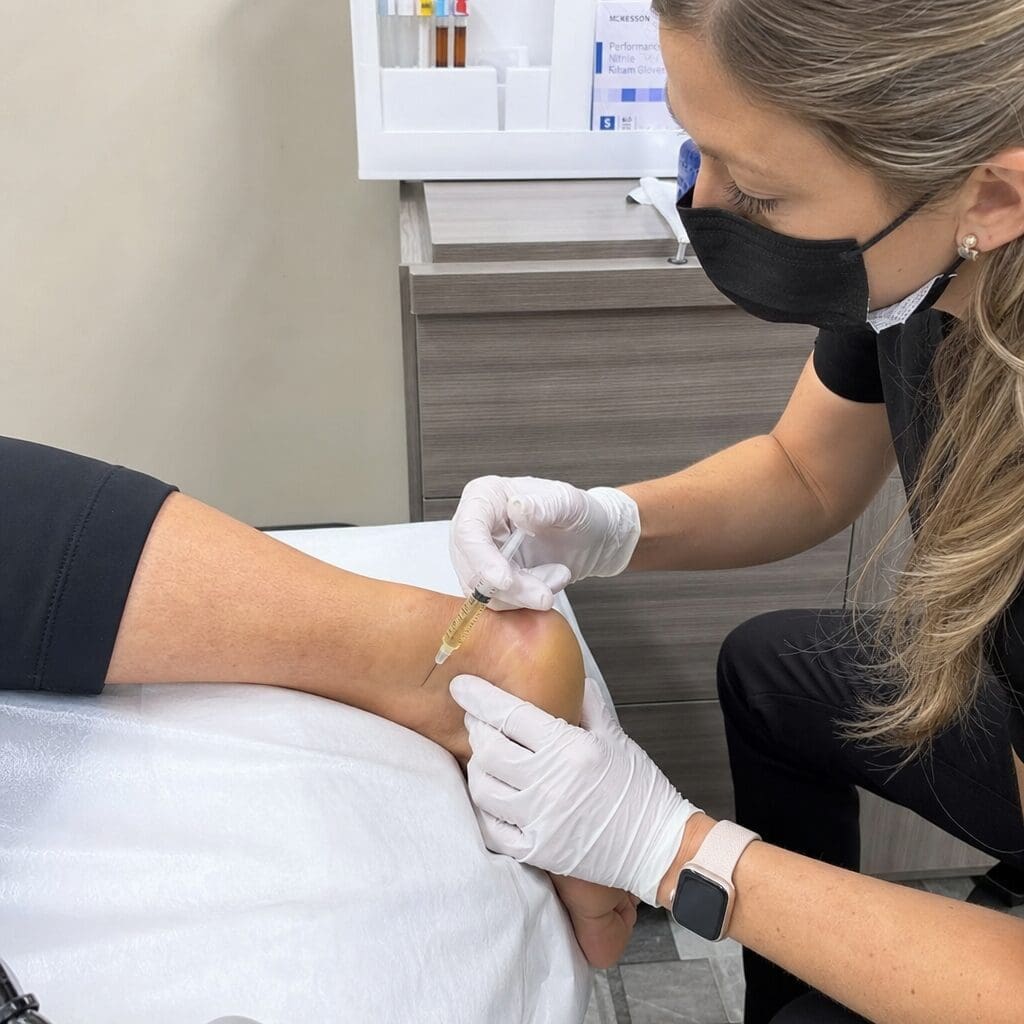
Patients often ask: “What is Prolo?” In our clinic, when we mention prolotherapy, we refer specifically to hypertonic dextrose injections mixed with local anesthetic for comfort. Typical mixtures in practice range widely; a common clinical teaching mixture for certain peri-tendinous or ligamentous targets may use dextrose concentrations substantially higher than physiologic, paired with lidocaine 1–2% for analgesia during administration. In the transcript snippet above, someone referenced “Dextrose fifty percent mixed with lidocaine two percent,” reflecting a colloquial description sometimes heard in clinical dialogues. In evidence-informed practice, we tailor concentration to tissue target, safety, and published guidance.
What prolotherapy aims to do:

  • Irritant-mediated signaling: Hypertonic dextrose acts as a controlled irritant, intended to stimulate local healing responses, promote fibroblast activity, and support collagen deposition in weakened connective tissues.
  • Stabilization of lax or painful sites: Often used for ligaments, entheses, and peri-tendinous structures with micro-instability or degenerative changes.
  • Pain modulation: Dextrose may have neuromodulatory properties; perineural dextrose injections have been studied for certain neuropathic pain patterns.

Where it fits in Achilles care:

  • Midportion Achilles tendinopathy and insertional cases are primarily treated with progressive loading. However, in select cases—particularly where paratendinous tissue pain is prominent, or there are associated ligamentous contributors—extratendinous prolotherapy may be considered as part of a broader plan.

Important note:

  • We do not inject directly into the Achilles tendon. Intratendinous injections risk further degeneration or rupture. Evidence-informed approaches target peri-tendinous or adjacent connective tissues when appropriate, and always under medical oversight.

Why boot use can accompany prolotherapy:

  • Following a procedure intended to activate local healing pathways, short-term load protection helps limit immediate strain, giving tissues a quieter environment to respond. A boot for the first week post-procedure may be advised, then gradually discontinued as loading resumes.

Safety and oversight:

  • Our Medical Director, Dr. Maria Guadalupe Cardenas, MD (NPI #1164426749; Texas MD License #J2933), evaluates systemic factors (diabetes, anticoagulation, infection risk), assures safe anesthetic use, and confirms appropriate candidates for prolotherapy. Her internal medicine oversight ensures that regenerative interventions align with patient comorbidities and medications.

Integrative Chiropractic Care: Biomechanics, Alignment, and Kinetic Chain Support

In my integrative practice, chiropractic care is not merely about adjustments; it is about restoring biomechanical integrity across the kinetic chain so upstream or downstream dysfunctions do not overload the Achilles.
Chiropractic contributions:

  • Foot and ankle mechanics: Address subtalar motion, midfoot stability, and first ray function to optimize dorsiflexion mechanics without excessive Achilles strain.
  • Pelvic and lumbar alignment: Pelvic obliquity or lumbar facet dysfunction can alter gait patterns and increase asymmetrical loading.
  • Thoracolumbar integration: Posture and spinal mobility influence stride length and cadence. Optimizing spinal motion can normalize energy transfer through the lower limb.
  • Soft tissue work: Myofascial release, instrument-assisted soft tissue mobilization, and targeted manual therapy can reduce myofascial guarding and improve fascial glide.

Why chiropractic integration matters:

  • Load distribution: Tendon load depends on whole-body movement. Correcting foot-to-hip alignment spreads forces more evenly.
  • Motor control: Adjustments can improve proprioceptive input, enhancing neuromuscular coordination.
  • Pain modulation: Spinal and peripheral joint interventions can affect nociceptive processing and reduce protective muscle co-contractions.

Clinical observations:

  • Many patients I document on Chiromed and discuss via my professional platforms show faster improvements when chiropractic and rehab are combined. The Achilles benefits when hip extension, ankle dorsiflexion, and foot stability operate in harmony.

Internal Medicine Oversight: Safety, Systems Biology, and Comorbidity Management

Our multidisciplinary model relies on medical direction to ensure every intervention is appropriate and safe. Dr. Maria Guadalupe Cardenas, MD (Board Certified in Internal Medicine), with over 40 years of experience, provides oversight for procedures and for patients with complex medical backgrounds.
Medical oversight includes:

  • Risk assessment: Diabetes, peripheral vascular disease, neuropathy, immunosuppression, and anticoagulant use affect tendon healing and procedure risk.
  • Medication review: NSAIDs, steroids, anticoagulants, and other medications can influence pain, bleeding risk, immune response, and repair.
  • Diagnostic clarity: Ruling out differential diagnoses (e.g., partial tears, retrocalcaneal bursitis, inflammatory arthropathies) with appropriate imaging or labs when indicated.
  • Procedure safety: Confirming candidacy for injections; selecting dextrose concentration; monitoring for adverse reactions; maintaining sterile technique standards.
  • Systemic optimization: Addressing nutrition, glycemic control, and vascular health to support connective tissue repair.

Why this matters:

  • Tendon recovery is not just local. Systemic health—metabolic factors, hormones, inflammation—affects the pace and quality of healing. Internal medicine oversight improves outcomes by aligning local care with whole-body needs.

Functional Medicine Integration: Nutrition, Metabolism, and Recovery

Functional medicine adds another layer: optimizing the biochemical environment that supports tendon repair and pain modulation. In our clinic, we combine chiropractic and medical oversight with functional medicine protocols tailored to individual needs.
Key functional considerations:

  • Glycemic control: Hyperglycemia impairs collagen cross-linking and increases glycation end-products that stiffen tissues maladaptively.
  • Protein adequacy: Collagen synthesis depends on adequate protein, vitamin C, copper, zinc, and specific amino acids like glycine and proline.
  • Omega-3 fatty acids: Support resolution-phase pathways that may help modulate pain and tissue response.
  • Micronutrient sufficiency: Vitamin D, magnesium, and B-vitamins support musculoskeletal function and neuromuscular control.
  • Inflammation modulation: Diet quality (whole foods, antioxidants) can lower chronic inflammatory tone that interferes with repair.

Clinical reasoning:

  • A tendon recovering under progressive load needs raw materials for remodeling. Functional medicine supplies these, while chiropractic alignment reduces unnecessary strain, and medical oversight ensures safe interventional choices.

Personal Injury and Occupational Considerations: Practical Constraints and Solutions

When patients are truck drivers or have jobs requiring long hours of driving or standing, visit frequency may be limited. The question, “Should we still do the boot if we can only be seen every other week?” appears often. My answer is a practical yes—with a plan.
Strategies for intermittent visits:

  • Boot schedule: First week consistent use, then taper based on pain and function, with remote guidance if needed.
  • Home program: Simple, clear isometrics, gentle mobility drills, and foot intrinsic activation that do not risk flares.
  • Telehealth check-ins: Brief remote reviews to adjust load and troubleshoot pain patterns.
  • Work ergonomics: Heel lifts in supportive shoes, breaks for calf circulation, avoiding high dorsiflexion angles that stress the tendon.
  • Documentation for personal injury cases: Thorough notes to support claims, compliance, and collaboration with legal or insurance teams.

Why this works:

  • Even with limited in-person care, a structured plan keeps healing on track. Boot use tempers acute pain; planned loading rebuilds capacity; clear guidance prevents setbacks.

Rehabilitation Roadmap: Detailed Protocols for Achilles Tendinopathy

I design rehab protocols to move patients from pain to resilience:
Phase 1: Calm the Pain and Protect the Tissue

  • Boot (as indicated): Use for the first week post-flare or post-procedure.
  • Isometric holds: 5 sets of 45-second mid-range calf holds, pain monitored.
  • Gentle mobility: Ankle ROM without pushing into pain; avoid high dorsiflexion in insertional cases.
  • Circulation: Micro-walks with boot; calf pumping to prevent stasis.

Why: Isometrics reduce pain via cortical and spinal mechanisms; limited motion protects healing tissues while preserving joint nutrition.
Phase 2: Build Capacity with Eccentrics and Isotonics

  • Eccentric heel drops: Midportion cases: straight-knee and bent-knee versions, 3 sets of 15 twice daily; insertional cases: partial range, no deep dorsiflexion.
  • Foot intrinsics: Short-foot exercises; toe yoga to improve medial longitudinal arch support.
  • Hip and core: Glute med/min strengthening; anti-rotation core drills to stabilize gait.
  • Progressive load: Gradual weight addition (e.g., backpack or dumbbells) as pain allows.

Why: Eccentrics drive collagen realignment and tendon stiffness improvements; foot-hip integration spreads load.
Phase 3: Restore Energy Storage and Return to Task

  • Low-amplitude plyometrics: Gentle pogo jumps, or double-leg hops with strict pain criteria.
  • Tempo work: Controlled cadence squats and lunges to coordinate the kinetic chain.
  • Task-specific drills: Step-downs, ramp walking for drivers; return-to-run progressions for athletes.

Why: Tendons must store and release energy efficiently for real-life activities. Controlled exposure rebuilds confidence and function.
Pain monitoring guidelines:

  • Acceptable pain: Mild discomfort during exercises that resolves within 24 hours.
  • Unacceptable pain: Sharp pain, swelling, or next-day stiffness that worsens; adjust load or revert to earlier phase.

Prolotherapy Protocols: Selection, Technique, and Follow-Up

How we decide on prolotherapy:

  • Indications: Persistent pain with clinical signs of ligamentous laxity, paratendinous irritation, or enthesopathic discomfort unresponsive to conservative care.
  • Contraindications: Active infection, uncontrolled diabetes, coagulopathy, allergy to local anesthetic, or patient preference against procedures.
  • Informed consent: Discuss benefits, alternatives (e.g., PRP, shockwave therapy, continued rehab), and risks.

Technique overview:

  • Target selection: Peri-tendinous or ligamentous structures where clinical exam reveals tenderness and laxity.
  • Solution: Hypertonic dextrose mixed with lidocaine for comfort; concentration tailored to tissue and safety guidance.
  • Sterility and precision: Mark anatomical landmarks; ultrasound guidance as appropriate; aspirate where indicated; inject small aliquots carefully.
  • Post-procedure: Boot for the first week if indicated; avoid NSAIDs to allow intended inflammatory-healing signaling; continue gentle isometrics without provoking pain.

Follow-up:

  • Re-evaluate in 2–4 weeks: Assess pain, function, tissue tenderness, and mechanical stability.
  • Rehab synchronization: Resume progressive loading phases calibrated to response.
  • Number of sessions: Varies; many patients benefit from 1–3 sessions, but decisions are individualized.

Clinical reasoning:

  • Prolotherapy is not a stand-alone solution. It is a supportive intervention within a system that includes chiropractic alignment, structured rehab, and medical safety oversight.

Evidence-Based Perspective: What Research Shows

Modern research on tendinopathy underscores progressive loading as the cornerstone of recovery. While evidence for prolotherapy varies by tissue and protocol, there is growing interest in dextrose’s role in supporting connective tissue repair in chronic pain and laxity contexts. We apply it thoughtfully and selectively, based on clinical response and patient goals.
Key evidence-informed themes:

  • Load-based rehab is the primary driver of tendon adaptation and pain reduction.
  • Short-term immobilization can reduce pain in acute flares, but prolonged rest is counterproductive.
  • Adjunct interventions such as shockwave therapy, PRP, or dextrose prolotherapy may benefit specific patients when integrated with loading programs.
  • Whole-chain biomechanics matter; upstream/downstream dysfunction must be corrected.

We keep current with leading researchers and clinical trials that refine tendinopathy management methods. Our approach remains dynamic, adapting to new data while maintaining safety and individualized planning.

Safety, Ethics, and Patient Education

In our clinic, medical ethics guide every interventional choice:

  • Transparency: We explain what prolotherapy is, what it is not, and set realistic expectations.
  • Shared decision-making: Patients choose among options with full information.
  • Outcome tracking: We measure pain, function, and activity return to ensure objective progress.

Patient education focus:

  • Understand the plan: Boot is temporary; loading is structured; injections are adjuncts.
  • Pain literacy: Not all pain means harm; controlled discomfort during rehab can be acceptable.
  • Self-care: Sleep, nutrition, and stress management affect recovery speed.

The Multidisciplinary Model at Injury Medical Clinic PA (Mission Plaza Injury Medical Clinic)

Our clinic in El Paso, Texas, is a multidisciplinary setup common in integrative or injury care clinics, where an MD provides medical direction alongside a chiropractor. Here’s how our team functions:

  • Medical Director and Collaborative Physician: Dr. Maria Guadalupe Cardenas, MD (Board Certified in Internal Medicine; NPI #1164426749; Texas MD License #J2933) oversees medical decisions, ensures procedural safety, manages comorbidities, and aligns systemic health with local care.
  • Chiropractic Lead: I provide integrative chiropractic care, manual therapy, biomechanical analysis, and rehab programming to restore movement integrity and tendon capacity.
  • Functional Medicine Integration: Nutrition, metabolic optimization, and lifestyle strategies support healing biology.
  • Personal Injury Services: Documentation, care coordination, and ergonomic solutions adapt the plan to work demands and legal processes.
  • Rehabilitation Specialists: Team members deliver day-to-day exercise progression, manual therapy, and patient coaching.

The synergy:

  • Every patient benefits from an aligned plan. Medical safety, chiropractic biomechanics, rehab progression, and functional biology converge to produce comprehensive care for Achilles tendinopathy and related joint instability.

Case-Based Illustrations: Practical Pathways

Case A: Midportion Achilles Tendinopathy in a Driver

  • Presentation: Sharp pain with first steps after rest, worsened by long driving.
  • Plan: Boot for 1 week, isometrics, then eccentric loading. Heel lifts temporarily during driving.
  • Prolotherapy: Considered for paratendinous tenderness; if performed, boot resumed for first post-procedure week.
  • Oversight: Dr. Cardenas reviews metabolic health and approves procedure.

Case B: Insertional Achilles Pain with Foot Mechanics Issues

  • Presentation: Pain at calcaneal insertion, aggravated by dorsiflexion.
  • Plan: Modified range eccentrics avoiding deep dorsiflexion; foot intrinsic strengthening; supportive footwear.
  • Chiropractic: Subtalar joint and midfoot mobilization; pelvic alignment.
  • Prolotherapy: Consider enthesis-adjacent support if persistent; internal medicine oversight ensures safety.

Case C: Recurrent Flares with Limited Visit Frequency

  • Presentation: Can only come every other week due to work.
  • Plan: Boot week one after flare; robust home program with telehealth check-ins; progressive loading tracked remotely.
  • Outcome: Symptom reduction with maintained work capacity; boot phased out, function restored.

Why “Do It” Still Matters: Consistency and Commitment

When patients ask, “Should we still do it?”—meaning should we still proceed with the plan even if constraints exist—I encourage consistent, realistic actions:

  • Short-term boot: Yes, it can be beneficial, especially in the first week after a flare or procedure.
  • Progressive loading: Essential—begin as soon as pain allows, escalating thoughtfully.
  • Adjunct options: Prolotherapy may help select cases; ensure medical oversight and align it with rehab.
  • Follow-up cadence: Even every other week can work if the home plan is clear and the team coordinates.

The treatment journey is stepwise. The boot is a tool, rehabilitation is the engine, and integrative care is the roadmap.

Frequently Asked Questions

What is prolotherapy exactly?

  • Prolotherapy generally refers to injections that use an irritant solution—often hypertonic dextrose—to stimulate local healing. It is commonly mixed with lidocaine to reduce injection pain. Concentrations vary; we tailor them for safety and tissue targets under medical oversight.

Does a boot weaken the tendon?

  • Prolonged immobilization can reduce capacity. However, short-term use in acute flares or post-procedure phases provides protective benefit. We quickly transition to loading to prevent deconditioning.

Can I keep working while wearing a boot?

  • Often yes. We adjust work ergonomics and advise supportive footwear. The boot reduces pain while you carry out essential tasks.

Is eccentric loading necessary?

  • For midportion Achilles tendinopathy, eccentric loading is strongly supported for capacity-building. For insertional cases, we modify range to avoid excessive compression.

How does chiropractic care help?

  • Chiropractic care optimizes alignment and movement, reducing excessive load on the Achilles. Manual therapy and adjustments improve kinetic chain function and pain modulation.

Who ensures injection safety?

  • Our Medical Director, Dr. Maria Guadalupe Cardenas, MD, provides medical oversight, evaluates systemic risks, and confirms procedural safety.

What if I have diabetes or take blood thinners?

  • Internal medicine oversight is crucial. We adjust plans accordingly, monitor labs, and make procedural decisions based on individualized risk.

Closing Perspective: Integrated Healing for Lasting Results

The journey from Achilles pain to confident movement requires an integrated plan. In our clinic, we combine:

  • Chiropractic biomechanics to correct load distribution,
  • Medical oversight to ensure safe interventions,
  • Functional medicine to optimize biological repair,
  • Rehabilitation to rebuild tendon capacity,
  • Personal injury care to adapt the plan to real work demands.

This interdisciplinary pathway delivers safer, faster, and more reliable outcomes for patients with Achilles tendinopathy and related joint instability. If your visits are limited to every other week, we can still “do it” and do it well: boot early if needed, load progressively, consider prolotherapy when appropriate, and maintain consistent teamwork.
For more clinical insights and updates, visit:

References

SEO tags: Achilles tendinopathy, dextrose prolotherapy, chiropractic care, internal medicine oversight, Mission Plaza Injury Medical Clinic, Injury Medical Clinic PA, El Paso chiropractor, boot immobilization, tendon rehabilitation, functional medicine, integrative care, personal injury clinic, Dr. Maria Guadalupe Cardenas MD, Dr. Alex Jimenez DC

Integrative Platelet-Rich Plasma Care for Scalp, Joint, and Skin

Integrative Platelet-Rich Plasma Care for Scalp, Joint, and Skin

Integrative Platelet-Rich Plasma Care for Scalp, Joint, and Skin

A Practical, Evidence-Based Guide from the Procedure Room

Abstract

In this educational post, I share a first-person, inside-the-room perspective on how our team prepares and delivers platelet-rich plasma (PRP) and peptide-enhanced therapies for scalp health, joints, and skin rejuvenation—integrated with chiropractic, rehabilitation, and functional medicine principles. I explain the science behind PRP fractionation, gel separators, and sterility; why contact with the separator matters; and how we combine precise technique with patient-centered comfort strategies. I also describe how Dr. Maria Guadalupe Cardenas, MD (Board Certified in Internal Medicine; NPI #1164426749; Texas License #J2933) serves as Medical Director and Collaborative Physician at Injury Medical Clinic PA (Mission Plaza Injury Medical Clinic) in El Paso, Texas, working alongside me, Dr. Alexander (Alex) Jimenez, DC, APRN, FNP-BC, CFMP, IFMCP, ATN, CCST, to provide a multidisciplinary care model that integrates chiropractic care, internal medicine oversight, functional medicine, rehabilitation, and personal injury services.

You will learn:

  • What PRP is and why separator gel contact matters
  • How we handle tubes, air pockets, and plasma layers to maintain quality
  • How peptides and topical carriers can complement PRP
  • What patients typically feel during scalp treatments (and why)
  • How integrative chiropractic care coordinates with medical oversight, functional medicine, and rehabilitation to optimize outcomes
  • The physiologic mechanisms behind PRP for musculoskeletal and skin/scalp applications
  • Clinical observations from my practice regarding outcomes and best practices

Throughout, I highlight key terms, summarize recent research using modern evidence-based methods, and explain clinical reasoning so the “why” is as clear as the “how.”


Integrative PRP and Peptide Therapy: A First-Person Walkthrough

When I step into the procedure room to prepare platelet-rich plasma (PRP), I’m focused on two things: preserving the biologic integrity of the sample and ensuring the patient’s experience is calm, informed, and comfortable. Our team’s back-and-forth—confirming tube labeling, separator position, and plasma depth—reflects the real-world vigilance that high-quality PRP requires.

Key steps I emphasize during PRP prep

  • Clear labeling and allocation: Each tube is designated for a specific target (e.g., ankle, knee, hip, scalp, microneedling). This ensures dosing consistency and avoids cross-use.
  • Attention to the separator gel: We verify that the separator gel is properly positioned after centrifugation, and we keep the collection needle tip from touching it. Even “just a teeny, tiny” contact can mix layers and reduce PRP quality.
  • Air pocket awareness: When aspirating the plasma, I maintain a minor air interface in the syringe to prevent fluid turbulence and keep the tip away from the gel.
  • Fraction control: We access the platelet-rich layer just above the buffy coat while minimizing contamination from red cells or separator gel.
  • Patient-centered handling: We narrate each step in plain language, respond to sensations (pressure, tension), and integrate gentle scalp massage when appropriate to reduce sympathetically-mediated discomfort.

These details may sound small, but together they protect the bioactive payload—the growth factors and cytokines that make PRP a potent, autologous tool.


Why Separator Gel Contact Matters: The Physiology and Physics

The separator gel is designed to create discrete layers after centrifugation: red cells below, a gel barrier, and plasma above. The platelet-rich fraction sits near the buffy coat. If the collection tip contacts the gel, two things can happen:

  • Back-mixing: As my colleague said in the room, plasma components can “leak back” across the boundary. This dilutes the platelet concentration and risks contaminating the PRP with red cells or gel residues.
  • Re-spin necessity: We may need to re-centrifuge to re-establish separation, which risks platelet activation at the wrong time, reducing the efficacy of the injection.

Physiologically, the effectiveness of PRP hinges on platelet alpha granules releasing growth factors such as PDGF, TGF-β, VEGF, IGF-1, and EGF at the target tissue. Maintaining an optimal platelet concentration (often 3–5x baseline, depending on protocol) and minimizing pre-activation during handling enhances the burst and sustained release of these factors at the desired site, promoting:

  • Angiogenesis and microvascular support (VEGF)
  • Chemotaxis and fibroblast proliferation (PDGF)
  • Collagen deposition and matrix remodeling (TGF-β)
  • Tenocyte and chondrocyte support in musculoskeletal tissue (IGF-1)
  • Keratinocyte and dermal regeneration in skin/scalp (EGF)

Modern evidence-based methods—ranging from absorbance-based platelet counts to flow cytometry and standardized classification systems for PRP composition—consistently show that handling variability can affect outcomes (Dohan Ehrenfest et al., 2014; Mautner et al., 2015).


Patient Sensations During Scalp PRP: What They Feel and Why

When I inject PRP into the scalp, patients often describe transient sensations:

  • “Head in a vice” or local tension: This is due to the galeal aponeurotica and scalp fascia briefly distending with injected volume. Local nociceptors respond to pressure.
  • “Tension headache” quality: Short-lived, typically minutes, as tissue pressure equilibrates and autonomic tone settles.
  • Rapid resolution: Gentle scalp massage and parasympathetic engagement reduce sympathetic arousal and help disperse fluid micro-gradients.

We frequently add a topical peptide layer post-PRP. Massaging in the peptides over recently treated tissue taps into mechanotransduction—light pressure can improve microcirculatory spread and may help with nociceptive modulation through gate control mechanisms. Patients often say, “That’s the best part,” because the soothing element reframes the experience and supports adherence to care.


Adding Peptides and Topical Carriers: Synergy with PRP

In the room, we discussed mixing a portion of autologous PRP into a carrier cream formulated to maintain bioactivity—colleagues referenced a “Pro-Cell” moisturizing carrier designed to hold PRP for cosmetic application. The rationale:

  • Barrier-compatible vehicle: A well-formulated cream can maintain moisture and protect growth factors at the skin surface long enough to interact with microchannels left by microneedling.
  • Microneedling synergy: PRP plus microneedling creates a microenvironment where growth factors enhance keratinocyte proliferation, dermal fibroblast activation, and collagen/elastin remodeling.
  • Peptide augmentation: Topical peptides (e.g., copper peptides, signaling peptides) may complement PRP by supporting matrix integrity, angiogenesis, and cell signaling pathways.

We use only carriers known to be compatible with autologous biologics and discuss expectations: topical PRP is an adjunct, not a substitute for injected PRP, where deeper regenerative goals are targeted.


PRP for Joints and Soft Tissue: Mechanisms that Matter

On the musculoskeletal side, we commonly allocate full tubes for joints—ankle, knee, hip—and occasionally for small joints that need targeted attention. The goal is to deliver a platelet concentration appropriate to the tissue type and pathology (e.g., tendinopathy vs. mild osteoarthritis).

Physiologic mechanisms

  • Modulated inflammation: PRP can shift the local milieu from catabolic to anabolic by down-regulating NF-κB pathways and promoting anti-inflammatory cytokines (e.g., IL-10) in some formulations.
  • Cellular recruitment: PDGF attracts progenitor cells and stimulates fibroblasts and tenocytes; TGF-β drives matrix deposition.
  • Cartilage support: While not recreating hyaline cartilage, PRP may improve symptoms and function in early osteoarthritis by encouraging chondrocyte anabolism and modulating synovial inflammation (Laudy et al., 2015; Filardo et al., 2017).
  • Tendon and ligament repair: Enhanced collagen synthesis and crosslinking support improved tensile properties over time (Mishra et al., 2014).

Outcome optimization depends on leukocyte content (LP-PRP vs. LR-PRP), activation timing, and injection technique. For intra-articular applications, we typically prefer leukocyte-poor PRP to minimize post-injection flare, while leukocyte-rich PRP may be considered for some tendinopathies where a stronger inflammatory “reset” is useful.


Integrative Chiropractic Care in a Multidisciplinary PRP Framework

I practice as a chiropractor and family nurse practitioner within a comprehensive, medically supervised environment. Dr. Maria Guadalupe Cardenas, MD (NPI #1164426749; Texas License #J2933), serves as Medical Director and Collaborative Physician at Injury Medical Clinic PA (Mission Plaza Injury Medical Clinic) in El Paso, Texas. Our model is multidisciplinary—common in integrative and injury care—blending medical oversight with chiropractic, functional medicine, rehabilitation, and personal injury care.

How we integrate care

  • Medical direction and safety: Dr. Cardenas provides oversight on indications, contraindications, and medication management. She ensures adherence to standards for biologics, sterile technique, and emergency preparedness.
  • Chiropractic precision and biomechanics: I evaluate regional interdependence, joint mechanics, and motor control. By restoring segmental mobility and optimizing kinematic chains, we reduce aberrant loading that can undermine PRP’s regenerative intent.
  • Functional medicine: We assess metabolic drivers of impaired healing—glycemic control, micronutrient status (e.g., vitamin D, zinc), inflammatory load, sleep, and stress. Good nutrition and lifestyle modulation support collagen synthesis, mitochondrial function, and tissue remodeling.
  • Rehabilitation: We implement graded loading protocols, isometrics to eccentrics, and neuromuscular re-education to align mechanical signals with biologic repair timelines.
  • Personal injury care: For post-collision or workplace injuries, we coordinate imaging, documentation, and return-to-function plans that align medical necessity with ethical, evidence-based practice.

This collaboration means patients receive comprehensive reasoning behind each step—from lab draw to last rep.


Clinical Workflow: Reasoning Behind Each Protocol

  1. Assessment and stratification
    • We differentiate indication (e.g., tendinopathy vs. mild OA vs. hair thinning vs. skin rejuvenation), set goals, and plan volume and frequency.
    • We evaluate systemic factors (A1c, lipid profile, inflammatory markers) to optimize the terrain for healing.
  2. PRP preparation
    • Use sterile tubes with separator gel appropriate to the protocol.
    • Centrifuge to achieve the desired platelet concentration. Avoid over-activation.
    • No gel contact: Maintain a clean interface. If contact occurs and layers mix, consider re-spin or discard to maintain quality.
  3. Injection technique
    • Ultrasound guidance for joints/tendons minimizes off-target placement and reduces post-procedural flare.
    • For scalp, distribute small aliquots across regions of thinning; consider nerve block when appropriate for comfort, though many patients manage well with topical and massage support.
  4. Adjuncts
    • Topical peptide cream with PRP for microneedling sessions, when indicated, to enhance epidermal and dermal regeneration.
    • Chiropractic adjustments/mobilization to normalize joint and soft-tissue mechanics, reducing nociceptive drive and improving movement quality.
  5. Rehabilitation and loading
    • Protect the site in the acute inflammatory phase (24–72 hours), then transition to subacute loading targeting collagen alignment and capacity building.
    • Incorporate isometrics early for tendinopathy, progressing to eccentric/concentric as pain allows.
  6. Follow-up and metrics
    • Track patient-reported outcomes (pain scales, function indices), objective measures (ROM, strength), and where appropriate, trichoscopy for scalp density and microneedling outcomes.

Patient Experience: Comfort Measures that Matter

During scalp injections, we coach patients through breathing and normalize expected sensations. A patient recently told me she felt “more scalp than hair up here” and initially experienced a fleeting “vice-like” tension. We explained that this is temporary pressure within superficial fascial planes and not a true headache. Within minutes, the discomfort subsided—consistent with our typical experience.

  • Why it resolves quickly: The scalp’s rich vascularization redistributes fluid while the autonomic nervous system resets. Gentle massage augments fluid kinetics and reduces peripheral nociception.
  • Nerve blocks when needed: For patients with heightened sensitivity, small peripheral nerve blocks can blunt afferent signaling, making the session smoother without affecting PRP efficacy.

In joint cases, patients may feel pressure or mild post-injection soreness. We recommend relative rest for 24–48 hours, ice as needed, and resume graded activity according to the tissue and plan.


Evidence Base: What Modern Research Shows

  • PRP for knee OA: Meta-analyses suggest PRP can improve pain and function versus hyaluronic acid or saline in mild to moderate osteoarthritis, especially in patients with lower BMI and earlier-stage disease (Belk et al., 2021).
  • Tendinopathy: Evidence supports PRP in selected chronic tendinopathies (e.g., lateral epicondylitis, some Achilles and patellar cases), with protocols tailored to tissue and leukocyte content (Mishra et al., 2014).
  • Scalp/hair: PRP has demonstrated increases in hair density and thickness in androgenetic alopecia adjunctive to standard care, with repeated sessions optimizing outcomes (Gupta & Carviel, 2022).
  • Skin/microneedling: PRP applied with microneedling enhances collagen remodeling and accelerates recovery, improving texture and scar appearance (Alam et al., 2018).

Across studies, technique fidelity—including proper centrifugation, concentration targeting, and avoidance of contamination—correlates with outcomes. This underscores why we obsess over details like no tip-to-gel contact and air pocket management.


Why Integrative Chiropractic Fits: Biomechanics Meet Biology

As a chiropractor, I see PRP not as a standalone solution but as a biologic accelerator that thrives in the right mechanical environment. Consider:

  • Joint centration: If a knee remains mal-tracking due to proximal hip weakness or foot mechanics, repeated microtrauma persists. Chiropractic assessments uncover these drivers; targeted manual therapy and corrective exercise reduce aberrant load.
  • Fascial continuity: Pain and strain travel through myofascial lines. Addressing thoracolumbar junction stiffness or pelvic torsion can unload distal tendons, allowing PRP-mediated remodeling to consolidate.
  • Neuromuscular control: Adjustments and motor control drills refine proprioception and muscle recruitment, reducing shear forces that would otherwise disrupt early collagen matrix.

The result: PRP’s biologic work gains a stable foundation, improving durability of results.


Safety, Oversight, and Ethical Practice

Dr. Cardenas’ medical leadership ensures that:

  • Patients are screened for contraindications (e.g., platelet disorders, active infections, anticoagulation concerns).
  • Informed consent covers expected benefits, alternatives, and risks.
  • Sterile technique is standardized, and contingency protocols are in place.
  • Documentation meets medical and legal standards, especially in personal injury contexts.

This framework protects patients and supports reproducible, evidence-informed care.


Practical Tips We Use Every Day

  • Keep the syringe tip superficial within the plasma; never let it touch the gel.
  • Maintain a small air gap in the syringe to reduce turbulence and preserve layer integrity.
  • If the layers mix, don’t force it. Re-spin or consider re-draw depending on the scenario.
  • Match PRP composition to target tissue: LP-PRP for joints; consider LR-PRP for certain tendons.
  • Use ultrasound guidance for accuracy and safety.
  • After scalp PRP, apply peptide-enriched carrier when indicated and massage lightly.
  • Align rehab progressions with tissue healing timelines; avoid premature high-load activities.

Clinical Observations from My Practice

Based on patterns I’ve discussed publicly and in professional forums, as well as what we routinely document in the clinic:

  • Patients with optimized metabolic health (e.g., A1c < 5.7–6.0, adequate vitamin D, omega-3 index) demonstrate more consistent PRP responses.
  • In knee OA, two to three LP-PRP sessions spaced 4–6 weeks apart often yield clinically meaningful improvements in pain and function for 6–12 months, especially when paired with gait retraining and weight management.
  • For lateral epicondylitis, a single LR-PRP or staged injections with structured eccentric loading can reduce pain within weeks, with maturation over 3–6 months.
  • Scalp PRP combined with home microneedling and peptide topicals shows visible improvements in hair density in 3–4 months for many, with best outcomes when DHT and inflammatory factors are co-managed medically as needed.

These observations align with published literature while acknowledging individual variability—a core reason we tailor care.


The Team Behind the Care

  • Medical Director & Collaborative Physician: Dr. Maria Guadalupe Cardenas, MD (Board Certified in Internal Medicine; NPI #1164426749; Texas MD License #J2933), directing medical safety, oversight, and clinical protocols.
  • Chiropractic and Functional Care: Dr. Alexander (Alex) Jimenez, DC, APRN, FNP-BC, CFMP, IFMCP, ATN, CCST, integrating biomechanics, manual therapy, functional medicine, and rehabilitation.
  • Clinic: Injury Medical Clinic PA (Mission Plaza Injury Medical Clinic), El Paso, Texas—delivering multidisciplinary, integrative solutions for musculoskeletal health, skin/scalp regeneration, and personal injury recovery.

Takeaways for Patients and Clinicians

  • Quality handling equals quality outcomes: Protect the platelet payload by respecting the physics of separation.
  • Integrate for impact: Combine PRP with chiropractic, rehab, and metabolic optimization for durable results.
  • Individualize care: Choose PRP composition and protocols based on tissue type and patient factors.
  • Comfort is part of care: Anticipate sensations; smooth the experience with communication, massage, and selective nerve blocks.
  • Measure and iterate: Track outcomes and refine protocols with evidence and clinical feedback.

If you are considering PRP for joints, tendons, scalp, or skin, a multidisciplinary approach with medical oversight and integrative chiropractic care can help you reach the best version of your health—safely, methodically, and compassionately.


References

Musculoskeletal Health Innovations for Regenerative Medicine

Explore the future of regenerative medicine for musculoskeletal health and its potential to transform recovery and healing.

Abstract

Welcome to an evidence-based exploration of integrative regenerative musculoskeletal care grounded in modern physiology, clinical science, and practical, patient-centered protocols. I am Dr. Alexander Jimenez, DC, APRN, FNP-BC, CFMP, IFMCP, ATN, CCST. In this educational post, I present a unified, first-person narrative synthesizing leading-edge research on orthobiologics, human cellular and tissue products (HCT/Ps), perinatal secretomes, mesenchymal signaling cells, and needleless regenerative modalities, with a clear emphasis on why and how integrative chiropractic care enhances outcomes. I explain the molecular underpinnings of tissue breakdown and repair, immunomodulation, neural sensitization, angiogenesis, collagen remodeling, and tensegrity. I detail practical imaging decision-making, procedural safety, dosing logic, patient psychology, rehabilitation progressions, and functional medicine integration for sustained recovery.
This post introduces our multidisciplinary clinical model at Injury Medical Clinic PA (Mission Plaza Injury Medical Clinic) in El Paso, Texas, where our Medical Director and Collaborative Physician, Dr. Maria Guadalupe Cardenas, MD (Board Certified in Internal Medicine; NPI #1164426749; Texas MD License #J2933), provides medical oversight that aligns internal medicine with chiropractic, functional medicine, personal injury care, rehabilitation, allergy testing and immunotherapy, pelvic floor therapies, and systems-based protocols. Together, we organize care to treat the root causes of pain and dysfunction while restoring movement, reducing inflammation, and building resilient function.
You will learn:

  • Why traditional symptom-focused care often fails in chronic musculoskeletal conditions and how regenerative science reframes healing by shifting the microenvironment from breakdown to repair
  • How mesenchymal signaling cells, exosomes, growth factors, cytokines, hyaluronic acid, and mRNA blueprints orchestrate antifibrotic, immunomodulatory, angiogenic, and neuro-calming cascades
  • Why umbilical cord-derived orthobiologics and perinatal secretomes (including menstrual stem cell secretomes) offer unique, epigenetically youthful signals that complement precise, integrative chiropractic rehabilitation
  • How to build “fertile soil” for regenerative success by correcting biomechanical tensegrity, optimizing neurological function, and sequencing targeted rehabilitation
  • How needleless modalities (shockwave, PEMF, red light therapy, peptides) and lifestyle programs empower healing where injections are not feasible or preferred
  • When and why imaging is essential, how to interpret findings in context, and how to choose ethical, patient-centered plans that prioritize safety and outcomes
  • How pelvic floor HIFEM technology, allergy testing and immunotherapy, and gut-brain axis functional medicine strategies integrate with musculoskeletal care
  • How communication, patient education, and collaborative protocols create certainty, reduce delays, and improve acceptance and adherence for complete solutions.

Introducing Our Multidisciplinary Model: Internal Medicine Oversight Meets Integrative Chiropractic Care

I practice at Injury Medical Clinic PA (Mission Plaza Injury Medical Clinic) in El Paso, Texas, where our multidisciplinary model aligns chiropractic care, internal medicine oversight, functional medicine, personal injury care, rehabilitation, and regenerative adjuncts into coherent clinical pathways. Our Medical Director and Collaborative Physician, Dr. Maria Guadalupe Cardenas, MD, is Board Certified in Internal Medicine (NPI #1164426749; Texas MD License #J2933) with over four decades of experience. She ensures medical direction, safety, diagnostic clarity, and pharmacologic coherence for complex cases, anticoagulation management, oncology histories, systemic inflammatory diseases, infections, and comorbidities.
How we integrate:

  • Chiropractic care (Dr. Jimenez)
  • Biomechanical assessment, spinal and extremity adjustments, proprioceptive retraining, motor control restoration, and movement economy optimization
  • Internal medicine oversight (Dr. Cardenas)
  • Medical evaluation, lab ordering/interpretation, risk stratification, medication reconciliation, imaging pathways, and specialist referral coordination
  • Functional medicine
  • Systems biology for inflammation, insulin resistance, gut dysbiosis, micronutrient deficiencies, sleep disruption, and neuroimmune signaling
  • Personal injury care
  • Documentation, mechanism analysis, rehabilitation staging, return-to-function metrics, and legal/insurance communications
  • Rehabilitation
  • Progressive loading, sensorimotor training, endurance building, balance and proprioception, and functional integration
  • Regenerative modalities
  • Orthobiologics/HCT/Ps where appropriate under medical oversight, plus needleless regenerative tools (shockwave, PEMF, red light therapy) and peptides
  • Allergy testing and immunotherapy
  • Scratch testing workflows, safety protocols, subcutaneous (SCIT) and sublingual (SLIT) immunotherapy, and annual retesting under medical guidance
  • Pelvic floor therapies
  • HIFEM supramaximal contraction protocols, neuromuscular re-education, and integration with chiropractic pelvic-lumbar mechanics
  • Patient education and clinical communication
  • Clear reports of findings, structured options, expectation setting, home programs, lifestyle coaching, and outcome measurements

This multidisciplinary setup is common in integrative or injury care clinics, with an MD providing medical direction alongside a chiropractor to ensure comprehensive, safe, and effective care.

Navigating the Broken Healing Cycle: Why Chronic Pain Persists

Chronic musculoskeletal pain is rarely the result of a single insult. It’s the culmination of intertwined failures across structural, biochemical, neurological, and behavioral domains. To design effective care, I disentangle the drivers and match treatments to physiology.
Key drivers:

  • Tissue damage
  • Microtears, fraying, articular cartilage degeneration, compromised ligament/tendon integrity
  • Chemical irritation
  • Pro-inflammatory cytokines (e.g., TNF-α, IL-1β), acidotic microenvironments, enzymatic degradation of extracellular matrix
  • Mechanical stress
  • Joint instability, aberrant gait or movement patterns, maldistributed forces, shearing and compressive overload
  • Neural sensitization
  • Peripheral nociceptor upregulation, “angry” free nerve endings firing continuously, dorsal horn wind-up, central sensitization increasing pain output
  • Lifestyle and systemic factors
  • Poor sleep, nutrition imbalances, metabolic stress, psychosocial load, smoking, inactivity
  • Age-related decline
  • Reduced native stem cell pool and vigor, decreased reparative signaling, diminished angiogenic responses, slower collagen remodeling
  • Why traditional symptom management often falls short:
  • NSAIDs and steroids
  • Useful for acute severe pain but can impair cartilage health (chondrotoxicity), weaken tendons/ligaments, disrupt gut barrier, and fail to resolve root mechanical and immune drivers
  • One-off procedures
  • Arthroscopic “clean-outs” for degenerative arthritis show limited long-term benefit compared to sham in many cases; they don’t fix ligamentous instability or neuromuscular timing.
  • Over-reliance on per-visit care
  • Transactional care undercuts structured, staged restoration needed to convert short-term relief into durable function

Our approach builds capacity for healing by leveraging orthobiologic mechanisms, optimizing the tissue microenvironment, and restoring biomechanical tensegrity, neuromuscular control, and functional movement.

Orthobiologics and Human Cellular Tissue Products: Re-engineering Repair

I prefer precise terms—orthobiologics, HCT/Ps, mesenchymal signaling cells (MSCs)—to avoid misconceptions about “stem cells” popularized by hype. The core goal is tissue engineering: replace, remodel, or regenerate cells and extracellular matrix to recover function.
What these biologics do:

  • Anti-inflammatory cytokine modulation
  • Lower TNF-α, IL-1β; raise IL-10, IL-1Ra; temper M1 macrophage dominance and promote M2 macrophage healing phenotypes
  • Immunomodulatory effects
  • Reset dysregulated immune loops, recruit and orchestrate reparative cells, reduce chronic demolition signals, and favor reconstruction signals.
  • Neurotrophic benefits
  • Calm hyperexcitable nerve endings, reduce aberrant firing, improve local pain signaling, and enable stable motor recruitment patterns
  • Tissue regeneration and remodeling
  • Five stages:
  • Homing signal (paracrine signaling)
  • Homeostatic signals summon endogenous progenitors from marrow, adipose, and other reservoirs.
  • Proliferation
  • Expand reparative cell pools to handle local demand
  • Differentiation
  • Guide cells via mRNA and paracrine direction into chondrocytes, tenocytes, osteoblasts, or fibroblasts as needed
  • Angiogenesis
  • Establish oxygen/nutrient delivery via new vasculature to support metabolically demanding repair phases.
  • Remodeling
  • Align collagen fibers under graded mechanical load, crosslink for tensile strength, and transition from immature, disorganized matrix to resilient tissue
  • Critical caveat:
  • Time matters
  • Anti-inflammatory pain relief may arrive in weeks, but structural remodeling requires months to a year. Patient education—”feeling good is not equal to being healed”—is vital to prevent premature load surges that disrupt delicate remodeling.

The Power of Youthful Signals: Umbilical Cord Tissue and Perinatal Secretomes

Source matters. Autologous bone marrow or adipose harvesting is viable but constrained by invasiveness and age-related decline in cellular vigor.
Age-related decline (Caplan’s findings):

  • At birth: ~1 in 10,000 marrow cells are MSCs
  • Teen years: ~1 in 100,000
  • Age 50: ~1 in 400,000
  • Age 80: ~1 in 2,000,000
  • Why perinatal sources:
  • Epigenetic youth
  • Day-one signaling vigor supports robust paracrine orchestration
  • Safety and ethics
  • Not fetal tissue; post-full-term birth umbilical cord and placenta otherwise discarded; donors rigorously screened beyond blood standards
  • Rich biologic cocktail
  • MSCs (medicinal signaling cells), growth factors (FGF, PDGF, TGF-β family), anti-inflammatory cytokines (IL-10, IL-1Ra), hyaluronic acid (HA), mRNA blueprints, exosomes, amino acids, peptides, carbohydrates
  • Perinatal secretomes and menstrual stem cell-based secretomes (MenSCs):
  • The endometrium’s antifibrotic program
  • Monthly sterile inflammation, hypoxia, ECM breakdown, and re-epithelialization without scar formation—an intrinsic antifibrotic blueprint
  • Mechanistic insights (Cuenca et al., 2018; Evans et al., 2019)
  • MenSCs show elevated baseline mRNA for elastin (~13x), MMP-3 (~22x), and PDGF (~800x vs. umbilical cord MSCs), converging with superior collagen organization and rapid epithelial closure in wound models
  • Clinical signals in severe intrauterine adhesions (Asherman’s syndrome)
  • Tan et al. (2016) and Ma et al. (2021) found endometrial thickness gains to ~7–7.5 mm and natural pregnancies (~43%) in otherwise refractory populations after intrauterine MenSC infusions (autologous protocols)
  • ARDS trials with cell-free secretomes
  • Double-blind RCT in severe COVID-19 ARDS: intravenous menstrual stem cell secretome improved survival (~57% vs. ~28%) and reduced CRP (~77%)—powerful systemic anti-inflammatory signals consistent with immunomodulatory and macrophage polarization mechanisms
  • Additional domains
  • Ovarian function restoration in premature ovarian failure cohorts; MS intrathecal safety signals without immunologic reactions; preclinical liver antifibrotic benefits; corneal and dermal wound closure acceleration
  • Why integrative chiropractic care matters here:
  • Biomechanics + biology
  • Regenerative signals thrive when biomechanical tensegrity and neurological control reduce pathologic shear, compression, and inflammatory microtrauma. Adjustments, decompression, and targeted rehabilitation prepare “fertile soil” for the “seed” of biologics.
  • References:
  • Adult mesenchymal stem cells for tissue engineering versus regenerative medicine (Caplan, 2007)
  • The MSC: An injury drugstore (Caplan & Correa, 2011)
  • The reparative activities of menstrual-versus-bone marrow-mesenchymal stem cells in experimental cutaneous wounds (Cuenca et al., 2018)
  • The potential of menstrual blood-derived mesenchymal stromal cells in regenerative medicine (Evans et al., 2019)
  • Autologous menstrual blood-derived stromal cells transplantation for severe Asherman’s syndrome (Tan et al., 2016)
  • Efficacy of menstrual blood-derived stromal cell transplantation for restoring endometrial receptivity (Ma et al., 2021)
  • Mechanisms of mesenchymal stem/stromal cell function (Spees et al., 2016)

Building Fertile Soil: Integrative Chiropractic Care, Biomechanics, and Tensegrity

Orthobiologics can lower pain early through immunomodulation, but durable results hinge on restoring structural integrity and neuromuscular control. Chiropractic care sets the biomechanical and neurological stage.
Three pillars:

  • Restoring structural and biomechanical integrity
  • Chiropractic adjustments to normalize joint mechanics across kinetic chains (SI joints, lumbar/thoracic spine, hips, ankles), spinal decompression for discogenic and radicular relief, redistribution of forces to reduce abnormal stress on healing tissues
  • Optimizing neurological function
  • Correcting subluxations to improve afferent signaling and efferent motor control, enhancing proprioception, reflexive stabilization, and sensorimotor integration
  • Targeted rehabilitation and functional movement
  • Strengthen weak links, lengthen tight tissues, re-educate movement patterns, transition from relief to resilience via progressive load and motor learning
  • Why this matters:
  • Cabinet door analogy (joint instability)
  • Loose ligament “hinges” create wobble and destructive shear—chiropractic realigns the door; regenerative injections tighten the hinges; rehab retrains smoother motion to prevent recurrence.
  • Ligamentous instability and soft tissue competence
  • Iliolumbar and SI ligament tenderness often drive “old man noise” stiffness—diagnostic lidocaine challenge can confirm pain generators; prolotherapy/PRP/cellular signals target ligamentous integrity; adjustments “hold” better with stronger connective tissues
  • Knee as a responsive joint
  • Hinged arthrokinematics, superficial accessibility, multi-target injection plans (meniscal tears, MCL laxity, intra-articular inflammation), plus rehab for pes anserine bursa/tendons; adjustments coordinate tibiofemoral kinetics

Needleless Regenerative Strategies: When Injections Are Not Feasible

Not all patients can or wish to undergo injections. Needleless modalities can induce meaningful regenerative signaling through mechanotransduction, bioenergetics, neuromodulation, and tissue remodeling.
Key modalities:

  • Shockwave therapy (radial/focused)
  • Mechanotransduction triggers collagen synthesis, neovascularization, nociceptor modulation; grid mapping and energy titration to tendon footprints; synergistic with eccentrics and progressive loading.
  • Pulsed Electromagnetic Field (PEMF)
  • Influences ion channels, mitochondrial ATP generation, calcium signaling, and inflammatory cascades (NF-κB); supports ligament laxity and post-exertional recovery
  • Red light therapy (photobiomodulation)
  • Cytochrome c oxidase modulation, ATP upregulation, reduced ROS, enhanced microcirculation; complements pain modulation and repair
  • Peptides (e.g., BPC-157, TB-500)
  • Angiogenesis, fibroblast migration, collagen synthesis; actin modulation, cell migration; applied under medical oversight for safety and appropriateness
  • Functional nutrition and anti-inflammatory support
  • Eicosanoid balance, oxidative stress reduction, glycemic control, collagen precursors; integrate micro/macro-nutrient sufficiency for tissue repair
  • Chiropractic care and proprioceptive retraining
  • Adjustments and sensorimotor drills reestablish movement economy, reduce guarding, enhance CNS confidence in motion
  • Reference snapshot:
  • Extracorporeal shockwave therapy review (Cacchio et al., 2021)

Imaging Rationale: Trust the Exam, Use Imaging Wisely

Imaging must answer clinical questions born from history and physical exam. Over-imaging can mislead due to high rates of “abnormal” findings in asymptomatic people.
Guidance:

  • Red flags requiring MRI with and without contrast
  • Rapid unexplained weight loss, drenching night sweats, persistent fevers, known cancer histories with bone metastasis risk; contrast highlights vascularity characteristic of tumors/infections
  • When X-rays and ultrasound suffice
  • Weight-bearing X-rays for degenerative joint space, osteophytes, sclerosis, alignment; musculoskeletal ultrasound for dynamic soft tissue evaluation, ligament laxity, tendinopathy, guided injections
  • Evidence snapshots
  • CT/MRI abnormalities in asymptomatic individuals (Johnson et al., 1994); Classic imaging asymptomatic prevalence (Wiesel et al., 1984)

Practical Guidelines: Concentration, Joint-Specific Strategies, and Post-Surgical Care

  • Treatment strategy:
  • Concentration principle
  • Avoid diluting products below critical therapeutic thresholds; treat one or two areas thoroughly over many areas poorly; better outcomes and trust through quality-focused decisions.
  • Joint insights
  • Knee: responsive hinge dynamics, multi-target plans, careful pes anserine and ligament testing; hip: capsular distention caution, load complexity demands conservative volumes; shoulder: timing and neuromuscular control are key, treat tendon pathology and scapulothoracic rhythms
  • Post-surgical knees
  • Soft tissues generate pain around prostheses; treat ligaments (MCL/LCL), tendon insertions; avoid hardware injection with ultrasound guidance; document images for safety and medicolegal clarity.

Safety, Sedation, and Patient Responsibility

Procedural anxiolytics reduce muscle guarding and pain perception but come with safety obligations.
Points:

  • Anxiolytics
  • Lorazepam 1–2 mg for procedural calm; diazepam 5 mg for significant anxiety/muscle tension; maintain patient feedback capacity.
  • Driving prohibition
  • Cognitive/motor impairment akin to alcohol intoxication; insist on driver escort; pharmacist labeling “Do not operate heavy machinery or motor vehicle” improves safety layers.
  • Communication
  • Explain collaboration during procedures: “We need to manage your pain and anxiety, but you need to feel enough to guide me.”

Personal Narrative: Hope, Limits, and Timing

I share openly with patients: regenerative medicine is powerful but not magic. My own hip degeneration progressed to end-stage osteoarthritis (“bone-on-bone” with large osteophytes). Despite hundreds of millions of cellular inputs over years, structural remodeling limits were reached, and total hip replacement became the correct solution. Today, I am pain-free and active—including Brazilian Jiu-Jitsu.
Lessons:

  • Intervene early
  • Don’t wait for catastrophic structural deformity; earlier regenerative engagement improves odds.
  • Honesty builds trust
  • A surgical referral when appropriate honors patient safety and best outcomes

The Psychology of Delay: Costs of “Waiting to See”

Patients address car “check engine” lights within days but ignore their body’s warning signs for months or years.
Consequences:

  • Mechanical “gremlin” progression
    • Mild ligament laxity cascades into multihinge instability, subluxation, articular damage, and end-stage failure.
  • Financial burden
    • NIH and health economics estimate lifetime cost for degenerative joint management often exceeds ~$110,000 when factoring visits, drugs, imaging, physical therapy, steroid cycles, minor surgeries, DME, lost wages, and eventual joint replacement
  • Invest in solutions, not symptom chasing—regenerative and integrative plans act as prevention against long-term cascade costs.

Tensegrity Explanations: The Cabinet Door and Clinical Mapping

Educational analogies resonate:

  • Loose cabinet door sequence
    • Initial hinge looseness → bottom hinge overload → subluxation → door strikes frame → paint chips/wood splinters (cartilage wear) → osteophyte stabilization → door falls (end-stage failure)
  • Regenerative/Chiropractic approach
    • Inject “inside” joint for cushioning/anti-inflammatory support (e.g., HA, secretome products), inject ligaments around joint (prolotherapy, PRP, cellular signals) to tighten infrastructure; chiropractic realignment sets proper geometry.

Case Studies: Read Images, Know Limits, Target Function

  • Rotator cuff tendinopathy
    • Ultrasound: hypoechoic interstitial tears within an intact scaffold—excellent candidates for targeted regenerative injections; treat subacromial bursa if inflamed; integrate scapular mechanics and thoracic mobility; prognosis strong
  • Complete rotator cuff tear with retraction
    • MRI shows 3 cm medial retraction; not repairable by injections; surgical reattachment required; supportive care can still lower pain and improve function by strengthening other cuff muscles and optimizing glenohumeral mechanics
  • Medial knee pain: meniscus + MCL
    • Ultrasound shows vertical meniscal tear; dynamic stress reveals MCL laxity; injectable plan: meniscus (peripheral vascular zone), MCL along length, intra-articular anti-inflammatory support; integrate rehab to avoid meniscectomy when possible.
  • End-stage hip OA
    • Standing AP pelvis shows complete joint space loss and osteophytes; regeneration unlikely to rebuild surfaces; total hip arthroplasty often definitive; integrative prep improves pre-op function and post-op recovery.

Shoulder Mechanics: Sensorimotor Precision and Rehabilitation

The shoulder’s shallow glenoid and mobile humeral head demand neuromuscular timing to prevent impingement and labral overload.
Exam:

  • Palpation sequence: SC joint → AC joint → long head of biceps → supraspinatus footprint → infraspinatus insertion
  • Provocatives: Hawkins-Kennedy, Empty Can, resisted IR/ER, O’Brien’s test

Care:

  • Shockwave on tendon footprints
  • Scapular control drills (serratus anterior, lower trapezius)
  • Thoracic spine mobilizations
  • Red light therapy/PEMF for pain/inflammation
  • Anticipatory motor timing of humeral head centering
  • Functional nutrition to improve collagen turnover
  • Medical oversight for systemic considerations

Elbow Pain: Annular Ligament + Common Extensor Tendon

Tennis elbow worsens when stabilizers are ignored.
Points:

  • Annular ligament stabilizes radial head; laxity increases load on common extensor tendon; palpate both.
  • Positioning safety
    • Triceps targeting: avoid “tomahawk” angle; forearm pronation keeps radial nerve safer; mark ulnar nerve subluxation risk.
  • Non-needle plan
    • Shockwave (extensor origin + annular ligament), PEMF, eccentrics, forearm mechanics corrections; chiropractic wrist/forearm/cervical-thoracic alignment

Ankle Complexity and Morton’s Neuroma

Ankle articulates with extraordinary proprioceptive burden; energy storage in ligaments acts like a springboard.

  • Morton’s neuroma insights:
    • Steroid reduces perineural inflammation temporarily; transverse metatarsal ligament laxity must be corrected to prevent recurrent compression
  • Non-needle plan
    • Shockwave for ligament remodeling, PEMF for pain modulation, intrinsic foot training, toe splay drills, short-foot exercises, orthotic evaluation, footwear modifications; red light therapy for neuropathic excitability

Hip Joint Realities and AVN Caution

Hip is high-load and polyarticular, making late-stage structural repairs difficult.
Care:

  • Early labral signs: groin pain, clicking; lateral hip pain often gluteal tendon microtears (greater trochanteric pain syndrome) rather than classic bursitis
  • Ultrasound guidance: anterior approach landmarks (ASIS/AIIS, greater trochanter); assessment of quadriceps, iliopsoas, lateral stabilizers
  • Non-needle plan
    • Shockwave to gluteus medius/minimus footprints, IT band; hip stabilization drills, pelvic control; thoracolumbar mobility; PEMF/red light; chiropractic pelvic mechanics and SI balance

SI Joint and Lumbar Spine: High-Yield Non-Needle Targets

SI joint:

  • Positive squeeze tests, PSIS tenderness, flexion asymmetry; treat with stabilization, pelvic mechanics correction

Lumbar facets:

  • Perifacet pain modulation with careful energy dosing; emphasize lateral approaches and depth control; motor retraining for multifidus, diaphragmatic integration, hip hinge mechanics

Posterior spinous ligaments:

  • Supraspinous/interspinous contributions to axial pain; soft-tissue decompression and graded activation reduce guarding

Cervical Spine Safety: Facets, Headaches, Occipital Ridge

Cervical strategy:

  • Avoid injections above C2 due to vertebral artery risk
  • Perifacet targeting: angling plates constrain intra-facet access; perifacet diffusion can suffice
  • Occipital ridge peppering (non-needle modality approach): semispinalis/trapezius/levator attachments; bone as a safe barrier; soft energy settings for osteoporotic patients
  • Identify C7/T1 via palpation; avoid midline deep trajectories; lateral approaches reduce risk

Thoracic Care and Pneumothorax Avoidance

Safety pearls:

  • Under-skin entry, shallow safe angles, slow advancement; emphysematous patients have larger lung volumes—respect margins; conservative vectors prevent events

Anticoagulants, Supplements, and Cancer Histories: Medical Oversight Essentials

Under Dr. Cardenas’s oversight:

  • Anticoagulants
    • Timing windows (e.g., Eliquis) inform scheduling; deep structures carry higher bleeding risk; superficial shoulder targets lower concern.
  • Supplements and medications
    • NSAIDs elevate bleeding risk; prefer acetaminophen as needed; turmeric/curcumin/ashwagandha/omega-3s may interact—review case-by-case
  • Cancer history
    • Consider waiting five years post-recovery for certain biologics; PRP may be viable; MRI to screen for local metastasis before regional biologics; chemo timing preference: ideally two weeks before/after regenerative interventions

Functional Medicine Integration: Systems Biology Meets Mechanics

Functional drivers:

  • Insulin resistance
    • Aggravated collagen crosslinking and stiffened ECM; glycemic control improves repair dynamics.
  • Micronutrients
    • Vitamin D, magnesium, omega-3s influence neuromuscular function and inflammatory signaling.
  • Gut-immune axis
    • Dysbiosis and endotoxemia amplify systemic inflammation and pain sensitivity (gut-brain axis)
  • Sleep/circadian rhythm
    • Deprivation elevates pain perception and reduces GH pulsatility, which is essential for tissue repair.
  • Stress/autonomic balance
    • Chronic sympathetic dominance increases guarding and pain; downregulation improves central modulation

Outcome:

  • Local tissue care accelerates when systemic inflammation and metabolic stress are addressed; movement plus molecular health converts relief to resilience

Pelvic Floor Health: HIFEM Therapy and Integrative Care

Pelvic floor dysfunction affects continence, core stability, and sexual function. Kegels are often misapplied—hypertonic cases deteriorate with more tightening.
HIFEM (High-Intensity Focused Electromagnetic) therapy:

  • Supramaximal contractions
    • Electromagnetic fields depolarize motor neurons directly; recruit deep fibers beyond voluntary capacity; ~28-minute sessions deliver thousands of contractions (quality/depth matters)
  • Remodeling cascade
    • Hypertrophy/hyperplasia, mitochondrial stress adaptation, microtrauma signaling for rebuild, improved neuromuscular control via repeated precise contractions
  • Protocol
    • Six sessions, twice weekly for three weeks; adjust relaxation emphasis for hypertonic patterns; optimize pelvic-lumbar alignment with chiropractic care for balanced load
  • Applications
    • Stress urinary incontinence, postpartum recovery (OB/GYN clearance), post-prostatectomy incontinence and erectile function, chronic low back pain linked to pelvic floor dysfunction

Integrative synergy:

  • Chiropractic pelvic alignment
    • Sacral nutation/counternutation, SI mechanics; neurological optimization via sacral plexus
  • Functional medicine
    • Hormone balance (estrogen), magnesium for relaxation, anti-inflammatory diet; address constipation/straining and cough-related pressure surges
  • Patient experience
    • Non-invasive, fully clothed sessions; adjustable intensity; no downtime; sustainable maintenance via periodic tune-ups

References:

Allergy Testing and Immunotherapy in Integrative Practice

Allergies compound inflammation, sleep disruption, fatigue, and autonomic imbalance—impacting musculoskeletal recovery.
Program components:

  • Scratch testing
    • 15–20 minutes; monitored wheal/flare reactions; documented reporting; medically supervised safety protocols; emergency readiness
  • Immunotherapy options
    • SCIT (in-office injections) with decades of data; SLIT (sublingual at-home) reduces anaphylaxis profile and offers convenience; personalization via annual/every-other-year retesting
  • Clinical rationale
    • Reducing allergen load lowers systemic inflammation; improves sleep (critical for repair), reduces sedating antihistamine burden, and supports rehabilitation adherence.
  • Economics and access
    • Turnkey kits, modest hands-on time; insurance coverage common for scratch testing; patient education onboarding improves uptake

Gut-Brain Axis, Neuroinflammation, and Metabolic Health

Neuroimmune interface:

  • Vagus nerve afferents (gut-to-brain), enteric neurotransmitter production (serotonin), immune cytokines crossing BBB, microbiota metabolites (SCFAs) modulating CNS function
  • Neuroinflammation
    • Microglial activation (TNF-α, IL-1β, IL-6, ROS, glutamate excitotoxicity) drives bystander damage and underpins neurodegenerative disease progression.n
  • Leaky gut/leaky brain
    • Zonulin-regulated tight junction breakdown; LPS endotoxemia activates TLR4, and NF-κB cascades; systemic inflammation disrupts BBB and perpetuates microglial activation
  • Alzheimer’s” “pe 3 Diabetes”
    • Brain insulin resistance impairs synaptic plasticity and amyloid clearance via IDE competition; ketones (BHB) bypass insulin demands, inhibit NLRP3 inflammasome, and enhance mitochondrial efficiency and BDNF

Functional interventions:

  • 5R gut protocol: Remove triggers (gluten, dairy, sugar), Replace digestive support (enzymes, HCL), Reinoculate (probiotics/prebiotics), Repair (L-glutamine, zinc, vitamins A/D, quercetin, curcumin, aloe), Rebalance (stress, sleep)
  • Ketogenic approach and metabolic flexibility where appropriate for cognitive and inflammatory control

References:

Clinical Communication: Certainty, Options, and Ethical Care Plans

Communication is clinical—when I am certain, patients become certain. I avoid pressure and emphasize clarity, education, and choices.
Core elements:

  • Reports of findings that answer:
    • What is the diagnosis? Why does it matter? How serious is it? What are the options? What is my recommendation? How long will it take? What are we measuring? What if care is delayed?
  • Two-option frameworks
    • Acute repair vs. long-term correction; “Do you want a Band-Aid or a real fix?” Choice reframes from “if” to “which path”
  • Ethical care plans
    • Clinically justified, transparent costs and expectations, measurable goals, documented progress, individualized adjustments, informed consent
  • Include family/caregivers when appropriate.
    • Improves support, adherence, home exercise compliance, and lifestyle change adoption

Observations from practice (Chiromed, LinkedIn):

  • Patients improve when they understand the”“wh” behind care
  • Rehabilitation adheres when connected to meaningful life goals
  • Adjustments paired with active motor correction yield fewer flare-ups
  • Sleep and protein sufficiency correlate with faster tendon recovery
  • Imaging guides safety, but the exam drives care decisions
  • Clear education reduces fear-avoidance and delays

References:

Rehabilitation Milestones and Outcome Measurement

Stages:

  • Relief and protection
    • Isometrics reduce tendon pain; gentle mobility; breathing strategies tame sympathetic overdrive.
  • Motor control and stability
    • Multifidus and deep neck flexor activation; proximal control (glute med/min, lower trap, serratus anterior); tempo work and feedback
  • Strength and endurance
    • Progressive resistance; slow eccentrics for tendon remodeling; endurance capacity building
  • Return to function
    • Work/sport-specific drills; rate-of-force development with joint-friendly programming

Measurements:

  • Pain scales (NPRS/VAS)
  • Function indexes (ODI, NDI, KOOS/HOOS, DASH)
  • Range of motion, strength
  • Patient-specific functional scales
  • Sleep metrics, quality-of-life measures

Personal Injury Care: Documentation and Recovery Pathways

For motor vehicle collisions and occupational injuries:

  • Early phase
    • Rule out serious injury, imaging/referrals, vestibular-ocular rehab for CAD injuries where indicated, early activation to prevent deconditioning
  • Subacute phase
    • Joint mobilization/manipulation, soft tissue work, progressive isometrics, motor control stabilization
  • Recovery and return
    • Functional capacity evaluation elements, work hardening principles, ergonomic recommendations
  • Documentation
    • Mechanism of injury, exam findings, imaging rationale, staged care, outcomes, and maximum medical improvement considerations

Safety Protocols: Angles, Nerve Landmarks, and Tool Selection

Trim risk:

  • Lateral approaches for spine/deep targets; avoid midline deep structures; slow seesaw depth testing; withdraw/reorient upon tingling
  • Nerve landmarks
    • Radial nerve (lateral elbow), ulnar nerve (medial elbow), vertebral artery risks (upper cervical)
  • Instrument selection
    • Blunt-tip styles when appropriate; cautious thoracic angles; ultrasound guidance to visualize metallic hardware and avoid contact

Practical Lifestyle and Ergonomic Changes

Small changes accumulate:

  • Desk setup
    • Shoulder-friendly ergonomics, forearm neutral positioning, lumbar support
  • Footwear/orthotics
    • Toe box width, midfoot stability, appropriate insoles
  • Movement snacks
    • Short mobility breaks, posture resets, breath work during day

Clinical Observations: My Integrative Philosophy

From my clinical experience and collaborations:

  • Patients heal faster when their musculoskeletal mechanics, nervous system regulation, and systemic inflammatory status align
  • Chiropractic care emboldens proprioception, enabling more accurate muscle recruitment and better motor learning consolidation
  • Functional medicine reduces systemic”“noi e,” allowing local signals to repair rather than fight persistent inflammation
  • Medical oversight ensures timing safety (anticoagulants, oncology histories), proper referrals, and medication coherence
  • Needleless regenerative modalities expand access and layered support where injections aren’t viable
  • Explore practice insights:

Essential Reading to Support Integrated Perspectives

  • Life Force (Robbins, Diamandis, Hariri, 2022) — patient-accessible exploration of regenerative potential and personal narratives
  • The Pegan Diet (Hyman, 2021) — food-as-medicine frameworks relevant to anti-inflammatory milieus
  • Red Light Therapy: Miracle Medicine (Sloan, 2019) — photobiomodulation fundamentals for home and clinical application
  • The Ozone Miracle (Shallenberger, 2011) — adjunct oxygen utilization and immune modulation perspectives

Conclusion: A Patient-Centered, Evidence-Based Pathway to Healing

This comprehensive post connects modern regenerative science with integrative chiropractic care under internal medicine oversight to create a clear, ethical, and effective path from pain to durable function. At Injury Medical Clinic PA (Mission Plaza Injury Medical Clinic), our multidisciplinary structure with Dr. Maria Guadalupe Cardenas, MD, ensures safety and coherence. We prepare the “soil” of biomechanics, nervous system regulation, and systemic health so that regenerative signals—biologic or needleless—can thrive. We measure outcomes, educate patients, and build certainty through communication.
If your goal is to recover movement, reduce pain, and restore resilience, the journey is multifaceted but navigable. We invite you to engage with this integrative model—one that respects physiology, honors evidence, and focuses relentlessly on your function and quality of life.

References

SEO tags: regenerative medicine, orthobiologics, HCT/Ps, mesenchymal signaling cells, MSC, secretome, exosomes, umbilical cord tissue, menstrual stem cells, antifibrosis, angiogenesis, immunomodulation, chiropractic care, integrative chiropractic, internal medicine medical director, Dr Alexander Jimenez, Dr Maria Guadalupe Cardenas, Injury Medical Clinic PA, Mission Plaza Injury Medical Clinic, El Paso chiropractor, functional medicine, personal injury care, rehabilitation, shockwave therapy, PEMF, photobiomodulation red light, peptides BPC-157 TB-500, knee pain treatment, shoulder tendinopathy, lumbar spine pain, SI joint stabilization, hip labral pain, Morton’s neuroma, pelvic floor HIFEM therapy, allergy testing immunotherapy, gut-brain axis, neuroinflammation, leaky gut, ketogenic therapy, patient communication, ethical care plans, evidence-based chiropractic

Integrative Care Overview for Regenerative Medicine

Learn how regenerative medicine combined with integrative care can support your wellness journey and improve overall health outcomes.

Educational Abstract: Integrative Muse Stem Cell Care with Chiropractic, Functional Medicine, and Medical Oversight

In this educational post, I, Dr. Alexander Jimenez, DC, APRN, FNP-BC, CFMP, IFMCP, ATN, CCST, guide you through a clear, first-person journey on the emerging science and clinical integration of Muse stem cells—multilineage-differentiating stress-enduring cells—within a multidisciplinary care model. I explain what Muse stem cells are, how they differ from standard mesenchymal stem cells, and why their unique stress-endurance and pluripotency matter for complex conditions affecting musculoskeletal, neural, cardiac, hepatic, and dermal tissues. I present how our team at Injury Medical Clinic PA (Mission Plaza Injury Medical Clinic) in El Paso, Texas integrates chiropractic care, functional medicine, regenerative strategies, personal injury care, and rehabilitation under the medical direction of Dr. Maria Guadalupe Cardenas, MD (Board Certified in Internal Medicine, NPI #1164426749, Texas MD License #J2933). This post synthesizes recent findings and mechanisms—homing via S1P2 receptors and SDF-1 gradients, differentiation across all three germ layers, and paracrine signaling—while highlighting evidence-based clinical protocols, safety considerations, and practical applications, including dilution strategies and bio-scaffolding. Throughout, I share clinical observations from my work with patients and collaborating clinicians, leveraging modern, peer-reviewed research methods and transparent verification such as SSEA-3 marker validation.

Evidence-Based Muse Stem Cells: My Clinical Perspective and Team Integration

I have spent my career building integrated care pathways that combine chiropractic biomechanics, functional medicine, and evidence-based regenerative strategies. Over the last nine months, I have been deeply engaged with physicians and researchers who are advancing Muse stem cells—also called multilineage-differentiating stress-enduring cells—in the United States. These cells are garnering attention because they appear to be more resilient under physiological stress and capable of differentiating across all three germ layers, which has implications for multi-organ repair and complex chronic conditions.
Our practice model is multidisciplinary by design. Under the medical direction of Dr. Maria Guadalupe Cardenas, MD—Board Certified in Internal Medicine, NPI #1164426749, Texas MD License #J2933—and in collaboration with my chiropractic and functional medicine teams, we formulate personalized care plans. At Injury Medical Clinic PA (Mission Plaza Injury Medical Clinic) in El Paso, Texas, Dr. Cardenas serves as our Medical Director and Collaborative Physician. This MD-DC collaboration ensures medical oversight of regenerative protocols, safety monitoring, and integration with imaging, labs, and pharmacologic considerations. At the same time, we layer in integrative chiropractic care, neuromusculoskeletal rehabilitation, and functional medicine frameworks. This team-based approach is common in integrated injury care and improves outcomes, compliance, and patient satisfaction.
Key components of our integrated model:

  • Medical oversight for eligibility, safety, and dosing (Dr. Cardenas).
  • Chiropractic biomechanical optimization, spinal and peripheral joint care, soft tissue mobilization, and neurodynamic techniques (Dr. Jimenez).
  • Functional medicine: systems biology assessment, nutrition, sleep, stress, toxin load, microbiome balance, and metabolic optimization.
  • Personal injury care: documentation, objective measures, imaging, and functional capacity tracking.
  • Rehabilitation: graded exercise therapy, proprioceptive retraining, tissue loading plans.
  • Regenerative therapeutics: stem cells, exosomes, secretomes, and bio-scaffolding when appropriate.
  • Continuous outcome tracking: PROMs, pain/function scales, gait analyses, wearable data.

I emphasize comprehensive systems thinking—aligning biomechanics, bioenergetics, inflammation resolution, and tissue repair—to maximize the benefits of any regenerative protocol.

What Are Muse Stem Cells and Why They Matter

Muse stem cells are rare populations naturally present in umbilical cord and bone marrow, typically comprising around 0.3–0.5% of mesenchymal stem cell (MSC) populations. They are identified via the SSEA-3 surface marker (Stage-Specific Embryonic Antigen-3), which serves as a verification checkpoint. In practice, Muse cells are isolated under lethal stress conditions—commonly using heat and glass methodologies—where most standard MSCs are eliminated, and the stress-enduring Muse cells are selected and enriched. This manufacturing rigor ensures that each batch is verified for SSEA-3 positivity, supporting a transparent chain of custody and quality assurance.
Physiological traits that set Muse cells apart:

  • Cell size: Muse cells average 8–15 micrometers; standard MSCs are 15–25 micrometers. Smaller size enables passage through pulmonary capillaries, improving systemic distribution and homing to damaged tissue. The garden hose analogy fits: Muse cells are like pushing a marble through a hose, whereas many MSCs are like a golf ball that gets stuck.
  • Stress endurance: Muse cells withstand hypoxia, oxidative stress, and proteolytic enzymes. This resilience is critical in injury microenvironments characterized by low oxygen, high ROS, and inflammatory proteases that can kill fragile cells. Muse cells are essentially special forces selected by stress—trained for hostile physiology.
  • Differentiation capacity: Muse cells are pluripotent, capable of differentiating across ectoderm, mesoderm, and endoderm, while standard MSCs are primarily multipotent within mesodermal lineages. This expands applicability to neural tissue, myocardium, hepatocytes, skin, and hair follicles—areas where traditional MSCs have limited reach.
  • Immune privilege: Muse cells demonstrate immune-privileged behavior, reducing rejection risk and enabling allogeneic applications. This may reflect lower expression of major histocompatibility complex molecules and immunomodulatory paracrine outputs, though protocols still require medical oversight.

Why these features matter clinically:

  • Smaller cell size reduces first-pass lung trapping, meaning more cells reach targets like myocardial infarct zones or cortical and subcortical neural regions.
  • Stress endurance helps cells survive the harsh niche where they are needed most; if cells cannot survive, they cannot engraft or signal.
  • Pluripotency permits direct tissue replacement in diverse organ systems and complements paracrine signaling that modulates inflammation and supports native repair.
  • Immune privilege facilitates broader access and reduces the need for heavy immunosuppression.

Mechanisms of Action: Homing, Differentiation, and Paracrine Signaling

Muse cells appear to work via a three-engine mechanism, grounded in modern regenerative biology:

  • Targeted homing
    • Damaged tissues release gradients of S1P (sphingosine-1-phosphate) and SDF-1 (stromal cell-derived factor 1, also known as CXCL12). Muse cells express S1P2 receptors, enabling a chemotactic response akin to a heat-seeking mechanism. The SDF-1/CXCR4 axis further stabilizes retention in injured microenvironments.
    • In animal models, IV-administered Muse cells achieved measurable engraftment in cardiac injury sites (reports around ~14.5% in certain models), whereas many MSCs were trapped in the lungs. Homing without external targeting technology is a major advantage, leveraging endogenous biological cues.
  • Direct tissue replacement
    • Muse cells can sense damaged cells, capture local transcription factor signatures, and differentiate into tissue-specific phenotypes: cardiomyocytes, neurons, hepatocytes, and more, often within hours to days. For conditions like stroke or spinal cord injury, this speed may translate to meaningful functional improvements when paired with rehabilitation.
  • Enhanced paracrine signaling
    • Muse cells release anti-inflammatory cytokines, growth factors, chemokines, and exosomes/secretomes that suppress apoptosis, reduce oxidative stress, stimulate angiogenesis, and modulate immune responses. Because they originate from a pluripotent parent cell, their secretome may have broader signaling coverage than standard MSC secretions.

These mechanisms operate synergistically: homing brings cells to the right place; differentiation rebuilds tissue; paracrine signaling stabilizes the microenvironment and supports native stem/progenitor cell activity.

Integrative Chiropractic Care in Regenerative Protocols

My role as a chiropractor and functional medicine practitioner is to ensure the mechanical environment—joint alignment, soft tissue tone, nervous system regulation—and the metabolic environment—nutrient status, glycemic control, mitochondrial support—are optimized so that regenerative therapies like Muse cells can express their full potential.
How chiropractic integrates:

  • Spinal and peripheral joint care: Precise adjustments improve biomechanical loading, reduce nociceptive input, and enhance regional perfusion. Better joint mechanics decrease repetitive microtrauma and create a stable scaffold for regenerating tissues.
  • Soft tissue mobilization and fascial release: Manual therapy reduces adhesions, improves shear, and modulates fibroblast activity. In a regenerative protocol, this can guide collagen remodeling and prevent aberrant scar formation.
  • Neuromuscular reeducation: Targeted exercises improve proprioception, stabilize joints, and coordinate muscle firing patterns. Post-injection, tissue load progression must be graded to prevent overload while encouraging healthy mechanotransduction.
  • Autonomic balance: Breathing techniques, vagal stimulation, and stress reduction dampen sympathetic overdrive, lowering cortisol and catecholamines that can impede healing.
  • Functional medicine synergy: Nutritional support (omega-3s, vitamin D, magnesium, polyphenols), glycemic modulation, sleep optimization, gut health support, and toxin reduction provide raw materials and reduce inhibitors for regeneration.

With Dr. Cardenas’ oversight, our team tailors timing of adjustments, manual therapies, and rehab progressions around regenerative interventions to avoid disrupting early engraftment while preventing immobilization-related deconditioning.

Medical Oversight: Safety, Dosing, Dilution, and Verification

Safety is paramount. Dr. Cardenas and I co-manage patient selection, dosing strategies, and monitoring.
Key medical oversight elements:

  • Eligibility and contraindications: Active infections, uncontrolled autoimmune flares, malignancy concerns, and severe cardiopulmonary instability require careful screening. Medication interactions (anticoagulants, immunosuppressants) are reviewed.
  • Verification: Every batch is SSEA-3 verified, confirming Muse cell identity. Chain-of-custody, tissue bank compliance, sterility testing, and release criteria are documented.
  • Dilution strategies: High concentrations of pure Muse cells may provoke excess inflammation—akin to a localized cytokine surge. Literature and clinical experience suggest buffering Muse cells with mesenchymal stem cells at around a 20% Muse ratio reduces hyperinflammatory responses while preserving efficacy. Pre-diluted products improve standardization and reduce the need for specialized lab equipment (e.g., nano-flow cytometry).
  • Bio-scaffolding: An intra-articular heated Wharton’s Jelly gel provides mechanical bio-scaffolding to retain Muse cells in the target environment, enhancing local adherence and persistence. Although heating can diminish some native matrix bioactivity, the scaffold’s physical retention offers practical benefits for joint applications.
  • Adjunct exosomes and secretomes: Pairing Muse cells with exosomes and secretome components may amplify paracrine signaling, improve anti-inflammatory effects, and coordinate tissue remodeling.
  • Monitoring and follow-up: We track pain scales, functional mobility, neurologic status, imaging findings when indicated, and lab biomarkers of inflammation. If patients experience excessive inflammation or unexpected symptoms, dosing intervals and concentrations are adjusted.

Dr. Cardenas’ internal medicine experience ensures we adhere to evidence-based protocols, navigate comorbidities, and maintain compliant documentation.

Clinical Applications: Musculoskeletal, Neurologic, Cardiac, Hepatic, Dermal, and Hair

Our patients often present with complex multi-system issues. Muse cells’ broad differentiation potential and robust stress endurance open possibilities across conditions:

  • Musculoskeletal recovery
    • Joint degeneration, tendinopathy, ligament injury. Muse cells can home to damaged tissues and contribute to matrix repair while paracrine signaling reduces inflammatory mediators like TNF-α and IL-6.
    • Integration with chiropractic joint rehab stabilizes biomechanics and encourages orderly collagen deposition.
  • Neurologic applications
    • Stroke and spinal cord injury: Rapid differentiation into neurons and supportive glia has been reported in preclinical contexts, with paracrine factors promoting neuroprotection and synaptic plasticity.
    • Peripheral neuropathies: Potential for axonal support; clinical protocols include careful nerve gliding and autonomic balance to improve perfusion.
  • Cardiac repair
    • After myocardial injury, Muse cells can respond to S1P/SDF-1 gradients, engraft, and differentiate toward cardiomyocyte-like phenotypes. Rehab includes cardiac-safe graded activity and autonomic regulation.
  • Hepatic support
    • Differentiation into hepatocyte-like cells and secretome-driven anti-inflammatory actions may support liver regeneration in select cases, paired with functional medicine detoxification pathways and nutrition.
  • Dermal and hair biology
    • Skin and hair applications benefit from ectodermal differentiation and paracrine support of dermal papilla cells and keratinocytes. In patients experiencing hair thinning, including those on GLP-1 agonists, Muse protocols may complement peptide therapy, micronutrient optimization (iron, zinc, biotin when deficient), and scalp microcirculation interventions.
  • Sexual wellness
    • Vascular and neural components of sexual function may benefit from Muse homing and paracrine support. We pair this with pelvic floor rehabilitation and hormone-balancing strategies within functional medicine guardrails.

In all these cases, integrative care ensures we address mechanical, metabolic, and psychosocial domains—because tissue repair is not just a cell injection; it is a coordinated biological process.

Comparisons: Muse Stem Cells vs. Standard MSCs

From my day-to-day observations and the literature:

  • Cell size and trafficking
    • Muse: 8–15 μm, pass pulmonary capillaries; improved homing.
    • MSC: 15–25 μm, higher lung trapping; reduced systemic target reach.
  • Differentiation
    • Muse: Pluripotent, all three germ layers (ectoderm, mesoderm, endoderm).
    • MSC: Multipotent, primarily mesoderm.
  • Stress endurance
    • Muse: High; survive hypoxia, oxidative stress, proteolytic enzymes.
    • MSC: Lower; more vulnerable in hostile microenvironments.
  • Neural tissue
    • Muse: Evidence of crossing into neural repair contexts; potential beyond blood–brain barrier challenges via local delivery or homing.
    • MSC: Minimal direct neural differentiation.
  • Homing
    • Muse: Active homing via S1P2 and SDF-1/CXCR4 axes.
    • MSC: More passive distribution; often retained in lungs.
  • Immune profile
    • Muse: Immune-privileged behavior reported; batch verified via SSEA-3.
    • MSC: Standard immune modulation; SSEA-3 rarely tested.

These distinctions guide our protocol design and patient education.

Practical Protocols: Dosing, Delivery, and Rehabilitation

Our current approach, refined through multidisciplinary collaboration:

  • Patient preparation
    • Anti-inflammatory diet pattern, optimize omega-3 status, vitamin D sufficiency, magnesium, and sleep hygiene.
    • Review anticoagulants and immunosuppressants with Dr. Cardenas; adjust as medically appropriate.
  • Dosing and dilution
    • Avoid undiluted pure Muse to reduce risk of hyperinflammatory responses.
    • Favor pre-diluted products or 20% Muse to 80% MSC buffer. Start conservatively and titrate based on response.
  • Delivery routes
    • IV for systemic or multi-organ targets; monitor for infusion reactions and inflammatory markers.
    • Intra-articular with bio-scaffolding (heated Wharton’s Jelly gel) for joint stabilization and local retention.
    • Peri-neural or targeted tissue when appropriate, with ultrasound guidance and post-procedure stabilization.
  • Rehabilitation timeline
    • Immediate phase (0–72 hours): Gentle mobility, lymphatic flow, avoid aggressive manipulations at injection sites.
    • Early remodeling (days 3–14): Progressive range-of-motion, low-load isometrics, autonomic regulation.
    • Functional strengthening (weeks 2–8): Kinetic chain integration, proprioception, controlled loading.
    • Performance and resilience (beyond 8 weeks): Sport/job-specific conditioning; maintain anti-inflammatory lifestyle.
  • Monitoring outcomes
    • Pain and functional scales, grip strength, gait metrics, neurocognitive screens, and imaging when indicated.
    • Adjust protocols based on objective and subjective responses.

Discovering the Benefits of Chiropractic Care – Video

Clinical Observations and Anecdotes

In my clinical practice and network conversations, the word many colleagues have used to describe initial patient responses is “godsend.” While we maintain appropriate skepticism and adhere to rigorous monitoring, rapid improvements in symptoms—especially in challenging cases that did not respond to PRP, exosomes, or standard MSCs—are drawing attention. Patients with neurologic complaints, degenerative joint disease, and multi-system involvement have reported meaningful functional gains.
An illustrative narrative involved a patient with multiple sclerosis who received IV Muse protocols across multiple sessions; symptom relief—particularly ophthalmologic and neurodegenerative symptoms—was observed, though symptoms required repeat dosing when they returned. These experiences align with the concept that regenerative support may need staged or periodic dosing, combined with comprehensive rehabilitation and metabolic support to sustain gains.
I have also reviewed case reports describing multi-organ biological age changes after paired infusions of Muse stem cells, Muse exosomes, and cord blood plasma—sometimes referred to as the “golden bag.”
Reported changes included decreases in brain epigenetic age and improvements across immune, reproductive, and urinary systems within three months. While these findings are intriguing, our team interprets them through a critical, evidence-based lens, seeking replication, standardized methodologies, and peer-reviewed validation.

Ethics, Regulation, and Research Rigor

We operate within the boundaries of medical oversight and ethical practice:

  • Transparent informed consent with discussion of investigational aspects, expected benefits, and potential risks.
  • Reliance on peer-reviewed literature, PubMed-indexed research, and batch verification with SSEA-3 to ensure identity and quality.
  • Alignment with Good Tissue Practice, sterile technique, and adverse event reporting pathways.
  • Collaboration with research groups when feasible to contribute to multicenter data and quality improvement.

Our philosophy: combine innovation with scientific humility and protect patients through careful selection, monitoring, and integrated support.

Collaborative Care at Injury Medical Clinic PA (Mission Plaza)

This is how we make integrative regenerative care work on the ground in El Paso:

  • Medical Director: Dr. Maria Guadalupe Cardenas, MD, provides medical leadership—eligibility, dosing, monitoring, and multi-morbidity management.
  • Chiropractic and Rehabilitation: I design biomechanical and neuromuscular plans that support engraftment and tissue remodeling, ensuring appropriate loading and stabilization.
  • Functional Medicine: Personalized nutrition, sleep, stress, gut health, and environmental detox strategies reinforce cellular health and repair capacity.
  • Personal Injury Services: Comprehensive documentation, imaging, and functional metrics ensure accountability and clear outcomes for patients and stakeholders.
  • Data-Driven Iteration: We continuously refine protocols based on patient outcomes, research updates, and safety signals.

Our clinic structure reflects a modern integrative model where MDs and DCs collaborate, creating a robust platform for complex care needs.

Frequently Asked Clinical Questions

  • Why use Muse instead of standard MSCs?
    • Smaller size improves systemic reach; stress endurance enhances survival; pluripotency expands application scope beyond mesodermal tissues.
  • Is pure Muse too inflammatory?
    • Clinical experience and reports indicate excess inflammation with high-purity, undiluted Muse. Buffered ratios (e.g., 20% Muse with MSCs) and pre-diluted products help calibrate responses.
  • Do Muse cells replace all regenerative options?
    • No. Muse cells complement PRP, exosomes, peptides, and rehabilitation. We pick the right tool for the right tissue state and patient context.
  • How does chiropractic fit?
    • By optimizing mechanics and neurophysiology, we reduce barriers to regeneration and guide orderly remodeling—crucial for durable outcomes.

My Clinical Commitment and Ongoing Learning

I remain committed to merging mechanical excellence with biological science. As a chiropractor and functional medicine practitioner with advanced nursing training, I see the power of multidisciplinary care daily. With Dr. Cardenas’ medical leadership, we deliver protocols that are both innovative and responsible. We actively monitor the literature and refine our care pathways, sharing insights with colleagues nationwide.
For clinicians and patients interested in this approach, our doors are open. We welcome collaboration, transparent discussion of outcomes, and co-creation of best practices.

References

SEO tags: Muse stem cells, SSEA-3 marker, S1P2 receptors, SDF-1 CXCR4 homing, pluripotent stem cells, integrative chiropractic care, functional medicine, Injury Medical Clinic PA, Mission Plaza Injury Medical Clinic, Dr. Maria Guadalupe Cardenas MD, Dr. Alex Jimenez DC, regenerative medicine, Wharton’s Jelly bio-scaffolding, exosomes, secretomes, musculoskeletal repair, stroke recovery, cardiac regeneration, hair restoration, immune privilege, stress-enduring cells, El Paso Texas

Clinical Application: Weight Management for Success


Find out how weight management techniques in a clinical application can support your journey towards a healthier weight.

Abstract: A Modern, Integrative Approach to Obesity Management

Obesity is a chronic, relapsing, and multifactorial disease that affects a staggering number of individuals worldwide. This educational post delves into the complexities of obesity, moving beyond outdated notions of willpower to explore its deep-seated neurobehavioral, metabolic, and genetic roots. We will examine the latest findings on the pharmacology of weight management, exploring how modern, evidence-based medications such as GLP-1 receptor agonists, GIP/GLP-1 therapies, naltrexone-bupropion, and others can serve as powerful tools in a comprehensive treatment plan. This discussion will highlight the critical need to combat weight bias in healthcare, which significantly hinders patient outcomes. Furthermore, we will explore how an integrative care model that combines advanced chiropractic techniques with internal medicine, functional medicine, and personalized rehabilitation provides a holistic and effective pathway for patients on their journey toward sustainable health. At our clinic, this collaborative approach is championed by Mr. Maria Guadalupe Cardenas, MD, and me, ensuring our patients receive comprehensive, multidisciplinary care.

Our Collaborative and Integrative Care Model in El Paso

At Injury Medical Clinic PA, also known as Mission Plaza Injury Medical Clinic, in El Paso, Texas, we have cultivated a unique and powerful multidisciplinary environment designed to address complex health issues, such as obesity, from multiple angles. I am Dr. Alex Jimenez, and my expertise in chiropractic care, functional medicine, and Family Nurse Practitioner practice is complemented by the invaluable medical oversight of Dr. Maria Guadalupe Cardenas, MD. Dr. Cardenas is Board Certified in Internal Medicine and serves as our Medical Director and Collaborative Physician. With over 40 years of experience as an internist (NPI #1164426749, Texas MD License #J2933), she provides the essential medical framework for our integrative protocols.

This collaborative setup allows us to blend different disciplines for a truly holistic patient experience seamlessly:

  • Medical Oversight (Dr. Cardenas): Dr. Cardenas provides crucial medical direction, overseeing diagnoses and medication management, and ensuring that all treatments align with established medical safety and efficacy standards. Her role is vital, especially when considering pharmacotherapy for obesity and its related comorbidities such as hypertension, type 2 diabetes, and cardiovascular risk.
  • Chiropractic and Functional Medicine (Dr. Jimenez): My role involves focusing on the biomechanical and functional aspects of health. Through advanced chiropractic adjustments, we address musculoskeletal issues such as osteoarthritis, which is often exacerbated by excess weight. Using a functional medicine lens, we investigate the root causes of metabolic dysfunction, from gut health to hormonal imbalances, creating personalized nutritional and lifestyle strategies.
  • Integrated Services: Our team works cohesively to offer a spectrum of care that includes personal injury rehabilitation, physical therapy, and nutritional counseling. This allows us to create a unified treatment plan in which a patient can receive a chiropractic adjustment to alleviate back pain, consult with a provider on evidence-based weight-management medications under medical supervision, and receive a personalized nutrition plan, all within one coordinated system.

This team-based approach ensures that we treat the whole person, not just the symptoms, embodying the principles of modern, patient-centered integrative care. Patients are not isolated body parts; a patient with obesity, diabetes, back pain, and depression needs a coordinated strategy that respects the whole person.

Deconstructing Obesity: A Chronic and Complex Disease

We must begin by framing obesity correctly. It is not a simple matter of choice or a lack of discipline. Obesity is a chronic, progressive, relapsing, and treatable disease. This perspective is fundamental to how we approach patient care. When patients stop their anti-obesity medications, the weight often returns. This is no different than when a patient stops their antihypertensive medication, and their blood pressure rises, or when they stop chemotherapy and a malignancy returns. The condition relapses because it is chronic and deeply embedded in our physiology.

Obesity is profoundly multifactorial. It involves intricate neurobehavioral, neuroendocrine, and metabolic components. The accumulation of excess body fat promotes adipose tissue dysfunction, which is a key driver of the chronic inflammation and metabolic chaos associated with the disease. Obesity affects the body through several overlapping mechanisms:

  • Insulin resistance
  • Chronic low-grade inflammation
  • Leptin resistance
  • Altered appetite regulation
  • Reward pathway dysregulation
  • Mitochondrial dysfunction
  • Reduced skeletal muscle metabolic flexibility
  • Gut-brain signaling changes
  • Sleep disruption and cortisol imbalance
  • Mechanical overload on the spine, hips, knees, and feet

The consequences are far-reaching, impacting every system of the body:

  • Metabolic: Type 2 diabetes, dyslipidemia, hypertension.
  • Biomechanical: Osteoarthritis, back pain, incontinence.
  • Psychosocial: Depression, anxiety, social stigma, and discrimination.

In the United States, the statistics are sobering. 41.9% of the adult population meets the criteria for obesity (BMI ≥ 30), and a startling 9.2% have severe obesity (BMI ≥ 40). These numbers underscore the urgency of developing effective, accessible, and compassionate treatment strategies.

The Social and Environmental Drivers of Obesity

When we consider the roots of this epidemic, we must look beyond the individual to the broader environment. I often refer to the “social determinants of obesity” because factors like socioeconomic status, education, and environment play such a powerful role.

  • Economic Instability: For centuries, poverty was associated with being underweight. Today, the opposite is often true. In many impoverished areas, access to fresh, nutrient-dense food is limited, while calorie-dense, processed foods are cheap and abundant. This creates an environment where metabolic disease can thrive.
  • Neighborhood and Built Environment: If a person lives in a neighborhood where it is unsafe to walk outside, opportunities for regular physical activity are severely limited. The lack of green spaces, sidewalks, and recreational facilities contributes directly to a sedentary lifestyle.
  • Genetic and Hormonal Factors: We are identifying an ever-growing list of genetic and hormonal players that regulate appetite and metabolism, including ghrelin (the “hunger hormone”), GLP-1 (a satiety hormone), and leptin (which signals fullness). Research into the gut microbiota is also revealing how the balance of our intestinal flora can profoundly influence weight.
  • The Modern Environment: The rise of technology has engineered physical activity out of our daily lives. From desk jobs to digital entertainment, we are more sedentary than any previous generation.

Over the last decade, virtually every major medical organization, including the American Medical Association, has officially recognized obesity as a disease. This recognition is a critical step, as it validates the patient’s struggle and opens the door for proper diagnosis, treatment, and insurance coverage.

The Overwhelming Complexity of Appetite Regulation

The regulation of our appetite is an incredibly complex symphony conducted by the brain and a host of hormones. When you look at the intricate network of signals involved, it’s easy to see how a disruption in even one pathway can lead to dysfunction. Hormones like leptin, cortisol, ghrelin, and GLP-1 are in constant communication with the brain’s appetite centers, like the hypothalamus.

For many individuals with obesity, these signaling pathways are dysregulated. They may have leptin resistance, in which the brain doesn’t receive the “I’m full” signal, or ghrelin imbalances that drive persistent hunger. It becomes incredibly difficult for someone to “overpower” these potent neuroendocrine signals through willpower alone. This physiological reality is often overlooked, leading to significant clinical inertia.

Consider this shocking statistic: of the 100 million people with obesity in the United States, less than 1% receive a prescription for an anti-obesity medication. Less than 300,000 undergo bariatric surgery, despite 9.2% of the population having severe obesity. Why is there such a massive gap between the need for treatment and the care being provided? A large part of the answer lies in bias.

Binge Eating Disorder and the Physiology of Loss of Control Eating

A key concept in obesity care is recognizing binge eating disorder (BED). Binge eating disorder is not simply eating too much. It involves eating, within a discrete period of time, an amount of food larger than most people would eat under similar circumstances, combined with a sense of loss of control during the episode.

Clinically, binge eating episodes are often associated with several features:

  • Eating much more rapidly than normal
  • Eating until uncomfortably full
  • Eating large amounts when not physically hungry
  • Eating alone because of embarrassment
  • Feeling disgusted, depressed, guilty, or ashamed afterward
  • Marked distress about binge eating
  • Episodes occurring at least once weekly for at least three months
  • Absence of compensatory behaviors, such as purging, that would suggest bulimia nervosa

In practice, patients may describe getting up at night to eat while family members are asleep, hiding food, eating in the car, or waking up the next morning feeling shame and physical discomfort. I approach these disclosures with compassion because shame worsens the cycle. Patients need an evidence-based treatment plan, not judgment.

The physiology behind binge eating disorder involves dysregulation of:

  • Dopamine reward pathways
  • Impulse control circuits
  • Stress-related cortisol signaling
  • Serotonin and norepinephrine pathways
  • Prefrontal cortex regulation
  • Gut-brain satiety signaling
  • Emotional regulation networks

From a clinical standpoint, binge eating disorder can drive weight gain, worsen insulin resistance, aggravate depression and anxiety, and contribute to musculoskeletal pain because additional body mass increases mechanical load across the spine and joints.

Confronting Weight Bias: The Last Socially Acceptable Discrimination

Weight bias and stigma are perhaps the greatest barriers to effective obesity care. There is a pervasive, often unconscious, belief in our society—and even within the medical community—that obesity is a character flaw, a result of laziness or a lack of willpower. This prejudice is not only hurtful but also dangerous.

Research has shown that patients who experience weight bias have increased complications and mortality, independent of their BMI. The bias itself, through the stress it causes and the lack of care it fosters, becomes a risk factor. What drives this?

  • Lack of Reimbursement: Historically, treatments for obesity, especially medications, have not been well-covered by insurance, discouraging providers from offering them.
  • Time Constraints: Meaningful lifestyle counseling takes time, a luxury many providers in a fee-for-service model do not have.
  • Cultural Stigma: The belief that “people should just try harder” prevents us from treating obesity with the same seriousness as other chronic diseases.

This bias manifests in shocking ways. Imagine if we told patients with schizophrenia to “just stop listening to the voices.” It sounds absurd, yet we often tell patients with obesity to “just eat less and move more,” ignoring the powerful physiological drivers of their condition. We require extensive psychological screening for bariatric surgery patients—a practice not required for equally life-altering procedures like coronary artery bypass grafts—based on the biased assumption that overeating is purely a behavioral problem.

In a landmark Harvard study on implicit bias, weight bias was the only form found to increase over time. As providers, we must be the ones to break this cycle.

Shifting the Conversation: How to Engage Patients Effectively

The first step in combating bias is to change the way we talk to our patients. We need to approach the conversation with empathy, respect, and a genuine desire to help. The 5 A’s model provides a great framework:

  • Ask: “Is it okay if we talk about your weight and its potential effects on your health?” This simple question asks for permission and shows respect for the patient’s autonomy.
  • Assess: Take a detailed history. Understand their weight journey, family history, what they’ve tried in the past, and their understanding of how weight impacts health.
  • Advise: Provide clear, non-judgmental advice. Explain that even a modest weight loss of 3-5% can lead to significant improvements in blood pressure, blood sugar, and cholesterol.
  • Agree: Work with the patient to set realistic, achievable goals. What is a goal weight they feel is sustainable?
  • Arrange/Assist: Connect them with the resources they need. This could be a referral to a dietitian, an exercise program, or a discussion about pharmacotherapy or surgical options.

This approach transforms the conversation from one of judgment to one of partnership. Shared decision-making improves adherence because the patient becomes an active participant rather than a passive recipient.

A Framework for Treatment: Lifestyle, Medication, and Surgery

Our treatment approach is tiered and personalized, based on BMI and the presence of comorbidities (obesity-related health conditions). Current research strongly supports the idea that obesity should be treated as a chronic disease requiring ongoing monitoring, not as a temporary problem solved by short-term dieting. The Endocrine Society, American Gastroenterological Association, and American Diabetes Association emphasize that structured lifestyle therapy, medication when appropriate, and long-term follow-up are essential for improving outcomes (Apovian et al., 2015; American Diabetes Association Professional Practice Committee, 2026; Grunvald et al., 2022).

  • Lifestyle Interventions (BMI ≥ 25 with comorbidities, or ≥ 30): This is the foundation for everyone. It includes healthy eating, regular physical activity, and behavioral therapy. As a chiropractor and functional medicine practitioner, I often begin here, helping patients build a sustainable foundation. We focus on anti-inflammatory food plans, stress management techniques, and personalized exercise regimens that account for any musculoskeletal limitations.
  • Pharmacotherapy (BMI ≥ 27 with comorbidities, or ≥ 30): Medications should be considered for patients who have not reached their goals with lifestyle changes alone. These are not “magic pills” but powerful tools to aid the biological processes of appetite and metabolism.
  • Bariatric Surgery (BMI ≥ 35 with comorbidities, or ≥ 40): For individuals with severe obesity, surgery remains the most effective long-term treatment for significant weight loss and remission of comorbidities. It is a vital option that is tragically underutilized. A shocking 71% of providers never discuss surgical options with eligible patients.

Our goal is typically a 5-10% reduction in total body weight over six months. This level of weight loss is clinically significant and can dramatically reduce health risks.

Why “First, Do No Harm” Matters in Obesity Treatment

One of the most important principles I use in integrative obesity care is “first, do no harm.” Before adding a new medication or supplement, I want to understand whether the patient is already taking medications that may be contributing to weight gain. Common obesogenic medications may include:

  • Antidepressants and Antipsychotics: (e.g., some SSRIs, mirtazapine, olanzapine)
  • Anticonvulsants/Mood Stabilizers: (e.g., valproate, gabapentin)
  • Antidiabetic Agents: (e.g., sulfonylureas, insulin)
  • Corticosteroids: (e.g., prednisone)
  • Certain beta-blockers
  • Certain antihistamines
  • Some hormonal therapies

Shockingly, patients with obesity are often prescribed these medications more frequently. If a patient is on one of these drugs and struggling with their weight, we collaborate with their prescribing physician to see if a weight-neutral or weight-loss-promoting alternative exists. For instance, a patient with diabetes on a sulfonylurea like glyburide might be a candidate for a GLP-1 receptor agonist or an SGLT2 inhibitor, which can aid in weight loss. This is a perfect example of how the collaboration between Dr. Cardenas and me benefits the patient, ensuring patient safety and optimized outcomes.

Modern Pharmacotherapy for Weight Management

The good news is that we now have a growing arsenal of safe and effective long-term medications for obesity. All approved medications are more effective than placebo. A 12-week trial is often sufficient to determine whether a medication is working for a patient. If a patient does not achieve at least a 5% reduction in body weight after approximately 3 months at a therapeutic dose, we reassess the plan.

Here is an overview of some key long-term options:

  • Phentermine/Topiramate (Qsymia): This combination drug pairs a well-known appetite suppressant (phentermine) with an anticonvulsant (topiramate) that also reduces appetite and may lower leptin levels. Because phentermine can stimulate the sympathetic nervous system, increasing heart rate and blood pressure, it requires careful dose titration and monitoring, especially in patients with cardiovascular concerns.
  • Naltrexone/Bupropion (Contrave): This combination works on the brain’s reward and appetite-control centers. Bupropion stimulates the POMC system to reduce appetite, while naltrexone blocks an inhibitory feedback loop, allowing the appetite-suppressing effect to persist. This may be particularly useful for patients with co-occurring depression or reward-driven eating patterns.
  • Orlistat: This medication works by inhibiting gastrointestinal lipases, thereby reducing the absorption of dietary fat. It is a non-stimulant option but can cause gastrointestinal side effects and may interfere with the absorption of fat-soluble vitamins (A, D, E, K), requiring monitoring.
  • Liraglutide (Saxenda): A daily injectable GLP-1 receptor agonist. GLP-1 is a natural gut hormone that slows stomach emptying, promotes feelings of fullness (satiety), and acts on the brain’s appetite centers. It is started at a low dose and titrated up to 3.0 mg daily to manage potential GI side effects like nausea.
  • Semaglutide (Wegovy): A weekly injectable GLP-1 receptor agonist. It works similarly to liraglutide but has a longer half-life, allowing for once-weekly dosing. It has demonstrated even greater weight loss in clinical trials, with an average loss of approximately 15% of body weight (Blundell et al., 2017; Wilding et al., 2021). It is important to note that semaglutide is sold as Ozempic for type 2 diabetes and Wegovy for chronic weight management; they are the same molecule but have different indications and dosing.
  • Tirzepatide (Zepbound): A novel weekly injectable that is a dual GIP/GLP-1 receptor agonist. By targeting two different incretin hormone pathways, it produces a powerful synergistic effect on appetite suppression and glucose control. Clinical trials have shown unprecedented levels of weight loss, with some participants achieving more than a 20% reduction in body weight (Jastreboff et al., 2022). This potent therapy may be particularly appropriate for patients with severe obesity.
  • Lisdexamfetamine (Vyvanse): While not approved for general obesity, this medication is FDA-approved for moderate to severe binge eating disorder (BED). Since BED is a common co-occurring condition in patients with obesity, identifying and treating it can be a critical part of the overall weight management strategy. It works on dopamine and norepinephrine pathways to improve impulse control (McElroy et al., 2015).

Emerging Obesity Medications and Future Directions

The obesity medicine pipeline is advancing quickly. Researchers are studying therapies that may produce even more substantial weight loss while improving metabolic markers. Emerging therapies include:

  • Retatrutide: A triple agonist targeting GLP-1, GIP, and glucagon receptors, which has shown very large weight reduction percentages in trials (Jastreboff et al., 2023).
  • Oral GLP-1 agonists: Medications like orforglipron and danuglipron are being developed to provide an oral alternative to injections.
  • Combination therapies: CagriSema, a combination of cagrilintide and semaglutide, is being studied for its synergistic effects on appetite and metabolism.

Discovering the Benefits of Chiropractic Care- Video


The Role of Integrative Chiropractic Care in Weight Management

So, where does integrative chiropractic care fit into this modern, medical approach? It is a crucial component of our holistic model, addressing the biomechanical consequences of excess weight and enhancing the body’s ability to heal and adapt.

  1. Addressing Biomechanical Pain: Excess weight places tremendous stress on the musculoskeletal system, leading to conditions like osteoarthritis, degenerative disc disease, and chronic back and joint pain. In my clinical observations, I frequently see patients whose weight-related concerns overlap with low back pain, sciatica, and knee pain. This pain creates a vicious cycle: it hurts to move, so the person becomes more sedentary, which can lead to further weight gain. Through precise chiropractic adjustments, spinal decompression, and soft tissue therapies, we can alleviate pain, improve joint function, and restore mobility. This enables patients to engage in the physical activity essential for weight loss.
  2. Improving Neurological Function: The spine houses the central nervous system, which is the master controller of all bodily functions, including metabolism and hormonal regulation. By correcting spinal misalignments (subluxations), we can reduce interference in the nervous system, potentially improving the body’s ability to self-regulate and heal.
  3. Functional Medicine and Lifestyle Coaching: As a practitioner certified in functional medicine, I look beyond the symptoms to find the underlying root causes of dysfunction. We may use advanced testing to assess gut health, hormonal imbalances, or nutrient deficiencies that contribute to weight gain. Based on these findings, we develop highly personalized nutrition plans, stress-reduction protocols, and targeted supplement recommendations to optimize metabolic function from the inside out.
  4. Rehabilitation and Muscle Preservation: A major concern with weight loss, particularly rapid loss, is the loss of lean muscle mass. Muscle is critical for resting metabolic rate, glucose disposal, and long-term weight maintenance. My clinical approach, as reflected on my professional platforms like ChiroMed and my LinkedIn profile, emphasizes a rehabilitation-focused plan that includes progressive resistance training, core stabilization, and balance work to preserve this metabolically active tissue. Movement is metabolic medicine.

By integrating these approaches under the medical direction of Dr. Cardenas, we ensure that the patient is supported on every level—structurally, neurologically, metabolically, and medically.

Final Clinical Takeaway

If there is one concept I want patients and clinicians to remember from this post, it is this: obesity care must be individualized, medically safe, and integrated. Before adding a medication, we must ask whether current medications are worsening weight gain. Before recommending exercise, we must ask whether pain, injury, or joint dysfunction is limiting movement. Before assuming noncompliance, we must ask whether binge eating disorder, depression, anxiety, or sleep apnea are present.

With the collaborative oversight of Dr. Maria Guadalupe Cardenas, MD, and the integrative chiropractic, functional medicine, and rehabilitation services I provide, our El Paso practice model is designed to evaluate the whole patient. Modern obesity medicine is no longer about simply telling people to eat less and move more. It is about understanding physiology, reducing harm, improving function, supporting the nervous and musculoskeletal systems, and applying evidence-based tools with compassion and precision. This is the future of effective and compassionate obesity care.


References


SEO Tags: Obesity Management, Integrative Care, Chiropractic, Functional Medicine, Weight Loss Medication, Semaglutide, Tirzepatide, Weight Bias, Dr. Alex Jimenez, Dr. Maria Guadalupe Cardenas MD, El Paso, TX, Chronic Disease, Pharmacotherapy, Lifestyle Intervention, Adipose Tissue Dysfunction, Appetite Regulation, GLP-1 Agonists, Binge Eating Disorder, Lisdexamfetamine, Collaborative Healthcare, Injury Medical Clinic PA, Mission Plaza Injury Medical Clinic, metabolic health, personal injury rehabilitation, chiropractic weight loss support, prediabetes, type 2 diabetes, obesity treatment, musculoskeletal pain, rehabilitation, internal medicine collaborative care, El Paso Texas healthcare

SGLT2 Inhibitors in Diabetes & Cardio-Renal Benefits


Understand the role of SGLT2 inhibitors in providing cardio-renal benefits for better health management for the body.

Abstract

In this educational post, I share a clear, first-person journey through modern, evidence-based strategies that leverage SGLT2 inhibitors for cardio-renal protection in patients with diabetes and metabolic syndrome. We will explore the intricate connections between Type 2 Diabetes, Chronic Kidney Disease (CKD), and Cardiovascular Disease, and I will guide you through a detailed case study that showcases a modern, holistic approach to treatment. Drawing from my clinical observations and our multidisciplinary practice in El Paso, Texas, I explain how we integrate chiropractic care, internal medicine oversight, functional medicine, rehabilitation, and personal injury care to optimize outcomes. I also introduce our team structure, in which Dr. Maria Guadalupe Cardenas, MD, Board Certified in Internal Medicine (NPI #1164426749, Texas MD License #J2933), serves as Medical Director and Collaborative Physician at Injury Medical Clinic PA, alongside my role as a Doctor of Chiropractic and an advanced practice registered nurse. This post offers an accessible, step-by-step narrative with clinically relevant physiology, treatment rationales, and actionable protocols to support whole-person cardio-renal health.

My Path Toward Cardio-Renal Integration in Diabetes Care

I am Dr. Alex Jimenez, DC, APRN, FNP-BC, CFMP, IFMCP, ATN, CCST. Over the years, my clinical practice has focused on the intersection of metabolic health, musculoskeletal function, and neurophysiology—an integrative space where biochemical and biomechanical pathways meet. Early in my journey, a personal encounter with a loved one’s complications from diabetes impressed upon me how seemingly small choices—nutrition, movement, adherence, and foot care—can transform outcomes. Later, my formal training and work in functional medicine and advanced chiropractic biomechanics refined my approach to combine precise manual therapies, exercise rehabilitation, and medically supervised pharmacologic strategies.

Today, I use modern research on SGLT2 inhibitors to enhance cardio-renal outcomes. At the same time, our clinic’s multidisciplinary model ensures that each intervention is medically appropriate, safely combined, and tailored to the patient’s unique physiology. Our work is about reducing risk, restoring function, and improving quality of life.

Our Integrative Practice Model: A Symphony of Care

At Injury Medical Clinic PA (also known as Mission Plaza Injury Medical Clinic) in El Paso, Texas, we have cultivated a unique environment where different disciplines work in concert for the patient’s total well-being. This multidisciplinary setup is typical of progressive integrative and injury-care clinics.

  • Medical Management: Our practice is guided by the extensive medical expertise of Dr. Maria Guadalupe Cardenas, MD. Dr. Cardenas is a board-certified internist with an impressive 40-year career. As our Medical Director and Collaborative Physician, she provides essential medical oversight of our patients’ complex conditions, including prescribing and managing medications.
  • Chiropractic and Functional Medicine: I, Dr. Alex Jimenez, lead our team with a focus on chiropractic and functional medicine, addressing the body’s structural integrity, biomechanics, and underlying physiological imbalances. This approach is powerful for managing musculoskeletal complications, improving mobility, and reducing pain.
  • Comprehensive Services: This collaborative model allows us to offer a full spectrum of services under one roof, including functional medicine, personal injury care, rehabilitation, neuromuscular re-education, and lifestyle medicine.

This synergy ensures that a patient with diabetes receives not only state-of-the-art medical treatment for their blood sugar and organ protection, but also chiropractic adjustments to improve nervous system function, nutritional counseling to overhaul their diet, and physical rehabilitation to help them move again. It’s a 360-degree approach to health that treats the person, not just the disease.

A Patient’s Journey: From Uncontrolled Diabetes to Renewed Health

Let me introduce you to a patient we’ll call R.B., a case that perfectly illustrates the challenges and opportunities in modern diabetes care. When R.B. first came to our clinic, he was a 73-year-old Hispanic male with a 12-year history of type 2 diabetes, hypertension, and hyperlipidemia, and he was struggling despite being on several medications.

Patient Profile & Medications:

  • Metformin 1000 mg BID
  • Glipizide 10 mg BID with meals
  • Linagliptin (Tradjenta) 5 mg daily: A new DPP-4 inhibitor started shortly before his visit.
  • Losartan 100 mg daily: For hypertension.
  • Hydrochlorothiazide 25 mg daily: A diuretic for blood pressure.
  • Simvastatin 40 mg daily: For high cholesterol.
  • Glargine (Lantus) Insulin: Recently reduced from 60 units to 42 units.

His lab work painted a concerning picture. His hemoglobin A1C was a staggering 10.2%. His kidney function was declining, with an estimated Glomerular Filtration Rate (eGFR) of 43 and a creatinine level of 1.5. Clinically, he was experiencing dangerously high blood sugars during the day (200-300 mg/dL) yet was waking up with nocturnal hypoglycemia.

This patient was referred to our endocrinology service after a recent hospitalization for hyperglycemia and acute kidney injury. For five years, he had been considered “stable”, but his A1C had never dropped below 8%. This is a critical point: stability at a poor baseline is not true control. He had the trifecta of risk factors that recent clinical trials have focused on:

  1. Type 2 Diabetes: With a high A1C of 10.2%.
  2. Increased Cardiovascular Risk: Due to co-existing hypertension and hyperlipidemia.
  3. Chronic Kidney Disease (CKD): Evidenced by his low eGFR of 43.

Treatment Plan Part 1: Building a Foundation Through Education and Trust

The first step was not to add more medications but to address foundational issues. The patient was glucotoxic—a state where high blood sugar impairs insulin secretion and increases insulin resistance.

Comprehensive Diabetes Self-Management Education (DSME)

We started with intensive education. I discovered R.B. didn’t understand what his medications did. His most significant barrier was a profound fear of low blood sugar. To avoid it, he would preemptively eat carbohydrates throughout the day, driving his blood sugars sky-high. His long-acting insulin would then cause his sugar to plummet at night.

To break this cycle, we made two immediate changes:

  • We stopped the glipizide, a sulfonylurea drug notorious for causing hypoglycemia.
  • We further decreased his Lantus (glargine) dose to prevent nighttime lows.

Overcoming Barriers to Technology

A major point of resistance was his refusal to use a Continuous Glucose Monitor (CGM). He was terrified of a “big needle” staying under his skin. I showed him a demo CGM device and the tiny, flexible filament—not a needle—that actually sits under the skin. His fear vanished. We applied a sample sensor and ordered his supplies.

Finally, I ordered a C-peptide level. I explained this test to patients using an analogy: “The C-peptide is the candy wrapper, and insulin is the candy. If I see a lot of wrappers in your blood, I know your body is still making its own candy.”

Cardio-Renal Pathophysiology Made Simple

To treat effectively, we must understand the intertwined physiology. I explain these concepts to patients using clear analogies:

  • When blood glucose is high, think of syrup or honey. It is sticky and viscous. Your heart has to pump harder to move that thickened fluid, increasing cardiac workload.
  • Prolonged exposure to high sugar is inflammatory. If you hold a candy against your cheek for an hour, the tissue feels irritated. Similarly, hyperglycemia stiffens vessel walls and damages the vascular endothelium, including in the kidneys and heart.

The physiology behind these analogies is complex:

  • Kidney-glucose dynamics: In hyperglycemia, the kidney’s proximal tubules upregulate SGLT2 transporters, reabsorbing more glucose and sodium. This maladaptive conservation sustains hyperglycemia and reduces sodium delivery to the macula densa, blunting tubuloglomerular feedback and driving glomerular hyperfiltration. Over time, this causes podocyte injury, mesangial expansion, and glomerulosclerosis.
  • Heart-kidney axis: Volume overload and neurohormonal activation (RAAS, SNS) perpetuate cardiac remodeling. Increased venous congestion impairs renal perfusion, further activating RAAS—a vicious cycle worsened by insulin resistance and endothelial dysfunction.
  • Inflammation and fibrosis: Chronic hyperglycemia and oxidative stress increase TGF-β, NF-κB, and AGE-RAGE signaling, promoting fibrosis in renal and cardiac tissue.
  • Autonomic balance: Sympathetic overdrive elevates heart rate and vascular tone, harming diastolic filling and renal microcirculation.

Cardiometabolic Risk *Causes & Effects*- Video


SGLT2 Inhibitors: How They Work and Why We Use Them

SGLT2 inhibitors (such as empagliflozin, dapagliflozin, canagliflozin, and ertugliflozin) reduce blood glucose by promoting glucose excretion in the urine. Their benefits extend far beyond glucose lowering.

Key mechanisms:

  • Renal tubular transport modulation: By blocking sodium-glucose co-transport in the proximal tubule, they increase natriuresis (sodium excretion) and osmotic diuresis (water excretion).
  • Restoration of tubuloglomerular feedback: More sodium delivery to the macula densa improves afferent arteriolar tone, reducing intraglomerular pressure and mitigating hyperfiltration.
  • Hemodynamic effects: Reduced preload and afterload benefit cardiac function, leading to fewer heart failure events.
  • Metabolic shifts: Mild ketogenesis, lower insulin levels, improved insulin sensitivity, and weight reduction collectively support metabolic health.

Why we integrate them:

  • Robust evidence demonstrates cardio-renal benefits independent of A1c.
  • They complement lifestyle and biomechanical interventions by reducing congestion, improving energy utilization, and lowering systemic inflammation.
  • They fit the functional medicine goal of addressing root contributors—hemodynamics, energy metabolism, and renal microvascular stress.

Treatment Plan Part 2: Two Weeks Later – Progress and Precision

Two weeks later, the results were encouraging: blood sugar levels averaged in the 180s, and nocturnal hypoglycemia was gone. The C-peptide test came back within the normal range, confirming his pancreas was still producing insulin.

With his glucotoxicity resolving, it was now safe to introduce a more advanced therapy. Based on his CKD and cardiovascular risk profile, the clear choice was an SGLT2 inhibitor. We started him on Dapagliflozin (Farxiga) 5 mg daily and reduced his glargine dose again.

Clinical Indications and Patient Selection

Our internal medicine oversight by Dr. Cardenas ensures evidence-based selection for SGLT2 inhibitors:

  • Type 2 diabetes with high cardiovascular risk or existing heart failure.
  • Chronic kidney disease, with or without diabetes, particularly albuminuric CKD.
  • Heart failure across ejection fraction phenotypes (HFrEF and HFpEF), per modern trials.

We assess baseline eGFR, albumin-to-creatinine ratio, blood pressure, volume status, and existing medications, such as diuretics and RAAS inhibitors, to anticipate risks.

Safety and Monitoring Protocols

Under Dr.Cardenas’ss medical direction, we implement strict monitoring:

  • Renal function: Expect a modest, temporary dip in eGFR initially; monitor for stabilization.
  • Volume status: Monitor for dizziness or hypotension; adjust diuretics as needed.
  • Genitourinary infections: Counsel on hygiene; monitor for mycotic infections.
  • Euglycemic ketoacidosis: Rare; educate on sick-day rules, hydration, and carb intake.
  • Foot care: Double down on peripheral vascular assessments and neuropathy screening.

Treatment Plan Part 3: Three Months – Remarkable Improvement

Three months after his initial visit, the transformation was undeniable.

  • A1C: Dropped from 10.2% to 8.2%.
  • Creatinine: Improved from 1.54 to 1.3.
  • eGFR: Increased from 43 to 53.

His kidney function was actively improving! I explained it to him like this: “Remember when I told you high blood sugar makes your blood thick and sticky, like syrup? It forces your kidneys to work overtime. Now that your sugars are better, your blood flows more easily, and your kidneys can filter more efficiently.”

We also switched him from linagliptin to semaglutide (Ozempic) 0.5 mg weekly. Semaglutide is a GLP-1 receptor agonist that not only improves blood sugar control but also promotes weight loss and provides robust cardiovascular protection.

Integrative Chiropractic Care and Rehabilitation

Chiropractic care is not an add-on—it is integral to our approach.

  • Autonomic modulation: Dysautonomia in diabetes and heart failure fuels sympathetic dominance. Targeted spinal adjustments and vagal-stimulating breathwork can enhance HRV, reduce resting sympathetic tone, and improve baroreflex sensitivity. This aids renal perfusion and cardiac efficiency.
  • Thoracic mobility and respiration: Restricted rib and thoracic spine motion compromises ventilation and venous return. Mobilization improves diaphragmatic excursion, reduces intrathoracic pressures, and supports cardiac filling, synergizing with the preload reduction from SGLT2 inhibitors.
  • Gait mechanics and peripheral circulation: Foot and ankle alignment influence plantar pressure and ulcer risk. We correct biomechanical imbalances and prescribe footwear or orthotics.
  • Rehabilitation for Capacity Building: Our graded rehabilitation protocols restore functional capacity. Improved skeletal muscle mass enhances glucose uptake (GLUT4-mediated), reduces insulin resistance, and supports cardiac output by improving peripheral oxygen utilization.

From my clinical observations, integrating musculoskeletal optimization with metabolic therapies improves adherence and functional outcomes. Patients who receive targeted manual therapy and movement training are more likely to sustain walking programs, which lower A1C, reduce blood pressure, and enhance heart rate variability.

Treatment Plan Part 4: Seven Months – Approaching Full Remission

Seven months from his first visit, R.B. was a new person.

  • Blood Sugar Average: Now 150 mg/dL, with no lows.
  • A1C: Further improved to 7.2%, a 3-point drop!
  • Creatinine: Now 1.25, within the normal range.
  • eGFR: Stabilized at an improved 55.

Most remarkably, he was achieving this without needing mealtime insulin. The combination of Dapagliflozin and Semaglutide was working so effectively that his body’s own insulin, paired with better lifestyle choices, was enough. We officially stopped his prandial lispro.

Why This Matters: From Risk Reduction to Life Quality

This case highlights a new paradigm for diabetes care. We must stop fixating on A1C alone and consider the non-glycemic benefits of medications. By combining SGLT2 inhibitors with integrative chiropractic care, functional medicine, and rehabilitation, we address the mechanisms that drive heart and kidney decline while restoring movement, autonomy, and resilience. The evidence is strong, the physiology compelling, and the patient stories motivating. With cohesive medical oversight from Dr. Maria Guadalupe Cardenas, MD, and a unified clinical team, our approach is safe, rigorous, and deeply human.

Key Takeaways

  • SGLT2 inhibitors provide robust cardio-renal benefits through hemodynamic, metabolic, and microvascular mechanisms.
  • Integrative chiropractic care enhances autonomic balance, respiration mechanics, and peripheral circulation, synergizing with pharmacotherapy.
  • Medical oversight by Dr. Maria Guadalupe Cardenas, MD ensures safety, appropriate selection, and precise monitoring.
  • Functional medicine and rehabilitation embed behavior change and strengthen physiology for lasting outcomes.
  • Multidisciplinary coordination delivers comprehensive, patient-centered cardio-renal care.

References

Additional Clinical Observations


SEO tags: SGLT2 inhibitors, cardio-renal benefits, chronic kidney disease, heart failure, type 2 diabetes, integrative chiropractic care, functional medicine, internal medicine oversight, Dr. Alex Jimenez, Dr. Maria Guadalupe Cardenas, El Paso clinic, diabetes management, rehabilitation, autonomic balance, thoracic mobility, microvascular health, GLP-1 agonists, A1C, eGFR, hypoglycemia, Ozempic, Farxiga, patient education, holistic healthcare, cardio-renal protection, empagliflozin, dapagliflozin, canagliflozin, ertugliflozin, ADA guidelines, AACE guidelines, albuminuria, RAAS system, euglycemic DKA, personal injury care, Mission Plaza Injury Medical Clinic

Integrative Care for Improved Health from Cardiorenal Syndrome


Understand the principles of integrative care for cardiorenal syndrome and its impact on patient wellness and recovery.

Abstract

I am Dr. Alexander Jimenez, DC, APRN, FNP-BC, CFMP, IFMCP, ATN, CCST. In this educational post, I guide you through a clear, evidence-based understanding of the heart–kidney relationship known as cardiorenal syndrome. We will explore how decreased cardiac output, increased preload, and chronic neurohormonal activation—especially the renin–angiotensin–aldosterone system (RAAS) and sympathetic nervous system (SNS)—drive congestion, inflammation, and progressive organ dysfunction. I discuss why venous congestion and right ventricular (RV) mechanics are pivotal, what natriuretic peptides signal, and how splanchnic venous reservoir dynamics and renal tubular injury shape decisions.
You will also see how our multidisciplinary team at Injury Medical Clinic PA (Mission Plaza Injury Medical Clinic) in El Paso, Texas integrates chiropractic care, functional medicine, personal injury care, rehabilitation, and medical oversight to deliver safe, modern cardiorenal care. Our Medical Director and Collaborative Physician, Dr. Maria Guadalupe Cardenas, MD (Board Certified in Internal Medicine; NPI #1164426749; Texas MD License #J2933), provides medical direction as I implement integrative chiropractic and functional strategies. I present practical frameworks for loop diuretic regimens, sequential nephron blockade, guideline-directed medical therapy (GDMT), and when to consider inotropes, ultrafiltration, or mechanical circulatory support. Throughout, I explain how integrative chiropractic fits—via thoracic and diaphragmatic mechanics, autonomic modulation, and postural optimization—to complement medical therapy.

Integrative Cardiorenal Care in El Paso: Our Collaborative Model

Practice within a multidisciplinary structure common to modern integrative and injury care clinics. At Injury Medical Clinic PA (Mission Plaza Injury Medical Clinic), I work alongside Dr. Maria Guadalupe Cardenas, MD, our Medical Director and Collaborative Physician, who is board-certified in Internal Medicine with over 40 years of experience (NPI #1164426749; Texas MD License #J2933). Dr. Cardenas provides comprehensive medical oversight, directing our cardiometabolic and internal medicine pathways and ensuring our care aligns with current standards and safety protocols.
My integrated role combines:

  • Chiropractic and rehabilitative biomechanics to improve mobility, breathing mechanics, and venous return
  • Autonomic and pain modulation techniques to temper sympathetic drive
  • Functional medicine frameworks for inflammation, nutrition, and mitochondrial health
  • Personal injury care and graded rehabilitation for safe return to function
  • Close medical coordination for diagnostics, pharmacology, and escalation pathways

This coordinated model allows us to deliver evidence-based care for complex syndromes like cardiorenal syndrome, chronic kidney disease (CKD), and heart failure, while integrating spine-focused biomechanics and lifestyle interventions under medical supervision.

The Cardiorenal Connection: Heart–Kidney Crosstalk

Cardiorenal syndrome describes the bidirectional relationship in which heart dysfunction worsens kidney injury and kidney dysfunction exacerbates heart failure. To act precisely, we must understand the crosstalk:

  • Natriuretic peptides (ANP, BNP/NT-proBNP, CNP): They promote vasodilation, natriuresis, and reduced preload, signaling the heart’s attempt to counter congestion.
  • RAAS: Renin, angiotensin II, and aldosterone drive vasoconstriction and sodium/water retention—powerful mechanisms that often dominate in chronic heart failure.
  • SNS activation: Increases heart rate and contractility to compensate for low stroke volume; chronically, it amplifies inflammation and oxidative stress.

Why this matters: Chronic low cardiac output and elevated filling pressures tip the endocrine tug-of-war toward RAAS dominance, promoting fluid retention, vascular stiffness, and fibrosis. Over time, this neurohormonal imbalance becomes maladaptive, feeding back into both cardiac and renal decline (American College of Cardiology, n.d.; American Heart Association, n.d.; European Society of Cardiology, n.d.).

Decreased Cardiac Output, Increased Preload, and Maladaptive Responses

Early in heart failure, two key changes dominate:

  • Decreased cardiac output from reduced stroke volume, adverse remodeling, and increased LV wall stress
  • Increased preload with elevated left atrial and central venous pressures

Compensatory responses:

  • RAAS activation stabilizes blood pressure but increases sodium and water retention
  • SNS activation maintains cardiac output (CO = HR × SV) but increases oxidative stress and inflammatory signaling

Short-term benefits can lead to long-term harm: persistent vasoconstriction strains the myocardium; aldosterone drives interstitial fibrosis in the heart and kidney; sustained SNS activity increases reactive oxygen species (ROS), worsening myocardial and tubulointerstitial injury (American College of Cardiology, n.d.; American Heart Association, n.d.).

Renal Pathophysiology: Tubular Injury, Fibrosis, and RAAS Amplification

At the nephron level, chronic inflammation and catecholamine exposure create:

  • Glomerular and interstitial damage leading to sclerosis
  • Renal tubular injury with vacuolization and reduced effective surface area, impairing natriuresis and diuresis
  • Apoptosis and fibrosis that diminish renal reserve
  • Local RAAS amplification from injured renal tissue, compounding systemic signals

Clinical implications:

  • Worsening CKD is both a consequence and driver of advanced heart failure
  • NT-proBNP rises as a counter-regulatory endocrine signal; yet in chronic disease, it is overwhelmed
  • Progressive dysfunction narrows the therapeutic windows for ACEi/ARBs/ARNIs, MRAs, SGLT2 inhibitors, and diuretics, thereby demanding careful dosing and monitoring (European Society of Cardiology, n.d.; Natriuretic peptides and heart failure outcomes, n.d.; RAAS inhibition and cardiorenal protection, n.d.).

Venous Congestion and the Splanchnic Reservoir: Abdominal Physiology in Focus

A frequently under-recognized driver is abdominal (splanchnic) congestion. The liver, spleen, omentum, and mesenteric vasculature form a large venous reservoir. In heart failure:

  • Fluid redistributes early to splanchnic beds, preceding peripheral edema
  • Elevated portal and mesenteric pressures impair gut perfusion and barrier function, contributing to intestinal edema, malabsorption, dysbiosis, and systemic inflammation.
  • Hepatic congestion elevates liver enzymes, lowers albumin, and alters drug metabolism—crucial for dosing loop diuretics and other GDMT agents.

Clinically, splanchnic congestion explains early satiety, bloating, nausea, RUQ discomfort, and variable diuretic responses. Effective care must reduce central venous pressure and consider RV dynamics, not just peripheral edema.

Right Ventricular Hemodynamics: The Hidden Driver of Renal Outcomes

The right ventricle (RV) primes venous return and pulmonary flow. Elevated RV afterload (e.g., pulmonary hypertension) or intrinsic RV dysfunction raises central venous pressure, compressing renal perfusion pressure (mean arterial pressure minus renal venous pressure). Even with preserved systemic BP, renal venous hypertension narrows the filtration gradient, impairing GFR and accelerating tubulointerstitial injury.
Therapeutic implications:

  • RV unloading through oxygenation, judicious pulmonary vasodilators, and careful fluid offloading can improve renal perfusion and diuretic responsiveness
  • Thoracic mobility, diaphragmatic mechanics, and postural optimization—core chiropractic strategies—support venous return and respiratory efficiency, synergizing with cardiology care

Forward Versus Backward Flow: A Modern Hemodynamic Framework

Four decades of hemodynamics reframed heart failure from contractility-centric to congestion-centric:

  • Forward flow is arterial delivery—cardiac output reaching organs
  • Backward flow is venous pressure burden—congestion impeding organ drainage

High venous pressures collapse the transglomerular filtration gradient. The kidney depends on strong arteriolar inflow against low venous outflow. When venous pressures rise, filtration falls—creating cardiorenal and veno-renal states. Effective therapy must preserve forward arterial perfusion while reducing venous congestion (Stevenson, 1999).

The Veno-Renal State: Why Decongestion Restores Filtration

Elevated renal vein pressure increases interstitial and capsular pressures, diminishing net filtration pressure. Renal congestion triggers inflammatory pathways, worsens tubular oxygen demand, and perpetuates sympathetic tone. Decongestion widens renal gradients, improves filtration, and reduces neurohormonal stress. This is why diuretics, volume redistribution, and venous pressure relief can yield renal recovery, even without dramatic increases in forward cardiac output.

Clinical Assessment: How We Characterize Congestion and Risk

Under Dr. Cardenas’s medical direction, we integrate physical exam and testing:

  • Jugular venous pressure (JVP) and hepatojugular reflux
  • Lung auscultation for rales and airflow changes
  • Hepatic size/tenderness, ascites signs, and abdominal wall tension
  • Peripheral edema grading
  • Bioimpedance and segmental composition when available
  • Functional measures: orthopnea, bendopnea, exercise tolerance, and heart rate recovery
  • BNP/NT-proBNP, CMP, urinalysis, albumin–creatinine ratio
  • Echocardiography for LV/RV function and pulmonary pressures
  • IVC ultrasound for collapsibility as a central venous pressure surrogate
  • POCUS for lung B-lines and portal flow; renal Doppler for resistive index when indicated

These findings guide diuretic regimens, fluid targets, and GDMT adjustments, defining whether pulmonary, splanchnic, or peripheral compartments dominate.

Beating the Odds: “Conquering Congestive Heart Failure”- Video

Diuretic Therapy: Thresholds, Ceilings, and Precision Offloading

Loop diuretics are cornerstone therapies for decongestion. Our approach emphasizes pharmacokinetics and physiology:

  • Agent selection:
    • Furosemide: Widely used; variable oral bioavailability; IV preferred in acute decompensation; SQ options in supervised settings
    • Torsemide: High, consistent bioavailability; favorable half-life; potential antifibrotic aldosterone-modulating effects; often preferred in gut edema
    • Bumetanide: Potent, reliable absorption; useful in intestinal edema or furosemide resistance
  • Dosing strategy:
    • Start weight-adjusted doses; escalate based on urine output targets (e.g., 150–200 mL/hour acutely) and daily weight trends
    • Sequential nephron blockade: Add thiazide-like diuretics (e.g., metolazone) or acetazolamide when resistance occurs
    • Consider IV or subcutaneous routes when oral absorption is limited
  • Safety checks:
    • Monitor electrolytes, renal function, blood pressure; anticipate hypokalemia, hyponatremia, metabolic alkalosis
    • Use IVC ultrasound and lung B-lines to avoid over-diuresis and renal hypoperfusion

Physiologic rationale: Targeting nephron segments reduces venous pressures, improves renal perfusion by lowering renal venous hypertension, and reduces splanchnic reservoir volume—improving symptoms and organ function (Felker et al., 2011; Mullens et al., 2022).

Managing Diuretic Resistance: Push vs Drip and Sequential Blockade

When resistance appears, we reassess dose, bioavailability, timing, and add-ons:

  • Bolus vs infusion: Adequate bolus dosing can be comparable to continuous infusion; continuous infusion may aid severe resistance by sustaining tubular drug levels (Felker et al., 2011)
  • Sequential nephron blockade:
    • Add a thiazide (e.g., metolazone) to increase distal blockade
    • Layer MRAs for neurohormonal modulation and sodium balance
    • Consider acetazolamide to augment proximal diuresis in alkalotic patients (Mullens et al., 2022)

Cardiorenal nuance: Patients often have higher thresholds due to renal venous congestion and interstitial edema; higher initial doses of loop diuretics may be required. A modest early rise in creatinine can reflect hemodynamic shifts rather than intrinsic injury—context matters.

Guideline-Directed Medical Therapy: Renal-Safe Sequencing

We tailor GDMT to renal function:

  • ACE inhibitors/ARBs/ARNI: Reduce afterload and RAAS activity; monitor creatinine and potassium, especially in CKD
  • Mineralocorticoid receptor antagonists (MRAs): Counter aldosterone-mediated fibrosis and retention; monitor for hyperkalemia
  • SGLT2 inhibitors: Provide osmotic diuresis, modulate tubuloglomerular feedback, and deliver cardio-renal protection; initiation feasible down to eGFR ≥20 mL/min/1.73 m² in many protocols
  • Beta-blockers: Temper SNS overactivation; we typically initiate after decongestion to avoid acute hemodynamic compromise

Why it works: GDMT attenuates maladaptive RAAS/SNS cascades, reduces fibrosis, improves hemodynamics, and stabilizes renal function when combined with congestion management and lifestyle support (Yancy et al., 2017; McDonagh et al., 2021; McMurray et al., 2019; Heerspink et al., 2020).

Inotropes and Escalation: Milrinone, Dobutamine, Ultrafiltration, and MCS

In refractory oliguria or low-output states:

  • Milrinone: PDE-3 inhibition improves calcium handling, reduces systemic and pulmonary vascular resistance, and unloads the RV—lowering venous pressures and improving renal gradients; renally cleared, so dose cautiously
  • Dobutamine: Beta-1 agonism increases contractility; beta-2 effects can vasodilate; monitor for tachyarrhythmias and ischemia; useful when faster augmentation of output is needed, including RV responsiveness

If diuretics fail:

  • Ultrafiltration/CRRT/hemodialysis: Remove fluid without RAAS activation associated with loops; decompress venous beds to restore renal output; modality choice depends on blood pressure and setting
  • Mechanical circulatory support (MCS):
    • Impella platforms for LV unloading; Impella RP for RV support
    • Protek Duo RVAD systems for right-sided failure
    • VA-ECMO for biventricular support and oxygenation

Early referral to advanced heart failure teams prevents prolonged renal congestion and organ compromise (McDonagh et al., 2021; Yancy et al., 2017).

Integrative Chiropractic Care: Mechanobiology Meets Hemodynamics

Chiropractic care must be thoughtfully integrated into cardiorenal frameworks to support mobility, autonomic balance, and venous return safely. My priorities include:

  • Thoracic spine mobility and rib cage mechanics: Enhancing diaphragmatic excursion improves the respiratory pump, supporting venous return and lymphatic drainage
  • Diaphragmatic training and myofascial release: Reducing abdominal wall tension aids interstitial fluid movement and improves GI motility affected by splanchnic congestion
  • Cervical and upper thoracic autonomic modulation: Gentle techniques that reduce sympathetic tone may improve heart rate variability and sleep quality
  • Postural optimization: Correcting kyphosis and forward head posture improves intrathoracic pressure dynamics and may reduce venous congestion in splanchnic and hepatic beds
  • Safe exercise prescription: Low-intensity, interval-based activity focusing on calf-muscle pump activation mobilizes peripheral venous blood without hemodynamic instability

Clinical guardrails:

  • Coordinate with Dr. Cardenas for patients on high-dose diuretics, vasodilators, or with orthostatic risk
  • Avoid aggressive manipulations in decompensated states; prioritize gentle mobilization, breathing mechanics, and isometrics tailored to stability.
  • Monitor for signs of worsening congestion: new orthopnea, weight gain, increased abdominal girth, escalating fatigue.

Physiologic rationale: Improving respiratory mechanics increases negative intrathoracic pressure and IVC collapsibility, supporting RV preload management. Autonomic balancing reduces catecholamine burden, which otherwise constricts venous capacitance and impairs renal perfusion (Shaffer & Ginsberg, 2017).

Functional Medicine Foundations: Inflammation, Oxidative Stress, and Nutrition

Functional medicine complements GDMT by addressing systemic drivers:

  • Anti-inflammatory nutrition: Emphasize omega-3s, polyphenol-rich plants, and sodium-aware choices tailored to renal function
  • Mitochondrial support: Consider medically supervised supplementation (e.g., CoQ10 in select cases) with lab-guided oversight
  • Gut barrier integrity: Address dysbiosis with dietary fiber, fermented foods when tolerated, and targeted probiotics; splanchnic congestion can impair gut function, heightening systemic inflammation
  • Sleep and stress modulation: Screen for sleep apnea and apply stress-reduction practices to lower SNS activity

Why it helps: Reducing ROS and inflammatory cytokines alleviates endothelial and tubular stress, potentially slowing fibrosis and improving responsiveness to GDMT and diuretics (Heerspink et al., 2020; McMurray et al., 2019; Yancy et al., 2017).

Personal Injury Care and Rehabilitation: Cardiorenal-Aware Protocols

Many patients with heart failure or CKD present with musculoskeletal pain or injuries that limit activity:

  • Tailor rehabilitation to avoid preload spikes and excessive intrathoracic pressure
  • Use graded activity while monitoring heart rate, blood pressure, oxygen saturation, and perceived exertion
  • Emphasize non-opioid pain management and mechanically informed approaches compatible with cardiovascular safety

In trauma-related cases, thoracoabdominal mechanics may be impaired. Post-injury diaphragm dysfunction and altered posture can exacerbate venous congestion. Our protocols restore:

  • Respiratory mechanics via diaphragm training and rib mobility drills
  • Core stability with low-load exercises to improve abdominal wall tone without excessive pressure
  • Graded activity to enhance skeletal muscle pump and lymph flow

Team-Based Care: Medical Oversight and Integrated Delivery

Under Dr.Cardenas’ss direction:

  • We define congestion targets and diuretic protocols with lab and ultrasound monitoring
  • Chiropractic and rehab schedules are synchronized with medical therapy
  • Functional medicine plans are reviewed for renal safety (e.g., potassium and magnesium loads) and medication interactions
  • Fast-track escalation pathways are in place for decompensation—cardiology, nephrology, advanced heart failure programs, or transplant centers when indicated

This structure ensures precision, safety, and continuity across disciplines.

Clinical Observations From My Practice

In my hands-on experience and professional insights:

  • Patients with pronounced abdominal congestion respond better when we combine respiratory mechanics and gentle thoracic mobility with diuretic therapy
  • Torsemide often outperforms oral furosemide in gut edema due to consistent bioavailability; bumetanide is reliable and potent when absorption is uncertain
  • Adjusting diuretic timing (morning and early afternoon) reduces nocturia and fall risk, improving adherence
  • Pairing loops with metolazone for short, closely monitored bursts can break resistance effectively
  • Low-dose milrinone for RV congestion improves urine output within hours by lowering venous backflow
  • Integrative chiropractic rib mobilization and diaphragmatic retraining lessen dyspnea, enhance exercise tolerance, and reduce perceived fatigue

For deeper insight into my approach and clinical perspectives, see my professional pages:

Putting It All Together: A Practical, Stepwise Pathway

  • Assess congestion comprehensively
    • JVP, hepatojugular reflux, IVC ultrasound, lung B-lines, abdominal exam
    • Determine whether pulmonary, splanchnic, or peripheral compartments dominate
  • Initiate or adjust diuretics
    • Choose loop based on bioavailability and potency; set a dosing schedule that minimizes nocturia.
    • Use sequential nephron blockade when necessary; monitor electrolytes and renal function closely.y
  • Implement GDMT with renal consideratio.ns
    • ACEi/ARB/ARNI, MRA, SGLT2 inhibitor, beta-blocker—tailored to ejection fraction and kidney function
    • Sequence therapies to avoid acute hemodynamic compromise
  • Layer integrative chiropractic and rehabilitation
    • Thoracic and rib mobility, diaphragmatic training, postural optimization, autonomic modulation, calf-pump-centric activity
  • Apply functional medicine strategies.
    • Nutrition, sleep optimization, stress reduction, and microbiome support to reduce inflammation and oxidative stress
  • Coordinate under medical oversight
    • Align therapy changes, monitor safety, and escalate promptly when needed

Why this works: Cardiorenal syndrome is a systemic problem in which hemodynamics, endocrine signals, inflammation, and structural changes interlock. Our model reduces maladaptive neurohormonal activation, safely offloads venous congestion, supports autonomic balance and respiratory mechanics, and ensures medical oversight for complex decisions—bridging chiropractic practice with internal medicine standards.

The Initial Workup and Differentiation: Practical Details

When a patient presents with acute decompensation, we assemble the full physiological picture:

  • CBC to assess infection and anemia, which can mimic refractory dyspnea
  • Comprehensive Metabolic Panel (CMP) for electrolytes, BUN/creatinine, and liver enzymes to gauge hepatic congestion
  • NT-proBNP/BNP to quantify cardiac strain and congestion
  • Urinalysis and urinary sodium to evaluate tubular function and diuretic responsiveness
  • Echocardiogram for ejection fraction, RV function, pulmonary pressures, and IVC size/collapsibility
  • Renal ultrasound to rule out post-obstructive processes (e.g., hydronephrosis); neurogenic bladder and strictures can masquerade as intrinsic AKI
  • 12-lead EKG to evaluate ischemia or arrhythmia triggers (e.g., atrial fibrillation)
  • Lactate for perfusion assessment—elevated levels suggest malperfusion, guiding escalation beyond simple diuresis

This workup helps answer whether heart failure drove renal dysfunction or vice versa (Ronco et al., 2008; Stevenson, 1999).

Hemodynamic Profiles and Cardiorenal Types: Guiding Strategy

Categorizing hemodynamic profiles:

  • Warm and wet: Good perfusion, congested—focus on diuresis
  • Cold and wet: Poor perfusion and congested—combine diuretics with inotropic/perfusion support
  • Warm and dry: Stable and compensated
  • Cold and dry: Low output without congestion—consider volume or inotropes, not diuretics

Cardiorenal syndrome types:

  • Type 1: Acute heart failure → acute kidney injury
  • Type 2: Chronic heart failure → progressive CKD
  • Type 3: Acute kidney injury → acute heart dysfunction
  • Type 4: Chronic kidney disease → cardiac hypertrophy and diastolic dysfunction
  • Type 5: Systemic condition (e.g., sepsis, lupus) → both heart and kidney dysfunction (Ronco et al., 2008)

These frameworks refine therapy and escalation plans.

Patient-Centered Communication: Functional Signs That Matter

I listen for specific functional clues:

  • Orthopnea: Difficulty lying flat; ask how many pillows or whether the patient sleeps in a recliner
  • Paroxysmal nocturnal dyspnea (PND): Sudden nighttime dyspnea often described as a panic episode
  • Bendopnea: Shortness of breath when bending; a specific sign pointing to increased intracardiac pressures
  • Dyspnea on exertion (DOE): Probe real-world activities (parking lot walk, vacuuming) rather than abstract distances
  • Early satiety, bloating, weight gain, peripheral edema: Indicators of splanchnic and systemic congestion
  • Fatigue, confusion, low urine output: Signs of malperfusion, corroborated by lactate

These narratives connect laboratory and imaging data to lived physiology, guiding personalized care.

Conclusion: A Modern, Multidisciplinary Path to Cardiorenal Stability

Cardiorenal syndromes require precision medicine anchored in physiology and delivered through integrated care. Diuretics, used with a clear grasp of thresholds, ceilings, and pharmacokinetics, remain foundational for decongestion. Thoughtful GDMT sequencing stabilizes neurohormonal networks. When needed, inotropes, ultrafiltration, and mechanical support provide timely escalation. In our El Paso practice, the co-led model—Dr. Maria Guadalupe Cardenas, M.D., providing internal medicine oversight, and I integrating chiropractic and functional medicine—help patients breathe easier, move better, and regain confidence in daily life.
For more about my clinical observations and approach, visit:

References

SEO tags: cardiorenal syndrome, heart failure, chronic kidney disease, RAAS, sympathetic nervous system, natriuretic peptides, venous congestion, right ventricular dysfunction, splanchnic reservoir, loop diuretics, torsemide, bumetanide, GDMT, SGLT2 inhibitors, mineralocorticoid receptor antagonists, inotropes, ultrafiltration, mechanical circulatory support, integrative chiropractic care, thoracic mobility, diaphragmatic training, functional medicine, El Paso, Injury Medical Clinic PA, Mission Plaza Injury Medical Clinic, Dr. Maria Guadalupe Cardenas MD, Dr. Alex Jimenez DC APRN FNP-BC

Metabolic Balance for Optimal Wellness in Women’s Health


Master your well-being with insights on women’s health for metabolic balance to boost your energy and enhance your daily life.

Abstract

As a clinician working at the intersection of chiropractic, internal medicine, and functional medicine, I see how women’s pelvic health often hinges on one central pillar: a resilient, balanced microbiome across the oral cavity, gut, and vagina—working in concert with structural integrity and metabolic balance. In this educational post, I walk you through evidence-based insights on strain-specific probiotics for bacterial vaginosis (BV), recurrent vulvovaginal candidiasis (VVC), and urinary tract infection (UTI) resilience; explain how acidification, adhesion, co-aggregation, biofilm disruption, and immune signaling underpin their effects; and share how our El Paso team integrates chiropractic care, PRP regenerative therapy, functional medicine, rehabilitation, and personal injury services under medical direction to restore pelvic health while supporting whole-body metabolic resilience. You will learn why targeted Lactobacillus strains (including L. reuteri, L. rhamnosus, L. paracasei, and L. plantarum variants) and clinically standardized cranberry proanthocyanidins support epithelial defense, reduce pathogen adherence, and help lower chronic inflammatory burden that can otherwise disrupt metabolic and hormonal balance in women. I also outline practical dosing, recurrence prevention strategies, multidisciplinary workflows, and how oral and gut health drive vaginal and systemic metabolic outcomes. Finally, I summarize how our clinic streamlines access to high-quality nutraceuticals and regenerative options while maintaining rigorous medical oversight and integrative chiropractic management.

Author: Dr. Alexander Jimenez, DC, APRN, FNP-BC, CFMP, IFMCP, ATN, CCST

Medical Direction and Collaborative Care

I practice in El Paso, Texas, at Injury Medical Clinic PA, also known as Mission Plaza Injury Medical Clinic. Our Medical Director and Collaborative Physician is Dr. Maria Guadalupe Cardenas, MD, Board Certified in Internal Medicine (NPI #1164426749, Texas MD License #J2933). Dr. Cardenas brings over 40 years of experience in internal medicine, ensuring medical oversight, safety, and evidence-based protocols as we integrate chiropractic care, functional medicine, regenerative therapies such as PRP, and rehabilitation. This multidisciplinary model is common in integrative and injury care clinics: the MD provides medical direction and prescriptive governance, while the chiropractor leads biomechanical assessment, manual therapy, neuromuscular reeducation, and lifestyle guidance. Together, we coordinate diagnostics, labs, imaging, risk stratification, and precision therapeutics—including microbiome support and targeted PRP for tissue healing—for women’s pelvic health concerns, personal injury needs, and broader cardiometabolic issues.

Introduction: Why Women’s Pelvic Health Starts With the Microbiome and Metabolic Balance

Over three decades of clinical practice, my consistent observation is this: the health of the vaginal ecosystem mirrors that of the gut and mouth, and together they profoundly shape metabolic balance in women. When oral hygiene is compromised, dietary quality declines, stress dysregulates sleep, or antibiotics deplete commensals, the downstream effect is dysbiosis—altered diversity and resilience of microbial communities. In the vagina, the loss of Lactobacillus-dominant flora, a rise in pH, and the formation of biofilms by BV organisms or Candida set the stage for irritation, discharge, itching, and recurrence.

Modern research demonstrates that strain-specific probiotics can restore acidification, secrete organic acids and hydrogen peroxide (H₂O₂), occupy epithelial binding sites, co-aggregate with pathogens to crowd them out, modulate local immune responses, and strengthen the epithelial barrier. A balanced microbiome also supports metabolic health through short-chain fatty acid (SCFA) production, healthy estrogen metabolism via the estrobolome, reduced systemic inflammation, and better insulin sensitivity—key factors for energy, weight regulation, and hormonal harmony across a woman’s lifespan.

Below, I synthesize leading findings and explain how our team applies them—clinically and safely—under Dr. Cardenas’s medical oversight with integrative chiropractic care, PRP regenerative therapy when indicated, functional medicine, and tailored rehabilitation.

Core Concept: The Vaginal Microbiome, pH, Epithelial Defense, and Metabolic Connection

  • In a healthy state, Lactobacillus species dominate the vaginal microbiome, generate lactic acid, and maintain a low pH (~3.5–4.5) that discourages pathogen growth.
  • Several strains produce H₂O₂ and bacteriocins/organic acids that exert antimicrobial pressure against BV-related organisms and Candida.
  • Beneficial lactobacilli show strong adhesion to vaginal epithelial cells, occupying binding sites so pathogens struggle to attach and form biofilms.
  • These organisms also influence innate immunity, including pattern-recognition signaling, cytokine modulation, and barrier-protein support—thereby enhancing tight junction integrity and mucosal defense.
  • Beyond local protection, a resilient Lactobacillus-dominant ecosystem contributes to metabolic homeostasis by producing metabolites that communicate with host metabolism, helping regulate inflammation, insulin sensitivity, and estrogen recycling through gut-vaginal axis signaling.

From research and clinical observation, the following strain categories and mechanisms are central.

Strain-Specific Probiotics: What the Evidence Says and Why It Matters

  1. Lactobacillus reuteri and closely studied variants
  • Key actions: acidification, H₂O₂ production, organic acid secretion, epithelial adhesion, and immune modulation to protect against BV and Candida while strengthening the barrier.
  • Why it matters: H₂O₂-producing L. reuteri strains shape a hostile environment for anaerobic BV organisms and Candida, reducing symptom severity and recurrence by undermining biofilms and stabilizing pH. This local stability also helps limit chronic low-grade inflammation that can interfere with metabolic signaling.
  1. Targeted strains addressing both BV and Candida
  • Several trade-designated Lactobacillus strains demonstrate dual coverage: symptom reduction in BV and VVC, improved epithelial adherence, and interference with biofilms.
  • Why it matters: By reducing pathogen adherence and biofilm resilience, these strains limit chronic local inflammation and support epithelial integrity. This reduction in persistent inflammatory signaling helps maintain mucosal health and may positively influence systemic inflammatory tone, which is linked to metabolic balance in women.
  1. Symbio-designated strains: L. reuteri and L. paracasei variants (501, 502)
  • Mechanisms: H₂O₂ production, co-aggregation with Candida to crowd it out, robust epithelial adhesion, and support against BV biofilms.
  • Why it matters: Co-aggregation literally clusters commensals with Candida, hindering yeast’s ability to anchor to epithelial surfaces. Paired with H₂O₂ and low pH, this reduces colonization pressure and helps restore healthy flora dominance, supporting both local comfort and broader metabolic resilience.
  1. L. plantarum variants (e.g., 7504, 061)
  • Clinical signal: Reduced recurrence after antifungal therapy; statistically significant improvements in itching, discharge, and irritation; high tolerability and improved recurrence reduction over six months in pilot findings.
  • Why it matters: Many patients feel better after antifungal treatment but relapse due to persistent dysbiosis and residual biofilm. A strain-specific L. plantarum provides structural support to the mucosal ecosystem, improving resilience and reducing the probability of recurrence while aiding the gut-vaginal-metabolic axis.

Physiology in Focus: Acidification, Adhesion, Immune Signaling, and Metabolic Ripple Effects

  • Acidification: Lactic acid lowers pH, inhibiting BV anaerobes and limiting Candida hyphal transition. Lower pH shifts microbial ecology toward Lactobacillus dominance and supports a less inflammatory local environment.
  • Adhesion and Biofilm Disruption: Commensal binding to epithelial receptors prevents pathogen adherence and biofilm maturation. Some lactobacilli secrete biosurfactants that destabilize biofilm matrices.
  • Hydrogen Peroxide: At physiologic vaginal concentrations, H₂O₂ exerts antimicrobial pressure and synergizes with peroxidase enzymes and myeloperoxidase derived from neutrophils, enhancing local defense.
  • Immune Modulation: Lactobacilli influence TLR signaling, dampen excessive NF-κB activation, and support antimicrobial peptides (e.g., defensins), helping the epithelium rebalance after infection and reducing spillover into systemic inflammatory pathways that affect metabolic health.

Urinary Tract Health: Targeting Uropathogens Like E. coli

Certain strains demonstrate anti-pathogenic activity relevant for UTI resilience, especially against uropathogenic E. coli:

  • Mechanisms include survival in the presence of common antibiotics, rebalancing the vaginal and periurethral microbiome, and reducing uropathogen colonization pressure.
  • Rationale: Because E. coli commonly originates from the lower intestine and can migrate periurethrally, restoring gut and vaginal microbial balance reduces the pool of potential uropathogens. Lactobacilli also compete for adhesion sites in the urogenital tract. They may influence mucin dynamics and IgA production, bolstering mucosal defenses and reducing recurrence that can otherwise disrupt daily activities and metabolic routines.

Cranberry Proanthocyanidins: Non-Adhesion Strategy for UTIs and Broader Support

  • Standardized cranberry proanthocyanidins (PACs) at clinically relevant doses (e.g., 8.4 mg PACs) inhibit P-fimbriae and Type 1 fimbriae-mediated adherence of E. coli to uroepithelial cells.
  • Why it matters: Preventing adhesion is the key to thwarting colonization and subsequent infection. This non-antibiotic, microbiome-friendly strategy improves recurrence outcomes without contributing to resistance.
  • Additional benefits: Polyphenols show prebiotic effects, modulating gut microbiota composition and metabolites, augmenting beneficial commensals. Antioxidant and antimicrobial activities have been observed against oral pathogens associated with periodontitis and dental caries, supporting overall oral health and feeding into the mouth-gut-vaginal-metabolic axis.

The Mouth-Gut-Vagina Axis and Its Influence on Metabolic Balance

‘Clinical reality: Oral health impacts the gut, and the gut impacts the vagina—and all three influence systemic metabolic health in women.

  • Poor oral hygiene, alcohol-based mouthwashes, CoQ10 deficiency, and chronic gingivitis can drive systemic inflammation, change salivary microbiology, and contribute to GERD via microbiota shifts and mucosal irritation.
  • GERD often reflects upstream gut dysbiosis—suboptimal fiber intake, reduced short-chain fatty acid production, altered motility, and barrier compromise.
  • Gut dysbiosis reduces lactobacilli abundance and increases vaginal pH, enabling BV and Candida recurrences. These recurrences, in turn, perpetuate local inflammation and epithelial stress, which can spill over into systemic metabolic dysregulation via elevated inflammatory cytokines that promote insulin resistance and hormonal imbalances.
  • The gut microbiome’s “estrobolome” helps metabolize and recycle estrogens, influencing circulating hormone levels that affect energy, fat distribution, and metabolic flexibility.
  • The phenotype expresses the genotype: environment and lifestyle (diet, stress, sleep, toxin exposures) can turn on or quiet genetic predispositions. A plant-forward diet, sleep-driven detoxification via glymphatic and hepatic phases, and stress reduction improve microbial diversity, barrier integrity, and metabolic resilience.

Integrative Chiropractic Care and PRP Regenerative Therapy Within Multidisciplinary Pelvic and Metabolic Health

My clinical approach as a chiropractic physician and advanced practice registered nurse integrates biomechanical and neurophysiological strategies with medical oversight and regenerative options:

  • Biomechanics and pelvic floor: Pelvic misalignment, sacroiliac dysfunction, and lumbar segmental restrictions alter autonomic tone, pelvic floor loading, and local blood flow. Through gentle spinal and pelvic adjustments, soft-tissue release, and neuromuscular reeducation, we normalize afferent and efferent signaling and improve pelvic floor function, thereby supporting urogenital circulation, mucosal nourishment, tissue healing, and the capacity for movement that underpins metabolic health.
  • Autonomic regulation: Sympathetic overdrive can reduce mucosal perfusion, impair barrier function, and disrupt digestive efficiency and metabolic signaling. Chiropractic modulation of segmental facilitation and paraspinal tone, combined with breathing and vagal practices, improves autonomic balance, which can favor immune readiness, epithelial recovery, gut motility, and metabolic regulation.
  • PRP regenerative support: PRP therapy harnesses concentrated growth factors from the patient’s own blood to promote repair of pelvic floor muscles, fascia, ligaments, and vaginal tissues. It enhances collagen synthesis, microcirculation, and modulation of excessive inflammation—accelerating healing in cases of chronic strain, perineal trauma, laxity, or atrophy. By restoring structural integrity and reducing pain, PRP facilitates greater physical activity, better sleep, and improved function—key drivers of metabolic balance—while creating a healthier local tissue environment that may better support colonization by beneficial microbes.
  • Functional medicine synergy: With Dr. Cardenas’s medical direction, we identify root causes, including nutrient deficiencies (e.g., magnesium, iodine, omega-3s, vitamins A/D/K), sleep disruption, endocrine imbalances, and medication impacts on the microbiota. We then apply targeted nutraceuticals, dietary interventions, chiropractic care, and PRP (when tissue healing is needed to accelerate recovery) alongside rehabilitation and lifestyle guidance to address both pelvic symptoms and metabolic health.
  • Personal injury considerations: Trauma can dysregulate the autonomic nervous system, disrupt sleep, elevate stress hormones, and cause soft tissue injuries in the pelvis and core—exacerbating dysbiosis, pain, recurrence risk, and metabolic slowdown through inactivity and inflammation. Our injury protocols integrate manual therapy, PRP to accelerate soft tissue and ligamentous healing, graded exercise, anti-inflammatory nutrition, and MD-led medication management to stabilize systemic physiology and restore metabolic momentum.

Clinical Protocols: Practical Steps for BV, Candida, UTI Resilience, and Integrated Regenerative Support

Under medical oversight, we tailor protocols to symptoms, labs, history, biomechanical findings, and metabolic context. Examples:

For recurrent vulvovaginal candidiasis (VVC)

  • Acute phase: Antifungal therapy per MD recommendation. Add strain-specific Lactobacillus with demonstrated recurrence reduction (e.g., L. plantarum variants) to support re-acidification, epithelial adhesion, and biofilm disruption. Typical approach: 2 capsules daily during active infection, then 1 capsule daily prophylactically, monitoring tolerance and symptom resolution.
  • Maintenance and recurrence prevention: Rotate probiotics every ~6 months to sustain diversity and prevent adaptation. Include prebiotic fibers and polyphenols (cranberry PACs) to modulate gut flora and reduce uropathogen pressure. Address diet (plant-forward, low refined sugar to reduce Candida substrate and support stable blood sugar), sleep hygiene, and stress reduction. When pelvic floor dysfunction, tissue laxity, or mobility limitations are present and affecting metabolic health or daily function, we evaluate the need for chiropractic care and PRP to support tissue repair and structural stability.

For bacterial vaginosis (BV)

  • Target Lactobacillus strains with strong H₂O₂ production, adhesion, and acidification capacity to restore low pH and resist biofilms. Consider intravaginal application when appropriate and medically supervised, or oral dosing with monitoring. Reinforce oral hygiene and gut health, as oral-gut dysbiosis is frequently upstream of vaginal imbalance and systemic inflammatory load.

For urinary tract infection (UTI) resilience

  • Combine vaginal/gut-focused Lactobacillus strains that reduce E. coli adherence with clinically standardized cranberry PACs. Employ hydration strategies, timed voiding, and pelvic floor rehabilitation to improve mechanical clearance and reduce stasis. For patients on antibiotics, support microbiome recovery with strain-specific probiotics that are shown to be tolerated by common antibiotics, reducing collateral damage and recurrence risk. When pelvic floor weakness or post-injury tissue compromise contributes to stasis or pain that limits activity, integrate chiropractic adjustments and PRP assessment for enhanced support.

Why We Choose Evidence-Based, Strain-Specific Products and Regenerative Options

  • Strain specificity matters: genus, species, and strain number determine functional behavior—acid output, H₂O₂ production, adhesion strength, and biofilm disruption capacity vary across strains. Trademarked strains often reflect robust characterization and published data, improving predictability of outcomes.
  • Quality control is critical: third-party testing for purity and potency ensures that the active ingredients match the label, helps avoid contaminants, and safeguards patients. We work through vetted platforms and suppliers validated under MD oversight.
  • For regenerative care, PRP is prepared and administered under strict protocols with ultrasound guidance when indicated, ensuring targeted delivery to areas of tissue need while maintaining safety and efficacy.

Clinic Access, Education, and Compliance

Patients succeed when access and compliance are simple:

  • We maintain foundational nutraceuticals on-site, so patients leave with their first month of therapy—boosting confidence and adherence.
  • We utilize secure, streamlined ordering systems for drop-ship and auto-ship so refills arrive at 30, 60, or 90 days without lapses that compromise outcomes.
  • Our team deploys customized educational materials, symptom checklists, and digital prompts to keep patients engaged, prompt them to ask questions, and encourage them to report changes promptly.
  • Regenerative consultations for PRP are coordinated seamlessly within the same multidisciplinary framework.

Lifestyle Foundations That Make Therapies Work Better for Pelvic and Metabolic Health

  • Plant-forward diet: Enhances short-chain fatty acid (SCFA) production (acetate, propionate, butyrate), which supports epithelial integrity, reduces inflammation, improves motility, and aids metabolic signaling including insulin sensitivity and healthy estrogen metabolism.
  • Sleep and stress management: Optimizes glymphatic and hepatic detoxification cycles, balances cortisol, and stabilizes autonomic output—critical for mucosal immunity, hormone regulation, and metabolic flexibility.
  • Oral care upgrade: Replace alcohol-based mouthwashes with microbiome-aware options; consider CoQ10 supplementation to support periodontal health; manage GERD with diet, motility, and microbial balance to protect oral and esophageal mucosa and downstream gut-vaginal-metabolic health.
  • Movement and rehabilitation: Chiropractic-supported pelvic floor reconditioning and graded exercise improve core stability, circulation, insulin sensitivity, and mood while reducing stagnation that favors pathogen issues.

Why Manual Care and PRP Support Pelvic Function and Metabolic Balance

  • Spine-pelvis alignment influences viscerosomatic reflexes and pelvic floor tone. If sacroiliac joints are hypomobile or lumbar segments are hypertonic, neural traffic to pelvic viscera can be altered. Adjustments and soft tissue therapy can restore mechanotransduction and reduce nociceptive drive, thereby indirectly supporting immune competence, epithelial repair, and metabolic efficiency by improving circulation, autonomic balance, and capacity for physical activity.
  • PRP complements this by providing targeted regenerative stimuli to damaged or lax tissues, shortening recovery time from injury or chronic strain, modulating inflammation, and enabling patients to engage more fully in rehabilitative exercise and daily movement essential for metabolic health and sustained pelvic resilience.

Collaborative Workflow: How Dr. Cardenas and I Coordinate Care

  • Intake and risk stratification: Dr. Cardenas oversees medical evaluation, labs, and imaging when needed; I assess biomechanical factors, pain generators, functional capacity, and regenerative needs.
  • Precision plan: We co-develop a plan that incorporates MD-guided prescriptions, strain-specific probiotics, cranberry PACs, dietary strategies, chiropractic adjustments, rehabilitation, and PRP therapy, where indicated, to enhance tissue repair and metabolic support.
  • Monitoring and rotation: We rotate probiotics every 4–6 months, reassess symptoms, pH, biomechanical function, pain levels, activity tolerance, and metabolic indicators (energy, sleep quality, weight trends), and adjust nutraceuticals and regenerative plans based on tolerance and outcomes, with medical safety checks in place.
  • Patient education: We provide clear, practical guidance on dosing, duration, expected timelines, and how microbiome restoration, structural care, and regenerative support work together for both local comfort and systemic metabolic vitality.

Revolutionizing Healthcare- Video

Observed Outcomes and Practical Pearls From Practice

Drawing from observations across my clinical work and shared insights on my professional platforms, patients who embrace an integrative plan—addressing the mouth-gut-vagina axis, leveraging strain-specific probiotics, adopting lifestyle foundations, and incorporating chiropractic care with PRP when tissue healing accelerates progress—report:

  • Reduced frequency and severity of BV and VVC episodes.
  • Improved itching, discharge, and irritation metrics within weeks, with sustained benefits when prophylaxis continues.
  • Fewer UTI recurrences when PAC-standardized cranberry and vaginal/gut Lactobacillus are combined under MD oversight.
  • Better sleep, stress resilience, pelvic comfort, and metabolic vitality when chiropractic care normalizes biomechanical stress and autonomic balance while PRP supports tissue repair and reduces pain-related barriers to activity.
  • Enhanced metabolic resilience, including improved energy levels, better tolerance to physical activity, and support for healthy weight management as inflammation decreases and function returns.
  • Higher compliance when the first month of nutraceuticals is dispensed in-clinic, subsequent refills are automated, and regenerative options are seamlessly coordinated.

Caveats and Safety

  • Always consult with your MD for persistent pelvic pain, abnormal bleeding, fever, or systemic symptoms.
  • Probiotics are generally well tolerated but can cause transient bloating; rotate strains and adjust dosing if needed.
  • Cranberry PACs may interact with specific medications; medical review is advised.
  • Consider pregnancy status, immunocompromised status, and device implants when selecting modalities and dosing.
  • For PRP: Potential temporary soreness, swelling, or bruising at injection sites; medical review is essential to determine candidacy, especially with bleeding disorders, active infection, or certain medications. Outcomes vary; PRP is used as part of a comprehensive plan, not in isolation.

Putting It All Together: A Practical Roadmap

  • Start with a targeted probiotic known for BV/VVC resilience (e.g., L. reuteri, L. paracasei, L. plantarum variants with strong adhesion, H₂O₂, and acidification profiles).
  • Pair with cranberry PACs to prevent UTI adhesion if history warrants.
  • Reinforce plant-forward nutrition, fiber intake, oral hygiene upgrades, stress reduction, and sleep optimization to support both microbiome and metabolic balance.
  • Integrate chiropractic care for pelvic alignment, autonomic and metabolic regulation, and rehabilitation to recondition pelvic floor function and enable movement.
  • Consider PRP regenerative therapy for targeted tissue repair and to accelerate healing in cases of pelvic soft-tissue compromise, laxity, chronic strain, or post-injury issues affecting comfort, mobility, and metabolic momentum.
  • Maintain medical oversight for diagnostics, prescriptions, safety, and regenerative planning through Dr. Cardenas’s internal medicine leadership.
  • Use auto-ship systems to ensure steady compliance, and rotate strains every ~6 months to maintain diversity and efficacy.

Concluding Perspective

Women’s pelvic health is not siloed—it is an orchestration of the oral cavity, gut, and urogenital microbiomes, structural integrity, autonomic function, and metabolic balance, all governed by lifestyle, biomechanics, and immune function. With the right strain-specific probiotics, standardized cranberry PACs, chiropractic integration, PRP regenerative support when needed, and internal medicine oversight, we can move patients from repeated acute care and metabolic drag toward durable resilience and vibrant health. Our El Paso team’s unified approach ensures that every piece—medical, biomechanical, regenerative, nutritional, and behavioral—works together to reestablish health at the mucosal surface, structural foundation, and systemic metabolic level.

Learn more about my clinical observations and integrative strategies:

  • Clinical notes and resources: https://chiromed.com/
  • Professional insights: https://www.linkedin.com/in/dralexjimenez/

References

  • Barrons, R., & Tassone, D. (2017). Use of Lactobacillus probiotics for bacterial genitourinary infections in women: A systematic review. Pharmacotherapy.
  • Chee, W. J. Y., Chew, S. Y., & Than, L. T. L. (2020). Vaginal microbiota and the potential of Lactobacillus metabolites. Microbial Cell Factories.
  • Falagas, M. E., Betsi, G. I., & Athanasiou, S. (2007). Probiotics for prevention of recurrent vulvovaginal candidiasis: A review. Journal of Antimicrobial Chemotherapy.
  • Gupta, P. K., et al. (2018). Cranberry proanthocyanidins and prevention of urinary tract infections. Phytochemistry Reviews.
  • McKinnon, L. R., et al. (2019). The bacterial vaginosis biofilm: implications for pathogenesis and treatment. PLOS Pathogens.
  • Petrova, M. I., et al. (2015). Lactobacillus species as biomarkers and agents of the healthy vaginal microbiome. Frontiers in Physiology.
  • van de Wijgert, J. H., et al. (2014). Probiotics for the vaginal microbiota: Evidence and recommendations. BJOG: An International Journal of Obstetrics & Gynecology.
  • Wade, N. W., et al. (2021). Lactobacilli adhesion and biofilm modulation in vaginal epithelium. Beneficial Microbes.

SEO tags: vaginal microbiome, probiotics for BV, recurrent yeast infection, vulvovaginal candidiasis, Lactobacillus reuteri, Lactobacillus plantarum, cranberry proanthocyanidins, UTI prevention, biofilm disruption, hydrogen peroxide lactobacillus, integrative chiropractic care, PRP pelvic floor, PRP regenerative therapy women’s health, metabolic balance women’s pelvic health, internal medicine oversight, functional medicine women’s health, El Paso Injury Medical Clinic, Mission Plaza Injury Medical Clinic, Dr Maria Guadalupe Cardenas MD, Dr Alex Jimenez DC