Failure to Yield Left-Turn Accidents: Injury Recovery
A ChiroMed Guide to T-Bone Crashes, Injury Recovery, and Restoring Mobility
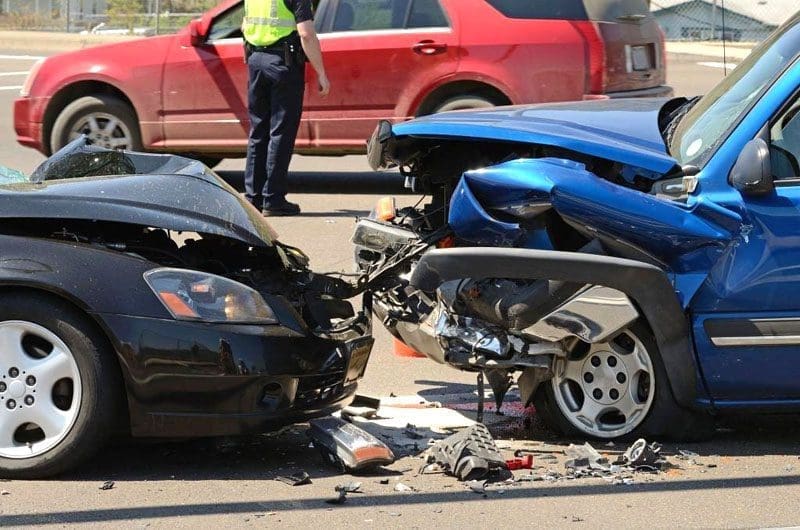
A “Failure to Yield Left Turn” accident happens when a driver turns left across active traffic before the road is truly clear. In many of these crashes, the turning vehicle ends up partially blocking the lane, and the front of the oncoming vehicle strikes the side of the turning vehicle. That is why this crash is often called a “T-bone” or side-impact collision. Under Texas law, a driver turning left must yield the right of way to oncoming traffic that is already in the intersection or close enough to be an immediate hazard. (Texas Legislature, 2025; Daniel Stark, 2026).
For ChiroMed patients, this matters because side-impact crashes often create more than one injury at the same time. The force can twist the neck, compress the shoulder, jar the lower back, and strain the soft tissues on one side of the body. ChiroMed describes its model as a multidisciplinary, patient-centered approach led by Dr. Alex Jimenez, a dual-licensed chiropractor and advanced practice nurse practitioner, offering services including chiropractic care, rehabilitation, acupuncture, nutrition, and treatment for whiplash and severe auto accident injuries. (ChiroMed, 2026).
What This Crash Is Really Called
The best way to understand this crash is to separate the legal problem from the physical impact.
- Failure to Yield Right of Way: This is a legal violation when a left-turning driver enters the path of oncoming traffic.
- T-bone collision: This describes the shape of a crash in which one vehicle strikes the side of another.
- Side-impact collision: another common term for the same type of hit.
- “Sticking out” accident: This is an informal description people use when the turning car is left protruding into an active lane.
- Improper median or lane positioning: In some cases, the driver also misuses the median opening or fails to line up correctly before finishing the turn. Texas DPS materials include “improper lane or location – median” as a recognized offense-code description. (Texas DPS, 2009; TopDog Law, 2025; DCM&D Law, 2026).
So, in simple terms, the crash is usually a T-bone collision caused by failing to yield when making a left turn. If the vehicle is hanging out in the crossover or median break, poor positioning may also be part of the story. That technical detail can matter when police, insurers, and injury providers are trying to understand exactly how the crash happened. (Texas DPS, 2009; Texas Legislature, 2025).
Why Failure to Yield Left Turns Are So Dangerous
Left turns are risky because the driver has to judge speed, distance, timing, and space all at once. A small mistake can put the car directly in front of fast-moving traffic. Daniel Stark explains that unprotected left turns are especially dangerous because drivers may misjudge the speed of oncoming traffic, creep too far forward, or become impatient and try to beat traffic. Other legal summaries of T-bone crashes say the same pattern is common when a driver turns left without waiting for a safe gap. (Daniel Stark, 2026; DCM&D Law, 2026).
Common causes include:
- poor judgment of distance or speed
- rushing through a gap that is too small
- creeping too far into the lane
- poor visibility
- distraction
- trying to clear the median opening too quickly
- assuming the oncoming driver will slow down or stop (Daniel Stark, 2026; TopDog Law, 2025).
Who Is Usually at Fault
In most of these crashes, the left-turning driver is usually at fault because that driver had the duty to wait until the way was clear. Texas Transportation Code Section 545.152 places that duty directly on the left-turning driver. Legal explainers on left-turn and T-bone crashes also consistently say that a driver who turns into oncoming traffic is usually responsible for the collision. (Texas Legislature, 2025; TopDog Law, 2025; DCM&D Law, 2026).
However, “usually” does not mean “always.” A fault can become shared if the oncoming driver was speeding, distracted, impaired, or ran a red light. That is why investigators often review witness statements, traffic signals, vehicle damage, and final vehicle positions before reaching a full conclusion. (TopDog Law, 2025; Uptown Injury, 2025).
Common Injury Patterns in a T-Bone Crash
Side-impact crashes can be serious because there is less space between the occupant and the point of impact. NCBI’s StatPearls notes that frontal and near-side collisions commonly create head, neck, chest, and abdominal injuries. Research on side collisions also shows that injury risk is often higher than in frontal crashes because there is less vehicle structure to absorb the impact on the struck side. (Toney-Butler & Varacallo, 2023; Frampton et al., 1998).
After a failure-to-yield left-turn crash, common injuries may include:
- whiplash and neck strain
- shoulder pain and reduced motion
- rib and chest wall pain
- low back pain
- hip or pelvic pain
- headaches
- numbness or tingling
- bruising and soft tissue injury
- disc irritation or nerve-related symptoms
- in more serious cases, abdominal injury, fracture, or concussion-related symptoms (Toney-Butler & Varacallo, 2023; Yadla et al., 2008).
Whiplash is one of the most common injuries after a crash because the head and neck are suddenly forced to move. The Mayo Clinic explains that whiplash often causes neck pain, stiffness, headaches, and limited range of motion. A broader review of whiplash-associated disorders also lists arm pain, paresthesias, headache, dizziness, and concentration problems among the common symptoms. (Mayo Clinic, 2024a; Yadla et al., 2008).
Why Some Symptoms Do Not Show Up Right Away
One of the biggest mistakes people make after a side-impact crash is assuming they are fine because pain has not started yet. ChiroMed’s own MVA education page notes that whiplash symptoms may not show immediately because adrenaline can mask pain at first, with discomfort sometimes appearing within 24 hours. Research on late whiplash patterns also reports that headache and neck pain can begin hours after impact rather than right away. (ChiroMed, 2026; Astrup et al., 2022).
That is why patients should pay attention to delayed signs such as:
- neck stiffness
- headaches
- dizziness
- shoulder tightness
- low back pain
- numbness or tingling
- reduced range of motion
- pain that worsens the next day or over the next week (ChiroMed, 2026; Mayo Clinic, 2024b).
How ChiroMed Approaches Recovery After a T-Bone Accident
ChiroMed presents auto-injury care as more than just basic symptom relief. Its materials describe a team-based model that combines chiropractic care with rehabilitation and broader clinical support. On the ChiroMed site, Dr. Alex Jimenez is described as a dual-licensed provider who leads a multidisciplinary team focused on holistic, patient-centered care for whiplash, neck and back pain, complex personal injuries, and severe auto accident rehabilitation. ChiroMed also explains that its nurse practitioners help bridge conventional and alternative medicine by working with chiropractors and other specialists to build comprehensive plans. (ChiroMed, 2026a; ChiroMed, 2026b).
For a patient hurt in a failure-to-yield left-turn crash, an integrative plan may include:
- chiropractic adjustments or mobilization to improve joint movement
- soft tissue work or massage to calm muscle tension
- rehabilitation exercises to rebuild strength and coordination
- posture and movement retraining
- imaging or deeper clinical evaluation when symptoms suggest a more complex injury
- supportive therapies such as acupuncture, depending on the case (ChiroMed, 2026a; ChiroMed, 2026c).
ChiroMed’s MVA page states that chiropractic care after collisions can help reduce joint inflammation, improve mobility, and support long-term recovery through spinal adjustments, soft-tissue therapies, rehabilitation exercises, and individualized care plans. Its broader injury-recovery content also highlights detailed documentation and integrated treatment when legal and insurance issues are part of the case. (ChiroMed, 2026c; ChiroMed, 2026d).
Why Physical Rehabilitation Matters
Good recovery after a T-bone crash is not just about getting the pain to calm down. It is also about restoring motion, stability, endurance, and safe daily function. Mayo Clinic says active physical therapy programs can reduce pain and disability in whiplash cases, and those programs often include range-of-motion work, cervical strengthening, coordination training, and functional exercises. Mayo also notes that simple movement exercises can help patients return to normal activities. (Mayo Clinic, 2022; Mayo Clinic, 2024b).
That rehab focus fits with ChiroMed’s site style and services. The clinic emphasizes rehabilitation as part of its integrated care model, which is important for patients who need more than a quick adjustment. A person recovering from a side-impact crash may need a staged plan that starts with pain control, then moves into mobility work, then into strengthening and functional recovery. (ChiroMed, 2026a; ChiroMed, 2026c).
Dr. Alex Jimenez’s Dual-Scope Perspective
One of the strongest site-specific angles for ChiroMed is Dr. Alex Jimenez’s dual-scope background. ChiroMed describes him as both a chiropractic doctor and an advanced practice nurse practitioner, and its injury pages present the combined skill set as useful for evaluating complicated motor vehicle cases. ChiroMed also highlights medical precision, chiropractic expertise, and documentation support in injury-related care. (ChiroMed, 2026a; ChiroMed, 2026e).
For patients injured in a failure-to-yield left-turn crash, that dual perspective can be valuable because side-impact collisions may involve more than one body system at once. A patient may have neck strain, nerve symptoms, shoulder dysfunction, low back pain, and soft-tissue injury, all from the same event. A combined medical and chiropractic perspective can help link crash mechanics to the patient’s symptoms and recovery needs. (Toney-Butler & Varacallo, 2023; ChiroMed, 2026e).
The Bottom Line
A “Failure to Yield Left Turn” crash is usually both a legal and physical event. Legally, it is most often a failure-to-yield problem on the part of the turning driver. Physically, it is often a T-bone or side-impact collision that can create neck, back, shoulder, rib, pelvic, and nerve-related injuries. Because symptoms can be delayed and injury patterns can be complex, patients often benefit from a thorough, integrative recovery plan. For a ChiroMed audience, that means looking beyond short-term pain and focusing on accurate diagnosis, whole-body treatment, rehabilitation, and long-term return to function. (Texas Legislature, 2025; Mayo Clinic, 2024b; ChiroMed, 2026a).
References
- Astrup, J., Rosenbaum, S., & Feldt-Rasmussen, U. (2022). The Whiplash Disease Reconsidered. Frontiers in Neurology.
- ChiroMed. (2026a). ChiroMed – Integrated Medicine Holistic Healthcare in El Paso, TX.
- ChiroMed. (2026b). About Us.
- ChiroMed. (2026c). Chiropractic Treatment for Optimal Health After An MVA.
- ChiroMed. (2026d). From Injury to Compensation: How Chiropractors and Nurse Practitioners Support Personal Injury Recovery After Car Accidents.
- ChiroMed. (2026e). Gastrointestinal Impact After Motor Vehicle Accidents: Treatment Through Integrative Medicine.
- Daniel Stark. (2026). Why Left Turns Are So Dangerous.
- DCM&D Law. (2026). Who Is at Fault in a T-Bone Car Accident?.
- Mayo Clinic. (2024a). Whiplash – Symptoms and causes.
- Mayo Clinic. (2024b). Whiplash – Diagnosis and treatment.
- Mayo Clinic. (2022). Update on medical management of whiplash-associated disorders.
- Texas Department of Public Safety. (2009). Driver License / Identification Card Inquiries.
- Texas Legislature. (2025). Transportation Code Chapter 545, Section 545.152.
- Toney-Butler, T. J., & Varacallo, M. (2023). Motor Vehicle Collisions. StatPearls.
- TopDog Law. (2025). Who Is at Fault for a T-Bone Accident?.
- Uptown Injury. (2025). Who Is Liable in a T-Bone Car Accident?.
- Yadla, S., Ratliff, J. K., & Harrop, J. S. (2008). Whiplash: Diagnosis, treatment, and associated injuries. Current Reviews in Musculoskeletal Medicine.