Integrative Chiropractic for Old Car Accident Injuries
Abstract
Motor vehicle accidents can cause injuries that last for months or even years. Neck pain, back pain, joint stiffness, headaches, ligament injuries, and soft tissue pain may continue long after the crash. These symptoms may come from tissues that did not heal correctly the first time. At ChiroMed, an integrated care approach may combine chiropractic care, rehabilitation, regenerative medicine, MLS laser therapy, and shockwave therapy to help address the cause of chronic pain, not just the symptoms. Research supports the use of PRP, MFAT, laser therapy, and shockwave therapy for selected musculoskeletal pain conditions, but each patient needs a proper exam and personalized treatment plan (Thu, 2022; Heidari et al., 2021; Stanciu et al., 2025).
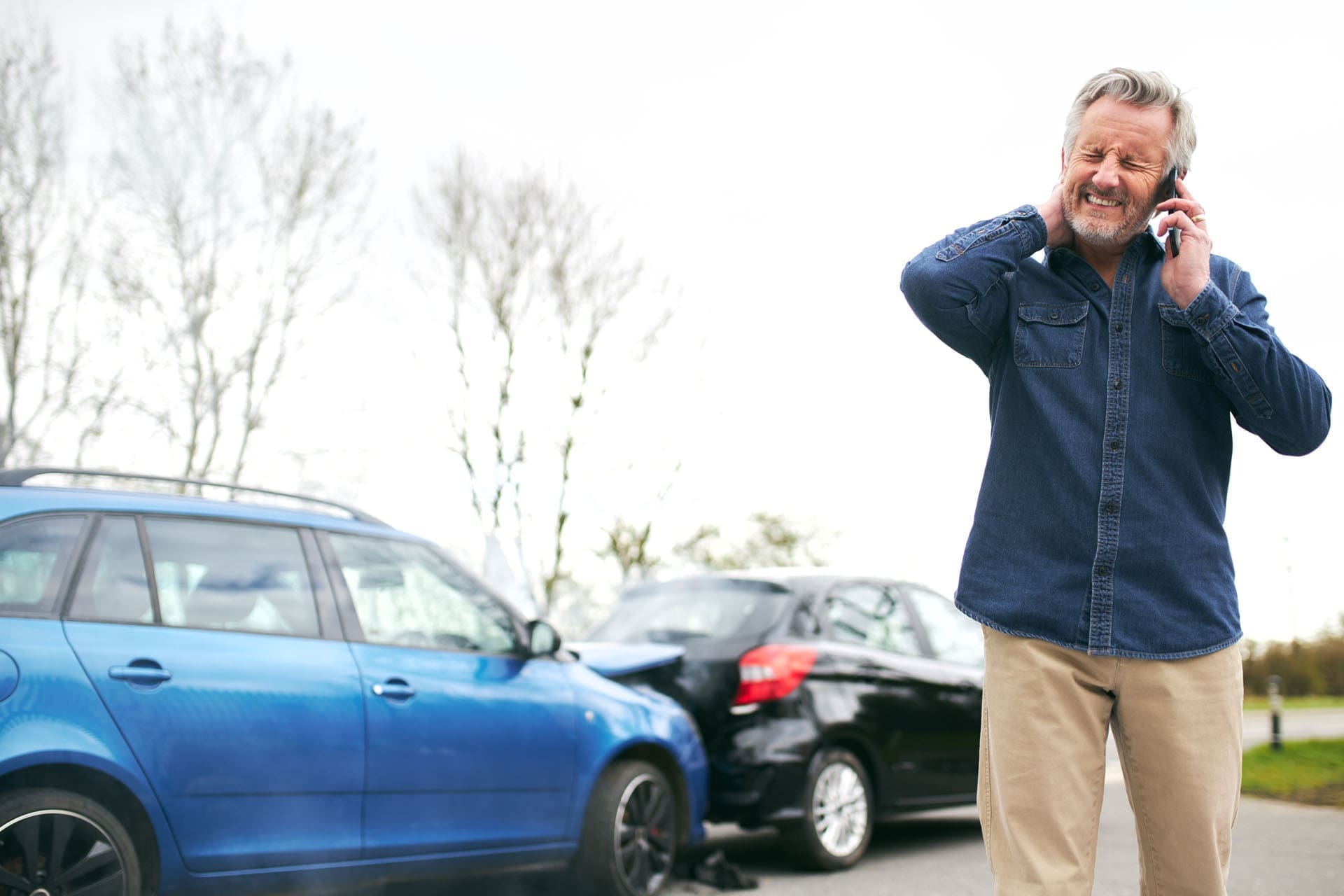
Chronic Pain After a Car Accident Can Be Real
Some people believe that if a car accident happened months or years ago, the body should already be healed. But that is not always true. A crash can injure muscles, ligaments, tendons, joints, discs, fascia, and nerves. These tissues may heal slowly, especially when the injury was not fully evaluated or treated early.
After an accident, the body may protect itself by tightening muscles, changing posture, and limiting movement. At first, this can feel helpful. Over time, however, these protective patterns can lead to chronic stiffness, weakness, and pain.
Long-term car accident injuries may include:
- Whiplash and chronic neck pain
- Low back pain
- Headaches from neck tension
- Shoulder, hip, knee, or ankle pain
- Ligament sprains or instability
- Tendon irritation
- Scar tissue and tight fascia
- Nerve irritation, numbness, or tingling
- Reduced range of motion
- Pain that worsens with activity
ChiroMed’s auto accident recovery content explains that accident injuries can involve soft tissues and joints, and that combined care may help when pain lasts longer than expected. Chiropractic care may improve mobility, rehabilitation may rebuild strength, shockwave therapy may support the soft tissue response, and regenerative options may help when injured tissue needs additional support.
Why Old Injuries May Still Hurt
An old accident injury can remain painful because the tissue may have healed in a poor position, stayed inflamed, or developed weak scar tissue. The area may no longer move the way it should. When this happens, nearby muscles and joints work harder to protect the injured region.
For example, a person with old whiplash may develop:
- Tight neck muscles
- Upper back stiffness
- Headaches
- Shoulder tension
- Nerve irritation in the arm
- Poor posture from guarding
A person with an old knee, hip, or ankle injury may develop:
- Joint stiffness
- Limping or altered walking
- Weak stabilizing muscles
- Ligament laxity
- Tendon pain
- Pain with stairs, exercise, or standing
This is why chronic MVA care should not focus only on pain relief. The goal should be to understand why the pain keeps returning.
ChiroMed’s Integrated Approach
At ChiroMed, the recovery model is built around integrated medicine and whole-person care. ChiroMed describes its El Paso clinic as using an integrated approach that combines chiropractic care with other forms of medicine, and its auto accident content highlights personalized care for injury recovery.
Dr. Alexander Jimenez, DC, APRN, FNP-BC, brings a dual-scope view to injury care. ChiroMed describes Dr. Jimenez as both a chiropractor and nurse practitioner who evaluates injury patients through a broader clinical lens. His model may include chiropractic assessment, medical evaluation, review of advanced imaging, functional testing, rehabilitation planning, and personal injury documentation, as needed.
This matters because long-term accident pain is often not one simple problem. It may involve joints, nerves, muscles, posture, sleep, stress, and inflammation. A broader clinical perspective helps connect the injury history to the patient’s current symptoms.
Chiropractic Care: Restoring Motion and Reducing Stress
Chiropractic care is often foundational to long-term recovery from accidents because the spine and joints must move well for the body to function properly. If a joint is restricted, nearby muscles may tighten. If the spine is not moving correctly, nerves and soft tissues may stay irritated.
Chiropractic care may help by:
- Improving spinal and joint motion
- Reducing mechanical stress
- Calming muscle guarding
- Improving posture
- Supporting better nerve function
- Helping the body move with less pain
- Making rehabilitation more effective
ChiroMed’s injury content notes that chiropractic care may restore motion and joint mechanics, while soft tissue work and rehabilitation may reduce guarding, improve stability, and support function-based recovery.
PRP Therapy: Supporting the Body’s Repair Signals
Platelet-Rich Plasma, or PRP, is a regenerative therapy made from a patient’s own blood. The blood is processed to concentrate platelets, which contain growth factors and healing signals. PRP may be used in selected cases to support injured tendons, ligaments, joints, or soft tissues.
PRP is not simply a pain-numbing treatment. It is used to support the body’s natural healing response.
PRP may be considered for:
- Chronic tendon pain
- Ligament injuries
- Joint pain
- Soft tissue damage
- Pain that has not improved with standard care
- Selected sports or accident-related injuries
A narrative review on PRP and musculoskeletal pain reported that PRP appears to reduce pain and improve function in some patients, although the evidence has limitations and results can vary (Thu, 2022).
Research has also examined PRP in combination with shockwave therapy. A randomized controlled trial on chronic patellar tendinopathy found that PRP alone and PRP combined with extracorporeal shockwave therapy both helped improve pain and function, with the combined group showing faster early pain reduction (Jhan et al., 2024).
MFAT Therapy: Support for Complex Joint and Soft Tissue Problems
Micro-Fragmented Adipose Tissue, or MFAT, uses a small amount of the patient’s own fat tissue. The tissue is processed into tiny fragments and placed into the painful or injured area when appropriate. MFAT contains a natural tissue matrix and signaling factors that may support a healthier tissue environment.
MFAT may be discussed for:
- Chronic joint pain
- Knee, hip, or shoulder problems
- Soft tissue injuries that have not healed well
- Degenerative changes after trauma
- Complex musculoskeletal pain
- Cases where conservative care has not been enough
A study on MFAT for knee osteoarthritis found that MFAT injection improved quality of life in selected patients and was described as a low-morbidity biological treatment option that may delay total knee replacement in suitable cases (Heidari et al., 2021).
A 2025 three-year follow-up study reported that MFAT treatment was associated with improvement in pain, quality of life, and function over time. The authors were careful to explain that the study focused on symptom relief and did not demonstrate structural regeneration, an important distinction for patient education (Stanciu et al., 2025).
MLS Laser Therapy: Calming Pain and Supporting Recovery
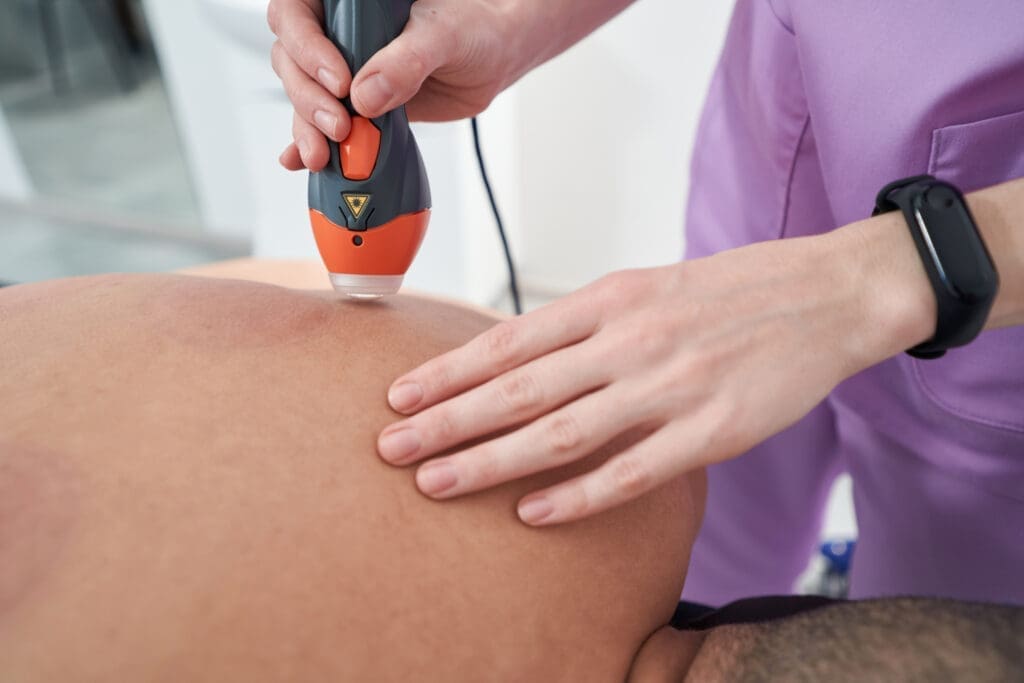
MLS laser therapy is a non-invasive treatment that uses light energy to support tissue recovery. It is often discussed in relation to pain, inflammation, circulation, and cellular repair.
MLS laser therapy may help patients with:
- Neck and back pain
- Soft tissue strain
- Muscle guarding
- Joint inflammation
- Nerve irritation
- Post-accident stiffness
- Chronic pain patterns
ChiroMed’s MLS laser and photobiomodulation content explains that modern MLS laser systems use synchronized wavelengths designed to support photobiomodulation while reducing surface overheating. The same page describes laser care as part of a broader plan that may include chiropractic assessment, rehabilitation, shockwave therapy, and PRP when clinically appropriate.
Shockwave Therapy: Waking Up Stubborn Soft Tissue
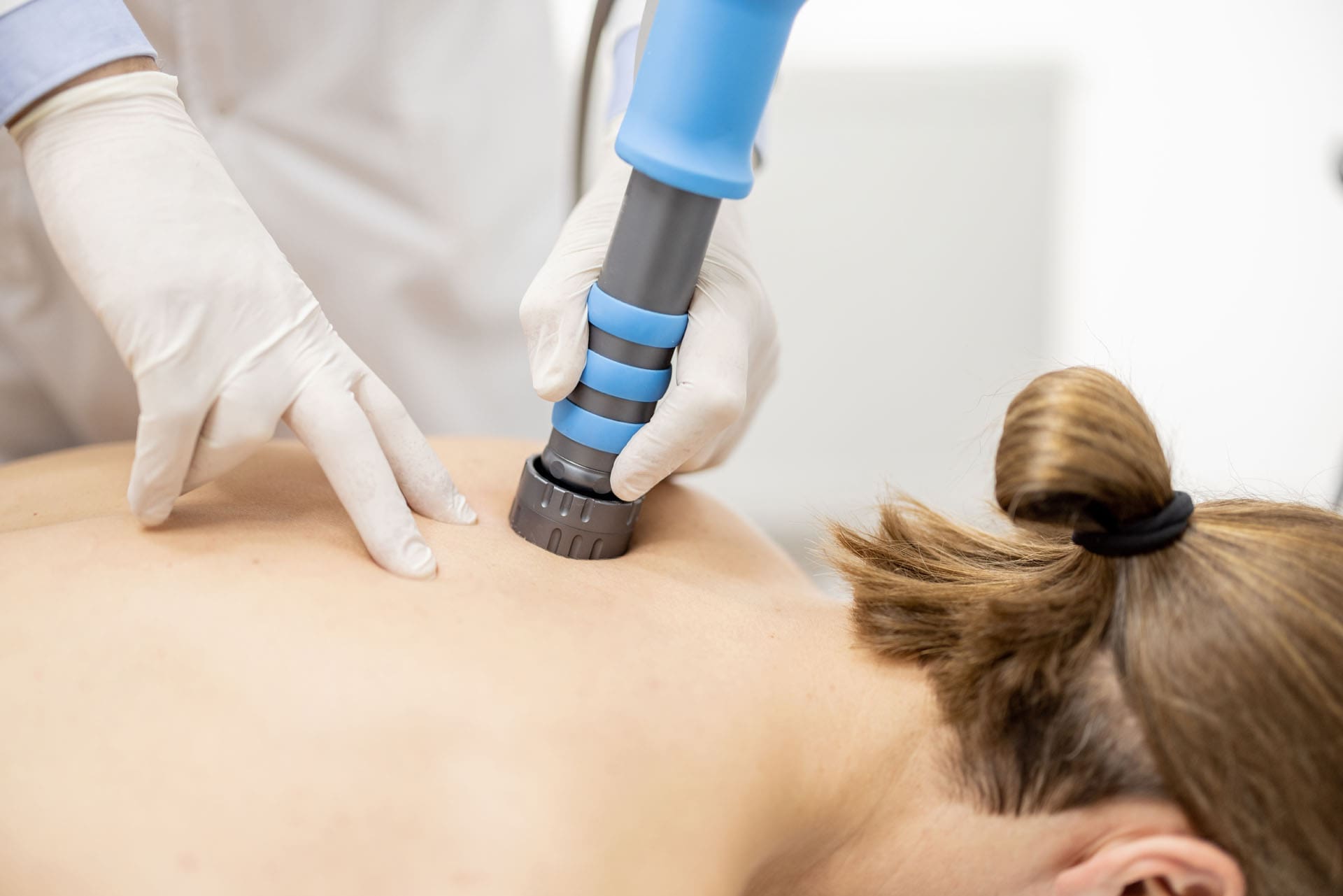
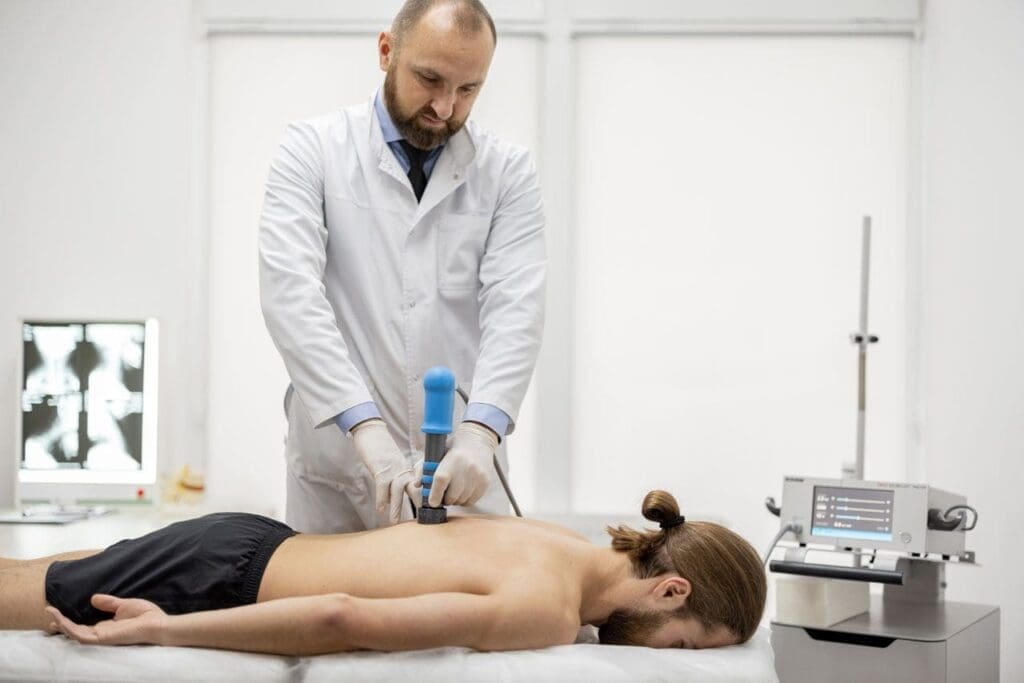
Shockwave therapy uses acoustic energy to stimulate injured tissues. It is often used for chronic pain related to tendons, ligaments, fascia, and joints. When tissue has been painful for months or years, the healing response may become stalled. Shockwave therapy may help restart a more active repair response in selected cases.
Shockwave therapy may help support:
- Local blood flow
- Collagen activity
- Soft tissue remodeling
- Reduced pain sensitivity
- Better mobility
- Tendon and fascia recovery
- Chronic scar tissue stiffness
ChiroMed describes shockwave therapy as a tool that may support soft tissue healing, circulation, and pain control, especially when paired with chiropractic care and rehabilitation.
Dr. Jimenez’s ChiroMed shockwave article also explains that he uses an integrative model combining chiropractic medicine, advanced practice nursing, functional medicine, and rehabilitative sciences when applying acoustic shockwave technologies.
Why Combining Therapies May Work Better
Chronic accident injuries are often layered. A patient may have joint restriction, muscle weakness, ligament irritation, scar tissue, inflammation, and poor movement patterns simultaneously. That is why a single treatment may not fully solve the problem.
A ChiroMed-style plan may combine:
- Chiropractic care to restore motion
- Rehabilitation to rebuild strength
- PRP to support tissue repair signals
- MFAT for selected complex joint or soft tissue cases
- MLS laser therapy to support pain and inflammation control
- Shockwave therapy to stimulate chronic soft tissue response
- Functional medicine support when inflammation, nutrition, or recovery barriers are present
- Medical documentation for personal injury cases, when needed
This approach is not about doing more treatments just to do more. It is about matching the right therapies to the right injury.
Can Healing Be Re-Initiated Years Later?
In many cases, yes. The body can still respond to treatment even months or years after an accident. This does not mean every old injury can be fully reversed. It means chronic tissues may still improve when the right problem is identified and treated.
For example:
- A stiff neck may improve when spinal motion, muscle guarding, and nerve irritation are addressed.
- A painful knee may improve when joint mechanics, ligament support, and inflammation are treated.
- Chronic tendon pain may improve when shockwave therapy, PRP, and strengthening are combined.
- Long-term back pain may improve when spinal function, core stability, and soft tissue irritation are treated together.
The key is a proper evaluation. A patient should not guess which therapy they need. The provider should review the injury history, symptoms, imaging, movement limits, neurological signs, and goals.
A Safer Path Forward
Long-term accident pain should be taken seriously. Patients should seek urgent care if they have a severe headache, chest pain, trouble breathing, worsening numbness, new weakness, loss of bladder or bowel control, severe abdominal pain, confusion, or trouble walking after trauma. ChiroMed also lists these types of symptoms as safety concerns that should be ruled out before an integrative recovery plan begins.
Once serious conditions are ruled out, an integrated recovery plan may help patients move better, feel stronger, and reduce chronic pain patterns.
Conclusion
A car accident injury does not always end when the bruises fade or the insurance paperwork closes. Months or years later, unresolved soft tissue damage, ligament weakness, joint dysfunction, inflammation, scar tissue, and nerve irritation may still cause pain.
For ChiroMed, the message is clear: chronic MVA pain should not be treated with a one-size-fits-all plan. An integrated approach using chiropractic care, rehabilitation, PRP, MFAT, MLS laser therapy, and shockwave therapy may help selected patients address the deeper causes of pain and support better long-term function.
This article is for educational purposes only and is not a substitute for medical advice. Patients with chronic pain after a motor vehicle accident should be evaluated by a qualified healthcare provider to determine which treatments are safe and appropriate.
References
AABP Integrative Pain Care. (n.d.). 5 essential benefits of PRP for chronic pain.
CARS Medical. (n.d.). MLS laser therapy for auto injuries in Charlotte NC.
CHARM Austin. (n.d.). Regenerative medicine approach to ankle injuries.
ChiroMed. (2026). Regenerative therapy for auto accident injury recovery.
ChiroMed. (2026). MLS laser therapy & photobiomodulation benefits for the body.
ChiroMed. (2026). Chiropractic shockwave therapy for pain and healing.
ChiroMed. (2026). Chiropractic care for hidden auto accident injuries.
Heidari, N., et al. (2021). Microfragmented adipose tissue injection may be a solution to the rationing of total knee replacement. Stem Cells International, 2021, 9921015.
Heidari, N., et al. (2022). Comparison of the effect of MFAT and MFAT + PRP on treatment of hip osteoarthritis. Journal of Clinical Medicine, 11(4), 1056.
Jhan, S. W., et al. (2024). A comparative analysis of platelet-rich plasma alone versus combined with extracorporeal shockwave therapy in athletes with patellar tendinopathy and knee pain.
Jimenez, A. (n.d.). Dr. Alex Jimenez.
Jimenez, A. (n.d.). Dr. Alexander Jimenez LinkedIn profile.
Nob Hill Family Chiropractic. (2025). How cold laser therapy can speed up recovery from auto injuries.
Primary Health Clinic. (2025). Laser therapy for soft tissue recovery after injury.
Stanciu, N., Heidari, N., Slevin, M., Ujlaki-Nagi, A.-A., Trâmbițaș, C., Arbănași, E.-M., Russu, O. M., Melinte, R. M., Azamfirei, L., & Brînzaniuc, K. (2025). Predicting long-term benefits of micro-fragmented adipose tissue therapy in knee osteoarthritis. Journal of Clinical Medicine, 14(13), 4549.
Taheri, P., Vahdatpour, B., & Andalib, S. (2016). Comparative study of shock wave therapy and laser therapy effect in elimination of symptoms among patients with myofascial pain syndrome in upper trapezius. Advanced Biomedical Research, 5, 138.
Thu, A. C. (2022). The use of platelet-rich plasma in management of musculoskeletal pain: A narrative review. Journal of Yeungnam Medical Science, 39(3), 206-215.