Give us a Call
+1 (915) 412-6680
Send us a Message
[email protected]
Opening Hours
Mon-Thu: 7 AM - 7 PM
Fri - Sun: Closed
Sleep, Athletic Recovery, and Integrative Chiropractic

Sleep, Athletic Recovery, and Integrative Chiropractic

Athletes often focus on training, nutrition, and discipline. However, one of the most important parts of performance is often overlooked: sleep. Sleep is not just rest. It is a major part of healing, muscle recovery, mental focus, and injury prevention. When athletes do not get enough sleep, their bodies and minds cannot perform at their best. They may react more slowly, lose speed, make more mistakes, and feel tired sooner. Over time, poor sleep can also increase the risk of injury and illness (Sleep Foundation, 2025).

For a practice like ChiroMed, this topic matters because sports recovery is not just about treating pain after an injury happens. It is also about helping athletes recover better, move better, and stay healthier over time. An integrative chiropractic approach can support athletes by addressing joint restrictions, muscle tension, movement problems, and physical stress that may interfere with restful sleep and full recovery.

Why Sleep Is Essential for Athletes

Sleep is when the body does much of its repair work. During sleep, especially deep sleep, the body restores muscles, balances hormones, and supports immune function. The brain also uses sleep to process information, sharpen memory, and improve decision-making. This is especially important for athletes, because sports demand both physical power and mental sharpness (Mass General Brigham, 2024).

When sleep is cut short, the body cannot fully recover from training or competition. That means an athlete may still be carrying fatigue, soreness, or mental strain into the next workout or game. Over time, that can lead to lower performance and greater wear and tear on the body (Charest & Grandner, 2020).

Research has shown that lack of sleep affects many parts of sports performance, including

  • Reaction time
  • Speed
  • Accuracy
  • Endurance
  • Skill control
  • Decision-making
  • Mood
  • Recovery

In other words, sleep is not separate from training. It is part of training.

What Happens When Athletes Do Not Sleep Enough?

Most adults need about 7 to 9 hours of sleep each night. Athletes often benefit from being near the higher end of that range, and elite athletes may need even more. When athletes regularly sleep less than this, the effects can become clear both on and off the field (Sleep Foundation, 2025).

Physical Effects of Sleep Loss

Poor sleep can reduce athletic ability in several ways. A systematic review and meta-analysis found that acute sleep deprivation can significantly harm speed, skill control, and high-intensity exercise performance in athletes (Gong et al., 2024). This means that athletes who miss sleep may not move as fast, react as quickly, or perform skills as accurately.

Common physical effects of poor sleep include:

  • Slower sprinting and movement
  • Lower energy output
  • Faster fatigue
  • Poor coordination
  • Decreased accuracy
  • Reduced power and explosiveness

These changes may seem small at first, but in sports, even a slight drop in speed or reaction time can make a big difference.

Mental and Emotional Effects of Sleep Loss

Athletes also rely heavily on mental performance. They need focus, quick thinking, emotional control, and fast decision-making. Sleep deprivation can make all of these worse.

Poor sleep has been linked to:

  • Slower cognitive processing
  • More mental errors
  • Reduced attention
  • Poor judgment
  • More irritability
  • Lower motivation

When the brain is tired, an athlete may hesitate during a play, make a poor decision under pressure, or lose focus during key moments. Mass General Brigham explains that lack of sleep weakens important brain signals that affect decision-making and motor performance (Mass General Brigham, 2024).

Sleep and Injury Risk

One of the most serious consequences of poor sleep is a greater risk of injury. Research has repeatedly shown that athletes who do not sleep enough are more likely to get hurt.

A study of adolescent athletes found that chronic sleep loss was associated with a higher rate of sports injuries (Milewski et al., 2014). The American Academy of Cardiovascular Sleep Medicine also reported that athletes who sleep fewer than 7 hours per night may have about 1.7 times the risk of injury compared with athletes who sleep more (AACSM, 2025).

This happens for several reasons:

  • Fatigue affects movement quality
  • Poor reaction time raises the chance of mistakes
  • Slower decision-making can lead to unsafe body positions
  • Reduced recovery leaves muscles and joints less prepared
  • Lower focus can increase accidents during practice or games

Sleep loss can also weaken the immune system, making athletes more likely to get sick. Illness adds even more stress to the body and can delay recovery from both training and injury (Sleep Foundation, 2025).

The Pain-Sleep-Recovery Cycle

Many athletes fall into a difficult pattern. Pain makes it harder to sleep. Poor sleep reduces recovery. Less recovery leads to greater soreness, worse performance, and a higher risk of injury. That new pain then disrupts sleep even more.

This is an important cycle to recognize:

  • Pain causes sleep problems
  • Sleep loss slows healing
  • Slower healing increases fatigue and tension
  • Fatigue and tension raise injury risk
  • More injury leads to more pain

Breaking this cycle is important for athletes who want lasting recovery instead of short-term relief.

How Integrative Chiropractic Care Can Help

Chiropractic care should be discussed honestly. Current evidence does not prove that chiropractic treatment alone directly improves an athlete’s performance. However, chiropractic care may still play an important role in sports medicine by helping address musculoskeletal problems that interfere with movement, comfort, and recovery (Miners, 2010).

For athletes, integrative chiropractic care may support better rest and recovery by helping reduce the physical issues that often disturb sleep, such as:

  • Joint restriction
  • Muscle tightness
  • Neck and back pain
  • Postural strain
  • Movement imbalance
  • Repetitive stress patterns

At a practice geared toward integrative musculoskeletal care like ChiroMed, chiropractic care can be part of a broader recovery strategy. This may include spinal adjustments, soft-tissue therapies, mobility work, corrective exercises, and guidance on lifestyle factors that affect healing.

When pain and tension are reduced, athletes may find it easier to fall asleep and stay asleep. When movement improves, they may also train with better mechanics and less strain. This does not mean chiropractic care replaces sleep, strength work, or nutrition. It means it can support the body by reducing barriers to recovery, such as pain and inflammation, which can hinder healing.

Clinical Observations from Dr. Alexander Jimenez

Dr. Alexander Jimenez, DC, APRN, FNP-BC, has publicly described an integrative model of care that combines chiropractic treatment with broader clinical evaluation, functional support, nutrition guidance, and advanced diagnostic insight when needed (Dr. Alexander Jimenez; LinkedIn).

His clinical observations suggest that athletes often perform better when providers look beyond a single symptom and consider the full recovery picture. That may include:

  • Pain patterns that affect sleep
  • Spinal or joint dysfunction that affects movement
  • Muscle tension that increases fatigue
  • Nutritional issues that slow recovery
  • Repetitive overuse stress that raises injury risk

From this viewpoint, chiropractic care is not just about the spine. It is about helping restore function, decrease stress on the body, and support the conditions needed for better healing and deeper rest.

How Better Sleep Improves Athletic Performance

When athletes sleep well, many aspects of performance improve. Good sleep supports:

  • Faster reaction time
  • Better focus
  • Sharper memory
  • More accurate movement
  • Improved emotional control
  • Better muscle recovery
  • Stronger immune function
  • Reduced risk of overtraining

Sleep also supports hormonal balance, including hormones involved in recovery, energy use, and muscle repair. Athletes who protect sleep are often better prepared not only for competition but also for long seasons of repeated training and physical stress (Charest & Grandner, 2020).

Practical Tips for Athletes to Improve Sleep

Athletes do not need a perfect routine to improve recovery. They need consistent habits that make quality sleep more likely.

Helpful sleep strategies include:

  • Go to bed and wake up at about the same time each day
  • Aim for at least 7 to 9 hours of sleep each night
  • Allow extra recovery sleep during heavy training periods
  • Limit screen time close to bedtime
  • Avoid very heavy meals late at night
  • Address pain early before it builds into a larger problem
  • Keep the sleeping area cool, dark, and quiet
  • Stay consistent with recovery work after training

Athletes who struggle with ongoing pain, stiffness, or postural tension may also benefit from a musculoskeletal evaluation. If pain is interfering with sleep, recovery care may help remove one of the major obstacles to healing.

Why This Matters for Long-Term Sports Health

Athletes often think about performance in terms of harder work. But performance is also built on recovery. Sleep is one of the most powerful recovery tools available, yet it is often the first thing athletes sacrifice.

That can be a costly mistake.

Without enough sleep, athletes are more likely to:

  • Perform below their potential
  • Feel mentally foggy
  • Make poor decisions
  • Recover slowly
  • Get sick more often
  • Experience more injuries

By protecting sleep and supporting recovery through integrative care, athletes may be able to stay stronger, more focused, and more durable over time, which can ultimately help them avoid illness more often and reduce the likelihood of injury.

Conclusion

Sleep is a critical part of sports performance, recovery, and injury prevention. Athletes who do not get enough sleep often experience slower reaction time, reduced speed, lower accuracy, quicker fatigue, poorer decision-making, and a higher risk of illness and injury. Over time, these problems can build into larger performance and health issues, such as chronic fatigue, decreased athletic performance, and increased susceptibility to injuries (Sleep Foundation, 2025; Gong et al., 2024).

An integrative chiropractic approach, such as the kind associated with ChiroMed, may help athletes by reducing pain, improving mobility, addressing musculoskeletal strain, and supporting better overall recovery. While chiropractic care is not a replacement for sleep, it can be a valuable part of a broader strategy to help athletes rest better, heal better, and perform at a higher level.

For athletes, sleep should never be treated as wasted time. It is one of the most important tools for staying strong, sharp, and healthy.


References

Sports Head Injuries: Integrative Care Basics

Understanding Common Sports Head Injuries: From Concussions to Skull Fractures and Beyond

Sports bring excitement, fitness, and teamwork, but they also come with risks. One big risk is head injuries. These can occur in various ways, such as from a hard hit or a fall. The most common type is a concussion, which is a mild traumatic brain injury. But other serious ones include brain contusions, intracranial hematomas, and skull fractures. A concussion usually comes from a blow to the head or strong shaking that makes the brain move inside the skull. This can lead to short-term issues with thinking, balance, or emotional stability. More severe injuries, like skull fractures, break the bone around the brain, while hematomas cause bleeding inside the head. These require prompt medical attention to prevent lasting harm.

Chiropractic care and other natural treatments can play a key role in recovery. They focus on addressing issues with nerves and muscles resulting from these injuries. Often, this approach works best as part of a team with doctors, therapists, and other healthcare professionals. This helps the body heal on its own without always needing strong drugs or surgery. In this article, we will examine the nature of these injuries, their causes, symptoms, and methods for treatment and prevention.

What Are Sports Head Injuries?

Head injuries in sports happen when force hits the head or body, affecting the brain or skull. They range from mild to severe. A concussion is the most common. It’s a type of mild traumatic brain injury where the brain gets jarred but doesn’t have major damage like bleeding (Centers for Disease Control and Prevention, n.d.). About 300,000 sports-related concussions happen each year in the U.S. (Harmon et al., 2013). They can cause confusion or dizziness, but these symptoms often subside with rest.

Other types include brain contusions, which are bruises on the brain that cause swelling and bleeding. Intracranial hematomas are collections of blood within the skull, similar to epidural or subdural hematomas. These can build pressure on the brain and are more dangerous. Subdural hematomas are the most common bleeding injury in sports-related head trauma. They come from torn veins between brain layers (Yilmaz et al., 2020). Skull fractures break the bones of the skull, often resulting from strong impacts. These can lead to leaking fluid from the ears or nose if severe (Children’s Minnesota, n.d.).

All these injuries share some traits. They result from sudden changes in speed, such as stopping abruptly or twisting. This makes the brain shift and stretch nerves. In severe cases, it can cause long-term issues such as memory problems or trouble focusing (Aptiva Health, n.d.).

Causes and Sports at Risk

Head injuries can occur in any sport, but some have higher risks due to contact or speed. Football tops the list due to the frequency of tackles and collisions. In football, tackling causes about 63% of concussions (Centers for Disease Control and Prevention, n.d.). Wrestling is another, where throws, slams, and takedowns often lead to head hits (Arsenian Law Offices, n.d.). Soccer involves heading the ball or players crashing, causing around 27% of boys’ and 18% of girls’ concussions from that action (Centers for Disease Control and Prevention, n.d.).

Ice hockey has risks from body checks and falling on ice. About two-thirds of concussions come from player collisions (Centers for Disease Control and Prevention, n.d.). Basketball sees injuries from jumps and bumps, with half of girls’ concussions from athlete contact (Centers for Disease Control and Prevention, n.d.). Even non-contact sports like cycling or skiing can cause head trauma from crashes or falls at high speeds (Arsenian Law Offices, n.d.).

The main causes are acceleration-deceleration forces. This means the head speeds up or slows down rapidly, causing the brain to hit the skull. Rotational forces twist the head, shearing brain tissues (Harmon et al., 2013). Helmets help reduce some risks, but don’t stop all concussions. In sports like boxing or mixed martial arts, repeated punches increase the chances of chronic brain damage (Arsenian Law Offices, n.d.).

Other factors raise risks, too. Past concussions make new ones more likely. Poor technique, such as incorrect tackling, adds danger. Even activities like cheerleading have risks from stunts and falls (Arsenian Law Offices, n.d.). Knowing these helps athletes stay safer.

Signs and Symptoms to Watch For

Symptoms of head injuries vary but often start right after the hit. For concussions, common signs include headache, dizziness, nausea, and feeling foggy (Cleveland Clinic, n.d.a). You may feel confused or struggle to remember things. Some people become sensitive to light or noise. Sleep changes, such as sleeping too much or too little, can also occur (OrthoInfo, n.d.).

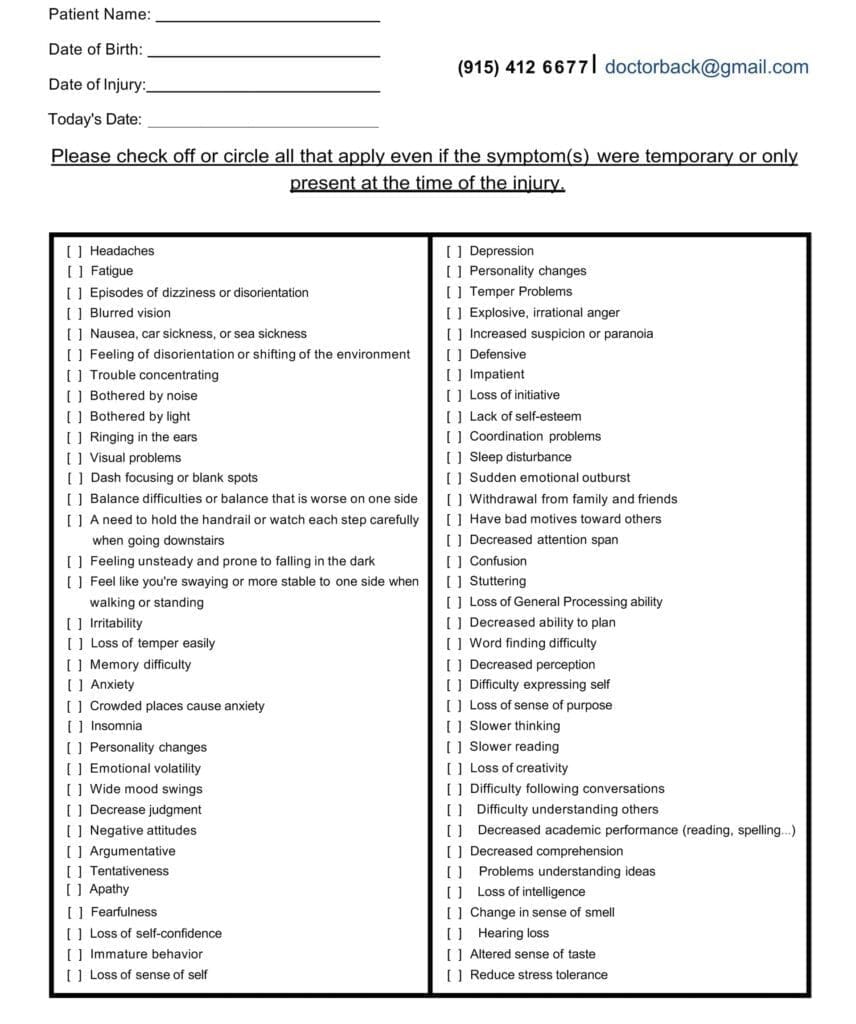
Head Injury/TBI Symptom Questionnaire

More serious signs mean get help fast. These include seizures, convulsions, or a dazed look (Mayo Clinic, n.d.a). Vomiting more than once, slurred speech, or unequal pupils are red flags (WebMD, n.d.). For skull fractures, look for swelling, bruising around the eyes or ears, or clear fluid from the nose or ears (Children’s Minnesota, n.d.).

Hematomas might cause severe headaches, weakness on one side, or passing out. Symptoms may appear hours or days later, so it is essential to monitor closely (Cleveland Clinic, n.d.b). In brain contusions, swelling can lead to similar issues, but scans may be necessary to confirm (Aptiva Health, n.d.).

Headaches are common across all types. In sports, they can result from exertion, such as weightlifting, which raises blood pressure (Studio Athletica, n.d.). But post-injury headaches are often linked to neck strain or brain changes.

Diagnosis starts with a check-up. Doctors ask about the injury and test balance, memory, and reflexes. Tools like the Sport Concussion Assessment Tool help score symptoms (Kazl & Torres, 2019). If needed, CT scans examine for bleeding or fractures, but most concussions don’t show on scans (OrthoInfo, n.d.).

Traditional Treatments for Head Injuries

Treatment depends on severity. For mild concussions, rest is key. Avoid physical activity and screens to let the brain heal (Mayo Clinic, n.d.b). Pain relievers like acetaminophen help headaches, but avoid aspirin if bleeding is possible (WebMD, n.d.).

For serious injuries like hematomas or fractures, emergency care is needed. Surgery might remove blood clots or fix bones (Yilmaz et al., 2020). Skull fractures often heal with pain meds and rest, but depressed ones need surgery (Children’s Minnesota, n.d.).

Recovery includes gradual steps back to activity. A 6-stage protocol begins with rest, followed by light exercise, sport drills, full practice, and a return to play (Johnson et al., 2013). This takes at least a week if no symptoms return.

Therapy helps too. Physical therapy improves balance, while cognitive therapy aids memory (Mayo Clinic, n.d.b). For long-term symptoms, see specialists.

The Role of Chiropractic and Integrative Care

Chiropractic care provides a natural approach to managing head injuries. It focuses on aligning the spine and neck, which often become misaligned in impacts (Carr Chiropractic Clinic, n.d.). Adjustments reduce pressure on nerves, easing headaches and dizziness (Aurora Chiropractic, n.d.).

For concussions, chiropractors employ gentle techniques, such as spinal manipulation, to enhance blood flow and nerve function (Grant Chiropractic, n.d.). This helps with balance and coordination (Mountain Movement Center, n.d.). Soft tissue work relaxes muscles, cutting pain (Think Vida, n.d.).

Integrative care mixes this with nutrition and lifestyle changes. Anti-inflammatory foods and supplements, such as omega-3s, support brain healing (Think Vida, n.d.). Stress management and adequate sleep promote faster recovery.

Chiropractors often work in collaboration with doctors and therapists to provide comprehensive care (Carr Chiropractic Clinic, n.d.). This addresses both brain and body symptoms.

Dr. Alexander Jimenez, a chiropractor with over 30 years of experience, notes that head injuries can disrupt posture and balance in the long term. His observations indicate that early intervention with integrative plans helps rebuild strength and cognitive skills. He stresses the importance of spotting hidden symptoms, such as gut-brain links, that can continue to harm the brain after injury (Jimenez, n.d.a; Jimenez, n.d.b).

Studies support this. Chiropractic care helped teen athletes recover from concussion symptoms, including headaches (Aurora Chiropractic, n.d.). It’s safe and avoids drug side effects.

Prevention Strategies

Preventing head injuries starts with gear. Wear fitted helmets for sports like football or cycling (WebMD, n.d.). Mouthguards cut some risks.

Learn proper techniques, such as safe tackling and heading (Centers for Disease Control and Prevention, n.d.). Follow the rules against dangerous plays.

Coaches should limit contact in practice. Athletes, rest if tired or hurt. Education on symptoms helps everyone spot issues early (Harmon et al., 2013).

For young players, it is recommended to delay participation in contact sports. Build strength and skills first.

Long-Term Effects and Recovery Tips

Repeated injuries can lead to lasting problems like memory loss or mood changes (Aptiva Health, n.d.). Second-impact syndrome is rare but deadly if another hit happens before healing.

Full recovery needs patience. Follow the doctor’s advice on returning to sports. Use graded steps to avoid setbacks (Johnson et al., 2013).

Support recovery with healthy habits. Eat well, stay hydrated, and manage stress. Regular check-ups track progress.

Chiropractic care can help prevent chronic issues by addressing misalignments early (Grant Chiropractic, n.d.). Integrative approaches, such as those from Dr. Jimenez, focus on whole-body wellness for better outcomes (Jimenez, n.d.a).

Conclusion

Sports head injuries like concussions, skull fractures, and hematomas are serious but manageable. Know the causes, watch for symptoms, and seek help fast. Treatments range from rest to surgery, but chiropractic and integrative care offer natural approaches to help alleviate symptoms and promote healing. Working with teams ensures the best recovery. Prevention through gear, technique, and awareness keeps athletes safe. Stay informed to enjoy sports without big risks.


References

Aptiva Health. (n.d.). Sports injuries & conditions. Aptiva Health.

Arsenian Law Offices. (n.d.). Most common sports that lead to brain injuries. Arsenian Law Offices.

Aurora Chiropractic. (n.d.). Chiropractic care for head injuries. Aurora Chiropractic.

Carr Chiropractic Clinic. (n.d.). The role of chiropractic care in concussion management. Carr Chiropractic Clinic.

Centers for Disease Control and Prevention. (n.d.). Heads up: Data on sports and recreation activities. Centers for Disease Control and Prevention.

Children’s Minnesota. (n.d.). Skull fracture. Children’s Minnesota.

Cleveland Clinic. (n.d.a). Concussion. Cleveland Clinic.

Cleveland Clinic. (n.d.b). Head injury. Cleveland Clinic.

Eastlake Chiropractic. (n.d.). How chiropractors can help sports concussions. Eastlake Chiropractic.

Genesis Orthopaedic and Spine. (n.d.). Common head injuries in athletes: Signs and treatments. Genesis Orthopaedic and Spine.

Grant Chiropractic. (n.d.). Chiropractors recovery after concussion. Grant Chiropractic.

Harmon, K. G., Drezner, J. A., Gammons, M., Guskiewicz, K. M., Halstead, M., Herring, S. A., Kutcher, J. S., Pana, A., Putukian, M., & Roberts, W. O. (2013). American Medical Society for Sports Medicine position statement: Concussion in sport. British Journal of Sports Medicine, 47(1), 15–26.

Jimenez, A. (n.d.a). Dr. Alex Jimenez, DC. Dr. Alex Jimenez.

Jimenez, A. (n.d.b). Dr. Alexander Jimenez, DC, APRN, FNP-BC. LinkedIn.

Johnson, C. D., Green, B. N., Nelson, R. C., Moreau, B., & Nabhan, D. (2013). Chiropractic and concussion in sport: A review of the literature. Journal of Chiropractic Medicine, 12(4), 192–200.

Kazl, C., & Torres, A. (2019). Definition, classification, and epidemiology of concussion. Seminars in Pediatric Neurology, 30, 9–13.

Mayo Clinic. (n.d.a). Concussion. Mayo Clinic.

Mayo Clinic. (n.d.b). Traumatic brain injury. Mayo Clinic.

Mountain Movement Center. (n.d.). Addressing common sports injuries with chiropractic. Mountain Movement Center.

Neural Effects. (n.d.). High school sports cause most concussions. Neural Effects.

OrthoInfo. (n.d.). Sports concussion. OrthoInfo.

Studio Athletica. (n.d.). Headache. Studio Athletica.

Think Vida. (n.d.). Treating concussions with chiropractic care. Think Vida.

WebMD. (n.d.). Head injuries: Causes and treatments. WebMD.

Yilmaz, A., Yener, U., & Yilmaz, A. (2020). A foundational “survival guide” overview of sports-related head injuries. Turkish Neurosurgery, 30(5), 635–643.