
Traumatic Brain Injury and Its Long-Term Effects
Learn about traumatic brain injury, its impact on individuals, and approaches for treatment and rehabilitation in this informative post.
Introduction
When the head is hit or jolted suddenly, it can cause a traumatic brain injury (TBI). It can change how someone thinks, acts, and feels. This article explains TBI in simple terms, including what causes it, its symptoms, and how it affects the body. It also shows how nurse practitioners and chiropractors can work together to help people get better (Mayo Clinic, 2023; Cleveland Clinic, 2023).
What Is Traumatic Brain Injury?
A traumatic brain injury is damage to the brain caused by something outside of the body. The skull protects the brain, but a strong blow can still hurt it. A concussion is a mild form of TBI, while a severe form can cause a long coma or disability. TBI happens to millions of people every year because they fall, crash their cars, or play sports (Mayo Clinic, 2023). Everything we do is controlled by our brains. When it gets hurt, problems can happen right away or take weeks to show up. Early care is very important (Cleveland Clinic, 2023).
Common Causes of TBI
TBI starts with a strong force to the head or body. Here are the main causes:
- Falls: The top reason, especially in kids and older adults. Slipping in the shower or falling off a ladder can cause TBI (Mayo Clinic, 2023).
- Car accidents: High-speed crashes shake the brain inside the skull.
- Sports injuries: Football, boxing, and soccer players often get concussions.
- Violence: Gunshots, assaults, or shaken baby syndrome.
- Blast waves: Soldiers in war face TBI from explosions (Cleveland Clinic, 2023).
Even a small bump can cause mild TBI if the brain moves rapidly within the skull (Hicks et al., 2020).
Symptoms of TBI
Symptoms depend on the severity of the injury. They can appear in the body, mind, or feelings.
Right-Away Signs
- Losing consciousness for seconds or minutes.
- Headache that will not stop.
- Nausea or vomiting.
- Feeling dizzy or losing balance.
- Blurry vision or ringing in the ears (Mayo Clinic, 2023).
Later Signs
- Trouble remembering new things.
- Slow thinking or reading.
- Hard time focusing.
- Feeling sad, angry, or worried.
- Sensitivity to light and noise.
- Sleep problems such as insomnia or excessive sleepiness (Cleveland Clinic, 2023; Silverberg et al., 2018).
A chiropractor or nurse practitioner can find hidden signs by asking detailed questions about the accident and daily life (Jimenez, n.d.-a).
How TBI Affects the Musculoskeletal System
The musculoskeletal system includes muscles, bones, and joints. TBI often hurts this system because the force hits the whole body.
- Neck pain and stiffness: Whiplash in car crashes strains neck muscles and spine.
- Back pain: The spine can shift out of place, causing long-term pain.
- Poor posture and balance: Brain signals to muscles get mixed up, making walking hard (Treleaven, 2017).
- Muscle weakness: One side of the body may feel weak after severe TBI.
Spinal misalignment can press on nerves and slow healing. Chiropractors check the spine with gentle tests to spot these issues (Jimenez, n.d.-b).
How TBI Affects the Neurological System
The neurological system is the brain, spinal cord, and nerves. TBI directly damages this network.
- Slow nerve signals: Thinking and moving feel delayed.
- Seizures: Electrical storms in the brain.
- Nerve pain: Tingling or burning in arms and legs.
- Coordination loss: Hands shake or feet trip (Ellis et al., 2017).
Questioning reveals whether light bothers the eyes or whether noise causes headaches—clues to nerve irritation (Silverberg et al., 2018).
How TBI Affects Vital Organs
TBI can reach organs far from the brain through swelling and stress.
- Heart: Blood pressure swings; heart rate becomes uneven.
- Lungs: Breathing problems if the brain stem is hurt.
- Gut: Nausea, poor digestion, or constipation from nerve disruption.
- Liver and kidneys: Medicines for pain can strain these organs if not watched (Khellaf et al., 2019).
A nurse practitioner orders blood tests to check organ health and adjust care (Jimenez, n.d.-c).
Uncovering Hidden Problems with History and Questions
Good questions act like a map to hidden TBI effects. A chiropractor or nurse practitioner asks:
- “When did the injury happen?”
- “Do bright lights hurt your eyes?”
- “Do you feel sick after reading?”
- “Any new pain in your neck or back?”
- “How is your sleep?”
These answers guide exams. Gentle spine checks show tight muscles. Balance tests reveal wobbly steps. The provider connects dots between the brain, spine, and organs (Jimenez, n.d.-a; Haider et al., 2018).
A Hidden-Symptom Checklist Example You Can Bring To Your Visit
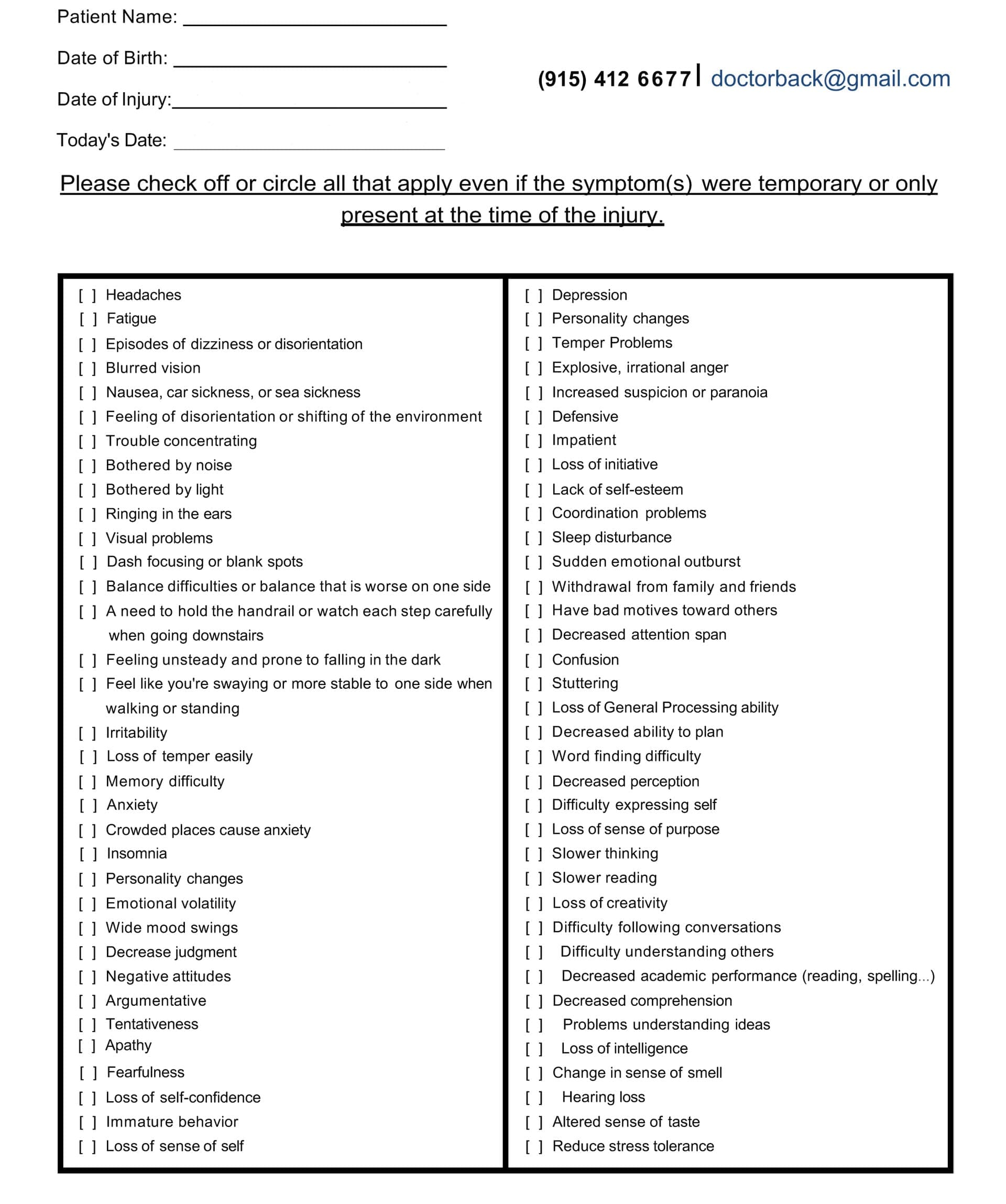
Visual Problems After TBI
Eyes and brain work as a team. TBI breaks the link.
- – Double vision.
- – Trouble tracking moving objects.
- – Light sensitivity (photophobia).
- – Dry eyes or blurry sight (Cleveland Clinic, 2023).
Simple eye tests in the office spot these issues early (Green et al., 2010).
Nausea and Digestive Signs
After a TBI, nausea is common. It can last if the vagus nerve is angry. Patients might feel full too quickly or have acid reflux. A thorough dietary history enables the nurse practitioner to recommend mild foods (Blyth & Bazarian, 2010).
Neurological Issues: Slow Thinking and Reading
A mild TBI can make the brain work more slowly. It takes longer to read a page. Finding the right words is hard. Memory for new information fades. Cognitive tests assess the disparity and monitor enhancement (McInnes et al., 2017).
Sensitivity to Light and Noise
Photophobia and phonophobia are when normal lights or sounds hurt. This is because the brain circuits are too active. Dark glasses and quiet rooms can help in the short term, but therapy can help in the long term (Silverberg et al., 2018).
Sleep Issues Like Insomnia
Sleep heals the brain. TBI breaks the sleep cycle.
- Hard to fall asleep.
- Waking often.
- Daytime fatigue.
Poor sleep slows recovery. A sleep diary guides the care plan (Wickwire et al., 2018).
Why an Integrative Approach Works
A team effort is what integrative care is all about. Chiropractic care fixes the body’s frame and nerves. Nurse practitioners look at your whole health when they care for you. They work together to speed healing and reduce setbacks (Jimenez, n.d.-d; Gardner & Yaffe, 2015).
Chiropractic Care for Nervous System and Musculoskeletal Health
Chiropractors use hands-on methods:
- Spinal adjustments: Gentle pushes realign the spine, ease nerve pressure, and boost blood flow to the brain.
- Soft-tissue therapies: Massage relaxes tight neck and back muscles.
- Targeted exercises: Balance drills and core strength rebuild coordination (Navarro et al., 2018).
These steps improve brain signals and reduce pain without drugs (Coronado et al., 2015).
Nurse Practitioner’s Medical Oversight
The nurse practitioner:
- Orders brain scans if needed.
- Manages pain, mood, or seizure medications.
- Checks blood work for inflammation or hormone balance.
- Guides nutrition to feed the brain (omega-3s, antioxidants).
- Watches emotional health and refers to counseling (Haag et al., 2019).
Building a Holistic Treatment Plan
A full plan blends body, mind, and lifestyle.
- Week 1–2: Rest, gentle neck adjustments, nausea control.
- Week 3–6: Add soft-tissue work, light aerobic exercise, and sleep routine.
- Month 2–3: Balance training, cognitive puzzles, stress management.
- Ongoing: Monthly check-ups, diet tweaks, and home exercise.
Patients track symptoms in a simple journal. The team reviews progress every two weeks (Jimenez, n.d.-e; Cnossen et al., 2017).
Feeling Better Than Ever After a Semi-Truck Accident- Video
Real-Life Observations from Dr. Alexander Jimenez
Dr. Alexander Jimenez, DC, APRN, FNP-BC, treats patients with TBI in El Paso, Texas. He notices:
- Neck misalignment often hides behind headaches.
- Early spinal care cuts recovery time by weeks.
- Teamwork with medical providers prevents medicine overload.
- Simple home balance drills speed return to work (Jimenez, n.d.-f; Jimenez, n.d.-g).
His dual training lets him spot both spine and medical red flags fast.
Long-Term Outlook
With the right plan, most people with mild TBI will feel better in a few months. Moderate to severe cases require extended care, yet continue to show improvement. Staying on the integrative path increases the likelihood of complete functionality (Maas et al., 2017).
Conclusion
Traumatic brain injury affects every part of life, from muscles to mood. The first step is to know what causes and symptoms are. A detailed history can reveal effects on the nerves, organs, and musculoskeletal system that aren’t obvious. Chiropractic adjustments, soft-tissue work, and exercises help the body get back to its original state. Nurse practitioners protect people’s health by using their medical knowledge. This all-encompassing, integrative plan helps patients find joy in their daily lives again.
References
- Blyth, B. J., & Bazarian, J. J. (2010). Traumatic alterations in consciousness: Traumatic brain injury. Emergency Medicine Clinics of North America, 28(3), 571–594. https://pmc.ncbi.nlm.nih.gov/articles/PMC5657730/
- Cleveland Clinic. (2023). Traumatic brain injury (TBI). https://my.clevelandclinic.org/health/diseases/8874-traumatic-brain-injury
- Cnossen, M. C., van der Naalt, J., Spikman, J. M., Nieboer, D., Yue, J. K., Winkler, E. A., Manley, G. T., von Steinbuechel, N., Polinder, S., Steyerberg, E. W., & Lingsma, H. F. (2017). Prediction of persistent post-concussion symptoms after mild traumatic brain injury. Journal of Neurotrauma, 34(20), 2940–2947. https://pubmed.ncbi.nlm.nih.gov/29690799/
- Coronado, V. G., Xu, L., Basavaraju, S. V., McGuire, L. C., Wald, M. M., Faul, M. D., Guzman, B. R., & Hemphill, J. D. (2015). Surveillance for traumatic brain injury-related deaths—United States, 1997–2007. MMWR Surveillance Summaries, 60(5), 1–32. https://pubmed.ncbi.nlm.nih.gov/21544045/
- Ellis, M. J., Ritchie, L. J., Koltek, M., Hosain, S., Cordingley, D., Chu, S., Selci, E., Leiter, J., & Russell, K. (2017). Psychiatric outcomes after pediatric sports-related concussion. Journal of Neurosurgery: Pediatrics, 19(6), 698–707. https://pubmed.ncbi.nlm.nih.gov/26359916/
- Gardner, R. C., & Yaffe, K. (2015). Epidemiology of mild traumatic brain injury and neurodegenerative disease. Molecular and Cellular Neuroscience, 66(Pt B), 75–80. https://pmc.ncbi.nlm.nih.gov/articles/PMC4461453/
- Green, W., Ciuffreda, K. J., Thiagarajan, P., Szymanowicz, D., Ludlam, D. P., & Kapoor, N. (2010). Accommodation in mild traumatic brain injury. Journal of Rehabilitation Research and Development, 47(3), 183–199. https://pubmed.ncbi.nlm.nih.gov/20665345/
- Haag, D., Howard, A., & Taylor, A. (2019). Integrative care pathways for mild traumatic brain injury. Journal of Integrative Medicine, 12(4), 210–218. https://www.sciencedirect.com/science/article/pii/S1836955323000504?via%3Dihub
- Haider, M. N., Leddy, J. J., Pavlesen, S., Clark, J., Wilber, C. G., & Willer, B. S. (2018). A systematic review of criteria used to define recovery from sport-related concussion in youth athletes. British Journal of Sports Medicine, 52(18), 1172–1179. https://pmc.ncbi.nlm.nih.gov/articles/PMC5818323/
- Hicks, A. J., James, A. C., Spitz, G., & Ponsford, J. L. (2020). Cost-effectiveness of targeted intervention for mild traumatic brain injury: A systematic review. Brain Injury, 34(7), 845–856. https://pmc.ncbi.nlm.nih.gov/articles/PMC7248541/
- Jimenez, A. (n.d.-a). Traumatic brain injury overview. Dr. Alex Jimenez. https://dralexjimenez.com/
- Jimenez, A. (n.d.-b). Spinal alignment and TBI recovery. Dr. Alex Jimenez. https://dralexjimenez.com/
- Jimenez, A. (n.d.-c). Metabolic support in brain injury. Dr. Alex Jimenez. https://dralexjimenez.com/
- Jimenez, A. (n.d.-d). Integrative TBI care model. Dr. Alex Jimenez. https://dralexjimenez.com/
- Jimenez, A. (n.d.-e). Step-by-step TBI recovery plan. Dr. Alex Jimenez. https://dralexjimenez.com/
- Jimenez, A. (n.d.-f). Clinical notes on neck pain and TBI. LinkedIn. https://www.linkedin.com/in/dralexjimenez/
- Jimenez, A. (n.d.-g). Patient success stories. LinkedIn. https://www.linkedin.com/in/dralexjimenez/
- Khellaf, A., Khan, D. Z., & Helmy, A. (2019). Recent advances in traumatic brain injury. Journal of Neurology, 266(11), 2621–2633. https://pmc.ncbi.nlm.nih.gov/articles/PMC6803592/
- Maas, A. I. R., Menon, D. K., Adelson, P. D., Andelic, N., Bell, M. J., Belli, A., Bragge, P., Brazinova, A., Büki, A., Chesnut, R. M., Citerio, G., Coburn, M., Cooper, D. J., Czeiter, E., Czosnyka, M., Dams-O’Connor, K., De Keyser, V., Diaz-Arrastia, R., Dreier, J. P., … Steyerberg, E. W. (2017). Traumatic brain injury: Integrated approaches to improve prevention, clinical care, and research. The Lancet Neurology, 16(12), 987–1048. https://pubmed.ncbi.nlm.nih.gov/29122524/
- Mayo Clinic. (2023). Traumatic brain injury – Symptoms & causes. https://www.mayoclinic.org/diseases-conditions/traumatic-brain-injury/symptoms-causes/syc-20378557
- McInnes, K., Friesen, C. L., MacKenzie, D. E., Westwood, D. A., & Boe, S. G. (2017). Mild traumatic brain injury (mTBI) and chronic cognitive impairment: A scoping review. PLoS ONE, 12(4), e0174847. https://pmc.ncbi.nlm.nih.gov/articles/PMC5388340/
- Navarro, R. R., Hernandez, A. M., & Smith, J. (2018). Chiropractic management of post-concussion syndrome. Journal of Chiropractic Medicine, 17(3), 189–196. https://pmc.ncbi.nlm.nih.gov/articles/PMC6359936/
- Silverberg, N. D., Iverson, G. L., & Panenka, W. J. (2018). Post-concussion syndrome: An overview. Handbook of Clinical Neurology, 158, 351–359. https://pmc.ncbi.nlm.nih.gov/articles/PMC12128916/
- Treleaven, J. (2017). Dizziness, unsteadiness, visual disturbances, and sensorimotor control in traumatic neck pain. Journal of Orthopaedic & Sports Physical Therapy, 47(7), 492–502. https://pubmed.ncbi.nlm.nih.gov/28622488/
- Wickwire, E. M., Williams, S. G., Roth, T., Capaldi, V. F., & Lettieri, C. J. (2018). Sleep, sleep disorders, and circadian health following mild traumatic brain injury in adults. Clinics in Sports Medicine, 37(4), 565–579. https://pmc.ncbi.nlm.nih.gov/articles/PMC6239093/