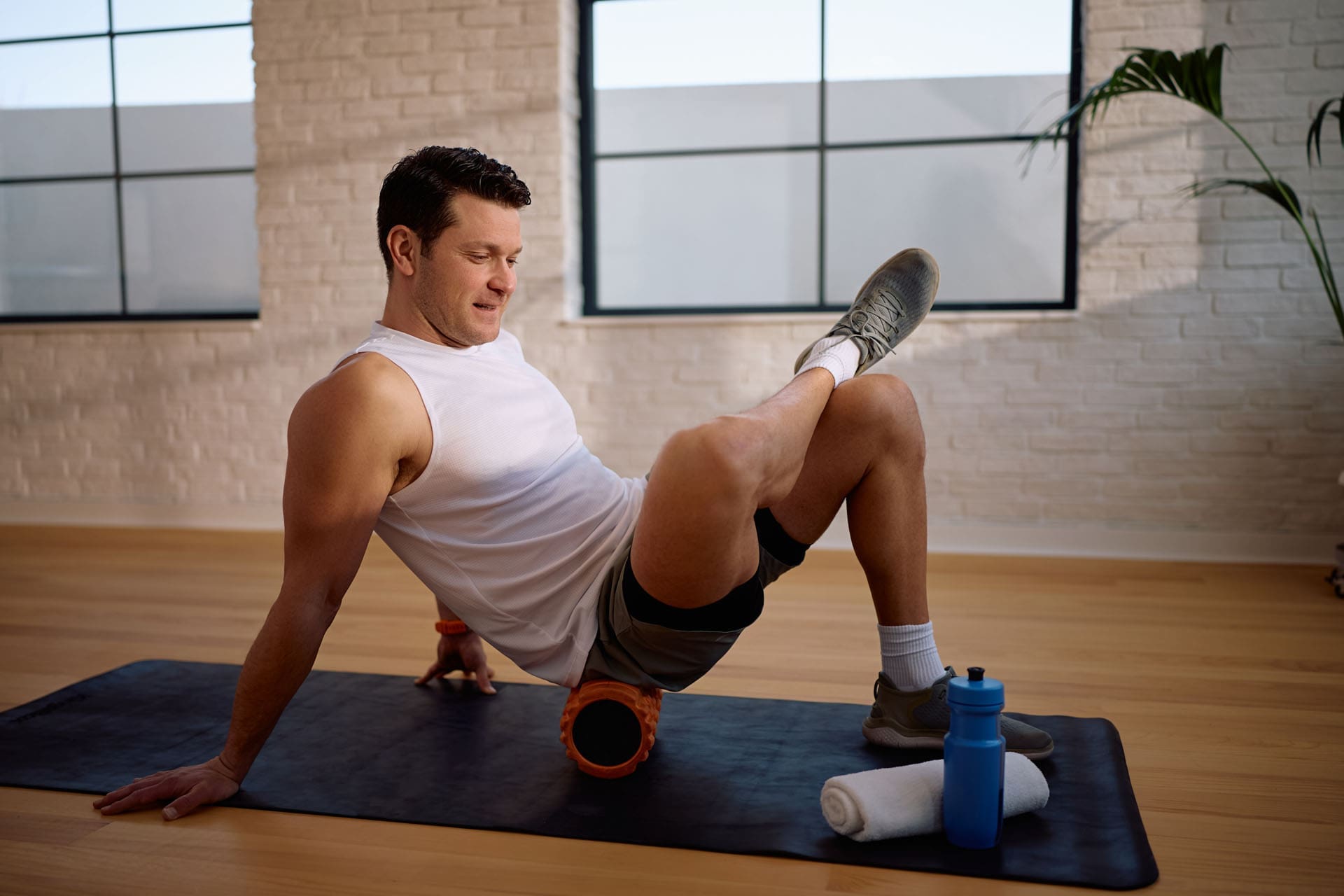
Tennis balls, foam rollers, and calf-release techniques are effective for self-massage.
Sciatica is not a single diagnosis. It is a symptom pattern—often burning, sharp, or “electric” pain that can start in the low back or buttock and travel down the leg. Some people also feel tingling or numbness. At ChiroMed, sciatica is usually discussed as a signal problem: something is irritating or sensitizing nerve tissues, and the body reacts with pain, tightness, and protective muscle guarding. (ChiroMed, 2025a)
Self-massage can be a helpful tool because many sciatica flare-ups include tight muscles and trigger points in the low back, glutes, hips, and the piriformis muscle. When these tissues tighten, they can increase pressure around sensitive areas and prolong symptoms. (Healthline, 2021)
Below is a practical, safe, “easy-to-follow” self-massage plan that matches what many people use at home—tennis balls, foam rollers, and gentle calf work—plus how these tools often fit into a whole-person chiropractic plan at ChiroMed. (ChiroMed, 2025b)
The #1 Safety Rule: Stay in the “Hurts Good” Zone
Self-massage should feel like helpful pressure, not intense pain.
Use this simple rule:
0–3 out of 10 discomfort: okay (“hurts good”)
4–10 out of 10: too much (back off)
Sharp zaps, burning, or increasing numbness: stop right away
This approach aligns with common guidance for piriformis massage: start gently, avoid excessive pressure, and discontinue if symptoms worsen. (Healthline, 2021)
Important: Do not apply intense pressure directly over the area where you feel the “electric line” of sciatic symptoms. The goal is to release muscle tension around the area, not to crush a nerve. (HSS, 2024)
Why These Areas Matter for Sciatica
Most effective self-massage targets the “hot spots” that commonly tighten during sciatica:
Low back muscles (especially near the pelvis)
Glutes (buttock muscles)
Piriformis (a deep hip muscle)
The calf is often tight due to compensation or referred pain.
Piriformis tension is a common reason people feel buttock pain and leg symptoms that look like sciatica. (Healthline, 2021)
Tool 1: Tennis Ball Release for Glutes and Piriformis
A tennis ball is useful because it can quickly locate a tight point. Many sciatica massage guides recommend using a ball to target trigger points in the gluteal/piriformis area. (Massage Chair Store, 2021; Healthline, 2021)
How to do it (simple floor method)
Sit on the floor and place a tennis ball under one buttock.
Lean your body weight slightly into the ball.
Slowly roll a few inches until you find a tender spot.
Apply light pressure for 20–45 seconds; breathe slowly.
Move off the spot and repeat 2–4 times.
Switch sides if needed.
What you want to feel:
Dull ache, pressure, warmth = okay What you do not want:
If you experience a sharp shooting pain down your leg or an increase in numbness, you should stop immediately (Healthline, 2021).
“Peanut” trick (two tennis balls)
Some people tape two balls together (or put them in a sock) to create a “peanut.” This can help you apply pressure on both sides of soft tissue—not the spine. (Massage Chair Store, 2021)
Tool 2: Foam Roller for Broader, Gentler Pressure
Foam rolling distributes pressure over a larger area than a ball, which may feel safer on sensitive days. It is often used for myofascial release, meaning the application of slow pressure to relax tight muscles and fascia. (Dorsal Health, 2020)
Best foam roller targets for sciatica patterns
Glutes (roll slowly, small range)
Outer hip muscles
Upper hamstrings (avoid behind the knee)
Simple foam rolling dose:
30–60 seconds per area
1–2 rounds total
Keep discomfort ≤3/10 (Dorsal Health, 2020)
Calf Massage for Referred Pain and “Compensation Tightness”
Sciatica symptoms often alter a person’s gait, stance, and leg loading. That can make the calf feel tight, sore, or crampy—even if the main issue is higher up. Gentle calf massage can lower muscle guarding and improve comfort while you work on the hip and low back. (Chicago Pain Control, n.d.)
Simple calf massage (hands-only)
Sit comfortably and support your leg.
Use your thumbs and palms to knead the calf slowly.
Work from mid-calf toward the ankle and back up.
Stop if you feel sharp nerve sensations.
Add Heat to Improve Results
Heat can relax tissues and make self-massage feel more effective. Many home-care routines for sciatica recommend applying heat before soft-tissue work to reduce muscle guarding. (HSS, 2024)
Try:
Heat 10–15 minutes
Then self-massage for 5–8 minutes
Then a short walk, 3–10 minutes if tolerated
What ChiroMed Often Adds: An Integrative Plan for Long-Term Relief
Self-massage is helpful, but many people need more than symptom relief. A longer-term plan often focuses on **-two goals:
Lower nerve irritation
Fix the mechanical patterns that keep stress on tissues
ChiroMed’s content frequently emphasizes combining chiropractic care, soft-tissue work, and rehabilitation strategies so patients are not merely chasing pain day to day. (ChiroMed, 2025b)
Common integrative elements include:
Focused chiropractic adjustments to improve motion and reduce joint stress (Fremont Chiropractic, n.d.)
Myofascial release/trigger point therapy to calm tight muscles and improve movement (Pinnacle Hill Chiropractic, 2023)
Spinal decompression (when appropriate) to reduce pressure and support disc-related cases (Posture Perfect PH, n.d.)
Rehab and mobility exercises to build stability and reduce flare-ups (Bend Total Body Chiropractic, n.d.)
Clinical perspective reflected in Dr. Alexander Jimenez’s published education
Dr. Alexander Jimenez, DC, APRN, FNP-BC, often describes sciatica care as a “systems” problem—muscles, joints, discs, inflammation, and movement habits can all contribute. His educational posts emphasize combining hands-on care with guided self-care to support function rather than merely providing temporary relief. (Jimenez, n.d.-a; Jimenez, n.d.-b)
When to Stop Self-Massage and Get Evaluated
Seek medical evaluation urgently if you have:
New or worsening leg weakness
Loss of bowel/bladder control
Numbness in the groin/saddle area
Severe pain that is rapidly worsening
These signs may indicate more severe nerve involvement and should not be managed with home massage alone. (ChiroMed, 2026)
A Simple 7-Minute Routine (Daily or During Flares)
Heat: 10 minutes (optional) (HSS, 2024)
Tennis ball glute/piriformis: 2 minutes total (Healthline, 2021)
Foam roll glutes/outer hip: 2 minutes total (Dorsal Health, 2020)
Calf massage: 2 minutes total (Chicago Pain Control, n.d.)
Easy walk: 3–10 minutes if tolerated (ChiroMed, 2025a)
Keep it gentle, stay in the 0–3/10 range, and avoid pressing directly into sharp nerve pain.
Post-Accident Headaches & Chiropractic Care: A Practical, Patient-First Guide for ChiroMed
Headaches that won’t quit after a car crash are common—and fixable. This guide explains why they linger and how an integrative chiropractic plan at ChiroMed can address the root causes with safe, conservative care.
Why Headaches Linger After Car Accidents
A collision can injure soft tissues (muscles, tendons, and ligaments), upset normal spinal alignment, and irritate nerves in the neck and upper back. Together, these changes create muscle guarding, restricted joint motion, and inflamed pain pathways that keep headaches going—even when ER scans look “normal.” Typical patterns include tension-type headaches, cervicogenic (neck-originating) headaches, post-traumatic migraines, and post-concussive headaches (Cascade Spine & Injury Center, 2023; North Port Chiropractic, 2025; Wellness Chiropractic Care, n.d.). Cascade Spine and Injury Center+2northport-chiropractor.com+2
Soft-tissue microtrauma triggers inflammation and protective spasm. Tight suboccipitals, SCMs, scalenes, and upper trapezius muscles can refer pain into the head and behind the eyes (Brookdale Health, n.d.). brookdalehealth.com
Spinal misalignments and facet joint irritation alter mechanics in the upper cervical spine and can refer pain toward the skull (North Port Chiropractic, 2025; Dr. Toth Chiropractic, n.d.). northport-chiropractor.com+1
Nerve irritation and autonomic upset heighten sensitivity to normal movement and posture, reinforcing headache cycles (Premier Care Chiropractic, 2023/2024). premiercarechiro.com+1
Delayed onset is common: symptoms may flare days to weeks after impact as inflammation evolves and compensations set in (Premier Care Chiropractic, 2024; Premier Care Chiropractic, 2023). premiercarechiro.com+1
Important: Seek emergency care first for red flags like severe or worsening headache, repeated vomiting, confusion, weakness/numbness, vision or speech changes, or loss of consciousness (Cascade Spine & Injury Center, 2023; Neuro Injury Care, 2023). Chiropractic care complements—never replaces—urgent medical evaluation. Cascade Spine and Injury Center+1
The Headache Patterns We See Most
Tension-Type Headaches
Why they happen: After a crash, overloaded neck and shoulder muscles develop trigger points that refer pain to the head. What it feels like: Dull, band-like pressure starting at the neck/base of the skull; worse with stress or screen time. What helps: Gentle cervical/upper-thoracic adjustments, soft-tissue release, and breathing-based down-regulation (Brookdale Health, n.d.; Wellness Chiropractic Care, n.d.). brookdalehealth.com+1
Cervicogenic Headaches
Why they happen: Pain is generated by cervical joints/soft tissue but felt in the head; often linked to upper-cervical facet irritation and reduced segmental motion. What it feels like: Unilateral head/neck pain that worsens with neck movement or sustained posture. What helps: Segment-specific adjustments/mobilization and deep-neck-flexor reconditioning (North Port Chiropractic, 2025; Premier Care Chiropractic, 2023). northport-chiropractor.com+1
Post-Traumatic Migraines
Why they happen: Impact can dysregulate cervical nociception, the trigeminovascular system, and autonomic tone. What it feels like: Throbbing pain with light/sound sensitivity, nausea; activity or posture may aggravate. What helps: Improve cervical mechanics and tissue tone, normalize sleep/hydration, pace activity; consider decompression when indicated (My Pinnacle Chiropractic, 2025; Premier Care Chiropractic, 2023). Pinnacle Chiropractic+1
Post-Concussive Headaches
Why they happen: Rapid acceleration/deceleration can injure brain tissues and cervical structures even without a direct head strike. What it feels like: Headache with dizziness, brain fog, or visual strain; may worsen with exertion. What helps: Medical clearance first; then a graded plan to restore cervical mobility and strength, guided by symptoms (Cascade Spine & Injury Center, 2023). Cascade Spine and Injury Center
The Mechanics Behind Lingering Pain
Inflammation + Guarding Loop Damaged tissues release inflammatory mediators that stimulate pain receptors. The body “guards” by tightening muscles, which compresses joints and perpetuates inflammation (Lutz Chiropractic, 2025; Wellness Chiropractic Care, 2023). lutzchiro.com+1
Joint Fixations & Misalignments When cervical segments stop moving well, facet joints and surrounding tissues become irritated, leading to increased referred head pain (North Port Chiropractic, 2025; Dr. Toth Chiropractic, n.d.). northport-chiropractor.com+1
Nerve Sensitization Irritated nerve roots and sympathetic fibers elevate sensitivity. Restoring alignment and easing tissue load helps normalize signaling (Premier Care Chiropractic, 2023/2024). premiercarechiro.com+1
Delayed Expression of Symptoms Early adrenaline and subtle sprains can mask pain; symptoms may arise days or weeks later as swelling and compensations evolve (Premier Care Chiropractic, 2024; Premier Care Chiropractic, 2023). premiercarechiro.com+1
How Chiropractic Care at ChiroMed Addresses Root Causes
At ChiroMed, your plan is built to treat what’s driving the headache, not just dull symptoms. We combine hands-on care, targeted exercise, and practical self-care so improvement lasts.
1) Spinal Adjustments (Manual or Instrument-Assisted)
Gentle, specific adjustments restore segmental motion, reduce facet irritation, and refine alignment—especially at the upper cervical spine. Patients often report fewer and less intense headaches as mechanics normalize (Dr. Toth Chiropractic, n.d.; North Port Chiropractic, 2025). drtoth.com+1
2) Soft-Tissue Therapy
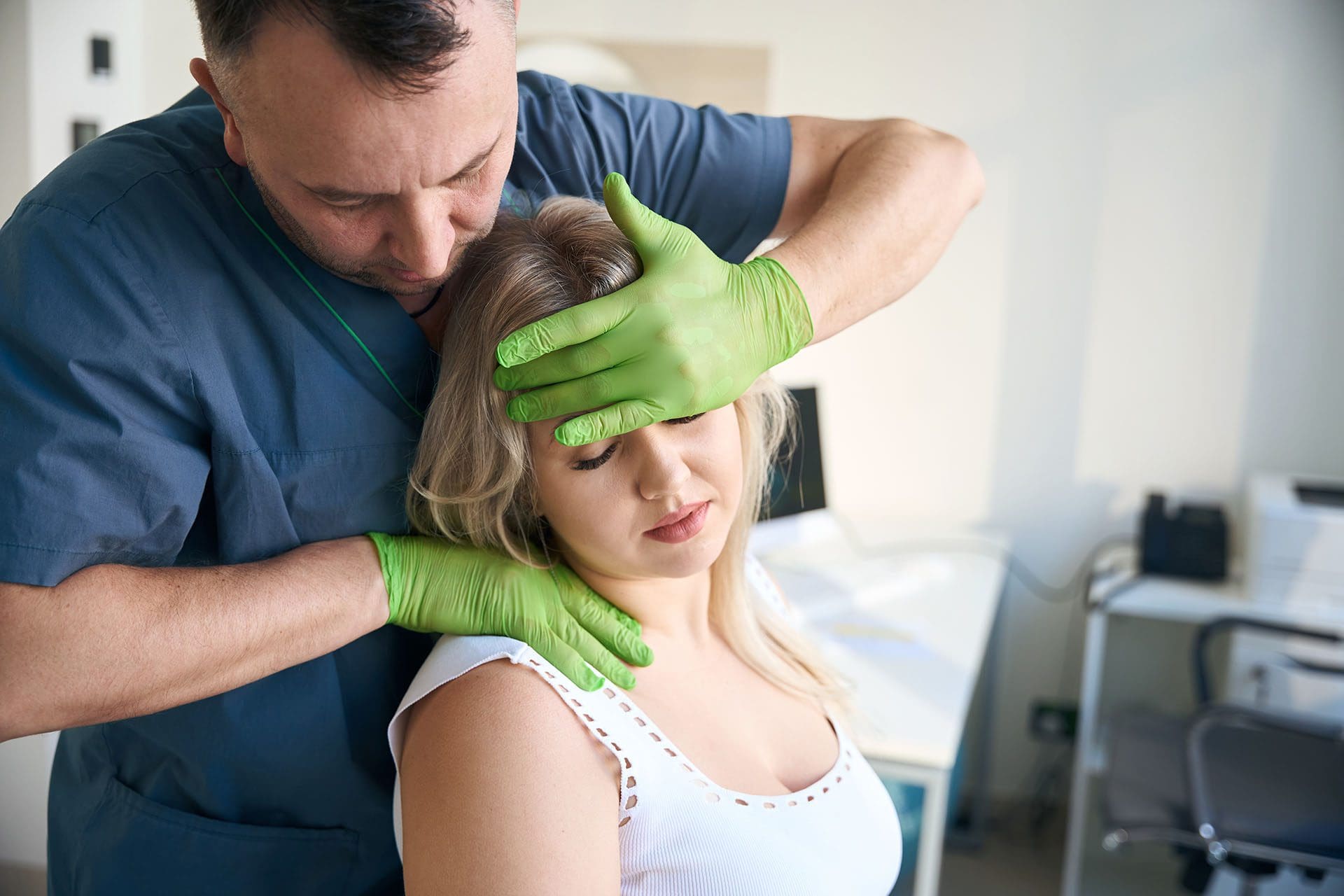
Myofascial release and trigger-point techniques deactivate common referral sources (suboccipitals, SCM, scalenes, upper traps), reduce guarding, and help adjustments “hold” between visits (Brookdale Health, n.d.). brookdalehealth.com
3) Cervical Traction/Decompression (As Indicated)
For patients with nerve irritation or axial loading, gentle traction can open space, reduce pressure, and improve local circulation—often easing cervicogenic and tension-type triggers (North Port Chiropractic, n.d.). northport-chiropractor.com
4) Corrective Exercise & Postural Retraining
We re-educate deep neck flexors, scapular stabilizers, and thoracic mobility to support healthy mechanics during driving, desk work, and daily life (Premier Care Chiropractic, 2023; Lutz Chiropractic, 2025). premiercarechiro.com+1
5) Education & Prevention
Micro-breaks, workstation tweaks, sleep/hydration routines, and graded activity protect progress and lower flare-ups (Cascade Spine & Injury Center, 2023; Wellness Chiropractic Care, n.d.). Cascade Spine and Injury Center+1
Timing matters. Evaluating within the first 1–2 weeks helps prevent chronic pathways from “setting in” (Premier Care Chiropractic, 2024; Dr. Toth Chiropractic, 2025). premiercarechiro.com+1
What a Visit Looks Like (ChiroMed Process)
History & Red-Flag Screen We clarify the mechanism (rear-end, side-impact, headrest position), immediate/delayed symptoms, medications, prior headache history, and job/sport demands. Red flags trigger immediate medical referral (Cascade Spine & Injury Center, 2023; Neuro Injury Care, 2023). Cascade Spine and Injury Center+1
Neuromusculoskeletal Exam
Cervical/thoracic ROM and joint end-feel
Palpation for segmental tenderness & trigger points
Neurologic screen: myotomes, dermatomes, reflexes
Headache triggers: posture, screen/drive time, sleep
Advanced Imaging (As Indicated) X-ray or MRI/CT is considered for neurological deficits, high-energy trauma, or poor progress after an appropriate trial of care (North Port Chiropractic, 2025; Premier Care Chiropractic, 2023). northport-chiropractor.com+1
Diagnosis & Care Plan We identify dominant drivers—such as joint dysfunction, muscle guarding, nerve irritation, migraine physiology, or mixed—and match them with precise interventions (Dr. Toth Chiropractic, n.d.; Brookdale Health, n.d.). drtoth.com+1
Outcome Tracking & Case Coordination We document progress (range, strength, disability scores, frequency/intensity of headaches) and coordinate with your PCP, specialists, or, when relevant, legal teams. (Premier Care Chiropractic, 2023; El Paso Chiropractic/Synergy, 2025—exemplar). premiercarechiro.com+1
Complementary Therapies That Pair Well With Chiropractic
Heat & cold strategies: Apply heat before mobility to relax tissues; use brief ice after workload spikes (Cascade Spine & Injury Center, 2023). Cascade Spine and Injury Center
Ergonomics & driving posture: Headrest height, seat angle, and screen position reduce cervical load (Cascade Spine & Injury Center, 2023). Cascade Spine and Injury Center
Graded return to activity: Short walks and gentle mobility boost blood flow without flare-ups (Premier Care Chiropractic, 2023). premiercarechiro.com
Recovery Timeline (Example)
Note: Your plan will be individualized. This timeline illustrates common milestones.
Progress strength/endurance; add job- or sport-specific tasks
Build a prevention toolkit: mobility sequence, ergonomic playbook, flare-control plan (Premier Care Chiropractic, 2023). premiercarechiro.com
Frequently Asked Questions
Do “minor” crashes really cause lasting headaches? Yes. Even low-speed impacts can strain soft tissue and disturb joint mechanics. Symptoms often appear days or weeks later (Premier Care Chiropractic, 2024; Premier Care Chiropractic, 2023). premiercarechiro.com+1
How soon should I see a chiropractor? Ideally, within 1–2 weeks, or sooner if symptoms escalate (Premier Care Chiropractic, 2024; Dr. Toth Chiropractic, 2025). premiercarechiro.com+1
Will I need imaging? Not always. Imaging is considered for neurological findings, severe trauma, or poor progress (North Port Chiropractic, 2025; Premier Care Chiropractic, 2023). northport-chiropractor.com+1
Can chiropractic help post-traumatic migraines? By improving alignment, reducing muscle tension, and normalizing nerve input, many people report fewer and less intense migraine days (My Pinnacle Chiropractic, 2025; Premier Care Chiropractic, 2023). Pinnacle Chiropractic+1
What if symptoms persist beyond 3 months? That’s often considered chronic and may still respond to a targeted plan; we reassess drivers and adjust care (Premier Care Chiropractic, 2024). premiercarechiro.com
A Brief Clinical Lens on Dual-Scope Care (Exemplar)
While ChiroMed provides chiropractic-centered, integrative care, it’s useful to note how some clinics coordinate chiropractic and medical decision-making under one roof. For example, Dr. Alexander Jimenez, DC, APRN, FNP-BC (El Paso) illustrates a dual-scope model that correlates biomechanical findings with medical drivers, orders advanced neuromusculoskeletal imaging when indicated, and prepares legal-ready documentation for personal-injury cases—all while progressing patients through adjustments, soft-tissue care, decompression, and rehabilitation (Jimenez, 2025a–d; El Paso Chiropractic/Synergy, 2025). This kind of coordination underscores the value of clear diagnosis, structured progression, and consistent documentation in post-accident headache care. Synergy Chiropractic
Practical Home Strategies (Simple & Repeatable)
Screens at eye level: Keep ears over shoulders; set a 20–30-minute micro-break timer (Cascade Spine & Injury Center, 2023). Cascade Spine and Injury Center
Warm before, cool after: Brief heat before mobility to relax tissue; brief ice after workload spikes (Brookdale Health, n.d.). brookdalehealth.com
Hydrate and sleep: Dehydration and poor sleep can amplify headaches, so maintain a steady routine (Premier Care Chiropractic, 2023). premiercarechiro.com
Ease into cardio: Short walks improve circulation without provoking flares (Premier Care Chiropractic, 2023). premiercarechiro.com
Track triggers: Note links between neck posture, stress spikes, and headache intensity; adjust positions accordingly (Cascade Spine & Injury Center, 2023). Cascade Spine and Injury Center
Bottom Line
Post-accident headaches linger because a collision injures soft tissues, disturbs cervical alignment, and irritates nerves. Chiropractic care targets the root causes with precise adjustments, soft-tissue therapy, traction when indicated, and corrective exercise—plus practical coaching to keep gains. At ChiroMed, we design a plan around your exam findings, track measurable progress, and coordinate when imaging or additional consultation is appropriate—so relief is not just fast, but lasting (North Port Chiropractic, 2025; Lutz Chiropractic, 2025; Premier Care Chiropractic, 2023/2024; Cascade Spine & Injury Center, 2023). Cascade Spine and Injury Center+4northport-chiropractor.com+4lutzchiro.com+4