

Alcohol and Cancer Risk: How Family Wellness and Integrative Healthcare Support Prevention
Abstract: Alcohol is a familiar part of social life, but it is also an established cause of several cancers. An October 2026 national survey shows that many Americans still miss this connection. Understanding alcohol metabolism, making supportive family decisions, and coordinating preventive care can help households address modifiable risks. Nutrition education, medical counseling, and appropriate musculoskeletal care each have distinct roles in a comprehensive wellness plan.
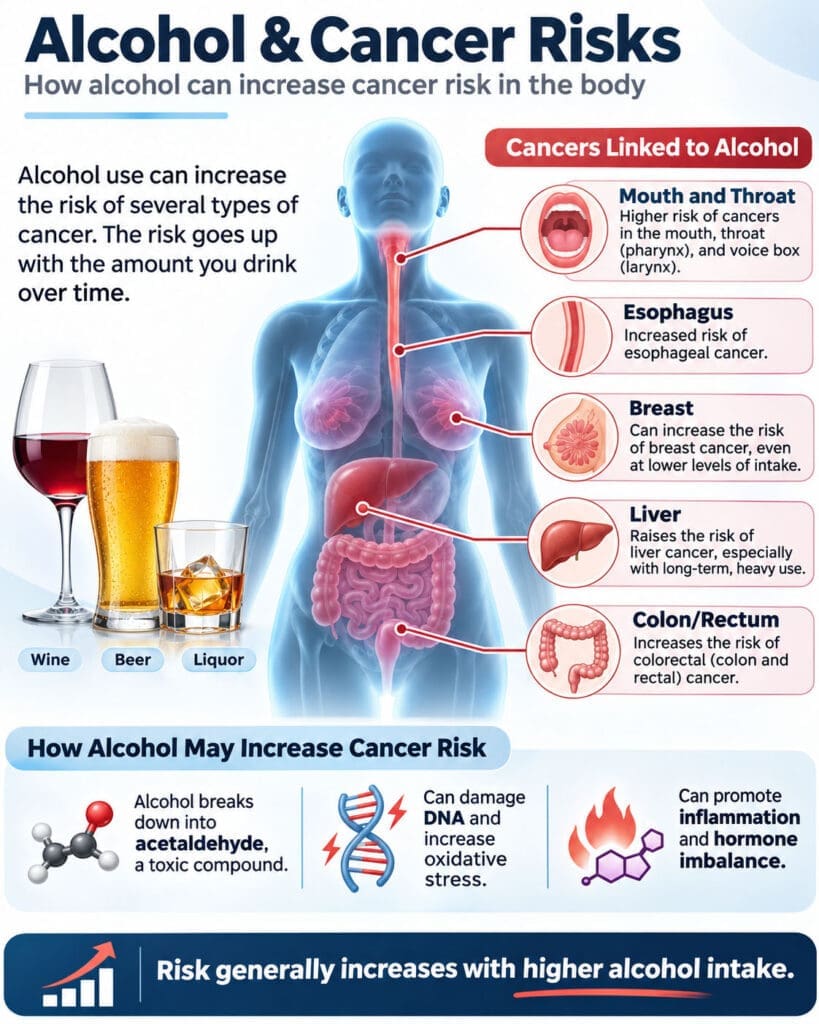
A family dinner should not require a medical lecture. Yet what we drink deserves the same attention as what we eat, how we sleep, and when we schedule checkups. Alcohol may appear at celebrations or after work. Inside the body, however, it creates chemical exposures that matter over time.
Families deserve accurate information without judgment. Understanding risk does not mean predicting who will develop cancer. It means recognizing a factor people can discuss and change.
Why Alcohol and Cancer Awareness Matters to Families
What the October 2026 Annenberg survey found
In a nationally representative survey of 1,842 American adults, 58% knew that regularly drinking alcohol increases later cancer risk. Another 42% did not recognize that relationship: 24% were unsure, while 17% said alcohol had no effect. Awareness had increased from 53% in February 2026 and 40% in September 2024 (Annenberg Public Policy Center [APPC], 2026).
Those numbers describe knowledge, not cancer diagnoses. They reveal an opportunity for better conversations at home and in exam rooms.
Parents, grandparents, and other adults often shape household expectations through everyday routines. A discussion about alcohol can help everyone understand that a beverage’s social acceptance does not determine its biological safety. The goal is not blame, prohibition imposed by relatives, or fear. It is shared knowledge and informed choice.
Which cancers are linked to alcohol?
The National Cancer Institute identifies increased risks involving the mouth, throat, voice box, esophagus, liver, colon and rectum, and breast (National Cancer Institute [NCI], 2025). These associations vary in strength and pattern across drinking levels. For cancer prevention, drinking less generally means less alcohol-related exposure; abstaining avoids that exposure.
No amount of alcohol can be guaranteed risk-free for cancer. Still, individual risk depends on more than one factor, including age, genetics, smoking, and total exposure. An elevated risk is not a diagnosis or a certainty.
How Alcohol Can Damage Cells
Acetaldehyde: the unwanted middle step
Imagine the liver as a processing facility. When someone drinks, enzymes begin converting ethanol into acetaldehyde. Other enzymes then convert acetaldehyde into acetate, which the body can process further. That middle chemical is important: acetaldehyde is reactive and can damage DNA and proteins (NCI, 2025).
DNA acts like a cell’s instruction manual. Cells can repair damage to these instructions, but repeated injury creates more opportunities for errors. These biochemical effects help explain why alcohol is classified as a human carcinogen. They do not mean every damaged cell becomes cancerous.
Oxidative stress and the gut barrier
Alcohol metabolism can also generate reactive oxygen species. Picture sparks produced during normal machinery operation. When those sparks exceed protective capacity, they can damage cellular fats, proteins, and DNA. The body uses antioxidant defenses, including glutathione, but supplements cannot make alcohol exposure harmless.
Heavy or prolonged alcohol exposure may also disturb the intestinal barrier and gut microbial environment. This can contribute to inflammatory signaling. Researchers study these pathways to understand how drinking influences tissue health (International Agency for Research on Cancer [IARC], 2024).
Here the distinction matters: acetaldehyde, oxidative stress, and inflammation are mechanisms. Developing cancer is a separate clinical outcome measured across people and time. Neither an inflammation test nor a single liver enzyme result can establish a person’s cancer risk on its own.
Family Prevention Starts With Respectful Choices
Make the conversation practical
Families can ask what role alcohol plays in celebrations, relaxation, and stress management. Consider offering appealing alcohol-free options without singling anyone out. Discuss drinking habits privately and respectfully; avoid labeling loved ones or assuming everyone wants the same goal.
A useful appointment question is: “Given my history, medicines, and health goals, what would reducing or avoiding alcohol change for me?” Clinicians can help explain cancer risk while considering pregnancy, liver disease, sleep problems, medication interactions, and other circumstances.
The IARC review found sufficient evidence that reducing or stopping alcohol consumption lowers the incidence of oral and esophageal cancers. Evidence for the size of benefit at other cancer sites is less certain, even though alcohol itself is a proven risk factor (IARC, 2024). This is a reason for measured optimism, not exaggerated promises.
If someone drinks heavily or may be physically dependent, abrupt withdrawal can be dangerous. They should seek medical guidance before stopping. Supportive treatment is more effective than shame.
Keep prevention bigger than one habit
Alcohol discussions belong alongside age-appropriate cancer screening, tobacco avoidance, recommended vaccinations, physical activity, and evaluation of concerning symptoms. Families with notable cancer histories can ask their clinicians whether genetic counseling is appropriate. New bleeding, unexplained weight loss, persistent swallowing difficulty, or other alarming changes deserve medical assessment rather than a wellness-only approach.
Nurse Practitioner and Physician Guidance
A nurse practitioner can review drinking patterns, medicines, personal risk factors, and readiness for change. Preventive visits can also include blood pressure checks, laboratory testing, screening recommendations, and referrals when needed. These services turn broad population findings into conversations tailored to an individual, without pretending that one blood test predicts cancer.
Physician oversight adds support when problems are complex. Dr. Maria Guadalupe Cardenas, MD, serves as Medical Director and Collaborative Physician alongside Dr. Alex Jimenez, DC, APRN, FNP-BC. Their coordinated model can help address metabolic concerns, medication safety, health education, and referrals while respecting each professional’s scope and the patient’s existing primary care team.
Shared decision-making means patients understand options and choose priorities with clinicians. A household member may begin by reducing drinking occasions; another may choose abstinence. Both deserve accurate counseling and follow-up, not a one-size-fits-all directive.
Nutrition and Metabolic Wellness Without Detox Myths
A balanced eating pattern supports energy, muscle function, and general metabolic health. Meals featuring vegetables, fruit, legumes, whole grains, and adequate protein can help households establish sustainable routines. Clinicians may evaluate nutrient deficiencies when symptoms, diet, or medical history justify testing.
Alcohol can interfere with absorption and handling of nutrients such as folate. Nevertheless, no food, vitamin, antioxidant infusion, or special “detox” protocol has been shown to cancel alcohol’s carcinogenic effects. A normal liver laboratory panel cannot certify that drinking is safe. The most direct way to reduce alcohol-related exposure is to drink less or not drink.
For more context on personalized food choices, see Dr. Jimenez’s discussion of functional medicine nutrition. Nutrition education should complement standard prevention, not replace it.
Chiropractic Care: Supporting Movement, Not Treating Cancer Risk
Some family members also experience mechanical neck pain, back discomfort, or limited mobility. When independently indicated after appropriate evaluation, chiropractic care or rehabilitation may help address those musculoskeletal concerns. It does not prevent alcohol-related DNA damage, lower alcohol-related cancer incidence, or replace medical screening.
Dr. Jimenez’s health, wellness, and chiropractic resources outline the separate role of physical function and movement care. Patients with serious medical conditions need screening, precautions, and coordination before manual treatment.
A Coordinated El Paso Care Model
At Injury Medical Chiropractic and Functional Medicine Clinic, medical leadership and rehabilitation expertise support a multidisciplinary approach. Dr. Cardenas provides medical direction and collaborates with internal medicine. Dr. Alex Jimenez brings dual chiropractic and family nurse practitioner training, with a clinical emphasis on soft tissue injury, musculoskeletal assessment, and functional rehabilitation.
This structure can connect patients with appropriate medical counseling, nutrition education, pain assessment, and physical rehabilitation when they need more than one service. The clinic describes its approach to multidisciplinary integrative care. Its value lies in coordinated assessment and patient choice, not an unverified claim that no other El Paso practice offers similar services.
Choose the Next Healthy Conversation
Cancer prevention begins with questions families feel comfortable asking. Talk about drinking honestly, review screening schedules, and bring medication or family-history concerns to a qualified clinician. If pain or restricted movement is also present, discuss whether independent musculoskeletal evaluation is warranted.
Dr. Jimenez and Dr. Cardenas can help coordinate suitable wellness and rehabilitation conversations with existing healthcare providers. The aim is: clearer information, safer decisions, and sustainable habits that support family health across generations.
References
Annenberg Public Policy Center. (2026, October 27). Public knowledge that alcohol causes cancer rebounds. University of Pennsylvania.
International Agency for Research on Cancer. (2024). IARC handbooks of cancer prevention: Volume 20A—Reduction or cessation of alcohol consumption. World Health Organization.
National Cancer Institute. (2025). Alcohol and cancer risk fact sheet. National Institutes of Health.
Jimenez, A. (n.d.). Offering progressive multi-disciplinary approaches to integrative medicine & personal injury care. DrAlexJimenez.com.
Jimenez, A. (n.d.). Health wellness and chiropractic. DrAlexJimenez.com.
Post Disclaimer
General Disclaimer, Licenses and Board Certifications *
Professional Scope of Practice *
The information herein on "Alcohol and Cancer Risk: How Family Wellness and Integrative Healthcare Support Prevention" is not intended to replace a one-on-one relationship with a qualified health care professional or licensed physician and is not medical advice. We encourage you to make healthcare decisions based on your research and partnership with a qualified healthcare professional.
Blog Information & Scope Discussions
Welcome to El Paso's Premier Wellness and Injury Care Clinic & Wellness Blog, where Dr. Alex Jimenez, DC, FNP-C, a Multi-State board-certified Family Practice Nurse Practitioner (FNP-BC) and Chiropractor (DC), presents insights on how our multidisciplinary team is dedicated to holistic healing and personalized care. Our practice aligns with evidence-based treatment protocols inspired by integrative medicine principles, similar to those on this site and on our family practice-based chiromed.com site, focusing on naturally restoring health for patients of all ages.
Our areas of multidisciplinary practice include Wellness & Nutrition, Chronic Pain, Personal Injury, Auto Accident Care, Work Injuries, Back Injury, Low Back Pain, Neck Pain, Migraine Headaches, Sports Injuries, Severe Sciatica, Scoliosis, Complex Herniated Discs, Fibromyalgia, Chronic Pain, Complex Injuries, Stress Management, Functional Medicine Treatments, and in-scope care protocols.
Our information scope is multidisciplinary, focusing on musculoskeletal and physical medicine; wellness, contributing etiological viscerosomatic disturbances within clinical presentations, associated somato-visceral reflex clinical dynamics; subluxation complexes, sensitive health issues, and functional medicine articles, topics, and discussions.
We provide and facilitate clinical collaboration with specialists across disciplines. Each specialist is governed by their professional scope of practice and licensure jurisdiction. We use functional health & wellness protocols to treat and support care for musculoskeletal injuries or disorders.
Our videos, posts, topics, and insights address clinical matters and issues that directly or indirectly relate to our clinical scope of practice.
Our office has made a reasonable effort to provide supportive citations and has identified relevant research studies that support our posts. We provide copies of supporting research studies upon request to regulatory boards and the public.
We understand that we cover matters that require an additional explanation of how they may assist in a particular care plan or treatment protocol; therefore, to discuss the subject matter above further, please feel free to ask Dr. Alex Jimenez, DC, APRN, FNP-BC, or contact us at 915-850-0900.
We are here to help you and your family.
Blessings
Dr. Alex Jimenez DC, MSACP, APRN, FNP-BC*, CCST, IFMCP, CFMP, ATN
Email: [email protected]
Multidisciplinary Licensing & Board Certifications:
Licensed as a Doctor of Chiropractic (DC) in Texas & New Mexico*
Chiropractic Licenses:
Texas DC License #: TX5807, Verified: TX5807
New Mexico DC License #: NM-DC2182, Verified: NM-DC2182
Nurse Practitioner Licenses:
Texas APRN License #: 1191402, Verified: 1191402 *
New Mexico CNP License #: 90560, Verified 90560
Florida APRN License #: 11043890, Verified: APRN11043890 *
Colorado License #: C-APN.0105610-C-NP, Verified: C-APN.0105610-C-NP
New York License #: N25929, Verified N25929
Georgia APRN License #: GAA-NP005701
Multi-State Advanced Practice Registered Nurse (APRN*) Texas & Multi-States
Multi-state Compact APRN License by Endorsement (43 States)
Compact Status: Multi-State License: Authorized to Practice in 43 States*
Nursing Licensure Compact: Updated Here
DEA Registration: (Drug Enforcement Agency Registered)
All medical (MDs) and family practice providers (FNP-APRN) are registered and licensed to offer various levels of medication.
Verify Providers' DEA Registration Here
License Verification Link: Nursys License Verifier
* Prescriptive Authority Authorized (DEA Registered Providers). Call if Required
Board Certification:
ANCC FNP-BC: Board Certified Nurse Practitioner*
Education:
Graduate with Honors: ICHS: MSN-FNP (Family Nurse Practitioner Program)
Degree Granted. Master's in Family Practice, MSN Diploma (Cum Laude)
Dr. Alex Jimenez, DC, APRN, FNP-BC*, CFMP, IFMCP, ATN, CCST
(Board Certified: Family Practice Nurse Practitioner—Multistate)*
(Licensed Nurse Practitioner & Chiropractor - Multistate)*
Clinical Director
DC & FNP License (Review Above)
Digital Business Card
NPI: 1205907805
Dr. Maria Cardenas, MD
(Board Certified: Internal Medicine)
(Licensed Medical Doctor)
Medical Director, Clinical Director & Collaborative Physician
NPI # 1164426748
MD License #: J2933
Licenses and Board Certifications:
MD: Medical Doctor
DC: Doctor of Chiropractic
APRNP: Advanced Practice Registered Nurse
FNP-BC: Family Practice Specialization (Multi-State Board Certified)
FNP-BC: Family Practice Across Life Span (Neonatal to Geriatrics)
RN: Registered Nurse (Multi-State Compact License)
CFMP: Certified Functional Medicine Provider
MSN-FNP: Master of Science in Family Practice Medicine
MSACP: Master of Science in Advanced Clinical Practice
IFMCP: Institute of Functional Medicine
CCST: Certified Chiropractic Spinal Trauma
ATN: Advanced Translational Neutrogenomics
Family with Primary Care Focus (Family Nurse Practitioner or FNP)
- The Family Nurse Practitioner (FNP) promotes, maintains, and restores health for individuals and families across the lifespan. FNPs also identify health risks, promote wellness, and diagnose and manage acute and chronic illness.
- The FNP focuses on comprehensive primary care, promoting healthy lifestyles for patients across the lifespan in settings such as private practice, physician offices, and community health centers.
Memberships & Associations:
TCA: Texas Chiropractic Association: Member ID: 104311
TNA: Texas Nurse Association: Member ID: 06458222
TNP: Texas Nurse Practitioner Association ID: 2025091511
AANP: American Association of Nurse Practitioners: Member ID: 2198960
ANA: American Nurses Association: Member ID: 06458222 (District TX01)
| Primary Taxonomy | Selected Taxonomy | State | License Number |
|---|---|---|---|
| No | 111N00000X - Chiropractor | NM | DC2182 |
| Yes | 111N00000X - Chiropractor | TX | DC5807 |
| Yes | 363LF0000X - Nurse Practitioner - Family | TX | 1191402 |
| Yes | 363LF0000X - Nurse Practitioner - Family | FL | 11043890 |
| Yes | 363LF0000X - Nurse Practitioner - Family | CO | C-APN.0105610-C-NP |
| Yes | 363LF0000X - Nurse Practitioner - Family | NY | N25929 |
| Yes | 363LF0000X - Nurse Practitioner - Family | NM |
90560 |
| Yes | 363LF0000X - Nurse Practitioner - Family | GA | GAA-NP005701 |
Dr. Alex Jimenez, DC, APRN, FNP-BC*, CFMP, IFMCP, ATN, CCST
(Board Certified: Family Practice Nurse Practitioner—Multistate)*
(Primary Care Across Lifespan—Neonatal / Pediatric / Adult / Geriatrics)
(Licensed Nurse Practitioner & Chiropractor - Multistate)*
Clinical Director
Digital Business Card
NPI: 1205907805
Dr. Maria Cardenas, MD
(Board Certified: Internal Medicine)*
(Licensed Medical Doctor)*
Medical Director, Clinical Director & Collaborative Physician
NPI # 1164426748
MD License #: J2933
📆 Schedule Appointment: Schedule 24/7 (Click Here)