
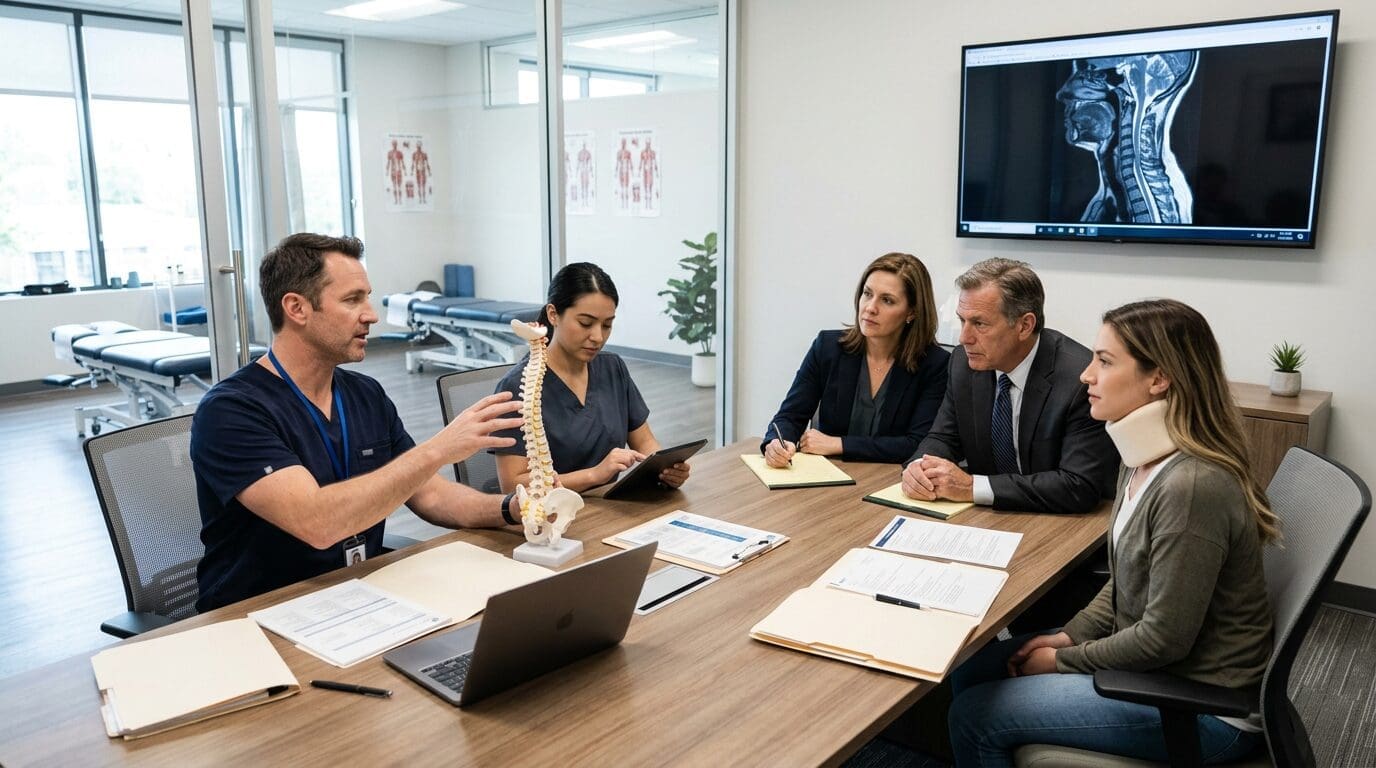
Chiropractic Care Techniques Using Causation for Neck Pain
Find out how chiropractic care can help with the causation of neck pain and improve your quality of life and health.
Abstract
Neck pain ranks among the leading causes of disability worldwide, imposing substantial physical, functional, and psychosocial burdens on affected individuals. This educational post explores the physiological mechanisms by which neck pain affects the body, the spectrum of symptoms and comorbidities that often accompany it, and how it disrupts day-to-day activities. It examines the critical role of causation in personal injury litigation involving neck pain and details how integrative chiropractic care, delivered under medical direction, addresses these issues through non-surgical approaches grounded in contemporary evidence. Drawing on findings from leading researchers employing rigorous, modern methodologies, the discussion highlights how spinal manipulative therapy, rehabilitative exercise, and multimodal strategies reduce pain, improve function, and mitigate related conditions. Clinical perspectives from Dr. Alexander Jimenez, DC, APRN, FNP-BC, CFMP, IFMCP, ATN, CCST, at Injury Medical Clinic PA (also known as Mission Plaza Injury Medical Clinic) in El Paso, Texas, are incorporated alongside the collaborative role of Dr. Maria Guadalupe Cardenas, MD, Board Certified in Internal Medicine (NPI #1164426749, Texas MD License #J2933). The post concludes by outlining practical ways to integrate these evidence-based, non-surgical interventions into ongoing health and wellness routines.
Understanding the Physiological Underpinnings of Neck Pain and Its Systemic Effects
The cervical spine consists of seven vertebrae, intervertebral discs, facet joints, ligaments, and a complex array of muscles that support the head while permitting a wide range of motion. Pain arises when these structures experience mechanical stress, inflammation, or neural irritation. Nociceptive pain results from activation of peripheral nociceptors in muscles, joints, or discs, while neuropathic pain stems from compression or irritation of cervical nerve roots. In many chronic cases, nociplastic pain or central sensitization develops, in which the central nervous system amplifies sensory signals even after the original tissue injury has resolved.
Research employing quantitative sensory testing and neuroimaging has demonstrated altered central pain processing in individuals with non-traumatic neck pain. Meta-analytic evidence shows remote mechanical hyperalgesia and impaired conditioned pain modulation, suggesting that the spinal cord and higher brain centers contribute to symptom persistence. Facet joints are frequently implicated; diagnostic blocks have identified them as a primary source in a substantial proportion of chronic neck pain cases. Muscle dysfunction, particularly involving the deep cervical flexors, leads to compensatory overactivity of superficial muscles, altered proprioception, and maladaptive motor control patterns. These changes can produce forward head posture, reduced range of motion, and increased fatigability.
Systemically, neck pain influences autonomic regulation. Sustained muscle tension and joint restriction can heighten sympathetic activity, contributing to elevated muscle tone, sleep disturbance, and heightened stress responses. Proprioceptive deficits in the cervical region disrupt sensorimotor integration, affecting balance, eye-head coordination, and even jaw function. Over time, these peripheral and central changes create a self-reinforcing cycle in which pain limits movement, disuse promotes further deconditioning, and central sensitization expands pain receptive fields.
Symptoms of Neck Pain and Its Common Comorbidities
Patients commonly report local neck pain and stiffness, often accompanied by restricted motion. Radiating symptoms into the shoulders, upper back, or arms may indicate radiculopathy or myofascial referral. Headaches, particularly cervicogenic or migraine-associated, occur frequently; studies indicate that a large majority of individuals with migraine experience concurrent neck pain, which correlates with greater disability, cutaneous allodynia, and reduced treatment responsiveness.
Comorbidities extend beyond the musculoskeletal system. Epidemiological data from cohort studies link neck symptoms with depression, anxiety, diabetes mellitus, cardiovascular conditions, pulmonary disease, and multisite pain. Depression, for example, is associated with substantially elevated odds of moderate-to-severe neck symptoms independent of other factors. Temporomandibular disorders show a clear association with neck pain, featuring reduced jaw mobility and lower pressure-pain thresholds in masticatory muscles. Sleep disturbances, cognitive fog, and fatigue further compound the clinical picture, especially in post-traumatic cases such as whiplash-associated disorders.
These overlapping conditions are not merely coincidental. Shared pathophysiological pathways involving central sensitization, systemic inflammation, and altered neuroendocrine responses help explain the clustering. Addressing only the local cervical complaint without considering these broader associations often yields incomplete relief.
How Neck Pain Disrupts Day-to-Day Life and Personal Function
Neck pain interferes with basic activities of daily living. Pain and stiffness limit prolonged sitting, computer work, driving, and household tasks. Sleep quality declines when positional discomfort prevents restorative rest, leading to daytime fatigue that further reduces productivity and mood. Work absenteeism and presenteeism are well-documented; a meaningful percentage of the working population experiences activity limitations attributable to neck pain each year.
Social and recreational participation also suffers. Individuals may avoid sports, hobbies, or social gatherings that require head movement or prolonged upright posture. The cumulative effect is reduced quality of life, measured by validated instruments such as the Neck Disability Index and health-related quality-of-life scales. Psychological distress often intensifies as functional losses accumulate, creating a bidirectional relationship in which pain worsens mood and low mood amplifies pain perception. In personal injury contexts, these functional losses form the basis for claims of pain and suffering and diminished earning capacity.
Establishing Causation in Personal Injury Courtroom Cases Involving Neck Pain
In personal injury litigation, you must establish causation to a reasonable degree of medical probability—typically “more likely than not.” For neck pain following a motor vehicle collision or other trauma, several elements support a causal link. Temporal association is foundational: symptoms that begin immediately or within 24–72 hours after the incident are more readily attributable to the event than those arising weeks later. Biomechanical consistency is equally important; the mechanism (for example, rear-end impact producing hyperextension-hyperflexion) must be capable of generating the documented injuries, such as facet joint strain, muscle strain, or disc injury.
Objective clinical findings strengthen the argument. Documented reductions in cervical range of motion, palpable muscle spasm, point tenderness, and positive orthopedic tests provide reproducible evidence. Imaging may corroborate soft-tissue or disc pathology when clinically indicated, though many soft-tissue injuries remain occult on standard radiographs. Pre-existing conditions do not preclude recovery if the incident aggravated them, producing new or increased symptoms and functional loss; careful baseline comparison is essential.
Chiropractors, when properly qualified, may offer expert testimony on etiology and diagnosis within the scope of chiropractic practice in many jurisdictions. Detailed, contemporaneous records that quantify findings, track progress, and correlate symptoms with the mechanism of injury are indispensable. Gaps in treatment or inconsistent reporting can undermine credibility, underscoring the value of structured, evidence-based documentation from the outset.
Chiropractic Care for Neck Pain Relief | El Paso, TX (2025 Recovery Guide) Chiropractic Treatment- Video
What Chiropractic Care Is and How Integrative Practice Operates
Chiropractic care focuses on diagnosing, treating, and preventing disorders of the musculoskeletal and nervous systems, with particular emphasis on the spine. Spinal manipulative therapy (SMT), also called spinal adjustment, applies controlled force to restricted joints to restore motion, reduce nociceptive input, and stimulate mechanoreceptors. Additional modalities include soft-tissue techniques, therapeutic exercise, and patient education.
At Injury Medical Clinic PA in El Paso, Texas, chiropractic care is delivered within a multidisciplinary framework. Dr. Alexander Jimenez, DC, APRN, FNP-BC, CFMP, IFMCP, ATN, CCST, provides clinical direction as both a chiropractor and family nurse practitioner. Dr. Maria Guadalupe Cardenas, MD, Board Certified in Internal Medicine, provides medical oversight as Medical Director and Collaborative Physician. This arrangement, common in integrative injury clinics, permits coordinated evaluation, appropriate diagnostic testing, prescription management when needed, and seamless referral. Functional medicine principles, rehabilitation, and personal injury-focused documentation are integrated to address structural, biochemical, and functional contributors concurrently.
How Chiropractic Care Reduces Neck Pain and Associated Comorbidities
Systematic reviews and meta-analyses of randomized controlled trials demonstrate that SMT produces clinically meaningful reductions in pain intensity and neck disability for both acute and chronic neck pain. One recent meta-analysis of acute neck pain found significant improvements in pain, cervical range of motion, and disability scores, with no serious adverse events. For chronic presentations, manipulative therapy likewise outperforms control interventions on pain and disability measures. Multimodal approaches that combine SMT with exercise often yield better outcomes than single interventions.
Mechanistically, SMT is thought to restore joint mobility, decrease muscle hypertonicity through reflex pathways, and modulate central pain processing by stimulating large-diameter afferents that inhibit nociceptive transmission (gate-control theory). Improved cervical proprioception and motor control follow the restoration of normal joint mechanics, reducing compensatory muscle overuse. Adding exercise improves deep cervical flexor endurance and scapular stability, addressing the sensorimotor deficits that perpetuate pain.
These local improvements often translate into broader benefits. Reduced neck pain is associated with fewer cervicogenic headaches, better sleep, and lower levels of depression and anxiety. By decreasing central sensitization and improving function, chiropractic care can lessen the overall symptom burden of comorbid conditions. In the integrative setting, these gains are reinforced by medical management of systemic factors and functional-medicine strategies that target inflammation, nutritional status, and stress physiology.
Chiropractic Care and Insights for Personal Injury Documentation
Chiropractic evaluation provides detailed, objective data that support causation opinions. Initial intake captures the precise mechanism, immediate symptom onset, and pre-injury status. Serial examinations quantify range-of-motion deficits, muscle spasm, and functional limitations with reproducible metrics. Progress notes document response to care, illustrating both the severity of the injury and the need for treatment. When combined with medical oversight from an internal-medicine physician, the record reflects a comprehensive, coordinated clinical picture that withstands scrutiny in litigation.
Benefits of Integrative Non-Surgical Treatments and Incorporation into Wellness Routines
Non-surgical care—encompassing SMT, targeted exercise, soft-tissue therapy, education, and lifestyle modification—offers a favorable risk-benefit profile. Evidence indicates that these interventions reduce pain and disability while avoiding the risks and costs associated with surgery or long-term medication dependence. Exercise programs that strengthen the neck and scapular musculature, improve posture, and restore endurance are particularly effective for both acute recovery and long-term prevention.
Incorporating these elements into a daily routine is straightforward. Patients can do brief sessions of deep cervical flexor activation, scapular retraction exercises, and ergonomic adjustments at home or at work. Regular physical activity, stress-management practices, and attention to sleep hygiene further support recovery and resilience. Periodic reassessment allows the plan to be refined as function improves. At Injury Medical Clinic PA, patients receive individualized protocols that blend these non-surgical strategies with medical direction, enabling them to regain independence and maintain gains over time.
Clinical observations at the practice confirm that patients who engage in multimodal, non-surgical care often experience meaningful reductions in pain, improved mobility, and restored participation in work and leisure activities. The combination of hands-on chiropractic care, rehabilitative exercise, and collaborative medical oversight addresses both the immediate structural drivers of neck pain and the broader factors that influence recovery.
References
- Cohen, S. P., & Hooten, W. M. (2017). Advances in the diagnosis and management of neck pain. The BMJ, 358, j3221. bmj.com/content/358/bmj.j3221
- Diao, Y., Liu, Y., Pan, J., Chen, J., Pan, J., Liao, M., Liu, H., & Liao, L. (2025). Efficacy and safety of spinal manipulative therapy in the management of acute neck pain: A systematic review and meta-analysis. Systematic Reviews, 14, 97. link.springer.com/article/10.1186/s13643-025-02855-7
- Gevers-Montoro, C., Provencher, B., Descarreaux, M., Ortega de Mues, A., & Piché, M. (2021). Clinical effectiveness and efficacy of chiropractic spinal manipulation for spine pain. Frontiers in Pain Research, 2, 765921. pmc.ncbi.nlm.nih.gov/articles/PMC8915715
- International Association for the Study of Pain. (2017). Neck pain fact sheet. iasp-pain.org/wp-content/uploads/2022/10/18.-Neck-Pain-Fact-Sheet-Revised-2017.pdf
- Liu, Z., Shi, J., Huang, Y., Zhou, X., Huang, H., Wu, H., Lv, L., & Lv, Z. (2023). A systematic review and meta-analysis of randomized controlled trials of manipulative therapy for patients with chronic neck pain. Complementary Therapies in Clinical Practice, 52, 101751. sciencedirect.com/science/article/abs/pii/S1744388123000324
- Wright, A. R., Cook, C. E., & Rhon, D. I. (2016). The prevalence of neck and shoulder symptoms and associations with comorbidities and disability: The Johnston County Osteoarthritis Project. Arthritis Care & Research. pmc.ncbi.nlm.nih.gov/articles/PMC5024545
- Additional supporting literature on central sensitization, sensorimotor control, and personal-injury documentation principles was consulted from peer-reviewed sources consistent with the evidence-based approach described herein.
SEO Tag: neck pain treatment, chiropractic care for neck pain, personal injury neck pain, cervical spine physiology, spinal manipulative therapy, integrative chiropractic, non-surgical neck pain treatment, whiplash recovery, central sensitization, Injury Medical Clinic El Paso, Dr. Alexander Jimenez, Dr. Maria Cardenas, functional medicine neck pain, causation personal injury, neck disability, evidence-based chiropractic, multidisciplinary injury care, cervical range of motion, cervicogenic headache, wellness routine neck health
Post Disclaimer
General Disclaimer, Licenses and Board Certifications *
Professional Scope of Practice *
The information herein on "Chiropractic Care Techniques Using Causation for Neck Pain" is not intended to replace a one-on-one relationship with a qualified health care professional or licensed physician and is not medical advice. We encourage you to make healthcare decisions based on your research and partnership with a qualified healthcare professional.
Blog Information & Scope Discussions
Welcome to El Paso's Premier Wellness and Injury Care Clinic & Wellness Blog, where Dr. Alex Jimenez, DC, FNP-C, a Multi-State board-certified Family Practice Nurse Practitioner (FNP-BC) and Chiropractor (DC), presents insights on how our multidisciplinary team is dedicated to holistic healing and personalized care. Our practice aligns with evidence-based treatment protocols inspired by integrative medicine principles, similar to those on this site and on our family practice-based chiromed.com site, focusing on naturally restoring health for patients of all ages.
Our areas of multidisciplinary practice include Wellness & Nutrition, Chronic Pain, Personal Injury, Auto Accident Care, Work Injuries, Back Injury, Low Back Pain, Neck Pain, Migraine Headaches, Sports Injuries, Severe Sciatica, Scoliosis, Complex Herniated Discs, Fibromyalgia, Chronic Pain, Complex Injuries, Stress Management, Functional Medicine Treatments, and in-scope care protocols.
Our information scope is multidisciplinary, focusing on musculoskeletal and physical medicine; wellness, contributing etiological viscerosomatic disturbances within clinical presentations, associated somato-visceral reflex clinical dynamics; subluxation complexes, sensitive health issues, and functional medicine articles, topics, and discussions.
We provide and facilitate clinical collaboration with specialists across disciplines. Each specialist is governed by their professional scope of practice and licensure jurisdiction. We use functional health & wellness protocols to treat and support care for musculoskeletal injuries or disorders.
Our videos, posts, topics, and insights address clinical matters and issues that directly or indirectly relate to our clinical scope of practice.
Our office has made a reasonable effort to provide supportive citations and has identified relevant research studies that support our posts. We provide copies of supporting research studies upon request to regulatory boards and the public.
We understand that we cover matters that require an additional explanation of how they may assist in a particular care plan or treatment protocol; therefore, to discuss the subject matter above further, please feel free to ask Dr. Alex Jimenez, DC, APRN, FNP-BC, or contact us at 915-850-0900.
We are here to help you and your family.
Blessings
Dr. Alex Jimenez DC, MSACP, APRN, FNP-BC*, CCST, IFMCP, CFMP, ATN
Email: [email protected]
Multidisciplinary Licensing & Board Certifications:
Licensed as a Doctor of Chiropractic (DC) in Texas & New Mexico*
Chiropractic Licenses:
Texas DC License #: TX5807, Verified: TX5807
New Mexico DC License #: NM-DC2182, Verified: NM-DC2182
Nurse Practitioner Licenses:
Texas APRN License #: 1191402, Verified: 1191402 *
New Mexico CNP License #: 90560, Verified 90560
Florida APRN License #: 11043890, Verified: APRN11043890 *
Colorado License #: C-APN.0105610-C-NP, Verified: C-APN.0105610-C-NP
New York License #: N25929, Verified N25929
Georgia APRN License #: GAA-NP005701
Multi-State Advanced Practice Registered Nurse (APRN*) Texas & Multi-States
Multi-state Compact APRN License by Endorsement (43 States)
Compact Status: Multi-State License: Authorized to Practice in 43 States*
Nursing Licensure Compact: Updated Here
DEA Registration: (Drug Enforcement Agency Registered)
All medical (MDs) and family practice providers (FNP-APRN) are registered and licensed to offer various levels of medication.
Verify Providers' DEA Registration Here
License Verification Link: Nursys License Verifier
* Prescriptive Authority Authorized (DEA Registered Providers). Call if Required
Board Certification:
ANCC FNP-BC: Board Certified Nurse Practitioner*
Education:
Graduate with Honors: ICHS: MSN-FNP (Family Nurse Practitioner Program)
Degree Granted. Master's in Family Practice, MSN Diploma (Cum Laude)
Dr. Alex Jimenez, DC, APRN, FNP-BC*, CFMP, IFMCP, ATN, CCST
(Board Certified: Family Practice Nurse Practitioner—Multistate)*
(Licensed Nurse Practitioner & Chiropractor - Multistate)*
Clinical Director
DC & FNP License (Review Above)
Digital Business Card
NPI: 1205907805
Dr. Maria Cardenas, MD
(Board Certified: Internal Medicine)
(Licensed Medical Doctor)
Medical Director, Clinical Director & Collaborative Physician
NPI # 1164426748
MD License #: J2933
Licenses and Board Certifications:
MD: Medical Doctor
DC: Doctor of Chiropractic
APRNP: Advanced Practice Registered Nurse
FNP-BC: Family Practice Specialization (Multi-State Board Certified)
FNP-BC: Family Practice Across Life Span (Neonatal to Geriatrics)
RN: Registered Nurse (Multi-State Compact License)
CFMP: Certified Functional Medicine Provider
MSN-FNP: Master of Science in Family Practice Medicine
MSACP: Master of Science in Advanced Clinical Practice
IFMCP: Institute of Functional Medicine
CCST: Certified Chiropractic Spinal Trauma
ATN: Advanced Translational Neutrogenomics
Family with Primary Care Focus (Family Nurse Practitioner or FNP)
- The Family Nurse Practitioner (FNP) promotes, maintains, and restores health for individuals and families across the lifespan. FNPs also identify health risks, promote wellness, and diagnose and manage acute and chronic illness.
- The FNP focuses on comprehensive primary care, promoting healthy lifestyles for patients across the lifespan in settings such as private practice, physician offices, and community health centers.
Memberships & Associations:
TCA: Texas Chiropractic Association: Member ID: 104311
TNA: Texas Nurse Association: Member ID: 06458222
TNP: Texas Nurse Practitioner Association ID: 2025091511
AANP: American Association of Nurse Practitioners: Member ID: 2198960
ANA: American Nurses Association: Member ID: 06458222 (District TX01)
| Primary Taxonomy | Selected Taxonomy | State | License Number |
|---|---|---|---|
| No | 111N00000X - Chiropractor | NM | DC2182 |
| Yes | 111N00000X - Chiropractor | TX | DC5807 |
| Yes | 363LF0000X - Nurse Practitioner - Family | TX | 1191402 |
| Yes | 363LF0000X - Nurse Practitioner - Family | FL | 11043890 |
| Yes | 363LF0000X - Nurse Practitioner - Family | CO | C-APN.0105610-C-NP |
| Yes | 363LF0000X - Nurse Practitioner - Family | NY | N25929 |
| Yes | 363LF0000X - Nurse Practitioner - Family | NM |
90560 |
| Yes | 363LF0000X - Nurse Practitioner - Family | GA | GAA-NP005701 |
Dr. Alex Jimenez, DC, APRN, FNP-BC*, CFMP, IFMCP, ATN, CCST
(Board Certified: Family Practice Nurse Practitioner—Multistate)*
(Primary Care Across Lifespan—Neonatal / Pediatric / Adult / Geriatrics)
(Licensed Nurse Practitioner & Chiropractor - Multistate)*
Clinical Director
Digital Business Card
NPI: 1205907805
Dr. Maria Cardenas, MD
(Board Certified: Internal Medicine)*
(Licensed Medical Doctor)*
Medical Director, Clinical Director & Collaborative Physician
NPI # 1164426748
MD License #: J2933
📆 Schedule Appointment: Schedule 24/7 (Click Here)