
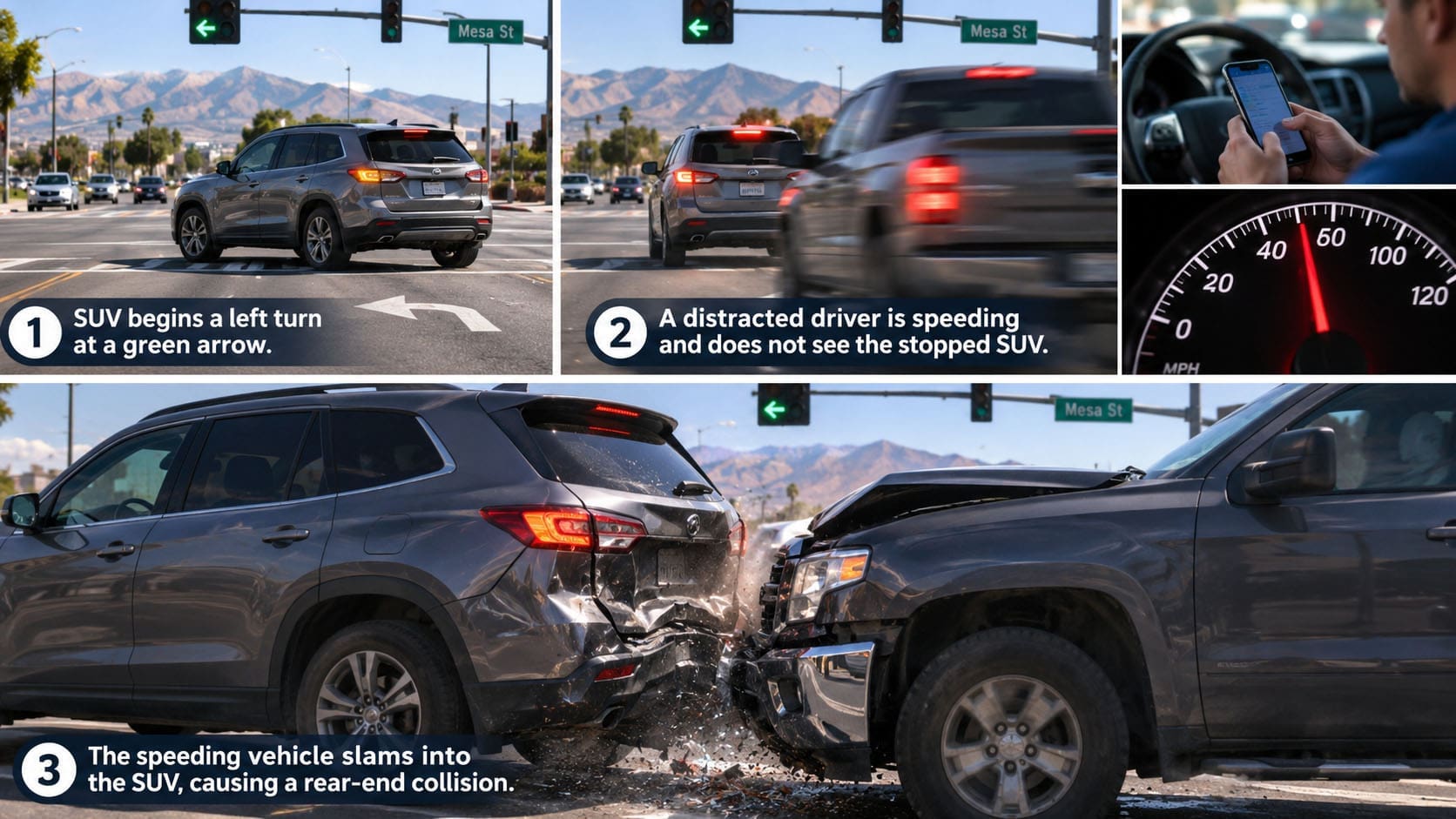
The Injuries Nobody Notices at First: Shoulder, Knee, and Wrist Problems After a Car Accident
Abstract
After a car accident, neck and back pain often demand immediate attention. Yet the shoulder, knee, wrist, and other joints may also absorb significant crash forces. Some injuries are obvious immediately, while others become noticeable only when swelling develops, or everyday activities reveal a loss of strength and motion. Understanding how these overlooked injuries occur can help patients seek the right evaluation, imaging, rehabilitation, and specialist care instead of assuming every symptom is simply part of whiplash.

When Neck Pain Gets All the Attention
Imagine a family member who has just been involved in a car accident.
During the first several days, the biggest complaint is neck pain. Turning the head hurts. The upper back feels tight. Sleeping is uncomfortable. Naturally, everyone focuses on the neck.
Treatment begins, and the neck gradually starts feeling better.
Then something else becomes obvious.
Reaching into a kitchen cabinet hurts. Putting on a shirt requires an awkward movement. Lifting your arm to wash or style your hair causes sharp shoulder discomfort.
The shoulder problem may not be new. It may have been present from the beginning but temporarily overshadowed by more intense neck and back symptoms.
This is one reason a thorough post-accident examination should look beyond the area that hurts the most on the first day. Motor vehicle collisions can expose multiple areas of the body to different forces at nearly the same time. Upper-extremity injuries after frontal crashes include both soft-tissue injuries and fractures, and restraint systems, airbags, vehicle interiors, and body position can influence how those injuries occur (Goldman et al., 2005).
Dr. Jimenez discusses this broader injury perspective in his Accidents & Injuries patient-education resource, emphasizing the importance of evaluating the circumstances and symptoms associated with an accident.
Shoulder Injuries: When the Restraint System and Bracing Forces Meet
Seat belts save lives and substantially reduce the risk of serious injuries in motor vehicle crashes. They remain an essential safety device. At the same time, during a collision, the shoulder portion of the restraint can transmit force across the chest, collarbone, and shoulder while preventing the occupant from moving farther forward.
That does not mean the seat belt “caused” a shoulder diagnosis simply because shoulder pain developed afterward. A clinician still has to determine what structure is injured and whether the examination findings are consistent with the collision.
The shoulder may also be affected when a driver grips the steering wheel or braces the arms just before impact. Forces can travel from the hands and wrists through the elbows and into the shoulder girdle. The arm can also strike the door, steering wheel, center console, or another part of the vehicle. Dr. Jimenez’s discussion of car-accident shoulder injury and recovery describes restraint pressure, bracing, direct impact, airbag deployment, and sudden pulling or twisting as possible mechanisms that warrant clinical evaluation.
Depending on the mechanism and examination findings, post-accident shoulder symptoms may involve muscles, tendons, ligaments, the acromioclavicular joint, the rotator cuff, the labrum, the clavicle, or other structures.
The important point is simple: shoulder pain deserves a shoulder examination.
It should not automatically be labeled as pain “coming from the neck,” even though cervical and shoulder symptoms can overlap.
A clinician may assess active and passive range of motion, strength, tenderness, stability, neurological function, and specific movements that reproduce symptoms. For adults with acute shoulder pain, radiography is generally considered an appropriate initial imaging study when imaging is indicated. When a suspected occult fracture or soft-tissue injury remains despite negative or indeterminate radiographs, CT, MRI, or ultrasound may become appropriate depending on the suspected condition (American College of Radiology [ACR], n.d.).
The Shoulder Problem That Appears During Everyday Life
This brings us back to the family member whose neck was initially the major concern.
Perhaps the person can now turn the head more comfortably but still cannot reach overhead without pain. Dressing remains difficult. Carrying groceries on that side feels weak. Sleeping on the injured shoulder is uncomfortable.
Those are important functional clues.
Pain intensity is only one part of an injury assessment. Clinicians also want to know what the patient can and cannot do.
Can the patient reach a shelf?
Fasten a seat belt?
Put on a jacket?
Carry a child?
Lift a work tool?
Reach behind the back?
Loss of normal function can help identify a problem that was not apparent when more painful injuries dominated the first examination.
Knee Injuries: The “Dashboard” Mechanism
The knee experiences a very different type of crash force.
During a frontal collision, a bent knee may strike the dashboard or another portion of the vehicle interior. A direct force applied to the front of the tibia while the knee is flexed can drive the tibia backward relative to the femur. This is a recognized mechanism of posterior cruciate ligament (PCL) injury (Verhulst & MacDonald, 2020; Sancilio et al., 2026).
Recent literature on the so-called “dashboard knee” also emphasizes that symptoms can initially seem subtle. Some patients later develop persistent pain, instability, or activity limitations once the underlying ligament injury is recognized (Sancilio et al., 2026).
Dr. Jimenez discusses additional mechanisms in his resource on knee and ankle automobile-collision injuries. Collision forces can compress or twist the knee and ankle as the legs contact the vehicle interior or the feet remain planted while the rest of the body moves.
Not every sore knee after a collision represents a PCL tear. Contusions, patellar injuries, meniscal injuries, other ligament injuries, fractures, muscle injuries, and preexisting arthritis may all need consideration.
That is why the mechanism begins the investigation rather than ending it.
The Knee Should Be Examined as a Knee
A patient who reports knee pain should have the knee evaluated.
That sounds obvious, yet extremity symptoms can receive less attention when significant neck and lumbar complaints dominate the early post-collision period.
A knee examination may include inspection for swelling and bruising, palpation, range-of-motion testing, ligament stability testing, strength evaluation, gait observation, and assessment of the patient’s ability to bear weight.
For significant acute knee trauma, including motor vehicle collisions, radiography is generally considered appropriate as an initial imaging examination when clinically indicated. MRI may later be used when ligament, meniscal, cartilage, or other internal structural injuries are suspected (ACR, n.d.).
Persistent instability is especially important. A patient may describe the knee as “giving way,” feeling unreliable on stairs, or becoming painful after standing longer than usual. Those observations help direct further evaluation.
Wrist and Hand Injuries: The Instinct to Brace for Impact
People often instinctively throw their hands forward when they believe an impact or fall is about to occur.
A driver may lock the elbows while gripping the steering wheel. A passenger may brace against the dashboard. Someone knocked down during or after a collision may extend an arm to stop the fall.
That defensive reaction can transmit substantial force into the wrist and hand.
The resulting injury may range from a mild sprain to ligament injury or fracture. Scaphoid injuries deserve particular attention because they can sometimes be missed during the initial evaluation. A fall onto an outstretched hand with wrist hyperextension is a classic scaphoid-fracture mechanism, and missed fractures can lead to complications such as nonunion or impaired blood supply to portions of the bone (Imran et al., 2026).
The American College of Radiology considers radiographs the usual initial imaging choice for acute hand or wrist trauma. When clinical suspicion remains despite negative or uncertain initial films, repeat radiographs, MRI, or CT may be appropriate depending on the presentation (ACR, n.d.).
For patients, the lesson is straightforward: persistent wrist pain after a crash should not be dismissed merely because the first few days were dominated by neck or back pain.
Symptoms That Deserve Additional Attention
Patients should tell their healthcare provider whenever a new joint symptom appears, or an existing symptom becomes clearer during recovery. Important findings can include:
- Shoulder weakness, inability to raise the arm normally, persistent night pain, or loss of overhead reach
- Knee swelling, instability, locking, difficulty bearing weight, or persistent pain with stairs
- Wrist swelling, grip weakness, tenderness near the thumb side of the wrist, or pain when pushing through the hand
- Numbness, tingling, unusual coldness, color change, or loss of normal sensation in an arm or leg
- Visible deformity, rapidly increasing swelling, severe pain, an open wound, or inability to use the extremity normally
Some of these findings may warrant urgent medical evaluation.
Imaging Should Answer a Clinical Question
Imaging is valuable, but “more imaging” is not automatically better care.
The goal is to choose the study that answers the clinical question.
If the concern is a fracture, radiographs are commonly the starting point. If the examination suggests a ligament, tendon, meniscal, rotator-cuff, or other soft-tissue injury, consider MRI or ultrasound depending on the body region and suspected diagnosis. CT can be particularly helpful for certain fractures and complex bony injuries.
This approach supports the principle of non-maleficence: perform the evaluation needed to reach an appropriate diagnosis while avoiding unnecessary procedures.
It also supports patient autonomy. Patients should understand what their clinician suspects, why a particular study is recommended, and what the result may change about treatment.
Rehabilitation Should Match the Injury
Once clinicians identify serious injuries and conditions requiring orthopedic or other specialist management, rehabilitation can focus on restoring function.
For one patient, rehabilitation may emphasize shoulder mobility and rotator-cuff strength. Another may need gradual knee stability and gait work. A patient recovering from an immobilized wrist may require carefully progressed motion and strengthening.
Chiropractic care can be valuable for appropriately selected spinal and musculoskeletal problems after an accident, but a painful shoulder, knee, or wrist should not simply receive a spinal diagnosis by default.
Integrated care means identifying the actual injured region and choosing treatments that match the diagnosis.
That may involve medical management, chiropractic care, therapeutic exercise, mobility work, neuromuscular rehabilitation, manual therapy, acupuncture or electroacupuncture when appropriate, activity modification, and coordinated referral.
When findings indicate a fracture, substantial ligament tear, unstable joint, neurological compromise, vascular problem, or another condition outside conservative management, refer to orthopedics, sports medicine, neurology, hand surgery, vascular care, or another appropriate specialist.
What Makes Injury Medical Chiropractic and Functional Medicine Clinic Different?
Dr. Jimenez’s Injury Medical Chiropractic and Functional Medicine Clinic uses a coordinated medical and musculoskeletal structure that is relatively uncommon in the El Paso injury-care community.
Dr. Maria Guadalupe Cardenas, MD, a board-certified internal medicine physician, serves as Medical Director, Clinical Director, and Collaborative Physician. Dr. Alex Jimenez, DC, APRN, FNP-BC, CFMP, IFMCP, combines his chiropractic background with board-certified family nurse-practitioner training, allowing him to coordinate musculoskeletal and soft-tissue injury assessment with appropriate medical evaluation. The clinic’s published materials describe this combination of medical direction, advanced-practice nursing, chiropractic evaluation, rehabilitation, and injury-focused care as making it one of the only integrated clinics in El Paso structured this way.
Readers can review the clinic’s multidisciplinary credentials and provider roles through the Dr. Alex Jimenez staff and clinical team page and About Dr. Alexander Jimenez and the clinic.
The advantage for an injured patient is coordination. A shoulder problem can be evaluated as a shoulder problem. A suspicious knee can be examined as a knee. A painful wrist can receive appropriate imaging or referral instead of being overlooked because neck pain was louder during the first appointment.
Recovery Means Looking at the Whole Person
A car accident does not injure people according to a convenient checklist.
One part of the body may hurt immediately. Another may become noticeable later. Swelling can evolve. Adrenaline can fade. A patient can discover a functional limitation only when returning to normal activities.
That is why follow-up matters.
A good post-accident evaluation asks not only, “Does your neck still hurt?”
It asks, “What are you having trouble doing now?”
Maybe the neck is improving, but the shoulder prevents dressing independently. Maybe the back feels better, but the knee gives way on stairs. Maybe headaches have decreased, but gripping a steering wheel still produces wrist pain.
Those details help clinicians identify injuries that might otherwise remain hidden.
The goal is not to attribute every new ache to an accident automatically. The goal is to investigate the patient’s symptoms carefully, connect objective findings with plausible injury mechanisms when the evidence supports that connection, consider alternative explanations when appropriate, and direct the patient toward the safest path to recovery.
For families recovering from a collision, that broader approach can mean discovering the injury nobody noticed at first—and finally treating the body region that has been asking for attention all along.
References
American College of Radiology. (n.d.). ACR Appropriateness Criteria: Acute hand and wrist trauma.
American College of Radiology. (n.d.). ACR Appropriateness Criteria: Acute shoulder pain.
American College of Radiology. (n.d.). ACR Appropriateness Criteria: Acute trauma to the knee.
Goldman, M. W., MacLennan, P. A., McGwin, G., Jr., Lee, D. H., Sparks, D. R., & Rue, L. W., III. (2005). The association between restraint system and upper extremity injury after motor vehicle collisions. Journal of Orthopaedic Trauma, 19(8), 529–534. https://doi.org/10.1097/01.bot.0000161543.52643.ab
Imran, B., Miller, J., & Moulton, L. (2026). Current trends in scaphoid fracture management: An update. British Journal of Hospital Medicine, 87(3), 52086. https://doi.org/10.31083/BJHM52086
Sancilio, C., Fada, L., Pulido, J., Mousad, A. D., Sorkin, S., Mastroianni, M., Jacobs, G., & Mccormick, F. (2026). Dashboard knee: Injury mechanisms, diagnostic challenges, and treatment outcomes. Cureus, 18(3), e104683. https://doi.org/10.7759/cureus.104683
Verhulst, F. V., & MacDonald, P. (2020). Diagnosing PCL injuries: History, physical examination, imaging studies, arthroscopic evaluation. Sports Medicine and Arthroscopy Review, 28(1), 2–7. https://doi.org/10.1097/JSA.0000000000000251
Post Disclaimer
General Disclaimer, Licenses and Board Certifications *
Professional Scope of Practice *
The information herein on "The Injuries Nobody Notices at First: Shoulder, Knee, and Wrist Problems After a Car Accident" is not intended to replace a one-on-one relationship with a qualified health care professional or licensed physician and is not medical advice. We encourage you to make healthcare decisions based on your research and partnership with a qualified healthcare professional.
Blog Information & Scope Discussions
Welcome to El Paso's Premier Wellness and Injury Care Clinic & Wellness Blog, where Dr. Alex Jimenez, DC, FNP-C, a Multi-State board-certified Family Practice Nurse Practitioner (FNP-BC) and Chiropractor (DC), presents insights on how our multidisciplinary team is dedicated to holistic healing and personalized care. Our practice aligns with evidence-based treatment protocols inspired by integrative medicine principles, similar to those on this site and on our family practice-based chiromed.com site, focusing on naturally restoring health for patients of all ages.
Our areas of multidisciplinary practice include Wellness & Nutrition, Chronic Pain, Personal Injury, Auto Accident Care, Work Injuries, Back Injury, Low Back Pain, Neck Pain, Migraine Headaches, Sports Injuries, Severe Sciatica, Scoliosis, Complex Herniated Discs, Fibromyalgia, Chronic Pain, Complex Injuries, Stress Management, Functional Medicine Treatments, and in-scope care protocols.
Our information scope is multidisciplinary, focusing on musculoskeletal and physical medicine; wellness, contributing etiological viscerosomatic disturbances within clinical presentations, associated somato-visceral reflex clinical dynamics; subluxation complexes, sensitive health issues, and functional medicine articles, topics, and discussions.
We provide and facilitate clinical collaboration with specialists across disciplines. Each specialist is governed by their professional scope of practice and licensure jurisdiction. We use functional health & wellness protocols to treat and support care for musculoskeletal injuries or disorders.
Our videos, posts, topics, and insights address clinical matters and issues that directly or indirectly relate to our clinical scope of practice.
Our office has made a reasonable effort to provide supportive citations and has identified relevant research studies that support our posts. We provide copies of supporting research studies upon request to regulatory boards and the public.
We understand that we cover matters that require an additional explanation of how they may assist in a particular care plan or treatment protocol; therefore, to discuss the subject matter above further, please feel free to ask Dr. Alex Jimenez, DC, APRN, FNP-BC, or contact us at 915-850-0900.
We are here to help you and your family.
Blessings
Dr. Alex Jimenez DC, MSACP, APRN, FNP-BC*, CCST, IFMCP, CFMP, ATN
Email: [email protected]
Multidisciplinary Licensing & Board Certifications:
Licensed as a Doctor of Chiropractic (DC) in Texas & New Mexico*
Chiropractic Licenses:
Texas DC License #: TX5807, Verified: TX5807
New Mexico DC License #: NM-DC2182, Verified: NM-DC2182
Nurse Practitioner Licenses:
Texas APRN License #: 1191402, Verified: 1191402 *
New Mexico CNP License #: 90560, Verified 90560
Florida APRN License #: 11043890, Verified: APRN11043890 *
Colorado License #: C-APN.0105610-C-NP, Verified: C-APN.0105610-C-NP
New York License #: N25929, Verified N25929
Georgia APRN License #: GAA-NP005701
Multi-State Advanced Practice Registered Nurse (APRN*) Texas & Multi-States
Multi-state Compact APRN License by Endorsement (43 States)
Compact Status: Multi-State License: Authorized to Practice in 43 States*
Nursing Licensure Compact: Updated Here
DEA Registration: (Drug Enforcement Agency Registered)
All medical (MDs) and family practice providers (FNP-APRN) are registered and licensed to offer various levels of medication.
Verify Providers' DEA Registration Here
License Verification Link: Nursys License Verifier
* Prescriptive Authority Authorized (DEA Registered Providers). Call if Required
Board Certification:
ANCC FNP-BC: Board Certified Nurse Practitioner*
Education:
Graduate with Honors: ICHS: MSN-FNP (Family Nurse Practitioner Program)
Degree Granted. Master's in Family Practice, MSN Diploma (Cum Laude)
Dr. Alex Jimenez, DC, APRN, FNP-BC*, CFMP, IFMCP, ATN, CCST
(Board Certified: Family Practice Nurse Practitioner—Multistate)*
(Licensed Nurse Practitioner & Chiropractor - Multistate)*
Clinical Director
DC & FNP License (Review Above)
Digital Business Card
NPI: 1205907805
Dr. Maria Cardenas, MD
(Board Certified: Internal Medicine)
(Licensed Medical Doctor)
Medical Director, Clinical Director & Collaborative Physician
NPI # 1164426748
MD License #: J2933
Licenses and Board Certifications:
MD: Medical Doctor
DC: Doctor of Chiropractic
APRNP: Advanced Practice Registered Nurse
FNP-BC: Family Practice Specialization (Multi-State Board Certified)
FNP-BC: Family Practice Across Life Span (Neonatal to Geriatrics)
RN: Registered Nurse (Multi-State Compact License)
CFMP: Certified Functional Medicine Provider
MSN-FNP: Master of Science in Family Practice Medicine
MSACP: Master of Science in Advanced Clinical Practice
IFMCP: Institute of Functional Medicine
CCST: Certified Chiropractic Spinal Trauma
ATN: Advanced Translational Neutrogenomics
Family with Primary Care Focus (Family Nurse Practitioner or FNP)
- The Family Nurse Practitioner (FNP) promotes, maintains, and restores health for individuals and families across the lifespan. FNPs also identify health risks, promote wellness, and diagnose and manage acute and chronic illness.
- The FNP focuses on comprehensive primary care, promoting healthy lifestyles for patients across the lifespan in settings such as private practice, physician offices, and community health centers.
Memberships & Associations:
TCA: Texas Chiropractic Association: Member ID: 104311
TNA: Texas Nurse Association: Member ID: 06458222
TNP: Texas Nurse Practitioner Association ID: 2025091511
AANP: American Association of Nurse Practitioners: Member ID: 2198960
ANA: American Nurses Association: Member ID: 06458222 (District TX01)
| Primary Taxonomy | Selected Taxonomy | State | License Number |
|---|---|---|---|
| No | 111N00000X - Chiropractor | NM | DC2182 |
| Yes | 111N00000X - Chiropractor | TX | DC5807 |
| Yes | 363LF0000X - Nurse Practitioner - Family | TX | 1191402 |
| Yes | 363LF0000X - Nurse Practitioner - Family | FL | 11043890 |
| Yes | 363LF0000X - Nurse Practitioner - Family | CO | C-APN.0105610-C-NP |
| Yes | 363LF0000X - Nurse Practitioner - Family | NY | N25929 |
| Yes | 363LF0000X - Nurse Practitioner - Family | NM |
90560 |
| Yes | 363LF0000X - Nurse Practitioner - Family | GA | GAA-NP005701 |
Dr. Alex Jimenez, DC, APRN, FNP-BC*, CFMP, IFMCP, ATN, CCST
(Board Certified: Family Practice Nurse Practitioner—Multistate)*
(Primary Care Across Lifespan—Neonatal / Pediatric / Adult / Geriatrics)
(Licensed Nurse Practitioner & Chiropractor - Multistate)*
Clinical Director
Digital Business Card
NPI: 1205907805
Dr. Maria Cardenas, MD
(Board Certified: Internal Medicine)*
(Licensed Medical Doctor)*
Medical Director, Clinical Director & Collaborative Physician
NPI # 1164426748
MD License #: J2933
📆 Schedule Appointment: Schedule 24/7 (Click Here)