
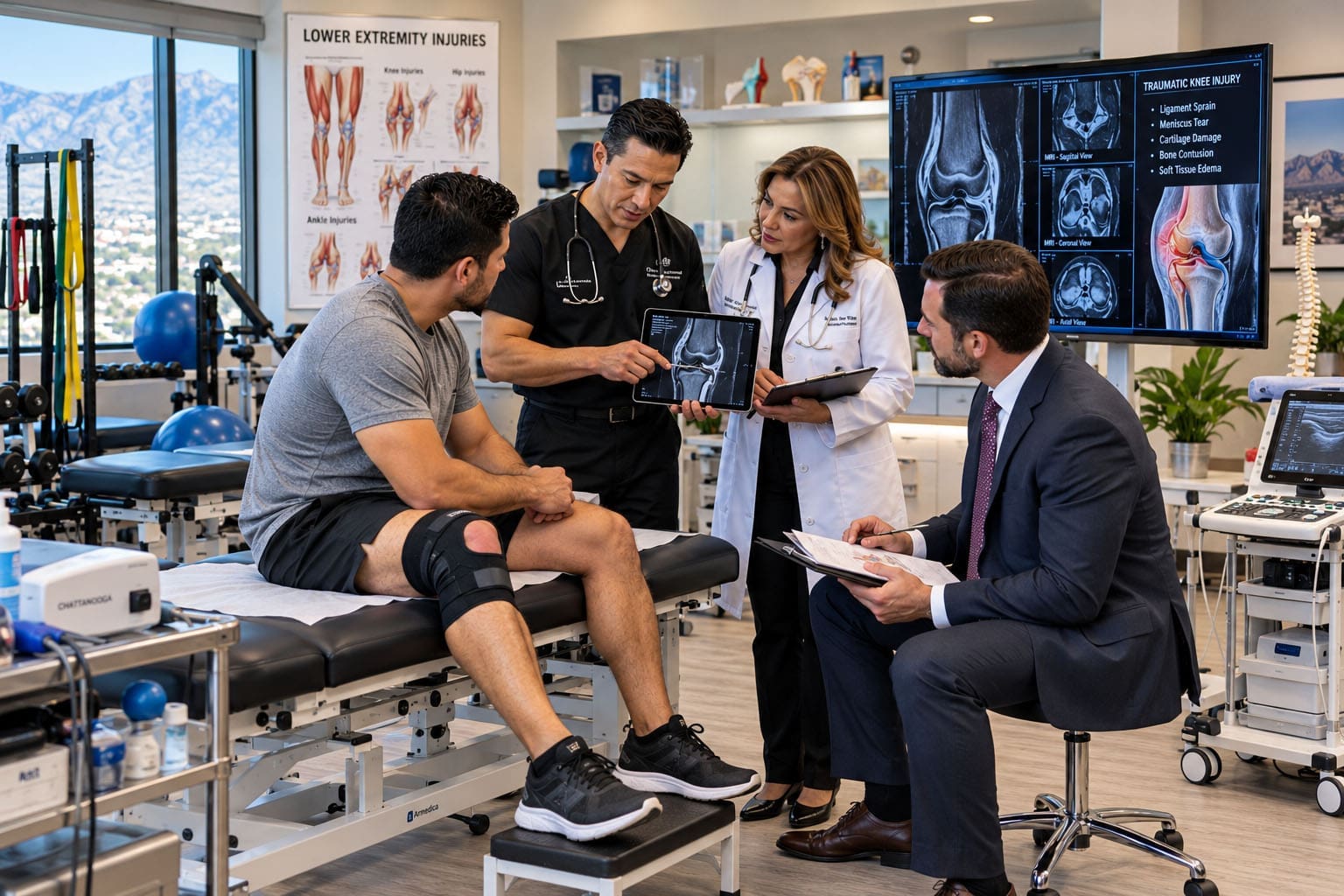
When Your Symptoms Change After an Accident: Why You Should Tell Your Doctor
Abstract
After a car crash, fall, or workplace injury, symptoms do not always follow a straight line. Pain may improve while movement becomes harder. A headache may appear two days later. Tingling may begin after the first visit. An old back problem may suddenly feel different. These changes matter because they help clinicians decide whether recovery is progressing as expected, whether to update the diagnosis or care plan, and whether additional testing or referral is appropriate. Clear communication also creates a more accurate medical record for patients and families navigating injury care.

The Accident Is Over, but the Clinical Story Is Still Developing
Imagine a parent who is rear-ended on the way home from work. At first, the main complaint is neck soreness. Two days later, the neck pain improves slightly, but headaches, poor sleep, and difficulty turning to check traffic appear. A week later, the headaches improve, yet the right hand begins tingling after sitting at a computer.
Those changes are not small details. They are part of the clinical picture.
Whiplash-associated disorders can involve many symptoms, physical impairments, and activity limitations rather than neck pain alone. Research on people with whiplash-associated disorders has found a broad symptom profile that affects body function, as well as everyday activities and participation (Särkilahti et al., 2024). Symptoms after an injury may also evolve with time. The CDC notes that some mild traumatic brain injury and concussion symptoms appear immediately, while others may not become noticeable for hours or days and can change during recovery (Centers for Disease Control and Prevention [CDC], 2025).
Dr. Jimenez’s patient education on delayed accident symptoms similarly emphasizes the importance of watching for headaches, neck or back pain, numbness, restricted movement, dizziness, and other changes following a collision.
That is why your healthcare provider needs to know when something changes—even if it seems minor or hard to describe.
New Symptoms Can Change the Next Clinical Decision
A first injury evaluation is a snapshot. A follow-up visit shows the movie.
At the first visit, a clinician may document pain location, tenderness, range of motion, strength, sensation, reflexes, balance, headaches, sleep changes, and functional limitations. The clinician also considers how the injury happened, such as a rear-end impact, side collision, fall, twisting force, direct blow, or sudden deceleration.
At later visits, the clinician can reassess those findings. A new symptom may fit the original working diagnosis, or it may suggest that another problem needs attention.
For example:
- New arm tingling may lead to a more detailed neurological examination.
- Increasing dizziness may prompt screening for concussion, balance problems, medication effects, or another medical cause.
- New weakness can change how urgently you evaluate.
- Worsening headaches after head trauma may require immediate medical assessment.
- New hip or knee pain may become noticeable after more severe neck or back pain begins to settle.
- New sleep difficulties may influence concentration, mood, pain tolerance, and recovery.
Clinicians evaluate whiplash-associated disorders through history, physical examination, neurological findings, and selective diagnostic testing when medically appropriate. Imaging may be normal even when a patient has clinically meaningful symptoms, so careful clinical reassessment is especially important (Lehman & Margetis, 2026).
A changing symptom gives the clinician new information to compare with the original diagnosis, rather than assuming the first examination tells the whole story.
Improving Pain Is Good, but Function Matters Too
Patients naturally tend to judge recovery by one question: “How much do I hurt today?”
Pain matters, but it isn’t the only measure.
A patient may report less pain but still struggle to lift a child, carry groceries, turn their head while driving, stand through a work shift, sleep through the night, or concentrate at school. Another patient may still experience soreness but regain movement, sleep better, and return to normal household responsibilities.
When describing progress, compare what you can do now with what you could do before the accident and immediately afterward.
You might tell your provider, “I can sit for 45 minutes now instead of 15,” or “My neck pain is lower, but I still cannot turn far enough to check my blind spot comfortably.” A parent might explain, “My back feels better when I am sitting, but picking up my toddler still causes a sharp pull.” Another patient may report that numbness occurs less frequently even though grip strength still feels different.
These functional details give the medical team a clearer picture of recovery.
Dr. Jimenez’s published injury-care materials emphasize documenting measurable findings such as range of motion, neurological function, strength, sensation, orthopedic testing, and functional performance. Repeating appropriate measurements over time can help show whether a limitation is improving, persisting, or changing unexpectedly.
Worsening Symptoms Should Not Be Hidden
Families sometimes worry that reporting a setback means treatment is failing. Others don’t want to sound like they are complaining. Some patients worry that discussing a new symptom will complicate their injury claim.
Clinically, silence creates a larger problem.
If pain suddenly worsens, a new body area becomes symptomatic, or everyday function declines, tell your healthcare provider. The change could reflect a temporary fluctuation, increased physical activity, an injury that was less obvious during the initial examination, a neurological problem, or even a condition unrelated to the accident.
Reassessment helps sort through these possibilities. It should not begin with the assumption that every new symptom was caused by the accident.
That approach supports both beneficence—doing what is medically helpful—and non-maleficence—avoiding unnecessary risk. Depending on the findings, the treatment plan may remain unchanged, rehabilitation may be modified, additional examination may be necessary, diagnostic imaging may be considered when appropriate, or the patient may need referral to another medical professional.
For some patients, conservative options such as chiropractic care, rehabilitation, acupuncture, or electroacupuncture may support pain relief and improved physical mobility without immediately relying on more invasive procedures. Always individualize treatment to the diagnosis, safety considerations, and patient preferences.
Previously Unreported Conditions Matter Too
Sometimes the most important update isn’t a new symptom. It is an old health condition the patient forgot to mention.
A previous disc injury, migraine history, concussion, arthritis, diabetes, neuropathy, shoulder surgery, sports injury, or earlier automobile accident can affect how a clinician interprets current symptoms.
Sharing that history does not automatically mean the present problem is unrelated to the accident.
The important clinical question is often how the patient changed from the pre-accident baseline.
Consider someone who experienced occasional low back stiffness before a collision but had no leg numbness, work restrictions, or difficulty exercising. After the collision, that same person develops daily back pain, reduced motion, leg tingling, and difficulty lifting.
Those differences matter.
A careful medical record can acknowledge the earlier condition while documenting what is objectively or functionally different afterward. Dr. Jimenez’s discussion of car accidents and pre-existing conditions emphasizes documenting what symptoms existed before a crash, what changed afterward, objective examination findings, imaging when clinically appropriate, and changes in daily activities.
Being open about previous health problems therefore gives the clinician more—not less—information for making an accurate assessment.
Families and Caregivers May Notice Changes First
Parents, spouses, adult children, and caregivers can become important observers during injury recovery.
The injured person may naturally focus on pain while overlooking other changes. A family member may notice that someone is sleeping much more than usual, avoiding stairs, forgetting conversations, becoming unusually irritable, dropping objects, walking differently, or needing help with ordinary activities.
Mention those observations during a medical visit, especially after a possible head injury.
The CDC explains that concussion symptoms can involve thinking, memory, mood, sleep, balance, vision, headaches, nausea, and behavior. Importantly, patients may not always recognize how their symptoms affect everyday activities (CDC, 2025).
Family participation should still respect patient autonomy. When an injured person can make their own healthcare decisions, that patient remains the primary decision-maker. A caregiver’s observations should add useful information without replacing the patient’s own voice, concerns, goals, and choices.
Know When a Change Needs Emergency Attention
Some changes should not wait until the next scheduled chiropractic, rehabilitation, or primary care appointment.
Following a bump, blow, or jolt involving the head or body, the CDC advises seeking emergency medical attention for concussion danger signs such as a headache that worsens and does not go away, repeated vomiting, seizures, increasing confusion or unusual behavior, slurred speech, weakness or numbness, decreased coordination, extreme drowsiness or inability to wake, or other significant neurological deterioration (CDC, 2025).
Sudden neurological symptoms after spinal trauma can also change the clinical situation. Imaging decisions after acute spinal trauma depend on the mechanism, exam findings, neurological status, and established clinical criteria, not pain score alone (American College of Radiology, 2024).
When symptoms worsen rapidly or become potentially dangerous, emergency medical care takes priority over waiting for a routine office visit.
Better Communication Creates Better Documentation
Accurate documentation begins with accurate communication.
During follow-up visits, tell your healthcare provider what is new, what’s improved, what’s worsened, and what’s stayed the same. Discuss changes involving work, childcare, driving, household responsibilities, sleep, exercise, concentration, recreation, and other activities that matter in daily life.
A simple symptom journal can help. Record when a symptom appeared or changed, what seems to make it better or worse, whether it is constant or intermittent, and how it affects daily function. Also mention any new illness, medication, fall, workout, workplace event, or other incident that occurred during recovery.
The goal is not to create a perfect legal diary.
The goal is to give the healthcare team a dependable timeline. That timeline lets clinicians compare examinations, reconsider diagnoses when needed, document treatment response, and adjust care to the patient’s actual condition.
This is especially important when injuries are easy to miss at first. Soft-tissue injuries, concussions, disc problems, nerve irritation, ligament injuries, and other conditions may require a combination of history, physical and neurological examination, functional testing, and appropriately selected imaging rather than reliance on a single test.
What Makes Injury Medical Clinic PA Different in El Paso
Injury Medical Clinic PA uses a medically integrated model rather than approaching accident recovery as a single-provider problem.
Clinic materials identify Dr. Maria Guadalupe Cardenas, MD, as Medical Director, Clinical Director, and Collaborative Physician, a board-certified internal medicine physician. Dr. Alex Jimenez, DC, APRN, FNP-BC, CFMP, IFMCP, practices as both a Doctor of Chiropractic and a board-certified Family Nurse Practitioner, bridging musculoskeletal care with broader medical evaluation. The clinic specifically focuses on spinal, soft-tissue, neurological, functional, and injury-related conditions.
This multidisciplinary structure coordinates chiropractic care, medical oversight, rehabilitation, diagnostic evaluation, functional medicine, acupuncture, and electroacupuncture when clinically appropriate. The practice website confirms that acupuncture and electroacupuncture are among its available clinical services.
According to the clinic, Injury Medical Clinic PA is the only practice in El Paso offering this exact integrated combination of treatments within one coordinated clinical system.
For injured parents, caregivers, and families, the practical advantage is continuity. Musculoskeletal concerns don’t have to be treated separately from neurological symptoms, underlying health conditions, medication questions, or changes in physical function. Dr. Cardenas provides internal medicine oversight, while Dr. Jimenez brings chiropractic and advanced practice nursing perspectives to the multidisciplinary care model.
The purpose is not to place every patient into the same treatment program. It is to identify what has changed, investigate why, explain reasonable options, minimize avoidable risks, and preserve the patient’s ability to make informed healthcare decisions while coordinating with their existing medical team.
Your Symptoms Are Information—Share Them
Recovery after an accident rarely follows a perfectly straight line.
A symptom can improve, disappear, return, or be replaced by a different limitation. Pain can improve while physical function remains restricted. A previously unnoticed problem may become clearer once another symptom settles.
The most useful thing patients and caregivers can do is communicate those changes clearly and promptly.
Tell your doctor when pain improves. Tell your doctor when function does not. Report new symptoms, worsening symptoms, and previously unreported medical conditions. Explain what is happening at home, work, school, during sleep, and while performing everyday activities.
A changing symptom pattern does not automatically mean that something serious has happened. It means that the clinical picture has changed.
Your healthcare team needs that updated picture to reassess your condition accurately, document your progress responsibly, and help you make informed decisions about the next stage of recovery.
Enhancing Health Together: Embracing Multidisciplinary Evaluation and Treatment | El Paso, TX
References
American College of Radiology. (2024). Acute spinal trauma. ACR Appropriateness Criteria. Acute Spinal Trauma
Centers for Disease Control and Prevention. (2025, September 15). Symptoms of mild TBI and concussion. Symptoms of Mild TBI and Concussion
Injury Medical Clinic PA. (n.d.). Staff: Injury Medical Clinic PA. Injury Medical Clinic PA Staff
Jimenez, A. (n.d.). Car accidents and pre-existing condition claims. Car Accidents and Pre-Existing Condition Claims
Jimenez, A. (n.d.). Delayed symptoms after a crash: Key facts to understand. Delayed Symptoms After a Crash: Key Facts to Understand
Jimenez, A. (n.d.). Missed injuries after car accidents and recovery plans. Missed Injuries After Car Accidents and Recovery Plans
Jimenez, A. (n.d.). Why choose our clinical team? Why Choose Our Clinical Team?
Lehman, A., & Margetis, K. (2026). Cervical sprain. In StatPearls. StatPearls Publishing. Cervical Sprain
Särkilahti, N., Leino, S., Takatalo, J., Löyttyniemi, E., & Tenovuo, O. (2024). The symptom profile of people with whiplash-associated disorder: A mixed-method systematic review. Journal of Bodywork and Movement Therapies, 40, 706–725. The Symptom Profile of People With Whiplash-Associated Disorder

