Give us a Call
+1 (915) 412-6680
Send us a Message
[email protected]
Opening Hours
Mon-Thu: 7 AM - 7 PM
Fri - Sun: Closed
Tuesday Neck After a Monday You Thought You Survived

Tuesday Neck After a Monday You Thought You Survived

Abstract

Monday can feel manageable for working parents in IT, data-center, or Amazon roles. The real limiter often shows up on Tuesday, when a simple turn to check a lane or scanner becomes stiff or painful. This post explains why the neck can absorb a full day of sedentary work plus family demands and then complain the next morning. It covers practical fixes for the badge pull, the car-seat lift, and the monitor that never got reset after the weekend. It includes a two-minute unload after the drive. Electroacupuncture is discussed only as an option when limited rotation is what blocks the day. Care stays collaborative, patient-directed, and focused on safer, non-surgical options.

Tuesday Neck After a Monday You Thought You Survived

You finished Monday. The tickets closed. The scanner stayed in motion. The kids got picked up. You told yourself the stiffness was just the usual end-of-day tightness. Then Tuesday arrived, and the turn to check the next lane, the next rack, or the next monitor felt like a hard stop.

That pattern is common for parents balancing desk or fulfillment work with home demands. Monday can be survived because the body is still running on residual weekend recovery. By Tuesday, the accumulated load from sitting, reaching, driving, and lifting kids or car seats shows up as restricted rotation. The neck is not “suddenly injured.” It is simply past the point where small compensations stay quiet (Meng et al., 2025).

Research reviewing more than 43,000 participants found that longer sedentary time raises the odds of neck pain. The risk climbed further when sitting exceeded six hours a day, and screen-based work added its own load (Meng et al., 2025). For a parent who sits through a shift, drives, then lifts a child or car seat, the total is rarely just the work hours.

Why Monday Felt Manageable, and Tuesday Became the Limiter

Monday stiffness after a busy weekend often comes from sleep shifts and general muscle tightness. Tuesday neck pain is more specific. It often appears when the day’s first real rotational demand arrives—looking over your shoulder to merge, turning to grab a badge, or checking a scanner while standing. Joints and muscles that spent hours in a narrow range are asked to move farther, and their available motion is smaller than it was on Sunday.

Forward head posture and rounded shoulders quietly increase the mechanical load on the cervical spine. When those postures continue into the drive home and then into the car-seat transfer, the neck has little recovery window before the next shift. Sleep can also suffer if turning in bed becomes uncomfortable, which further reduces next-day mobility.

At ChiroMed in El Paso, the first step is to clarify what the neck is asked to do throughout the day. Structural chiropractic assessment can identify restricted segments. When findings support it, gentle mobilization or adjustment improves joint motion, so muscles don’t have to work as hard to turn the head. Dr. Maria Guadalupe Cardenas, MD, provides medical oversight so that any broader contributors—sleep disruption, metabolic factors, or medication effects—are considered rather than assumed.

The Badge Pull: A Small Reach That Loads the Neck

Many workers reach across the body or lean forward to swipe a badge while still seated or while holding a bag or laptop. The head stays forward, the upper back stays rounded, and the neck rotates under load. Over a week, this repeated reach becomes one of the first places Tuesday stiffness shows up.

A simple change is to stand fully, square the shoulders to the reader, and bring the badge to the scanner rather than the neck to the badge. If the reader is low, bend the knees slightly instead of dropping the chin. These adjustments take only a few seconds yet reduce the cumulative flexion and rotation the neck performs before the shift even starts.

The Car-Seat Lift After the Drive

Car seats are awkward. With a child inside, they are heavy, and the natural tendency is to twist from the driver’s seat or lean in from the open door with arms extended. That combination of rotation and forward reach loads the neck and upper back when the body is already tired from the workday.

A safer pattern is to open the rear door fully, step one foot into the vehicle if space allows, and face the seat before lifting. Keep both hands close to the body. If a rotating base is available, use it so the seat faces you. The goal is not perfect form every time—parenting rarely allows that—but to reduce the number of twisted lifts so the neck still has rotation left for the next morning.

The Monitor That Never Got Reset After the Weekend

Weekend work often happens on a laptop at the kitchen table or on the couch. The screen sits low. The head drifts forward. When Monday begins, that same laptop or an unadjusted secondary monitor stays in the weekend position. By Tuesday, the neck has spent two full days in a forward, slightly rotated posture and then faces the first real turning demand of the week.

Resetting takes under a minute. Raise the laptop on a stand or books so the top of the screen is near eye level. Pull the keyboard closer so the shoulders can stay down. If you use a second monitor, place it directly in front rather than far to the side. These changes don’t eliminate all load, but they stop weekend posture from carrying straight into Tuesday.

The Two-Minute Unload After the Drive

Before walking into the house or starting the next task, spend two minutes unloading the neck. Sit or stand tall. Gently turn the head left and right only as far as is comfortable, five times each side. Follow with small chin tucks—drawing the chin straight back without looking down—ten times. Finish with shoulder rolls backward. The sequence is short enough to do in the parking lot or at the kitchen counter. It restores a little rotation before the evening’s lifting and before sleep.

This is not a full rehabilitation program. It is a practical buffer that keeps small restrictions from becoming the reason Tuesday turning hurts. Consistent short movement also supports better sleep posture, because a neck that can turn a little more easily at bedtime is less likely to stay locked in one position all night.

When Rotation Is What Blocks the Day: Electroacupuncture as an Adjunct

Most Tuesday neck complaints improve with the habits above plus structural care and simple strengthening. Electroacupuncture is not the starting point. It becomes a reasonable option only when limited rotation prevents work tasks or family care—when turning to check a lane or scanner is the real limiter.

A 2025 randomized trial found that electroacupuncture produced greater reductions in neck-pain questionnaire scores than sham electroacupuncture or a waiting-list group after ten sessions, with benefits that persisted at three-month follow-up (Li et al., 2025). The electrical stimulation is mild and supports local blood flow and nervous-system modulation. At ChiroMed, we add it only after an examination confirms mechanical restriction as the primary driver and after simpler measures have been tried. The decision remains the patient’s. The goal is to restore enough comfortable rotation to finish the shift and still lift a child without guarding.

How Collaborative Care Keeps You in Charge

Beneficence means the plan serves the patient’s best interests. Chiropractic adjustments and mobilization improve joint motion so the neck does not have to fight itself during everyday turns. When rotation remains the clear barrier, electroacupuncture can be layered in as a non-drug adjunct. Medical oversight from Dr. Cardenas ensures that any concurrent health issues are addressed rather than overlooked.

Non-maleficence is built into the sequence. Non-invasive options are used first so the risks of prolonged medication reliance or surgical intervention stay lower. Care matches findings rather than applying a default approach.

Autonomy means you decide the pace and the priorities. You already know which turns matter most for your job and your family. The clinical team explains what the examination shows, what the evidence supports, and what the realistic next steps are. Excellent group insurance coverage is often available for these services, removing a practical barrier to getting an evaluation that clarifies whether the Tuesday limiter is purely mechanical or needs additional medical input.

If numbness, weakness, or pain traveling into the arm appears, or if symptoms steadily worsen, further evaluation is appropriate. Most cases, however, respond to better daily movement patterns, structural care, and a short unload after the drive.

You do not have to wait until the neck stops turning altogether. A brief assessment can show whether the badge reach, the car-seat lift, and the unadjusted monitor are the main drivers, and whether a short course of care will restore the rotation you need for both work and home.

Call Injury Medical Clinic PA / ChiroMed in El Paso at 915-850-0900 or schedule online to review your Tuesday neck pattern. Dr. Alex Jimenez, DC, APRN, FNP-BC, CFMP, IFMCP, and Dr. Maria Guadalupe Cardenas, MD, coordinate structural and medical care so you stay the decision-maker.

Chiropractic Care for Neck Pain Relief | El Paso, TX


References

Li, W., Liu, X., Lin, J., Huang, J., Li, S., Xu, N., Fu, W., & Liu, J. (2025). Clinical efficacy of electroacupuncture in the treatment of chronic neck pain: A randomized clinical trial. Journal of Pain Research, 18, 2909–2922. https://doi.org/10.2147/JPR.S515679

Meng, Y., Xue, Y., Yang, S., Wu, F., & Dong, Y. (2025). The associations between sedentary behavior and neck pain: A systematic review and meta-analysis. BMC Public Health, 25, 453. https://doi.org/10.1186/s12889-025-21685-9

Why You Feel Fine at Work and Stiff the Moment You Get Home

Why You Feel Fine at Work and Stiff the Moment You Get Home

Abstract: Many El Paso parents finish a tech shift, a data-center round, or a fulfillment route feeling fine, then stiffen as soon as the car door closes. This article explains how focus, stress chemistry, repetitive movement, and stillness can hide neck, back, hip, and shoulder fatigue until work ends. It covers the drive home, the couch, and habits that protect family time, plus care that rebuilds after-shift reserve.

Why You Feel Fine at Work and Stiff the Moment You Get Home

The rack light is red. You bend, reach, type, and keep going because the next task is waiting. Your neck feels warm, not painful. Then you pull into the driveway, lift a backpack, or sit for homework, and the stiffness arrives at once.

That pattern is common among software workers, Amazon fulfillment associates, data-center technicians, and working parents in El Paso. The body did not break at the front door. The shift used a reserve you couldn’t feel while you needed it.

The Shift Can Turn the Volume Down

Pain is also a signal the brain has to notice. When a task demands attention, the nervous system can turn that signal down. In a lab study, a hard memory task reduced spinal-cord response to a painful stimulus, and blocking natural opioid signals reduced that effect (Sprenger et al., 2012). Later imaging linked this attentional analgesia to brainstem pathways that help set pain volume (Oliva et al., 2021).

The workday version is easy to recognize:

  • A programmer locks onto a deploy and stops noticing a tight upper trap.
  • A NOC analyst watches alarms and holds one shoulder up for an hour.
  • A fulfillment associate feels the scanner hand only when the belt slows.
  • A data-center technician keeps reaching because the ticket has a clock.

Focus is useful. It is not the same as being uninjured. Mood and chronic pain change how attention affects pain (Bushnell et al., 2015). Distraction can hide a signal for an hour. It does not repair a joint or a tendon. When the task ends, the signal can feel louder.

Alertness Keeps You Moving Until It Drops

A long shift is chemical as much as it is mechanical. Deadlines, cold aisles, and the need to stay accurate raise alertness. Noradrenaline from brainstem centers helps blunt discomfort (Oliva et al., 2021). Caffeine and skipped meals add another layer.

The letdown is what families see. The badge comes off. The neck that felt workable at 4 p.m. feels wooden at 6:15. That is often when the masking drops.

Working parents feel this twice. The first drop is the drive. The second is the doorway, where a child wants to be carried, and dinner still has to happen. The body is asked to switch from task mode to family mode without a ramp.

Stillness Has Its Own Stiffness

Relaxed muscle gets temporarily stiffer when it stays still, and that stiffness eases when the muscle moves again. Researchers call this thixotropy. A physiology review describes resistance that builds with time at rest and falls with movement (Lakie & Campbell, 2019).

Three clocks matter. Desk time keeps the neck and hips in the same position. A large review linked standing more than about four hours to more low-back symptoms (Coenen et al., 2018). The drive adds another still seat after a repetitive shift.

Standing all day is not the healthy opposite of sitting all day. Both can leave the hips short and the shoulders forward. The first stand-up at home is often when that history shows up.

Where the After-Shift Ache Usually Lands

The pattern is rarely one joint. It is a chain.

Neck and shoulders. Laptop work, headset use, and overhead rack reaches ask the same small muscles to hold. By evening, the upper back feels braced. Turning toward a car seat can catch.

Low back and hips. Long sitting folds the hips. Long standing loads the low back. A low squat, a drive, and a soft couch stack three versions of the same shape. The first symptom is often stiffness, not a sharp throw-out.

Scanner arm and reaching shoulder. Repeated pinch and reach do not always hurt at peak pace. They complain when the pace stops. Grip may still be strong. Endurance is what fades.

None of this automatically means a disc or a nerve problem. Sudden weakness, numbness, bowel or bladder changes, chest pain, fever, or pain after a fall or crash needs prompt review. Predictable end-of-shift stiffness is more often a load-and-recovery problem.

The Drive Home Is Part of the Shift

The commute is not neutral recovery. Hands on a wheel and hips flexed keep the same pattern going. Cold October air in El Paso can brace the upper back when you step out.

A short reset before family mode helps more than a long collapse:

  • Walk two minutes before you sit, even if it is only the block.
  • Open the hips with a gentle lunge by the counter.
  • Roll the shoulders and take three slow breaths. Do not force a crack.
  • Drink water before the couch.
  • Set a 20-minute sit limit, then stand and reset.

These steps do not fix a workweek. They keep the first hour at home from becoming the most loaded hour.

After-Shift Reserve Is a Family Resource

ChiroMed’s lens is household wellness. When a parent spends the evening guarded, the household absorbs it. After-shift reserve is the motion left for carrying a toddler, cooking, or sitting on the floor.

Reserve grows when three things line up. Change position before pain forces it. Land with shoes off, water, and a short mobility set before the couch. If evenings keep shrinking, look at structure, nerve irritation, tendon load, and sleep together. That is beneficence in plain language: use the least invasive mix that serves your safety and your ability to stay present at home.

What Collaborative Care Can Add

At Injury Medical Clinic PA in El Paso, Dr. Alex Jimenez, DC, APRN, FNP-BC, CFMP, IFMCP, bridges chiropractic alignment with family nurse practitioner care. He holds Texas Advanced Practice Nursing License #1191402 and Prescriptive Authority #59628 (NPI 1205907805). Dr. Maria Guadalupe Cardenas, MD, board-certified in internal medicine (Texas License #J2933, NPI 1164426748), directs labs, risk review, and complex history.

Care often starts simple:

  • An exam of neck, mid-back, hips, and shoulders, plus how you stand from a chair.
  • Hands-on care and rehab that restore movement before the next shift.
  • Electroacupuncture when pain blocks sleep or the evening routine.
  • MLS laser or shockwave only if a stubborn tendon is part of the story.

Non-maleficence favors drug-free care over daily pain pills or a rushed procedure. Advanced options belong to selected cases after a workup. Autonomy means you choose the pace and can coordinate with the physician you already trust. Your family may sit in if you wish. Many local tech, data-center, and fulfillment teams carry strong group benefits. A benefits check keeps the decision practical.

A Plain Evening Plan for This Week

Try this for five worknights before you decide nothing helps:

  • Take a two-minute walk before you sit at home.
  • Five slow hip openers and five shoulder-blade squeezes.
  • Water and a protein-forward plate before a second caffeine hit.
  • Screens up and shoulders down for the first dinner block.
  • Note which side stiffens, and whether the drive or the couch made it worse.

If the note looks the same every night, bring it in. You do not have to wait until you cannot pick up your child. Watch a short family story from our clinic: Recovering after a car accident | El Paso, TX (2025). The injury differs from end-of-shift stiffness. The goal is the same: motion left for family life.

A Team That Treats the Evening, Not Only the Shift

Feeling fine at work and stiff at home is a timing clue. Attention, alertness, load, and stillness can hide the cost until you take off your badge. You remain the decision-maker. A coordinated DC, NP, and MD visit protects function rather than pushing a procedure.

If your evenings are getting smaller, call Injury Medical Clinic PA at 915-850-0900 or ask about scheduling at Mission Plaza in El Paso. Bring the work pattern, the drive, and the first hour at home. That story is the exam.

References

Bushnell, M. C., Čeko, M., & Low, L. A. (2015). Cognitive and emotional control of pain and its disruption in chronic pain. Nature Reviews Neuroscience, 16(7), 458–471.

Coenen, P., Willenberg, L., Parry, S., Shi, J. W., Romero, L., Blackwood, D. M., Maher, C. G., Healy, G. N., Dunstan, D. W., & Straker, L. M. (2018). Associations of occupational standing with musculoskeletal symptoms: A systematic review with meta-analysis. British Journal of Sports Medicine, 52(3), 176–183.

Lakie, M., & Campbell, K. S. (2019). Muscle thixotropy—where are we now?. Journal of Applied Physiology, 126(6), 1790–1799.

Oliva, V., Gregory, R., Davies, W.-E., Harrison, L., Moran, R., Pickering, A. E., & Brooks, J. C. W. (2021). Parallel cortical-brainstem pathways to attentional analgesia. NeuroImage, 226, 117548.

Sprenger, C., Eippert, F., Finsterbusch, J., Bingel, U., Rose, M., & Büchel, C. (2012). Attention modulates spinal cord responses to pain. Current Biology, 22(11), 1019–1022.

Why Your Mid-Back Feels Tired Before Your Low Back Does

Why Your Mid-Back Feels Tired Before Your Low Back Does

Abstract: Mid-back fatigue can appear before low-back pain because muscles around the shoulder blades and thoracic spine support the arms, head, and rib cage for hours. Screen work, lifting, carrying, breathing patterns, reduced movement, and limited endurance can contribute to late-day burning or tightness. Coordinated chiropractic care, mobility work, rehabilitation, and strength training may improve tolerance.

Why Your Mid-Back Feels Tired Before Your Low Back Does

At 8 a.m., your back may feel fine. By lunch, you notice a dull ache between the shoulder blades. By late afternoon, the area feels hot, tight, or simply exhausted. Yet your low back may still feel normal.

That pattern makes sense when you consider what your mid-back does all day.

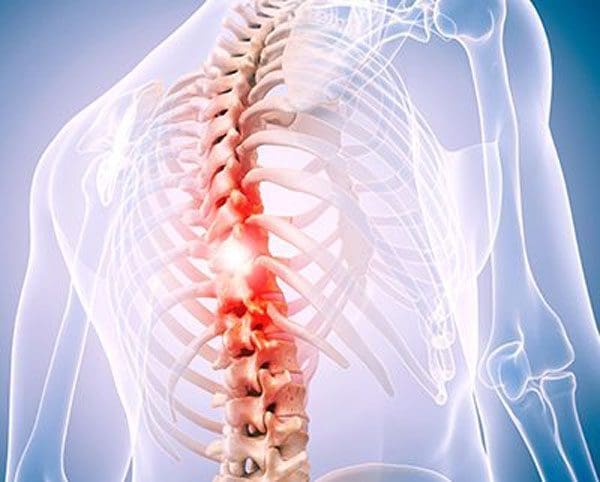
The thoracic spine is the middle portion of the spine, where the ribs attach. Muscles around it position the shoulder blades, stabilize the upper body, assist breathing, and support repeated arm use. For software engineers, help-desk employees, hybrid workers, data analysts, warehouse associates, and parents, these tissues may work quietly for hours before complaining.

A 2024 systematic review found that computer users commonly experience upper back, neck, shoulder, and low back pain, with prolonged computer use and repetitive or awkward work among reported risk factors (Demissie et al., 2024).

Your Arms Create Work for Your Mid-Back

Typing looks easy, but your arms still need support. Muscles around the shoulder blades make small adjustments to keep your hands positioned over a keyboard, mouse, steering wheel, scanner, phone, or tool.

Away from a desk, carrying a toddler, unloading groceries, stocking shelves, lifting boxes, or holding equipment away from the body increases mid-back demand.

This does not mean these activities are harmful. It means capacity matters. A muscle can tolerate only so much sustained or repeated work before fatigue changes how you move.

Concentration Can Quietly Reduce Thoracic Movement

When people concentrate, they often become still. The head moves closer to the screen, the shoulders may drift forward or upward, and the rib cage may move less freely.

No single posture is automatically “bad.” The bigger problem is often staying in one position for too long.

The thoracic spine normally bends, rotates, and extends. During long blocks of nearly motionless sitting, those opportunities shrink. Later, a stretch, twist, or deep breath may reveal how stiff the region feels.

Breathing Is Part of the Picture

Breathing is not just a lung activity. The ribs, diaphragm, abdominal wall, and muscles around the chest and spine all participate.

During stress or intense concentration, some people use smaller, upper-chest breaths or brace while typing, lifting, or driving. These patterns are not automatically dangerous, but hours of them can leave the ribs and shoulder girdle with fewer chances to relax.

A useful reset is simple: change position, let your shoulders drop, and take several comfortable breaths that let the lower ribs expand without forcing a giant inhale.

Why Endurance Matters More Than “Perfect Posture”

Many people try to solve mid-back fatigue by sitting straighter all day. That can backfire if “straight” becomes rigid.

Research in office workers with chronic neck pain suggests neck, shoulder, and shoulder blade strengthening can reduce pain and disability, although evidence certainty is low (Jones et al., 2024). Another meta-analysis found scapular-focused treatment can reduce pain, while some functional outcomes remain uncertain (Chen et al., 2024).

The practical message is not that everyone needs the same exercise. It is that muscles supporting the neck, shoulders, and thoracic region benefit from gradually increased capacity.

Useful building blocks may include:

  • Change positions instead of chasing one perfect posture.
  • Use comfortable thoracic rotation and extension.
  • Take walking breaks and let the arms swing.
  • Add rows, carries, or progressive pulling when appropriate.
  • Practice shoulder-blade control without constant bracing.
  • Gradually rebuild tolerance for lifting, carrying, reaching, and computer work.

Where Chiropractic Care Fits

Chiropractic evaluation can help determine whether the tired feeling is primarily related to joint restriction, muscle overload, shoulder mechanics, cervical referral, rib movement, or another problem requiring medical assessment.

Manual care may improve comfortable movement and reduce short-term symptoms, making exercise easier. In people with neck pain, thoracic manipulation may improve short-term pain, range of motion, and disability, but this evidence should not be taken as a promise that manipulation alone fixes every case of mid-back fatigue (Yang et al., 2024).

That distinction supports both beneficence and autonomy: care should help you move toward meaningful goals while giving you enough information to decide what fits your preferences.

At ChiroMed, care can combine chiropractic assessment, rehabilitation, and appropriate MD/NP evaluation. Dr. Alex Jimenez, DC, APRN, FNP-BC, CFMP, IFMCP, bridges chiropractic care, diagnostics, physical medicine, and functional health. Dr. Maria Guadalupe Cardenas, MD, provides internal medicine oversight when needed.

Acupuncture Can Be an Adjunct, Not the Finish Line

If persistent muscle tension or musculoskeletal pain makes it difficult to participate in mobility or strengthening, acupuncture or electroacupuncture may sometimes be added to the plan.

A 2024 systematic review found that acupuncture used as an adjunct for chronic neck pain may provide sustained pain relief in some patients, while comparisons with sham acupuncture were not consistently superior (Fang et al., 2024).

That is why acupuncture should be framed as a possible symptom-modulating tool, not a substitute for rebuilding strength, endurance, movement confidence, and work tolerance.

When Mid-Back Fatigue Deserves Medical Evaluation

Most late-day muscular fatigue is not an emergency, but unusual thoracic pain deserves attention. Seek prompt evaluation after significant trauma or with progressive weakness, numbness, difficulty walking, bowel or bladder changes, fever, unexplained weight loss, known cancer, immune suppression, or severe pain unlike ordinary musculoskeletal discomfort.

The American College of Radiology notes that thoracic pain with neurological findings, trauma risks, or concern for infection or cancer may warrant imaging based on the clinical picture (American College of Radiology, 2024).

Chest pressure, shortness of breath, fainting, or pain accompanied by other concerning heart or lung symptoms should be treated as a medical issue rather than assumed to be “just the back.”

Build a Back That Lasts Through the Day

The goal is not to make your mid-back perfectly still. It is to help it tolerate your life.

For one person, that means computer work without burning between the shoulder blades. For another, it means carrying a child, stocking a shelf, driving, or cooking dinner without feeling that the upper back has already finished its shift.

A coordinated plan can address mobility, strength, endurance, workstation habits, lifting mechanics, recovery, and medical factors. Non-invasive options such as chiropractic care, exercise, and selected acupuncture approaches may reduce reliance on more invasive strategies when appropriate, while patients can coordinate decisions with their healthcare team.

Schedule a ChiroMed multidisciplinary evaluation to identify what is overloaded, what is not moving well, and what needs more capacity. A good plan should explain what is happening, restore comfortable movement, and build resilience for work, family, and valued activities with coordinated care.


References

American College of Radiology. (2024). Thoracic back pain: ACR Appropriateness Criteria.

Chen, Y., Yang, C., Nie, K., Huang, J., Qu, Y., & Wang, T. (2024). Effects of scapular treatment on chronic neck pain: A systematic review and meta-analysis of randomized controlled trials. BMC Musculoskeletal Disorders, 25, 252.

Demissie, B., Bayih, E. T., & Demmelash, A. A. (2024). A systematic review of work-related musculoskeletal disorders and risk factors among computer users. Heliyon, 10(3), e25075.

Fang, J., Shi, H., Wang, W., Chen, H., Yang, M., Gao, S., Yao, H., Zhu, L., Yan, Y., & Liu, Z. (2024). Durable effect of acupuncture for chronic neck pain: A systematic review and meta-analysis. Current Pain and Headache Reports, 28, 957–969.

Jones, L. B., Jadhakhan, F., & Falla, D. (2024). The influence of exercise on pain, disability and quality of life in office workers with chronic neck pain: A systematic review and meta-analysis. Applied Ergonomics, 117, 104216.

Yang, J., Zhao, S., Zhang, R., Huang, C., Huang, K.-Y., Cheng, Y., He, C.-Q., & Li, L.-X. (2024). Effectiveness and safety of thoracic manipulation in the treatment of neck pain: An updated systematic review and meta-analysis. Technology and Health Care, 32(S1), 385–402.

Healing with Needles: Acupuncture for Anxiety and Panic Disorders

Can acupuncture be an effective treatment for anxiety and panic disorders in addition to other treatments, like therapy and/or medication?

Acupuncture For Anxiety and Panic Disorders

Considered one of the most popular types of alternative medicine, acupuncture has grown in popularity as a way to treat a variety of mental health conditions, including depression, post-traumatic stress disorder (PTSD), and other anxiety disorders. With the growth in popularity, more research has been focused on treatment for panic and anxiety symptoms. (Pilkington K. 2010)

  • Acupuncture can enhance personal wellness.
  • Acupuncture is generally safe and has few side effects.
  • It can help reduce physical and mental symptoms like tension, pain, and rapid heart rate.

Other alternative medicine practices include yoga, therapeutic massage, herbal medicines, and aromatherapy.

Traditional Chinese Medicine

Acupuncture is a healing technique originating from traditional Chinese medicine (TCM). The practice is based on the concept that medical conditions and mental health disorders are caused by an imbalance in the energy and circulation of the body’s vital life energy, known as chi or qi (National Institute for Complementary and Integrative Health, 2022). When the body and mind function properly, energy flows optimally through the channels/meridians at certain points throughout the body. Like tight or spasming muscles, energy or circulation becomes congested in different meridian pathways, leading to disease or disorders. The goal of acupuncture is to restore the health and balance of these channels.

How It Works

During acupuncture treatment sessions, small needles are placed along specific body areas, known as acupuncture points. These areas are thought to be where energy blockage occurs. The needles, which come in various thicknesses and lengths, stimulate and open blocked energy channels. Experts have conceptualized acupuncture from a neuroscience perspective, where nerves, muscles, and connective tissues are stimulated, and neurochemicals are released.

  • Acupuncture can help regulate the nervous system.
  • It can stimulate the body’s feel-good hormones and reduce stress hormones.
  • It can help deactivate the analytical brain, which is responsible for anxiety and worries.

Acupuncture is recognized by the National Institutes of Health (NIH) for treating pain management and other medical conditions. (National Institute for Complementary and Integrative Health, 2022)

Effectiveness

Clinical trials examining acupuncture for anxiety and panic disorders have shown some positive results. (Pilkington K. 2010) Acupuncturists and medical professionals are still not clear exactly why it may help with anxiety, but some research has noted that acupuncture appears to have a calming effect. More research studies are needed to prove the effectiveness of acupuncture for anxiety disorders. (Kim Y. K. 2019)

Getting Treated

What it can help with:

  • Agoraphobia
  • Generalized anxiety disorder (GAD)
  • Panic disorder
  • Phobias
  • Selective mutism
  • Separation anxiety disorder
  • Social anxiety disorder

If you are interested in treating your anxiety and panic symptoms through acupuncture, the first step is to consult your main healthcare provider. Professional acupuncture practitioners are on websites, including the National Certification Commission for Acupuncture and Oriental Medicine and the American Academy of Medical Acupuncture. The use of acupuncture continues to rise, making it more readily available. Since it has been evaluated for effectiveness and is available through many hospitals, some insurance policies may cover some acupuncture treatments.

Injury Medical Chiropractic and Functional Medicine Clinic

Acupuncture can help relieve symptoms of anxiety, stress, pain, discomfort, tightness, and poor circulation. Injury Medical Chiropractic and Functional Medicine Clinic can help individuals recover and build optimal health and wellness solutions with primary healthcare providers and specialists. We focus on what works for you to relieve pain, restore function, prevent injury, and help mitigate issues through adjustments that help the body realign itself. They can also work with other medical professionals to integrate a treatment plan to resolve musculoskeletal problems.


Discovering The Benefits of Chiropractic Care


References

Pilkington K. (2010). Anxiety, depression, and acupuncture: A review of the clinical research. Autonomic neuroscience : basic & clinical, 157(1-2), 91–95. https://doi.org/10.1016/j.autneu.2010.04.002

National Institute for Complementary and Integrative Health. (2022). Acupuncture: Effectiveness and Safety. Retrieved from https://www.nccih.nih.gov/health/acupuncture-effectiveness-and-safety

Kim Y. K. (2019). Panic Disorder: Current Research and Management Approaches. Psychiatry investigation, 16(1), 1–3. https://doi.org/10.30773/pi.2019.01.08