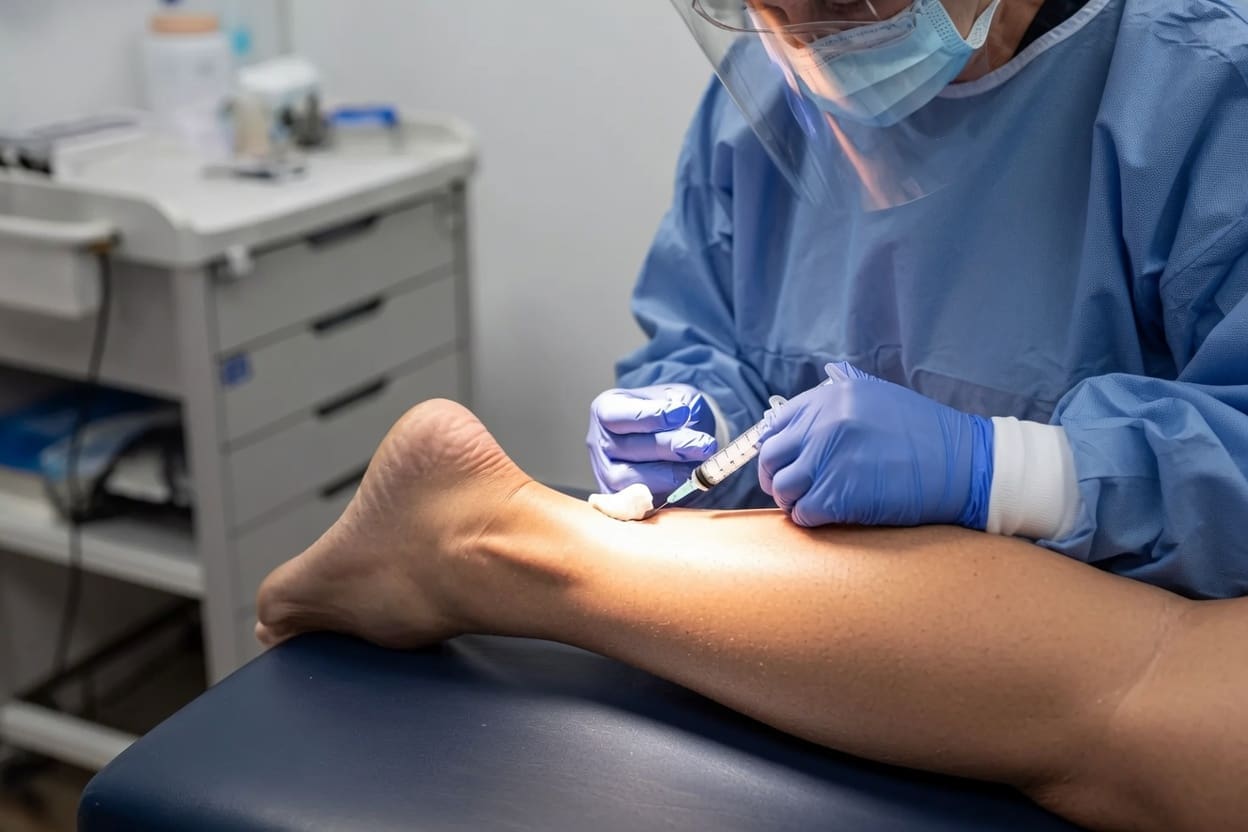
Microfragmented adipose tissue, commonly called MFAT, is a regenerative treatment made from a small amount of a patient’s own fat tissue. It may be considered for moderate-to-severe joint damage, cartilage injuries, chronic tendon problems, and certain partial ligament or tendon tears. MFAT is usually considered when an injury is complex, slow to heal, or has not improved enough with chiropractic care, rehabilitation, physical therapy, or simpler regenerative injections such as platelet-rich plasma.
This article explains when MFAT may be recommended after a motor vehicle accident or workplace injury. It also compares MFAT with PRP and explains how ChiroMed’s integrated approach combines medical oversight, chiropractic care, functional medicine, personal injury services, and rehabilitation.
What Is MFAT?
Microfragmented adipose tissue is prepared from a small amount of the patient’s own fat tissue. Fat may be collected from the abdomen, lower back, side, or thigh through a small procedure called lipoaspiration.
The collected tissue is then:
Cleaned
Washed
Mechanically processed into smaller sections
Prepared for injection
Placed into the injured joint or soft tissue
MFAT contains natural structural tissue, blood-vessel-related cells, signaling substances, and other components that may help support the injured area. It also provides a soft tissue framework that may help cushion damaged joints.
MFAT is different from laboratory-grown stem cell therapy. It is generally described as minimally processed tissue taken from the patient’s own body. University of Iowa Health Care lists MFAT as a nonsurgical option used for selected arthritic joints and tendon injuries (University of Iowa Health Care, n.d.).
When Is MFAT Recommended After an Injury?
MFAT is not normally the first treatment used after a car crash or workplace accident. Most patients begin with a careful examination, diagnostic imaging when needed, pain management, chiropractic care, rehabilitation, and activity changes.
MFAT may be considered when the injury is more severe, involves poor-quality tissue, or is not improving as expected.
Moderate-to-Severe Joint Damage
MFAT may be recommended when an accident causes significant damage inside a joint.
Examples may include:
A knee striking the dashboard during a crash
A worker falling directly onto the knee
A twisting injury while lifting or carrying equipment
Joint damage following a slip-and-fall accident
Post-traumatic arthritis
Worsening of arthritis that existed before the accident
A person may continue to experience swelling, stiffness, weakness, and difficulty walking even after completing conservative treatment.
The strongest clinical evidence for MFAT currently involves knee osteoarthritis. Research suggests that selected patients may experience improvements in pain and physical function. However, the available studies have limits, and the results should be interpreted with care (Hohmann et al., 2025; Li et al., 2023).
Cartilage Defects
Cartilage is the smooth material that covers the ends of bones inside a joint. It allows the joint to move with less friction.
A car accident or work injury may damage cartilage through:
Direct impact
Joint compression
Sudden twisting
Repeated loading
Joint instability
A bone or meniscus injury
Cartilage has a limited blood supply, which can make natural healing difficult. A patient with a cartilage defect may continue to experience catching, swelling, stiffness, or pain during weight-bearing activities.
MFAT may be discussed when imaging shows a moderate cartilage defect or post-traumatic joint degeneration. The goal is to support the joint environment and improve symptoms. It should not be described as a guaranteed way to regrow normal cartilage.
Larger Partial Tendon Tears
Tendons connect muscles to bones. A sudden collision, lifting injury, fall, or repetitive work activity may stretch or partially tear a tendon.
MFAT may be considered for selected conditions such as:
Partial rotator cuff tears
Chronic patellar tendon injuries
Achilles tendon injuries
Gluteal tendon damage
Tennis elbow
Chronic tendon degeneration
Tendon problems that have not responded to rehabilitation
PRP is often considered first for mild or moderate tendon injuries. MFAT may be discussed when a tear is larger, the tissue quality is poor, or an earlier injection did not provide enough improvement.
Research involving MFAT for tendon injuries is less developed than research involving knee osteoarthritis. A careful examination and imaging review are needed before choosing this treatment. University of Iowa Health Care includes MFAT among the nonsurgical options it may use for selected tendon conditions, while also noting that surgery may still be required for severe tendon damage (University of Iowa Health Care, n.d.).
Partial Ligament Injuries
Ligaments connect one bone to another and help keep joints stable.
A motor vehicle or work-related accident may injure a ligament through:
Sudden twisting
Forceful joint movement
Direct impact
Hyperextension
A fall onto an extended arm or leg
MFAT may sometimes be considered for a chronic partial ligament injury, especially when the surrounding tissue is damaged, and the patient has not responded to conservative care.
A complete ligament rupture or a joint that remains severely unstable may require surgical evaluation. Regenerative injections cannot physically reconnect every fully torn ligament.
Injuries That Have Not Improved With Conservative Care
One of the main reasons to consider MFAT is continued pain or loss of function after a reasonable period of conservative treatment.
Previous treatment may include:
Chiropractic adjustments
Physical rehabilitation
Therapeutic exercise
Soft-tissue therapy
Bracing
Activity modifications
Medication when appropriate
PRP injections
A home exercise program
A lack of improvement does not automatically mean MFAT is needed. The care team must first confirm the source of the symptoms.
Continued pain could be caused by:
An undiagnosed fracture
A complete tendon tear
Severe joint instability
Nerve compression
A spinal disc injury
An infection
Advanced arthritis
Pain coming from another part of the body
The diagnosis should guide the treatment rather than selecting an injection based only on the location of pain.
MFAT Versus PRP
Platelet-rich plasma, or PRP, is made from a sample of the patient’s blood. The blood is processed to concentrate platelets and growth factors before being injected into the injured area.
PRP may be considered when the patient has:
Mild-to-moderate joint degeneration
Tendon irritation
A smaller partial tendon tear
A ligament sprain
An injury with reasonable natural healing ability
A condition that has not improved with basic conservative care
MFAT involves collecting and processing fat tissue. Because this requires a small lipoaspiration procedure, it is more involved than a regular blood draw.
MFAT may be discussed when there is:
Moderate-to-severe joint degeneration
A more significant cartilage defect
Poor soft-tissue quality
A larger chronic partial tear
Continued symptoms after PRP
A need for additional tissue cushioning or structural support
MFAT is not automatically better than PRP. A randomized clinical trial found that both MFAT and PRP improved patient-reported knee osteoarthritis symptoms, with no meaningful difference between the treatments after 12 months (Baria et al., 2024).
Another study also found that MFAT was not superior to PRP for knee osteoarthritis. Both treatments had similar failure and adverse-event rates (Zaffagnini et al., 2022).
These findings show why treatment must be selected based on the patient’s diagnosis, health, injury severity, and recovery goals.
Who May Not Be a Good MFAT Candidate?
MFAT is not appropriate for every personal injury patient. It is not a replacement for emergency treatment, orthopedic surgery, or neurological care.
MFAT may not be recommended when the patient has:
An unstable fracture
A complete tendon rupture
A complete ligament tear
Severe joint instability
An active infection
An open wound near the procedure area
Progressive muscle weakness
Severe spinal cord or nerve compression
Advanced joint destruction
A medical condition that increases procedure risks
Unrealistic expectations about tissue regrowth
A patient taking blood thinners or living with diabetes, cardiovascular disease, immune problems, or another chronic condition may need additional medical review before receiving a procedure.
The U.S. Food and Drug Administration warns that regenerative medicine products have not been approved to treat orthopedic conditions such as osteoarthritis, tendonitis, back pain, knee pain, shoulder pain, or disc disease. Patients should ask what type of tissue is being used, how it is processed, and whether the treatment follows current regulatory requirements (U.S. Food and Drug Administration, 2021).
How Integrative Chiropractic Care Fits With MFAT
MFAT focuses on the biological side of an injury. It may help support the environment around damaged tissue, but it does not automatically correct poor movement, joint restriction, muscle weakness, or abnormal posture.
For example, a knee injection may not provide lasting improvement if the patient continues to place uneven pressure on the knee because of:
Limited hip movement
An unstable ankle
Weak gluteal muscles
Poor balance
An abnormal walking pattern
Spinal or pelvic restrictions
Chiropractic care and rehabilitation may address these mechanical problems.
At ChiroMed, an integrated recovery plan may include:
Chiropractic adjustments
Joint mobility care
Soft-tissue treatment
Corrective exercises
Neuromuscular rehabilitation
Balance and coordination training
Posture correction
Functional movement testing
Nutrition support
Medical evaluation
Personal injury documentation
The goal is not to perform aggressive treatment directly over a newly treated area. Care should be properly timed so the tissue can settle before progressive movement and strengthening begin.
ChiroMed describes its integrated model as bringing together chiropractic care, medical oversight, functional medicine, rehabilitation, personal injury care, and regenerative options when clinically appropriate.
Treatment Timing After MFAT
The exact recovery plan depends on the area treated and the severity of the injury.
Before the Procedure
Before MFAT, the care team may examine:
Joint movement
Muscle strength
Posture
Balance
Walking patterns
Work activities
Areas of compensation
Previous treatment results
This creates a baseline for measuring progress.
Early Protection Phase
During the first stage, the patient should follow the procedure provider’s instructions. The injection and fat-collection areas may feel sore.
The patient may need to avoid:
Heavy exercise
High-impact activity
Deep tissue pressure over the procedure area
Aggressive joint manipulation
Heavy lifting
Repeated twisting
Returning to full work duties too quickly
Gentle movement may be encouraged when it is medically appropriate.
Controlled Rehabilitation Phase
As discomfort improves, rehabilitation may include:
Gentle range-of-motion exercises
Light muscle activation
Isometric exercises
Balance training
Controlled weight-bearing
Low-resistance strengthening
Walking or movement retraining
The exercises should increase gradually.
Return-to-Function Phase
The final stage may focus on:
Lifting
Carrying
Driving
Climbing stairs
Returning to work
Recreational exercise
Sport-specific movements
Preventing another injury
Progress should be based on the patient’s function and clinical findings rather than only the number of days since the injection.
ChiroMed’s Multidisciplinary Injury-Care Model
ChiroMed – Integrated Medicine in El Paso uses a multidisciplinary model that brings medical and musculoskeletal care together.
Dr. Alexander Jimenez, DC, APRN, FNP-BC, CCST, CFMP, IFMCP, ATN, provides an integrated clinical approach that includes:
Chiropractic care
Family nurse practitioner services
Functional medicine
Personal injury evaluation
Musculoskeletal rehabilitation
Clinical documentation
Whole-body wellness planning
Dr. Maria Guadalupe Cardenas, MD, is board-certified in internal medicine and has more than 40 years of clinical experience. ChiroMed materials identify Dr. Cardenas as Medical Director and Collaborative Physician for Injury Medical Clinic PA. The clinic lists Texas Medical License #J2933 and NPI #1164426749.
Dr. Cardenas’s medical oversight may include reviewing:
Chronic medical conditions
Medications
Laboratory results
Procedure risks
Cardiovascular concerns
Diabetes or immune problems
The need for specialist referrals
Dr. Jimenez focuses on the patient’s musculoskeletal injury, joint mechanics, spinal function, rehabilitation needs, and overall recovery plan.
This setup allows the team to coordinate:
Internal medicine oversight
Chiropractic treatment
Functional medicine
Regenerative care considerations
Personal injury services
Rehabilitation
Nutrition and lifestyle support
Diagnostic testing
Referrals when needed
Dr. Jimenez’s Clinical Observations
Dr. Jimenez’s clinical observations emphasize that lasting injury recovery often requires more than reducing pain.
A successful plan may also need to address:
Joint movement
Muscle control
Strength
Stability
Sleep
Nutrition
Inflammation
Physical job demands
Repeated movement patterns
He also stresses the importance of finding the real pain generator. Pain in one area may come from a joint, tendon, ligament, muscle, spinal disc, or irritated nerve.
For example, knee pain may be influenced by poor hip or ankle movement. Shoulder pain may be affected by the neck, upper back, or shoulder blade. Treating only the painful location may leave an important part of the injury unaddressed.
These clinical observations support individualized care but should not be viewed as a guarantee that every patient will respond to MFAT in the same way.
Final Thoughts
MFAT may be recommended after a motor vehicle accident or workplace injury when a patient has moderate-to-severe joint damage, a cartilage defect, chronic tendon degeneration, or a larger partial soft-tissue injury.
It may also be considered when chiropractic care, rehabilitation, physical therapy, or PRP has not provided enough improvement.
However, MFAT is not automatically better than PRP. It does not guarantee cartilage regrowth, and it cannot repair every complete tendon or ligament tear. The strongest evidence currently involves selected patients with knee osteoarthritis.
At ChiroMed, regenerative options may be considered as one part of a broader recovery plan. Medical oversight, chiropractic care, functional medicine, personal injury services, and progressive rehabilitation can work together to address both the biological and mechanical sides of an injury.
The right treatment begins with the right diagnosis.
Car crashes and workplace accidents can place sudden pressure on the neck and lower back. This force may damage a spinal disc and lead to an annular tear, disc protrusion, disc extrusion, or a separated disc fragment.
Many disc injuries can improve with conservative care, rehabilitation, and time. In selected cases, regenerative treatments such as platelet-rich plasma, platelet-fibrin products, and microfragmented adipose tissue may also be considered. However, these treatments are not a guaranteed cure, and their success depends on the type and severity of the injury.
At ChiroMed in El Paso, care may combine integrative chiropractic treatment, medical oversight, rehabilitation, functional medicine, and personal injury services. The goal is to reduce pain, improve movement, restore function, and help patients return to work and daily activities safely.
What Is a Spinal Disc?
Spinal discs are soft structures located between the bones of the spine. They act like cushions and help absorb pressure during movement.
Each disc has two main parts:
A strong outer ring called the annulus fibrosus
A softer center called the nucleus pulposus
A healthy disc allows the neck and lower back to bend, twist, and move while helping protect the spinal joints.
During a motor vehicle accident or work injury, the spine may be forced into a sudden position. Compression, twisting, bending, or rapid back-and-forth movement may strain the disc.
This damage may cause pain directly from the disc. It may also irritate or compress a spinal nerve.
How Car Accidents Can Cause Disc Injuries
A motor vehicle accident can create strong forces within a very short amount of time.
Even a crash at a moderate speed may cause the neck or lower back to move beyond its normal range. The seat belt may hold the body in place while the head, neck, and spine continue moving.
Common accident-related forces include:
Rapid forward and backward movement
Sudden spinal compression
Side-to-side bending
Twisting of the body
Direct impact
Muscle tightening and guarding
These forces may injure a healthy spinal disc. They may also make an older or previously painless disc condition become symptomatic.
An MRI may show a bulge or herniation, but the scan must be compared with the patient’s symptoms and physical examination. Some people have disc changes without pain. A complete evaluation helps determine whether the disc finding is connected to the current injury and symptoms (Stretanski et al., 2025).
How Workplace Accidents Can Damage a Disc
Workplace disc injuries may happen during one major accident or develop after repeated physical stress.
Common causes include:
Lifting heavy objects
Twisting while carrying weight
Falling from a ladder or platform
Slipping and landing hard
Pushing or pulling heavy equipment
Repeated bending
Long periods of vibration
Poor lifting technique
Working in awkward positions
A warehouse worker may injure a lumbar disc while lifting a heavy box. A construction worker may damage a disc during a fall. A truck driver may develop worsening disc symptoms from vibration, prolonged sitting, and repeated loading of the lower back.
Treatment should consider both the injury and the physical demands of the patient’s job.
Common Types of Disc Injuries
Annular Tear
An annular tear, also called an annular fissure, is a small split in the outer ring of the spinal disc.
The tear may cause pain in the neck or lower back. It may also release inflammatory chemicals that irritate nearby nerves.
Symptoms may include:
Deep back or neck pain
Pain with sitting
Pain during bending or twisting
Muscle spasms
Tingling or burning
Pain that moves into an arm or leg
An annular tear does not always mean that the center of the disc has moved outward. However, it may weaken the disc and increase the chance of a herniation.
Disc Protrusion
A disc protrusion is usually considered a contained herniation.
Part of the disc pushes outward, but the outer layers still hold much of the disc material in place. The base of the protrusion is wider than the section extending outward.
A protrusion may cause no symptoms. However, it may cause pain if it irritates a nerve or narrows the space around the spinal canal.
Disc Extrusion
A disc extrusion is a larger herniation.
The softer material from inside the disc moves farther through the damaged outer ring. The portion outside the disc may be wider than the opening it moved through.
An extrusion can place more pressure on a spinal nerve. However, the size of the extrusion does not always match the amount of pain.
Some people with a large extrusion have manageable symptoms. Others with a smaller herniation may have severe nerve pain.
Sequestered Disc Fragment
A sequestered disc occurs when a piece of disc material completely separates from the main disc.
The fragment may move upward or downward within the spinal canal. It may press on a nerve root or, in the neck, place pressure on the spinal cord.
This type of disc injury needs careful medical and neurological evaluation.
Broad Disc Bulge
A disc bulge involves a wider portion of the disc. It is different from a focal protrusion or extrusion.
Disc bulges are often connected to aging and wear. However, an accident may make a previously painless bulge become painful.
Modern medical terminology separates broad disc bulges from focal disc herniations such as protrusions and extrusions (Fardon et al., 2014).
Symptoms of an Accident-Related Disc Injury
A herniated disc may cause pain near the injured area or symptoms that travel along a nerve.
Common symptoms include:
Neck pain
Lower back pain
Shoulder or arm pain
Sciatica
Numbness
Tingling
Burning sensations
Muscle weakness
Muscle spasms
Reduced range of motion
Pain with sitting
Pain during lifting or bending
Pain when coughing or sneezing
Trouble sleeping
Difficulty walking or working
A lumbar disc injury may send pain into the buttock, thigh, calf, or foot. A cervical disc injury may send pain into the shoulder, arm, hand, or fingers.
The location of the symptoms may help identify which nerve is irritated.
Why the Examination Is as Important as the MRI
An MRI can provide important information, but it is only one part of the evaluation.
At ChiroMed, the healthcare team may review:
How the accident happened
When the symptoms began
Where the pain travels
Which movements increase the pain
Muscle strength
Reflexes
Sensation
Balance
Walking ability
Prior injuries
Work duties
Current medications
Other medical conditions
MRI and X-ray findings
This approach helps separate disc pain from muscle strains, ligament injuries, fractures, spinal joint problems, hip conditions, and other causes.
The best treatment plan connects the patient’s history, physical examination, symptoms, imaging findings, and daily needs.
Can PRP Help a Herniated Disc?
Platelet-rich plasma, or PRP, is prepared from the patient’s own blood.
A blood sample is collected and processed to increase the concentration of platelets. Platelets contain proteins and growth factors involved in the body’s healing response.
Depending on the condition, PRP may be placed near an injured spinal structure. In some cases, a trained physician may inject PRP directly into a painful disc using imaging guidance.
Research suggests that intradiscal PRP may reduce pain and improve function in certain patients with disc-related pain. However, the results are not consistent across all studies.
Some studies have found meaningful pain relief. Other research has not shown a major difference compared with a control treatment. PRP should therefore be described as a treatment that may help selected patients, not as a guaranteed method of rebuilding a damaged disc (Machado et al., 2023; Schepers et al., 2022).
PRP may be considered when:
The pain appears to come from the disc
Symptoms match the examination and MRI
Conservative care has not provided enough relief
There is no emergency spinal condition
The patient understands the possible risks and limits
What Are Platelet-Fibrin Products?
Platelet-fibrin products, sometimes called PFP, are prepared from the patient’s blood.
These products create a fibrin network that may help hold platelets and healing signals in the treated area.
Platelet-fibrin products are used in some orthopedic and soft-tissue procedures. However, research involving direct treatment of spinal discs remains limited.
A platelet-fibrin product should not be promoted as a guaranteed seal for an annular tear.
The outcome may depend on:
The type of disc injury
How the platelet product is prepared
The injection location
Use of image guidance
The patient’s health
The experience of the treating clinician
The severity of nerve pressure
Can MFAT Help Disc-Related Pain?
Microfragmented adipose tissue, or MFAT, is prepared from a small amount of the patient’s own fat tissue.
The processed tissue contains structural material, cells, and signaling substances that may affect inflammation and tissue healing.
Early research on cell-based treatments for degenerative disc pain has shown possible improvements in pain and function. However, studies are still small and use different products, doses, and treatment methods (Zhang et al., 2023).
MFAT and similar cell-based treatments remain investigational for spinal disc conditions.
The U.S. Food and Drug Administration states that regenerative medicine products are not approved to treat orthopedic conditions such as disc disease, neck pain, or back pain. Patients should ask what product is being used, how it is prepared, what evidence supports it, and whether it meets current regulatory requirements (U.S. Food and Drug Administration, 2021).
Do IV Infusions Repair a Herniated Disc?
IV infusions do not move a herniated disc back into position. They do not remove an extrusion or directly close an annular tear.
IV therapy may still have a supportive role when there is a medical reason for treatment.
For example, an IV infusion may be used to:
Treat dehydration
Correct a confirmed nutrient deficiency
Provide nutrients when normal absorption is limited
Address a specific medical condition
Support general recovery under medical supervision
IV therapy should not be presented as a direct disc repair treatment.
Patients with kidney disease, heart disease, blood pressure problems, abnormal electrolyte levels, or medication concerns need careful medical screening before receiving an infusion.
How Integrative Chiropractic Care Fits Into Treatment
Integrative chiropractic care may help improve movement and reduce stress on injured spinal areas.
Chiropractic treatment does not remove a separated disc fragment. It also does not push an extruded disc back into the disc space.
Its role may include:
Improving joint movement
Reducing muscle tightness
Decreasing mechanical stress
Supporting better posture
Improving flexibility
Restoring safe movement patterns
Helping the patient return to normal activities
Depending on the condition, care may include:
Gentle spinal mobilization
Carefully selected chiropractic adjustments
Flexion-distraction techniques
Spinal decompression
Soft-tissue therapy
Posture correction
Core strengthening
Hip strengthening
Mobility exercises
Work-conditioning exercises
The technique must match the injury.
High-force treatment may not be appropriate for patients with a fracture, spinal instability, severe nerve compression, spinal cord involvement, or worsening weakness.
Clinical guidelines recognize spinal manipulation as one possible non-drug treatment for certain types of low back pain. It is usually most helpful when combined with movement, exercise, patient education, and rehabilitation (Qaseem et al., 2017).
A Multidisciplinary Approach at ChiroMed
ChiroMed uses a coordinated approach for patients with accident-related neck pain, back pain, and disc injuries.
Dr. Alexander Jimenez, DC, APRN, FNP-BC, CCST, CFMP, IFMCP, ATN, combines chiropractic knowledge with advanced training in family practice, functional medicine, rehabilitation, and personal injury care.
His clinical approach emphasizes connecting the patient’s symptoms with the examination and imaging findings. He also focuses on function, movement, and coordinated treatment instead of depending on one procedure alone (Jimenez, 2026).
Dr. Maria Guadalupe Cardenas, MD, serves as Medical Director and Collaborative Physician for Injury Medical Clinic PA. She is board-certified in internal medicine and has more than 40 years of medical experience.
Her Texas medical license number is J2933. Public NPPES-derived records list her NPI as 1164426748.
Dr. Cardenas may help provide medical direction and review issues such as:
Chronic health conditions
Current medications
Laboratory findings
Diabetes
High blood pressure
Kidney function
Cardiovascular risk
Infection risk
Bleeding risk
Medical factors that may affect healing
This type of multidisciplinary structure is common in integrative and injury care clinics.
At ChiroMed, the team may coordinate:
Chiropractic care
Medical evaluation
Functional medicine
Personal injury care
Corrective exercise
Physical rehabilitation
Nutritional support
Imaging referrals
Specialist referrals
Care before or after an injection procedure
Each healthcare professional works within their training, licensing, and legal scope of practice.
Who May Be Considered for Regenerative Treatment?
A patient may be considered for PRP, PFP, MFAT, or another procedure when:
The diagnosis is clear
Symptoms match the injured structure
Conservative treatment has not helped enough
There is no emergency condition
Medical risks have been reviewed
The patient understands that results vary
The procedure is performed with proper sterile technique
Image guidance is used when needed
The type of herniation matters.
A small contained protrusion is different from a large extrusion causing severe weakness. A patient with a mild annular tear may have a different treatment plan from someone with spinal cord pressure or a separated disc fragment.
When Is Urgent Medical Care Needed?
Some symptoms should not be managed with routine conservative care alone.
Seek urgent medical evaluation for:
Loss of bladder control
Loss of bowel control
Numbness around the groin
Rapidly worsening weakness
Severe trouble walking
Loss of balance
Loss of hand coordination
Fever with severe spinal pain
Major trauma with possible fracture
Neck pain with signs of spinal cord pressure
These signs may indicate serious nerve or spinal cord compression. Treatment should not be delayed while trying chiropractic, regenerative, or supportive care.
The ChiroMed Approach to Disc Injury Recovery
Disc protrusions, extrusions, annular tears, and broad bulges may become painful after car crashes and workplace accidents.
Many patients improve with a well-planned conservative program that includes movement, rehabilitation, education, and time.
PRP may help certain patients with disc-related pain, but the evidence remains mixed. Platelet-fibrin products have less direct research involving spinal discs. MFAT and other cell-based procedures remain investigational.
IV infusions may support hydration or correct a documented deficiency, but they do not directly repair a herniated disc.
At ChiroMed, integrative chiropractic care may be combined with medical oversight, functional medicine, rehabilitation, and personal injury services. This coordinated approach helps address the disc injury, surrounding muscles and joints, overall health, and the patient’s ability to return to normal life.
The goal is not simply to treat an MRI image. The goal is to help the whole person recover safely, move better, and regain function.
Fardon, D. F., Williams, A. L., Dohring, E. J., Murtagh, F. R., Rothman, S. L. G., & Sze, G. K. (2014). Lumbar disc nomenclature: Version 2.0. The Spine Journal, 14(11), 2525–2545.
A motor vehicle accident can injure the neck, back, spinal discs, muscles, ligaments, joints, and nerves. Whiplash may cause neck stiffness, headaches, muscle tension, and limited movement. A herniated or irritated spinal disc may also cause sharp pain, numbness, tingling, or weakness that travels into an arm or leg.
Epidural spinal injections may help calm inflammation around an irritated spinal nerve. Integrative chiropractic care may help restore joint movement, reduce muscle tension, improve posture, and support rehabilitation. Because these treatments address different parts of an injury, they may be combined within a coordinated recovery plan.
At ChiroMed – Integrated Medicine in El Paso, Texas, the care model brings together chiropractic care, medical oversight, functional medicine, personal injury care, and physical rehabilitation. This article explains how epidural spinal injections and integrative chiropractic care may work together after an automobile accident.
How Car Accidents Injure the Neck and Back
During a car accident, the body can be pushed forward, backward, or sideways within a fraction of a second. The seat belt may stop the torso while the head and neck continue moving.
This sudden movement can overstretch the muscles and ligaments of the neck. It can also irritate the small joints between the neck bones. This injury is commonly called whiplash.
Whiplash symptoms may include:
Neck pain and stiffness
Headaches
Shoulder pain
Upper-back pain
Muscle spasms
Reduced neck movement
Dizziness
Numbness or tingling in an arm
Pain that becomes worse with movement
A crash may also damage the lower back. The force of the collision can strain the muscles, irritate spinal joints, or injure a spinal disc. Symptoms may not always appear immediately. Some people begin to notice pain and stiffness several hours or days after the accident (In8 Wellness, 2024; Back Pain Center, 2026).
When a Spinal Disc Affects a Nerve
Spinal discs sit between the bones of the spine. They help absorb pressure and allow the spine to move.
An accident can cause a disc to bulge, tear, or herniate. A herniated disc occurs when part of the inner disc material moves through a weakened outer layer. The damaged disc may irritate or press against a nearby spinal nerve.
A cervical disc injury in the neck may cause pain that travels into the shoulder, arm, or hand. A lumbar disc injury in the lower back may cause pain that travels into the hip, buttock, leg, or foot.
Possible symptoms include:
Sharp or burning pain
Electric or shooting pain
Numbness
Tingling
Muscle weakness
Pain when sitting or standing
Difficulty walking
Pain with coughing or sneezing
Pain that travels from the lower back into the leg is often called sciatica. When the pain is caused by an inflamed spinal nerve, an epidural spinal injection may be considered as part of the treatment plan (Houston Pain Specialists, 2023).
What Is an Epidural Spinal Injection?
An epidural spinal injection places medication into the epidural space near an irritated spinal nerve. This space is located around the spinal cord and nerve roots.
The injection commonly contains:
A corticosteroid to reduce inflammation
A local anesthetic to provide temporary pain relief
The procedure is usually performed with imaging guidance so the clinician can place the medication near the affected nerve.
The injection does not push a disc back into place. It also does not rebuild damaged muscles or ligaments. Its main purpose is to reduce inflammation and irritation around a spinal nerve.
An epidural injection may help a patient:
Sleep with less pain
Sit or stand more comfortably
Walk with less leg pain
Reduce severe arm or leg symptoms
Participate more fully in rehabilitation
Perform daily activities more easily
Some patients experience meaningful relief, while others receive little or no benefit. The length of relief also varies. The patient’s diagnosis, overall health, imaging findings, and severity of nerve irritation can all affect the outcome (Fanaee, 2021).
When an Epidural Injection May Be Considered
An epidural spinal injection may be considered when an accident causes nerve-related symptoms that do not improve enough with early conservative care.
Possible conditions include:
Cervical disc herniation
Lumbar disc herniation
Cervical radiculopathy
Lumbar radiculopathy
Sciatica
Spinal stenosis
Inflamed spinal nerve roots
Severe radiating arm or leg pain
An epidural injection is not needed for every case of neck or back pain. A patient with mild muscle soreness, limited movement, or uncomplicated whiplash may begin with gentle movement, chiropractic care, rehabilitation, and other conservative treatments.
The decision should be based on a complete examination. Imaging such as an MRI may also be needed when the patient has persistent radiating pain, numbness, weakness, or other signs of a disc or nerve injury.
How Integrative Chiropractic Care Helps
Epidural injections focus mainly on nerve inflammation. Chiropractic care focuses on movement, joint function, posture, muscle balance, and mechanical stress.
After an automobile accident, the body may tighten muscles around the injured area to provide protection. This reaction is called muscle guarding. Although guarding may help during the early stage of an injury, continued tension can cause stiffness, reduced movement, and more discomfort.
The patient may also begin moving differently to avoid pain. For example, a person with lower-back pain may lean to one side while walking. A person with whiplash may keep the neck stiff and turn the entire body instead of turning the head.
Integrative chiropractic care may include:
Gentle spinal mobilization
Carefully selected chiropractic adjustments
Soft-tissue therapy
Assisted stretching
Spinal decompression when appropriate
Posture correction
Range-of-motion exercises
Strength and stability exercises
Education about safe movement
Work and activity modifications
Chiropractic treatment should be adjusted to the patient’s diagnosis and stage of healing. A highly irritated neck or back may require gentle care during the early phase. More active strengthening can be added as pain and inflammation improve.
ChiroMed describes its integrated injury model as combining chiropractic care with rehabilitation, functional medicine, nutritional support, medical assessment, soft-tissue care, and pain-management coordination when clinically appropriate.
Why Combining the Two Treatments May Help
Epidural spinal injections and chiropractic care do not perform the same job.
Epidural spinal injections may help:
Calm inflammation around a nerve
Reduce sharp, burning, or shooting pain
Decrease pain traveling into an arm or leg
Make daily movement easier
Create an opportunity for active rehabilitation
Integrative chiropractic care may help:
Improve restricted joint movement
Reduce muscle guarding
Restore safer movement patterns
Improve posture and body mechanics
Build strength and stability
Reduce repeated stress on the injured area
For example, an epidural injection may reduce severe leg pain caused by an inflamed lumbar nerve. Once the pain is more manageable, the patient may be better able to complete core exercises, walking programs, stretching, and other rehabilitation activities.
The injection may create a window of reduced pain. Chiropractic care and rehabilitation can use that window to improve function.
ChiroMed’s clinical approach recognizes that reducing inflammation is only one part of recovery. A patient may still have weakness, poor posture, limited spinal movement, balance problems, or unsafe movement patterns after the nerve pain improves.
A Step-by-Step Recovery Plan at ChiroMed
Step 1: Complete Injury Evaluation
The first step is to understand how the accident happened and which tissues may have been injured.
The evaluation may include:
Medical and accident history
Pain location and severity
Range-of-motion testing
Orthopedic tests
Neurologic tests
Muscle-strength testing
Reflex testing
Posture and balance
Walking and movement patterns
X-rays, MRI scans, or specialist referrals may be recommended when medically necessary.
Step 2: Reduce Acute Pain and Irritation
Early care may include gentle movement, activity changes, soft-tissue treatment, cold or heat therapy, and education about safe sleeping, sitting, and lifting positions.
The goal is to protect the injured area without keeping the patient inactive for too long.
Step 3: Address Nerve Inflammation
If the examination and imaging show that a disc injury is irritating a spinal nerve, the patient may be referred for pain management or a spine evaluation.
A qualified medical clinician can determine whether an epidural spinal injection is appropriate.
Step 4: Restore Movement
As severe pain begins to improve, the patient may progress into more active chiropractic and rehabilitative care.
Treatment may focus on:
Neck mobility
Shoulder-blade control
Core stability
Hip strength
Balance
Walking
Safe lifting
Work-related movements
Home exercises
Step 5: Measure Progress
Progress should be measured by more than a pain score.
The ChiroMed team may monitor:
Neck and back movement
Arm or leg symptoms
Muscle strength
Sleep
Walking tolerance
Sitting tolerance
Ability to work
Ability to complete daily activities
The plan can be changed when the patient improves, reaches a plateau, or develops new symptoms.
Medical Oversight at Injury Medical Clinic PA
ChiroMed’s integrative model includes medical collaboration through Injury Medical Clinic PA in El Paso.
Dr. Maria Guadalupe Cardenas, MD, Board Certified in Internal Medicine, works with Dr. Alex Jimenez, DC, and is identified in ChiroMed clinic materials as the Medical Director and Collaborative Physician. Clinic materials list Texas Medical License #J2933 and NPI #1164426749 and state that she has more than 40 years of experience in internal medicine.
This type of multidisciplinary arrangement is common in integrative and injury care. The medical doctor provides medical direction and oversight, while the chiropractor addresses spinal movement, joint mechanics, posture, muscle function, and rehabilitation.
Medical oversight may help with:
Reviewing medical conditions
Identifying injection risks
Reviewing medications
Monitoring blood pressure or blood sugar
Coordinating imaging and referrals
Recognizing warning signs
Communicating with specialists
Guiding changes in the treatment plan
This collaboration is especially important when a patient has diabetes, takes blood-thinning medication, has a history of infection, or has another condition that may affect the safety of an epidural injection.
The Clinical Observations of Dr. Alexander Jimenez
Dr. Alexander Jimenez, DC, APRN, FNP-BC, CCST, CFMP, IFMCP, ATN, brings together experience in chiropractic care, family practice, functional medicine, physical rehabilitation, and personal injury care.
His clinical observations emphasize that accident recovery should not focus only on temporarily lowering pain. The treatment plan should also examine why the injured area remains stressed and what may be slowing recovery.
His approach may include evaluating:
Spinal and joint movement
Neurologic function
Muscle strength
Posture
Balance
Nutrition
Metabolic health
Sleep quality
Daily activity limits
Response to treatment
Dr. Jimenez has explained that biological healing, structural function, and rehabilitation are connected. An injection may calm nerve inflammation, but the patient may still need chiropractic care, corrective exercise, and movement training to support lasting improvement (Jimenez, 2026a, 2026b).
How Functional Medicine Fits Into Recovery
Functional medicine does not replace treatment for a herniated disc, whiplash injury, or inflamed nerve. It may, however, help identify health factors that affect recovery.
The ChiroMed team may review:
Diet
Hydration
Sleep
Stress
Blood sugar
Nutrient levels
Inflammation
Weight and metabolic health
Current medications
For example, uncontrolled blood sugar may increase health risks and can be temporarily affected by corticosteroid medication. Poor sleep may also increase pain sensitivity and make rehabilitation harder.
Functional medicine support looks at the whole patient, while the injury care plan addresses the damaged muscles, joints, discs, and nerves.
Safety and Warning Signs
Epidural injections and chiropractic care should be provided only after proper screening.
Possible temporary effects of an epidural steroid injection include:
Soreness at the injection site
Headache
Facial flushing
Trouble sleeping
Temporary blood sugar changes
A brief increase in pain
Less common but serious risks may include infection, bleeding, nerve injury, allergic reaction, or spinal headache. The clinician performing the injection should explain the possible benefits, risks, and alternatives.
A person should seek immediate medical care after an accident for:
Loss of bladder or bowel control
Numbness around the groin
Worsening arm or leg weakness
Trouble walking
Loss of coordination
Severe or unusual headaches
Fainting or confusion
Chest or abdominal pain
Difficulty breathing
Rapidly worsening symptoms
These symptoms should not be treated with routine chiropractic care before an emergency medical evaluation.
A More Complete Path to Recovery
Combining epidural spinal injections with integrative chiropractic care may provide a more complete recovery plan for selected patients with back injuries, whiplash, herniated discs, and nerve pain after a motor vehicle accident.
The injection may reduce sharp nerve inflammation. Chiropractic care may improve joint movement, reduce physical tension, and restore safer movement patterns. Rehabilitation can then help rebuild strength, stability, balance, and confidence.
At ChiroMed in El Paso, the goal is not to depend on one procedure. The care model connects medical assessment, chiropractic treatment, functional medicine, personal injury care, and rehabilitation.
A successful plan should include:
An accurate diagnosis
Proper medical screening
Treatment matched to the injury
Safe control of nerve pain
Progressive rehabilitation
Regular progress checks
Communication between providers
Patients should work with qualified healthcare professionals to decide whether an epidural spinal injection, chiropractic care, or a combined plan is appropriate for their condition.
A ChiroMed Blueprint for Lasting Pain: Pain can continue long after a car crash, workplace accident, or sports injury. In many cases, the problem involves more than pain alone. The injury may affect a tendon, ligament, muscle, joint, spinal disc, or nerve. It may also change posture, strength, balance, and normal movement.
At ChiroMed – Integrated Medicine in El Paso, care focuses on the whole injury instead of only covering up symptoms. A coordinated plan may include chiropractic care, medical evaluation, functional medicine, physical rehabilitation, and regenerative treatments when medically appropriate.
This article explains how platelet-rich plasma, platelet-fibrin products, microfragmented adipose tissue, and epidural spinal injections work. It also explains how these procedures may safely fit alongside chiropractic care and active rehabilitation.
Moving From Pain Relief to Tissue Recovery
Pain is the body’s warning signal. However, stopping the signal does not always repair the injured tissue.
Pain medicine may provide short-term comfort. Rest may also help during the first stage of an injury. These methods can be useful, but they may not rebuild an injured tendon, restore joint stability, or correct movement problems that place stress on the painful area.
Regenerative therapies take a different approach. Treatments such as platelet-rich plasma, platelet-fibrin products, and microfragmented adipose tissue use material from the patient’s own body to support the local healing response.
These procedures do not guarantee that damaged tissue will completely regrow. Their purpose is to improve the biological environment around a carefully diagnosed injury. Results depend on the condition, the severity of the damage, the patient’s health, and the rehabilitation plan that follows treatment (Berrigan et al., 2024). End-Seed Model of Healing
A simple way to understand integrative recovery is to think about planting a seed.
The regenerative treatment is the seed. It delivers biological signals or supportive tissue to the injured area.
The patient’s physical and metabolic health is the soil. This includes joint movement, muscle strength, blood sugar control, nutrition, sleep, circulation, and inflammation.
A seed may struggle to grow in unhealthy soil. In the same way, an injection may not reach its full potential if the injured joint remains overloaded or the patient has poor nutrition, uncontrolled diabetes, weak supporting muscles, or poor movement patterns.
ChiroMed’s integrated approach works on both parts of the healing process:
Regenerative support for selected tissues
Chiropractic care for spinal and joint movement
Medical oversight for safety
Functional medicine for metabolic health
Rehabilitation for strength and stability
Nutrition guidance for tissue repair
Progressive return to work, exercise, or sports
ChiroMed describes its care model as a coordinated system that brings chiropractic care, nurse practitioner services, rehabilitation, nutrition, functional medicine, and medical oversight together under one roof. ed Multidisciplinary Framework
Integrative Chiropractic Care
Chiropractic care addresses the mechanical side of an injury.
A car crash, workplace accident, or sports injury can change the way the spine and joints move. The body may respond by tightening muscles and shifting weight away from the injured area. Over time, these changes can place stress on nearby joints.
A ChiroMed chiropractic plan may include:
Chiropractic adjustments
Gentle joint mobilization
Spinal decompression when appropriate
Soft-tissue treatment
Posture correction
Corrective exercises
Balance and coordination training
Home movement instructions
The term “subluxation complex” is sometimes used in chiropractic practice to describe restricted or poorly coordinated spinal joint movement. Treatment is not simply about putting a bone “back into place.” The practical goals are to improve movement, reduce stiffness, decrease muscle guarding, and distribute physical stress more evenly.
Chiropractic care may be modified after an injection. Forceful treatment near the procedure site may need to be avoided while the tissue enters its early healing stage.
Functional Medicine Support
Functional medicine examines health factors that may contribute to inflammation or slow recovery.
These factors may include:
High blood sugar
Insulin resistance
Nutrient deficiencies
Low protein intake
Poor sleep
Digestive problems
Smoking
Chronic stress
Excess body weight
Hormonal disorders
Functional medicine does not replace orthopedic care, emergency medicine, or surgery when those services are necessary. Instead, it helps improve the patient’s internal healing environment.
At ChiroMed, this may involve reviewing nutrition, laboratory findings, metabolic health, sleep, and lifestyle habits alongside the musculoskeletal injury. Medical Oversight and Collaborative Care
ChiroMed’s multidisciplinary structure includes Dr. Alexander Jimenez, DC, APRN, FNP-BC, CCST, CFMP, IFMCP, ATN, and Maria Guadalupe Cardenas, MD.
Dr. Cardenas is board-certified in internal medicine and has more than 40 years of medical experience. She serves as Medical Director and Collaborative Physician at Injury Medical Clinic PA in El Paso. Public provider records identify her National Provider Identifier as 1164426748 and her Texas medical license as J2933. Structure allows chiropractic and rehabilitation services to be coordinated with medical review.
Dr. Jimenez’s clinical role brings together:
Chiropractic care
Advanced practice nursing
Functional medicine
Personal injury evaluation
Musculoskeletal rehabilitation
Clinical documentation
Whole-body wellness planning
Dr. Cardenas provides an internal medicine viewpoint and collaborative medical direction. This may include reviewing medications, chronic illnesses, laboratory findings, procedure risks, and the need for medical referrals.
Together, the team can evaluate both the mechanical and medical parts of an injury. This is especially important for patients who take blood thinners or have diabetes, infections, immune disorders, bleeding problems, cardiovascular disease, or other complex conditions. ChiroMed presents this collaboration as part of its coordinated, patient-centered care model. Concentrated Platelet Support
Platelet-rich plasma, or PRP, begins with a sample of the patient’s blood. The blood is placed into a centrifuge to separate and concentrate the platelets. The prepared plasma is then placed near a clearly identified injury.
Platelets release growth factors and other signals involved in:
Collagen production
Blood-vessel activity
Inflammation control
Cell communication
Tissue remodeling
PRP may be considered for selected tendon injuries, ligament sprains, muscle injuries, chronic tendinopathy, and certain cases of osteoarthritis.
However, PRP is not one standard product. The total platelet dose, white blood cell content, processing method, and accuracy of placement may affect the outcome. Research suggests platelet dose may influence results in knee osteoarthritis, but the best formula has not been established for every condition (Berrigan et al., 2024).
Patients should ask what type of PRP is being used and why that preparation is appropriate for their diagnosis. let-Fibrin Products
Platelet-fibrin products, or PFP, are also prepared from the patient’s blood. The term may describe different platelet and fibrin preparations, so the exact product should be explained before treatment.
Fibrin creates a soft network that may hold platelets and their signals near the injured tissue. This temporary framework may support the local healing response.
PFP may be considered for certain tendon, ligament, muscle, or joint problems. However, preparation methods are not fully standardized. Patients should receive a clear explanation of:
What is being prepared
Where it will be placed
Why it is being recommended
What evidence supports its use
What recovery plan will follow
PFP should not be presented as a guaranteed way to rebuild all injured tissue.
MFAT: A Supportive Tissue Environment
Microfragmented adipose tissue, or MFAT, uses a small amount of the patient’s own fat. The tissue is commonly collected from the abdomen or side of the body and mechanically processed into smaller fragments.
MFAT contains a complex mixture of structural tissue, blood-vessel-related cells, signaling cells, and naturally occurring biological factors.
It may be considered for selected joint and soft-tissue conditions, including some cases of knee osteoarthritis. Studies suggest that some patients may experience improvements in pain and function. However, research has not shown that MFAT is clearly better than every other orthobiologic treatment, and stronger studies are still needed. It should not automatically be called a “stem cell cure.” It is a minimally processed tissue product, and its benefits and limits should be discussed honestly.
Epidural Spinal Injections for Nerve Pain
Epidural spinal injections perform a different job.
They are commonly considered when a spinal condition irritates a nerve root. Symptoms may include:
Sciatica
Arm or leg pain
Numbness
Tingling
Burning pain
Certain types of weakness
A traditional epidural steroid injection is not a regenerative treatment. Its main purpose is to place anti-inflammatory medication near an irritated spinal nerve.
Reducing nerve inflammation may give the patient a window of relief. During this time, the patient may be better able to walk, sleep, complete chiropractic care, and take part in rehabilitation.
Epidural PRP and related platelet-based procedures are also being studied. Early findings may be promising for selected cases, but preparation methods and treatment protocols still vary. More high-quality research is needed before these procedures can be viewed as standard replacements for traditional epidural care.
Bioidentical Hormone Replacement and Recovery
Hormones affect muscle maintenance, bone health, energy, sleep, and metabolism. A true hormone deficiency may make recovery more difficult.
Bioidentical hormone replacement may be considered when:
Symptoms support further evaluation
Laboratory testing confirms an imbalance
The patient is medically screened
Benefits and risks are reviewed
Follow-up monitoring is available
Hormone therapy is not a direct treatment for a torn ligament, damaged spinal disc, or arthritic joint. It should not be added simply to make a regenerative procedure work better.
When hormone treatment is appropriate, its role is to support overall health and correct a documented medical problem. FDA-approved hormone products are generally preferred over custom-compounded products when suitable options are available.
Combining Injections With Chiropractic Care
Regenerative injections and chiropractic care may be combined when the treatment team communicates and follows a planned schedule.
The injection addresses the local biological environment. Chiropractic care addresses movement restrictions and mechanical stress. Rehabilitation then helps the patient rebuild strength, stability, balance, and confidence.
Early treatment after an injection may focus on:
Protecting the treated area
Gentle walking
Light range-of-motion exercises
Posture
Movement of areas away from the injection site
Later care may include:
Controlled joint mobility
Muscle activation
Progressive resistance exercise
Core and spinal stability
Work-specific movement
Sport-specific drills
ChiroMed’s coordinated injury model combines medical assessment, chiropractic care, rehabilitation, functional medicine, nutritional guidance, and regenerative options when appropriate. Before a Procedure
A regenerative or epidural injection should not be recommended without proper screening.
The care team may review:
The diagnosis
Physical examination findings
X-rays, MRI, or ultrasound results
Current medications
Blood thinner use
Allergies
Blood counts
Diabetes control
Active infections
Immune disorders
Cancer history
Pregnancy
Previous surgeries
Response to conservative care
Neurological symptoms
Emergency symptoms require immediate medical attention. These may include loss of bowel or bladder control, numbness in the groin area, fever with severe spinal pain, major trauma, or rapidly worsening weakness.
NSAIDs and Other Pre-Procedure Instructions
Some platelet-based treatment plans ask patients to avoid nonsteroidal anti-inflammatory drugs, or NSAIDs, around the time of the procedure. Examples include ibuprofen and naproxen.
The concern is that certain NSAIDs may affect platelet activity. However, instructions differ between procedures and providers. Research has also found wide differences in PRP medication and rehabilitation protocols.
Patients must not stop aspirin, blood thinners, steroids, or another prescribed medicine without approval from the clinician managing that medication.
Pre-procedure instructions may also include:
Drinking enough water
Eating a healthy meal when permitted
Avoiding alcohol
Arranging transportation when sedation is used
Reporting fever or infection symptoms
Following medication instructions exactly
A Realistic Recovery Timeline
Recovery is different for every patient.
A general regenerative recovery path may include:
First few days: Soreness, protection of the area, and reduced activity
Weeks two through six: Gentle mobility and light muscle activation
Weeks six through twelve: Progressive strengthening and balance work
Three to six months: Continued tissue remodeling and return to demanding activities
Some patients improve sooner. Others need more time because of injury severity, age, arthritis, metabolic health, or work demands.
An epidural injection follows a different timeline. Relief may begin within several days, but it may be temporary. The lower-pain period should be used to improve movement, strength, and daily function.
Can Regenerative Care Help Avoid Surgery?
Regenerative and integrative care may help selected patients delay or avoid surgery. However, no injection can guarantee that surgery will never be needed.
Nonsurgical care may be considered when:
The injury is partial rather than complete
The joint remains stable
There is no progressive nerve damage
Imaging supports conservative care
The patient can participate in rehabilitation
Emergency surgery is not required
Surgery may still be needed for unstable fractures, complete tendon ruptures, severe joint destruction, spinal cord compression, progressive neurological weakness, or other serious conditions.
The best treatment is not always the most advanced procedure. It is the treatment that safely matches the diagnosis.
The ChiroMed Blueprint for Lasting Healing
A complete recovery plan may follow these steps:
Establish a clear diagnosis.
Rule out serious injuries and medical red flags.
Reduce severe pain and inflammation.
Improve safe spinal and joint movement.
Consider regenerative or epidural treatment when appropriate.
Protect the area during early recovery.
Begin progressive rehabilitation.
Address nutrition, sleep, stress, and metabolic health.
Track pain, strength, movement, and function.
Gradually return to work, exercise, or sports.
Passive care alone is rarely enough. An injection may support the healing environment, and chiropractic treatment may improve movement. However, active rehabilitation teaches the body how to move safely again.
At ChiroMed – Integrated Medicine in El Paso, the goal is not simply to cover up pain. The goal is to understand the injury, reduce the factors slowing recovery, restore movement, and help the patient build a stronger foundation for long-term function.
To learn more about coordinated injury and wellness care, visit ChiroMed – Integrated Medicine or contact the clinic at 915-850-0900.
Learn the key principles of integrative medicine for obesity care and how it supports sustainable weight loss and wellness.
Abstract: A Modern Integrative Roadmap to Obesity, Metabolic Health, and Whole-Person Care in Real-World Settings
In this easy-to-read educational post, I guide you through a practical, research-informed journey into obesity and metabolic health, showing how social and environmental realities shape clinical outcomes and how a multidisciplinary, integrative model changes lives. You will see how I, Dr. Alex Jimenez, DC, APRN, FNP-BC, CFMP, IFMCP, ATN, CCST, collaborate closely with our Medical Director and Collaborative Physician, Dr. Maria Guadalupe Cardenas, MD (Board Certified in Internal Medicine; NPI #1164426749; Texas MD License #J2933), at Injury Medical Clinic PA (Mission Plaza Injury Medical Clinic) in El Paso, Texas, to unify chiropractic care, functional medicine, medical oversight, personal injury care, and rehabilitation. We explore four detailed, real-world case narratives that illuminate underrepresented populations and common barriers: Case 1: Food insecurity, trauma, and prediabetes in a single mother Case 2 Cultural dietary patterns and type 2 diabetes in a South Asian family Case 3 Geographic barriers and food deserts with long-shift labor Case 4 Chronic stress, emotional eating, and structural barriers for a community educator and coach Along the way, I explain the physiological underpinnings of stress-cortisol dysregulation, insulin resistance, sleep deprivation, autonomic balance, and non-exercise activity thermogenesis, and I show why specific strategies and medications are chosen. I integrate the latest evidence from leading researchers on sleep and appetite hormones, incretin-based therapies, resistance training as metabolic medicine, NEAT, and culturally responsive nutrition. You will see exactly how integrative chiropractic care fits into each treatment plan: reducing pain barriers, improving spinal mechanics, supporting autonomic regulation, and enabling sustainable movement. The goal is simple but powerful: meet people where they are, honor culture and context, and apply clear, evidence-based steps to create momentum. This is a comprehensive, compassion-forward guide to modern obesity care, written for patients, families, and clinicians who want practical, science-grounded solutions that work in the real world.
Meet The Team: An Integrative Clinic Built for Real-World Health Challenges
I am Dr. Alex Jimenez, DC, APRN, FNP-BC, CFMP, IFMCP, ATN, CCST. For over three decades, my team at Injury Medical Clinic PA (Mission Plaza Injury Medical Clinic) in El Paso has delivered comprehensive, evidence-based care grounded in a simple belief: real healing happens when we treat the whole person in the context of their life. My training and clinical lens DC Doctor of Chiropractic APRN Advanced Practice Registered Nurse FNP-BC Family Nurse Practitioner-Board Certified CFMP Certified Functional Medicine Practitioner IFMCP Institute for Functional Medicine Certified Practitioner ATN Apoptosis, Telomere, and Nitric Oxide therapeutics CCST Certified Chiropractic Spinal Traumatologist Our medical leadership Dr. Maria Guadalupe Cardenas, MD, is Board Certified in Internal Medicine with 40+ years of clinical experience. She serves as our Medical Director and Collaborative Physician (NPI #1164426749; Texas MD License #J2933). In our multidisciplinary model, an MD provides medical direction alongside a chiropractor. This ensures safe, coordinated care across chiropractic, internal medicine, functional medicine, personal injury, rehabilitation, and prescription management. What this integration means for you A unified care plan that blends chiropractic adjustments and soft-tissue work with medical diagnostics, labs, prescriptions when needed, functional nutrition, and rehabilitative exercise. Seamless collaboration for complex cases: obesity and metabolic syndrome, personal injuries and biomechanical pain, sleep and stress disorders, and culture- or environment-shaped health patterns. Practical, stepwise strategies that fit your budget, family, culture, schedule, and neighborhood resources.
Why Integrative Care Works: The Science and Systems That Make Complex Care Doable
When we merge chiropractic care with internal medicine oversight and functional medicine, we gain a 360-degree view of health. This matters because obesity and metabolic dysfunction are not single-cause problems; they are emergent patterns arising from biology, behavior, environment, culture, stress, trauma, and access. Core pillars of our approach Structural restoration chiropractic adjustments to improve joint mechanics, reduce nociception, alleviate pain, and enhance movement capacity. Autonomic regulation: targeted spinal care and breathing routines that can help rebalance sympathetic-parasympathetic tone and reduce the physiologic “fight-or-flight” load driving cravings and poor sleep. Functional medicine mapping hormonal, inflammatory, and metabolic drivers; building nutrient-dense, culturally aligned nutrition; sleep and circadian optimization; gut and micronutrient support. Medical safety and efficacy: medical oversight for labs, comorbidities, medication selection and monitoring (e.g., metformin, GLP-1s, and affordable generics), and risk reduction. Rehabilitation and performance: pain-informed strength and mobility progressions, form coaching, and return-to-activity pathways that leverage NEAT and FITT-VP principles. Behavioral momentum: small-win habit design, motivational interviewing, and resource navigation that make change stick in real life. Why this is physiologically sound Pain relief and improved mechanics reduce kinesiophobia and allow therapeutic loading, strengthening insulin-sensitive muscle and improving glucose disposal. Autonomic balance shifts can lower perceived stress and cortisol reactivity, easing emotional eating and improving sleep. Resistance and movement increase GLUT4 translocation, mitochondrial efficiency, and myokine signaling, directly combating insulin resistance. Culturally respectful nutrition sustains adherence, stabilizes glycemia, and reduces inflammatory burden; consistent fiber and protein improve satiety signals. Sleep optimization corrects leptin-ghrelin imbalance and improves insulin sensitivity.
Case Study 1: Food Insecurity, Trauma, and Prediabetes: The Story of Sarah T.
I meet Sarah, a 30-year-old single mother of two. She is resilient, resourceful, and exhausted. She works part-time at a coffee shop, relies on SNAP, and often supplements with food pantry items. Her vitals and labs tell the story many clinicians see, but not enough to fully address. Clinical snapshot BMI 37.5 kg/m² (Class II Obesity) Waist circumference 42 inches (high visceral adiposity) Hemoglobin A1c 6.0 percent (prediabetes) Triglycerides 165 mg/dL; HDL 38 mg/dL; LDL 111 mg/dL Blood pressure 136/76 mmHg Anxiety and depression; history of intimate partner abuse and trauma Weight timeline and stress biology Postpartum weight gain compounded by a difficult divorce and trauma exposure. Chronic activation of the hypothalamic-pituitary-adrenal (HPA) axis elevates cortisol, promoting central adiposity, increasing drive for hyperpalatable foods, and impairing insulin signaling. Trauma-informed care is essential to avoid re-traumatization and to co-create a plan that restores agency and safety. Daily pattern highlights and hidden drivers Coffee with syrup and a pastry for breakfast blood sugar spike-crash cycle. Grazing on leftovers all shift: persistent insulin elevation that blocks lipolysis. Kids’ snacks are processed carbs; dinner is often quick, kid-friendly starches. Nighttime “decompressing” with snacks and screens: blue light suppresses melatonin, and next-day ghrelin rises with leptin drops, fueling cravings.
My Integrative Plan for Sarah: Four Coordinated Pillars
Nutrition skill-building in scarcity Why this matters In food-insecure settings, cost-per-calorie and shelf-stability drive high-carb intake. Our goal is “best available choice,” not perfection. Protein and fiber reduce glycemic volatility and improve satiety. How we do it Label literacy starts with serving size, added sugars, protein, and fiber. Pantry targets canned tuna/salmon/chicken in water; canned/dried beans and lentils; peanut butter without added sugar; low-cost seeds; frozen vegetables and fruit. “Protein first” habit: add beans to pasta; a handful of nuts instead of pastry; aim for protein in every eating event. Simple carbohydrate target e.g., under 100 g/day as a starting nudge, prioritizing higher-fiber sources. Community resources: SNAP-Ed recipes; pantry-specific guidance from my own volunteering experience. Why this works physiologically Protein stimulates peptide YY and GLP-1, enhancing satiety and reducing hedonic eating; fiber attenuates postprandial glucose and supports microbiome SCFAs that improve insulin sensitivity. Medication management: affordable, accessible options under medical oversight Why this matters GLP-1 agonists may be unaffordable or uncovered. We match therapy to biology and budget. Tools we consider with Dr. Cardenas Metformin: inexpensive insulin-sensitizer with modest weight benefit, especially in prediabetes. Phentermine, phendimetrazine, diethylpropion: short-term appetite suppression under careful supervision can break grazing cycles. Generic combination strategies Phentermine plus topiramate (as separate generics) attenuates cravings and increases satiety. Naltrexone plus bupropion targets reward pathways and emotional eating (bupropion can also support mood). Movement that fits life Why this matters Time, money, childcare are real barriers; intrinsic motivation and frictionless options drive adherence. How we do it Start with “exercisesnacks “: 10-minute bouts, 3 times per day. With kids, dance-party sessions; walking to a park; bodyweight circuits with household items. Use FITT-VP to progress frequency, time, and variety gradually: reach 150 minutes/week moderate activity plus 2 strength days as capacity grows. Why this works physiologically Frequent glycemic dips post-activity improve insulin sensitivity; strength training increases muscle mass and resting metabolic rate, aiding glucose disposal. Lifestyle, nervous system, and chiropractic care Sleep hygiene “Digital sunset,” consistent schedule, darker room, earlier lights-out. Better sleep normalizes leptin and ghrelin and reduces next-day hedonic drive. Mental health pathways PHQ-9 and GAD-7 screening; warm handoffs to low-cost counseling or community groups; trauma-informed pacing. Chiropractic integration Reduce musculoskeletal pain to lower barriers to activity. Facilitate autonomic balance to ease hyperarousal, lowering cortisol load. Regular visits as coaching touchpoints review food logs, step goals, micro-wins. What success looks like for Sarah: small wins that compound Protein at breakfast, fewer sugary coffees, a nightly “screen-off” alarm, and 10-minute dance breaks with the kids can shift hunger, energy, and mood within weeks. Metformin plus label literacy can stabilize days; strategic generics can reduce cravings and night snacking. Pain relief and better sleep unlock consistent movement, and momentum builds. References guiding this plan include research on stress-cortisol relationships, sleep-appetite hormones, metformin and prediabetes risk reduction, physical activity guidelines, and autonomic responses to manual therapy.
Functional Medicine’s Influence Beyond Joints- Video
Case Study 2: Cultural Dietary Patterns and Type 2 Diabetes: The Story of Rajesh
Rajesh is a 52-year-old Indian-American IT specialist with a BMI of 31, central adiposity (waist 43 inches), type 2 diabetes (A1c 6.8 percent on metformin 1,000 mg), hyperlipidemia on atorvastatin, and GERD on omeprazole. He enjoys traditional vegetarian-leaning meals prepared by his wife and occasionally plays pickleball. The daily food architecture Breakfast: idli or dosa with chutneys plus sweetened coffee, low in protein, high in refined starch. Lunch often skipped; vending machine snacks drive glycemic volatility. Dinner large, delicious, carb-forward family meals: white rice, dal, potato-rich curries, roti/naan. Dessert: traditional sweets; bedtime soon after a heavy meal. Key metabolic challenges High glycemic load with low morning protein; evening carb bolus when insulin sensitivity is lowest. Skipped lunch leads to compensatory overeating and “reward-driven” evening intake. Oils/ghee usage and portion sizes may quietly add energy density.
My integrative plan for Rajesh: culture-honoring changes that improve glycemia.
Re-proportioning, not rejecting Why this matters Sustained change requires respecting culture, flavors, and family. We adjust plate architecture to stabilize glucose without scrapping tradition. How we do it Plate method: half non-starchy vegetables, quarter protein (lentils, chickpeas, tofu, paneer, fish or chicken as desired), quarter starch (rice or roti). Substitutions in negotiation: cauliflower rice some nights; whole-wheat roti; increase lentils/vegetables in curries to dilute starch. Dessert swap fruit or yogurt-berry most nights; reserve mithai for occasions. Why this works physiologically Lower evening glucose excursions reduce glucotoxicity and improve next-day insulin action; higher protein and fiber increase satiety signals and slow gastric emptying. Breakfast and midday “metabolic anchors” Breakfast protein forward Moong dal chilla; scrambled paneer or tofu with spices; plain Greek yogurt with modest fruit; titrate down coffee sugar. Lunch make it unavoidable. Keep a 30 g protein shake at desk; nuts, seeds, sliced veggies to blunt cravings. Why this works physiologically Early-day protein improves dopaminergic tone and satiety, reduces evening rebound eating; stable midday intake prevents late-day reward seeking. Chiropractic care and rehab to fuel an active life Biomechanics Evaluate for upper and lower crossed patterns; adjust thoracic, cervical, lumbopelvic segments for mobility and posture. Soft-tissue work for overactive hip flexors/pecs; corrective activation for glutes and scapular stabilizers. Autonomic support Targeted spinal care may help shift toward parasympathetic dominance, easing stress-related intake and reflux triggers. Ergonomics and micro-movement Desk setup coaching; hourly movement breaks to improve NEAT and reduce postural strain. Strength-forward movement with FITT-VP Why this matters Resistance training is “metabolic medicine,” improving insulin sensitivity and protecting lean mass. Plan Pickleball for joyful cardio on Tuesdays; three 30-minute resistance sessions weekly guided by our rehab team; movement snacks to break up sitting. Why this works physiologically Muscle contractions drive non-insulin-mediated glucose uptake; cumulative NEAT reduces postprandial hyperglycemia. Advanced medical therapies with Dr. Cardenas Reassess pharmacotherapy If A1c stays above goal, consider initiating a GLP-1 receptor agonist (insurance-supported for diabetes) to reduce appetite, slow gastric emptying, and improve glycemia. If injectables are not tolerated or covered, consider oral combination options (e.g., phentermine/topiramate ER or naltrexone/bupropion) as appropriate and safe. Why this works physiologically Incretin therapies align with native GLP-1 signaling, improving beta-cell responsiveness and satiety; combination orals target both homeostatic and hedonic drivers of intake. The outcome we target is a culturally authentic plate that stabilizes glucose, a strong and mobile body that enjoys activity, and medication that supports (not replaces) lifestyle mastery.
Case Study 3: Food deserts, long shifts, and safety barriers: the story of Maria L.
Maria L., a 45-year-old warehouse worker, lives alone in an officially designated food desert. She has Class III obesity (BMI 40), controlled hypertension on losartan/HCTZ, persistent fatigue, and a grueling 12-hour shift work schedule. Her commute is long, her neighborhood feels unsafe for outdoor activity, and her primary food access is gas stations, vending machines, and drive-thrus. Environmental realities Limited access to fresh produce and affordable protein. Long hours, high fatigue, and safety concerns limit exercise options. Transportation barriers restrict supermarket access and gym feasibility.
My integrative plan for Maria: Eat well from a gas station, move safely at home, build capacity.
Gas-station nutrition survival guide Why this matters Telling Maria to “shop at a farmers market” ignores her context. We upgrade choices where she actually eats. Practical strategy Shop the perimeter refrigerated walls for eggs, cheese sticks, yogurt, pre-cut fruit/veg. Label literacy: start with serving size; progress to sugars and protein. Favor single-serve items to self-limit. Breakfast hard-boiled eggs and a banana with unsweetened coffee or tea. Lunch: grilled chicken sandwich “no mayo”; swap fries for fruit/veg when possible. Dinner: tuna kit plus veggie sticks; roasted chickpeas or mixed nuts as sides. Why this works physiologically Replacing refined snacks with protein/fiber improves satiety and flattens glucose swings that fuel fatigue and cravings. Expand access along her commute. Why this matters The other end of her commute may have grocery pickup services. Tactics Order curbside groceries online during a break; pick up after shift. Explore mobile farmers markets, or community produce trucks on days off. Batch-cook protein and veg on off-days; repurpose across the week for fast assembly meals. Indoor exercise and NEAT-first movement Why this matters Unsafe neighborhoods and long shifts demand safe, at-home, low-friction options. Plan Start with 10 minutes daily of YouTube-guided dance cardio, chair yoga, or low-impact strength. Emphasize NEAT: stand while on calls, march during TV ads, intentional stair use at work, micro-walks during breaks. Chiropractic support to restore joint mechanics, reduce pain from repetitive manual work, and prevent injuries as activity ramps up. Behavioral scaffolding and telehealth Why this matters Regular, short telehealth check-ins reduce attrition, build accountability, and fit her schedule. Tools Short weekly video visits; text reminders; step tracking with phone; simple food photo logs. Problem-solve obstacles in real time. Pharmacotherapy options matched to access Why this matters Cost and coverage shape choices; medications supplement, not supplant, habit change. With Dr. Cardenas Consider short-term phentermine for appetite control under supervision; evaluate long-term strategies as access and budget allow. If emotional eating is prominent, naltrexone/bupropion components as generics can be cost-effective. What success looks like for Maria: realistic upgrades at the pump and the drive-thru, short daily movement that compounds, pain relief that enables consistency, and telehealth support that keeps the plan alive.
Case Study 4: Chronic stress, emotional eating, ,and structurabbarrierssthe story of Jamal R.
Jamal is a 38-year-old African American teacher, community leader, and youth basketball coach with Class I obesity (BMI 34) and hypertension. He is a pillar for others, but his schedule leaves no time for himself. He experiences stress-triggered, high-carb snacking, limited local obesity medicine access, and difficulty getting time off for appointments. His state insurance covers anti-obesity medications, but there are no nearby specialized clinics. Core realities Emotional eating spikes mid-afternoon; family meals cater to children’s preferences. Structural barriers include limited local access and workplace constraints that feel inequitable. His activity is incidental through coaching; no structured, personal fitness routine.
My integrative plan for Jamal: reclaim calm, target cravings, and rewire the day
Family-centered nutrition shifts Breakfast overhaul Egg muffins baked weekly for grab-and-go protein; shift away from pancakes or sugary cereal. School cafeteria strategy Build salads smartly: dark greens, colorful veg, lean protein, vinaigrette; broth-based soups; avoid calorie-dense toppings. Dinner upgrades with kids Involve children in cooking to increase buy-in; swap to whole-wheat pasta; oven-bake “fried” chicken; add a big salad or veggie sides nightly; persistence over perfection. Stress-first behavior change Why this matters Emotional eating is a stress regulation strategy. We must provide alternatives. Tools Trigger awareness journal for one week without judgment. Replace vending trips with box breathing or a 5-minute brisk walk; guided 2-minute mindfulness on a phone app. Chiropractic visits to reduce cervical-thoracic tension and help downshift sympathetic tone. Pharmacotherapy aligned with phenotype With Dr. Cardenas First-line consideration: naltrexone/bupropion to target reward-based eating and energy/mood support. GLP-1 receptor agonists (if indicated and covered) to quiet “food noise,” enhance satiety, and improve glycemia. Emphasize medications as supports to behavior and sleep, not replacements. Telehealth solves access Why this matters Virtual check-ins respect his schedule and remove distance barriers. Model Monthly telehealth follow-ups with brief, focused goals; work within state rules for any required in-person intervals; coordinate home BP and weight tracking. Time architecture and FITT-VP Why this matters He needs a small, protected window for himself to regulate, move, and think clearly. Plan Three mornings per week, a 30-minute “sanctuary” window begins with breath, then 15-20 minutes of strength or cardio; stretch and set the day’s intention. Before coaching, arrive 20 minutes early for a quick circuit; during practice, be an active coach. Chiropractic care to keep mechanics efficient, reduce aches, and sustain adherence. What success looks like for Jamal: a quieter nervous system, fewer impulsive eating episodes, proactive family meals, medication that removes neurochemical headwinds, and a realistic routine that honors his service to others without sacrificing his health.
The Physiology Behind the Plans: Why these strategies work in the body
To create change that lasts, we must be crystal clear on the “why.” Here is how the core mechanisms we target work together. Stress-cortisol-hedonic eating loop Chronic psychosocial stress elevates cortisol, increases reward sensitivity to hyperpalatable foods, and promotes visceral adiposity. Lowering perceived stress through chiropractic-supported autonomic balance, breath work, and sleep hygiene decreases cortisol drive and reduces emotional eating. Sleep, appetite hormones, and insulin Short sleep reduces leptin, increases ghrelin, and elevates subjective hunger for high-carb foods; it also impairs insulin sensitivity. Consistent sleep routines, blue-light reduction, and pain relief improve hormonal balance and morning energy, making dietary adherence easier. Protein and fiber as satiety anchors Dietary protein enhances satiety via peptide YY and GLP-1; soluble fibers slow glucose absorption, produce short-chain fatty acids that improve insulin sensitivity, and modulate gut-brain signaling. Emphasizing protein-first and fiber-dense choices stabilizes appetite. NEAT and the cumulative edge Non-exercise activity thermogenesis adds hundreds of calories of daily energy expenditure without “workouts,” improves glycemic control, and reduces stiffness. Standing, strolling, and frequent posture changes are metabolically meaningful and biomechanically protective. Strength training as metabolic therapy Resistance training increases lean mass, enhances GLUT4-mediated glucose uptake, improves mitochondrial function, and elevates resting metabolic rate. For insulin resistance phenotypes, this is often the highest-yield exercise lever. Incretins and combination pharmacotherapy GLP-1 receptor agonists increase glucose-dependent insulin secretion, blunt glucagon, slow gastric emptying, and reduce appetite. Combination orals (e.g., naltrexone/bupropion; phentermine/topiramate) target both homeostatic and hedonic pathways, enabling patients to implement lifestyle plans with less neurochemical friction. Chiropractic adjustments and nervous system dynamics By restoring joint mechanics, reducing nociceptive input, and potentially influencing autonomic balance, spinal care can lower perceived stress, reduce musculoskeletal barriers to movement, and support better sleep—effects that amplify nutrition and activity interventions.
The FITT-VP Framework: How I tailor movement to real life
I rarely “prescribe” a fixed routine at the outset. Instead, I co-create an adaptable FITT-VP plan. Frequency How many moments of movement fit in the day? Three 10-minute walks may beat a single 30-minute block for adherence. Intensity Choose intensity that matches stress and conditioning. Early on, gentle or moderate intensities support recovery and reduce injury risk. Time Accumulate short bouts. Ten minutes done often beats 60 minutes skipped. Type Joy drives consistency. Dance, pickleball, walking meetings, resistance bands, chair yoga—whatever you enjoy and can repeat. Variety Mix modalities to prevent boredom and distribute load across tissues; variety reduces overuse injuries and sustains engagement. Progression Nudge up reps, minutes, or complexity gradually. Technique first, volume second, intensity third. This structure forms a living plan that grows with capacity, guided by periodic reassessment and pain-aware chiropractic support.
Sleep is not passive; it is active repair. I teach patients to stack the deck in their favor. Core habits Fixed sleep and wake times, seven days a week. Dark, cool, quiet room; blackout curtains; no screens for 60–90 minutes before bed. Light dinner several hours before sleep; minimize late alcohol and caffeine. Calming pre-bed ritual: brief stretch, breathwork, reading, or warm bath. Pain and posture Chiropractically informed pillow and mattress selection; side-sleeping with neutral cervical alignment; pre-bed thoracic mobility drills for desk workers. Medical and nutritional tuning with Dr. Cardenas Check magnesium status; consider magnesium glycinate at night for relaxation. Assess hormones as indicated across sexes and life stages; discuss evidence-based options when imbalances disrupt sleep. Better sleep translates into calmer days, steadier appetite, and more resilience to stressors.
Food Label Literacy: The fastest skill upgrade in constrained settings
For patients navigating pantries, gas stations, and vending machines, label literacy is liberation. Start here Serving size: how many per container; hidden multiples are common. Added sugars: grams per serving; look for low added sugar. Protein: aim for meaningful protein per serving, especially early in the day. Fiber: look for higher fiber options; combine with protein when possible. Sodium: be mindful, especially with hypertension; choose lower-sodium when available. Smart swaps Replace pastry with nuts or a lower-sugar protein bar. Choose yogurt with little or no added sugar; add your own fruit. Pick baked or grilled over fried when ordering hot items. Single-serve packs for built-in portion control. Small label-savvy decisions add up to big metabolic differences across a week.
Cultural Humility in Nutrition: Honoring flavor, family, and tradition
Food is identity. Realistic plans respect this. Ask with curiosity Who cooks at home? What groceries are available? What holidays or fasting practices matter? What dishes carry special meaning? Re-proportion rather than replace Keep traditional dishes on the table; adjust plate balance, serving sizes, and beverage sugars. Build allies Invite spouses or family cooks to visits; co-design substitutions that preserve taste and ritual. When nutrition aligns with culture, adherence becomes a point of pride rather than a source of conflict.
Rehabilitation and Injury Prevention: Movement that feels good and lasts
Rehabilitation translates pain relief into durable performance. Corrective priorities Address upper and lower crossed syndromes; restore thoracic extension, hip extension, and ankle dorsiflexion. Teach hip hinging and bracing; protect knees and lumbar spine during squats and lifts. Integrate scapular stability and neck posture work for desk-bound bodies. Programming Begin with isometrics and breath-led mobility; add low-load strength with meticulous form; progress to compound movements and light power when appropriate. Use pain as biofeedback: adjust range, tempo, or volume to keep within tolerable windows. The chiropractic link Adjustments create windows of mobility; reha “locks in” new patterns. Together, they reduce reinjury risk and enable sustainable activity.
Telehealth, Access, and Accountability: Care that meets you where you are
For many, the biggest barrier is logistics. We remove friction. Telehealth cadence Short, frequent virtual check-ins keep momentum high and help solve problems quickly. Share home BP, weight, and food photos; adjust plan dynamically. Community mapping We maintain local resource guides for food pantries, CSA programs, mobile markets, and low-cost counseling supports. Hybrid compliance When regulations require periodic in-person visits, we integrate these with convenient virtual follow-ups to minimize disruption. The result is care that fits life, not the other way around.
The Role of Evidence: Using research to guide every step
I align protocols with modern, peer-reviewed findings. Appetite, sleep, and hunger hormones Sleep curtailment increases ghrelin and hunger, lowering leptin and satiety. Correcting sleep is a high-yield lever for calorie control. NEAT and sitting disease Sitting less and moving more across the day adds meaningful energy expenditure and cardiometabolic benefits beyond gym sessions. Resistance training as medicine Structured strength work improves insulin sensitivity, body composition, and cardiometabolic profiles. Incretin and pharmacologic therapies GLP-1 receptor agonists improve glycemic control and reduce weight by modulating insulin, glucagon, gastric emptying, and central appetite. Combination oral therapies can be effective, particularly when tailored to hedonic vs. homeostatic drivers. Chiropractic, pain, and autonomics By reducing nociceptive input and improving mechanics, patients report decreased pain and improved ease of movement; autonomic shifts may support stress reduction and sleep quality, enabling lifestyle adherence. Each case plan is a living synthesis of this evidence, personalized by context.
Clinical Observations from My Practice:e What I see every day in El Paso
From decades of integrative work across chiropractic, advanced practice nursing, and functional medicine, several patterns stand out. Pain is the great disruptor When the neck or back hurts, movement and sleep collapse. Adjustments and soft-tissue care restore the capacity to follow through on nutrition and exercise intentions. Micro-wins create macro-change The first 10-minute walk is the hardest; the fifth feels natural. The first protein breakfast feels odd; the third improves energy. Momentum is real and measurable. Culture is chemistry Meals that honor culture improve adherence and joy; this “enjoyment signal” reduces the drive for hyperpalatable snacks between meals. Sleep turns off the “food noise” When patients sleep well, the snack drawer loses its voice; pharmacotherapy works better; cravings are quieter. Team care is multiplicative. Chiropractic opens the door, rehab keeps it open, medical oversight ensures safety, and functional medicine aligns biology and behavior. Together, outcomes accelerate. I share more reflections and case-informed insights through my clinic and professional channels. Dr.Jimenez’ss clinical hub: https://chiromed.com/ Professional profile and updates: https://www.linkedin.com/in/dralexjimenez/
Putting It All Together: A step-by-step template you can start today
No matter your starting point, this blueprint helps you take the first steps. Start with one anchor habit.t Choose one morning protein-forward breakfast or one 10-minute walk after dinner. Success builds confidence. Add a sleep lever Set a phone alarm for a “digital sunset” 60–90 minutes before bed. Read or stretch instead of scrolling. Map your food environment. Identify your usual food stops. Pre-select the best available items before you are hungry. Move the way you like Pick a type of activity you enjoy. Consistency beats intensity. Address pain early If pain blocks movement, see us for an evaluation. An adjustment today can unlock training tomorrow. Consider medications as a tool.s If cravings or appetite overwhelm your plans, talk to us about pharmacotherapy options that match your biology and budget. Stay connected Short telehealth check-ins or in-person visits maintain accountability and keep plans realistic.
Conclusion: Science plus compassion in a multidisciplinary model that works
At Injury Medical Clinic PA (Mission Plaza Injury Medical Clinic), our integrative approach exists for one purpose: to help you succeed in your real life, with your budget, your family, your neighborhood, and your schedule. We blend chiropractic care, internal medicine oversight, functional medicine, rehabilitation, and behavior design to turn evidence into action. With Dr. Maria Guadalupe Cardenas, MD, guiding medical safety and strategy and with my focus on structural and autonomic foundations, we tailor care that evolves with you. Whether you are navigating food insecurity, cultural dietary patterns, long-shift work in a food desert, or chronic stress with structural barriers, there is a path forward. We do not chase perfection. We build progress. One protein breakfast. One 10-minute walk. One better choice at the gas station. One adjustment that makes exercise feel possible. One night of better sleep. Then another. And another. That is how change compounds. That is how lives change.
Dunstan, D. W., Howard, B., Healy, G. N., & Owen, N. (2012). Too much sittin’: A health hazard. Diabetes Research and Clinical Practice, 97(3), 368–376.
Piercy, K. L., Troiano, R. P., Ballard, R. M., Carlson, S. A., Fulton, J. E., Galuska, D. A., George, S. M., & Olson, R. D. (2018). The Physical Activity Guidelines for Americans. JAMA, 320(19), 2020–2028.
Wehrens, S. M. T., Christou, S., Isherwood, C., Middleton, B., Gibbs, M. A., Archer, S. N., Skene, D. J., & Johnston, J. D. (2017). Meal timing regulates the human circadian system. Current Biology, 27(12), 1768–1775.e3.
Injury Medical Clinic and professional insights Dr. Jimenez Clinical Hub. Injury Medical Clinic. Jimenez, A. Professional Profile. LinkedIn Profile.
SEO tags: integrative chiropractic care, Dr. Alex Jimenez, Dr. Maria Cardenas, El Paso obesity care, functional medicine, internal medicine collaboration, personal injury rehabilitation, patient-centered care, food insecurity and obesity, cultural dietary habits, South Asian diet and diabetes, food desert solutions, telehealth obesity care, NEAT non-exercise activity thermogenesis, FITT-VP exercise framework, sleep hygiene metabolic health, GLP-1 receptor agonists, metformin prediabetes, naltrexone bupropion emotional eating, phentermine topiramate generics, autonomic nervous system balance, chiropractic adjustments stress, spine and metabolism, resistance training insulin resistance, glycemic control strategies, SNAP-Ed budget nutrition, community health resources, trauma-informed obesity care, family-centered nutrition, gas station healthy eating tips, label literacy coaching
Discover effective strategies for cardiometabolic care for obesity to enhance your health and lifestyle choices.
Abstract
I am Dr. Alexander Jimenez, DC, APRN, FNP-BC, CFMP, IFMCP, ATN, CCST. In this deeply detailed educational post, I guide you through an integrated, first-person case journey that weaves modern obesity medicine, functional medicine, internal medicine oversight, and integrative chiropractic care into one cohesive roadmap for patients and clinicians. I present: A comprehensive, stepwise protocol for managing class II obesity, insulin resistance, polycystic ovary syndrome (PCOS), binge eating disorder, and cardiometabolic risk — from diagnostic criteria to layered therapies including metformin and GLP-1/GIP agents such as tirzepatide and semaglutide. The physiology of hyperinsulinemia, glycemic variability, ovarian hyperandrogenism, autonomic imbalance, and stress physiology, explaining how elevated insulin blocks fat loss and fuels PCOS. An integrative model where I, as a dual-trained clinician in chiropractic and advanced practice nursing with functional medicine credentials, co-manage complex cases alongside our Medical Director and Collaborative Physician, Dr. Maria Guadalupe Cardenas, MD (Board Certified in Internal Medicine; NPI #1164426749; Texas MD License #J2933) at Injury Medical Clinic PA (Mission Plaza Injury Medical Clinic) in El Paso, Texas. Detailed patient journeys: “Eloise” (obesity, PCOS, binge eating), “George” (male metabolic syndrome, hypertension, fertility concerns), “Lynn” (perimenopause, weight gain, hypertension, mood/cognitive symptoms), “Amit/Amin” (type 2 diabetes, cardiovascular disease, sarcopenic obesity, insulin deprescribing), and “Dolores” (severe osteoarthritis, surgery thresholds, sarcopenia, health inequities). How integrative chiropractic care enhances outcomes via pain reduction, biomechanical optimization, autonomic regulation, and adherence amplification — and why this is a critical force multiplier when combined with medical pharmacotherapy, nutrition, and rehabilitation. Evidence-based methods from leading researchers and organizations, with clear APA-7-style in-text citations and a hyperlinked reference list. This post is written in plain, structured language with SEO-optimized headings, clearly highlighted concepts, narrative explanations, and bullet lists to make complex physiology and treatment strategies accessible. It is a comprehensive, clinically realistic guide to restoring metabolic health, protecting fertility, managing perimenopause and sarcopenia, and building durable, patient-centered outcomes through a multidisciplinary team. Visit my clinical observations and professional profile: Injury Medical Clinic PA: https://chiromed.com/ LinkedIn: https://www.linkedin.com/in/dralexjimenez/
Transform Your Body!- Video
Our Integrative Team: Internal Medicine Direction and Chiropractic Functional Care Working Together
I am Dr. Alexander Jimenez, DC, APRN, FNP-BC, CFMP, IFMCP, ATN, CCST. At Injury Medical Clinic PA (also known as Mission Plaza Injury Medical Clinic) in El Paso, Texas, our care model seamlessly integrates internal medicine direction and chiropractic functional care for metabolic, musculoskeletal, and personal injury cases. Medical Director and Collaborative Physician: Dr. Maria Guadalupe Cardenas, MD, Board Certified in Internal Medicine, NPI #1164426749, Texas MD License #J2933. With more than 40 years of experience, she ensures medical safety, guideline adherence, pharmacotherapy stewardship, and risk stratification for cardiometabolic conditions, PCOS, prediabetes/diabetes, hypertension, and liver disease. Chiropractic and Functional Medicine: I lead biomechanical assessments, spinal and rib mobilization, myofascial care, autonomic balancing, structured exercise therapy, and nutrition-metabolic coordination aligned with IFM/CFMP frameworks. Rehabilitation and Personal Injury Services: We deliver coordinated rehabilitation and post-injury functional restoration, common in modern integrative clinics where chiropractors and MDs co-manage patients. Our shared mission: Reduce pain and biomechanical friction Normalize metabolic signaling and autonomic balance Build capacity for sustained physical activity and nutrition adherence Deploy evidence-based pharmacotherapies safely Restore fertility potential and reduce cardiometabolic risk Protect mental health and quality of life This clinician dyad—Dr. Cardenas (internal medicine) and me (chiropractic, APRN, functional medicine)—is the structural backbone enabling comprehensive, safe, and effective integrative care.
Why Integrative Chiropractic Care Enhances Metabolic and Obesity Outcomes
Chronic metabolic conditions engage mechanics, neurology, endocrine, and immune systems all at once. Integrative chiropractic care contributes distinct and synergistic value: Pain and Movement Efficiency: Optimizing joint mechanics, soft-tissue glide, and spinal segmental function reduces nociceptive input, making movement more comfortable. This consistency in physical activity drives skeletal muscle GLUT4 translocation and insulin sensitivity, critical for obesity and insulin resistance. Autonomic Nervous System Regulation: Gentle spinal and rib articulations, thoracic mobility work, diaphragmatic facilitation, and guided vagal tone practices can rebalance sympathetic-parasympathetic dynamics. Patients often experience reduced stress hyperglycemia, fewer impulsive eating triggers, and improved sleep. Inflammation Modulation: Mobilization and myofascial interventions may lower neurogenic inflammation, improving exercise tolerance and insulin signaling. Adherence Amplifier: When pain abates and movement feels efficient, patients sustain nutrition, exercise micro-bouts, and rehab plans — amplifying pharmacotherapy effects and stabilizing outcomes. Chiropractic care is not a medication replacement. It is a force multiplier that increases the effectiveness and sustainability of medical and lifestyle interventions.
Case Journey 1: Eloise — Class II Obesity, PCOS, Insulin Resistance, Dyslipidemia, Elevated Liver Enzymes, and Binge Eating Disorder
I present Eloise, a composite educational case consistent with modern clinical realities. Eloise is a 25-year-old fitness director with high physical activity who struggles with: BMI 37.5 (class II obesity) Irregular, infrequent menses since adolescence Clinical hyperandrogenism: cystic acne and upper-lip hair Hyperinsulinemia: fasting insulin 36.1 μIU/mL, fasting glucose 107 mg/dL, A1C 6.0%, HOMA-IR 9.5 Dyslipidemia: elevated triglycerides, low HDL, elevated LDL Elevated liver enzymes; possible MASLD (metabolic-associated steatotic liver disease) Acanthosis nigricans and skin tags Binge eating episodes 1–2/week triggered by restrictive dieting Weight cycling with repeated regain High activity (elliptical, strength training, yoga), sleep okay except after binges; minimal alcohol; nonsmoker Clinical impression: Class II obesity PCOS by Rotterdam criteria (ovulatory dysfunction + clinical hyperandrogenism), excluding secondary causes Insulin resistance with hyperinsulinemia and prediabetes Dyslipidemia, possible MASLD Binge eating disorder with restriction-anxiety-binge cycles Anovulatory infertility risk Goals: Reduce cardiometabolic risk and normalize ovulation/fertility potential Stabilize insulin and lipids; improve skin/hirsutism Resolve binge eating and stop weight cycling Build durable lifestyle skills and protect mental health
The Physiology: Why Elevated Insulin Blocks Fat Loss and Fuels PCOS
Understanding root physiology clarifies strategy. Hyperinsulinemia and adipose storage: Insulin upregulates adipose lipoprotein lipase and suppresses hormone-sensitive lipase, decreasing lipolysis and fat oxidation during fasting. High insulin locks fat in storage. Ovarian hyperandrogenism: Insulin synergizes with LH to increase theca cell androgen production. Elevated insulin lowers hepatic sex hormone–binding globulin (SHBG), elevating free androgens, worsening acne, hirsutism, and anovulation (Jensen et al., 2021). Skeletal muscle and liver insulin resistance: Increases hepatic gluconeogenesis; reduces muscle glucose uptake; raises glycemia → more insulin secretion → vicious cycle (Misra & Bloomgarden, 2018). Hepatic insulin resistance & de novo lipogenesis: Accumulation of triglycerides elevates ALT/AST and connects PCOS to MASLD risk. Stress and sleep disruption: Elevate sympathetic drive and cortisol, worsening glycemic variability and binge vulnerability (Bornstein et al., 2018). Restrictive dieting: Increases ghrelin (hunger), impairs leptin sensitivity (satiety), elevates allostatic load — often precipitating binges. Therapeutic implications: Lower insulin exposure and restore insulin sensitivity Regularize meal timing with adequate protein and fiber to stabilize glycemia Use exercise micro-bouts to augment glucose disposal independent of insulin Introduce medications to improve incretin signaling and hepatic insulin sensitivity Address autonomic balance, pain-free movement, and behavioral drivers Align contraceptive safety and fertility planning with pharmacotherapy
Diagnostic Framework and Internal Medicine Oversight
PCOS diagnosis: Rotterdam criteria (two of three: ovulatory dysfunction, clinical/biochemical hyperandrogenism, polycystic ovarian morphology), excluding thyroid dysfunction, hyperprolactinemia, nonclassical CAH (Teede et al., 2018; ACOG, 2018). Insulin resistance: Elevated fasting insulin, HOMA-IR, triglyceride/HDL ratio; optional CGM phenotyping. Binge eating disorder: Validated screener like BEDS-7; assess frequency, loss of control, distress (Shafiee et al., 2023). Dr. Cardenas’ role: Validate diagnoses and coordinate labs/imaging Screen contraindications Initiate and monitor medication safely Align with ADA 2024 and endocrine guidelines (ADA, 2024; Apovian et al., 2015; Garvey et al., 2016)
Stepwise Treatment: Phased, Safe, and Synergistic
Phase 1: Stabilize Metabolic Rhythm and Protect Fertility Nutrition pattern shift from calorie fixation to patterned, insulin-sensitive eating: 4–5 small meals/day every 3–4 hours to smooth glycemia and reduce binge triggers Protein 90–100 g/day; 20–30 g/meal to drive muscle protein synthesis and satiety Fiber 50–100 g/day from vegetables and whole fruit; titrate for GI tolerance Reduce ultra-processed foods; minimize sweets, refined starches/grains, alcohol Exercise: Continue elliptical, strength training, yoga; add daily 10-minute walk post-meal or once daily to improve postprandial insulin sensitivity (Solomon et al., 2013) Medication: Start metformin ER 500 mg daily, titrate to 2,000 mg daily as tolerated; insulin sensitizer with hepatic benefits and modest weight effects (Rubio et al., 2020) Contraception: Initiate combined oral contraceptive (COC) to stabilize cycles and prevent unplanned pregnancy; counsel that 5–10% weight loss may restore ovulation (Teede et al., 2018) Behavioral: Psychoeducation, urge surfing, structured meals, anxiety reduction; treat binge drivers (Shafiee et al., 2023) Phase 2: Incretin Support and Binge Reduction Once metformin tolerated: introduce tirzepatide with careful titration to minimal effective dose. Safety counseling: With COCs, use a barrier method for the first four weeks after starting tirzepatide and for four weeks after each dose increase due to delayed gastric emptying possibly affecting pill absorption (Nauck & Meier, 2019; Perakakis & Mantzoros, 2020) Monitor GI tolerance, hydration, bowel regularity; track satiety and binge frequency. If binge persists: consider lisdexamfetamine (FDA-approved for binge eating) with cardiovascular/psychiatric screening (Shafiee et al., 2023) Phase 3: Consolidation and Skill Building Nutrition skills: meal structuring, grocery planning, protein-fiber pairing, craving scripts, evening rituals Movement portfolio: micro-bouts (5–10 minutes) across the day; maintain resistance training to preserve muscle Chiropractic and rehab: address pain, rib mobility, diaphragmatic mechanics, autonomic balance; sustain adherence Sleep hygiene, stress physiology training, relapse prevention planning Phase 4: Fertility Planning and Maintenance As indices normalize: reassess contraception; if evaluating natural cycles, coordinate medication adjustments with OB/GYN. Maintain lowest effective doses; consider taper with stability Continue labs, mental health screening, supportive care to prevent regression
Segmental/regional mobilization: improve loading, reduce neurogenic pain; consistent movement improves GLUT4 translocation in skeletal muscle and insulin sensitivity Diaphragmatic mobility and thoracic/rib work: enhance respiration, heart rate variability, and vagal tone, reducing stress-driven cravings and glycemic spikes Myofascial release/fascial glide: reduce nociception, enhance proprioception, support motor control and exercise quality Lumbopelvic alignment and hip hinge coaching: protect lifting mechanics and resistance training progression Autonomic balancing: breath pacing, positional recovery (e.g., 90-90 breathing), gentle vagal stimulation to buffer stress-induced binge triggers Outcome rationale: When patients feel good, they move more — compounding into better insulin sensitivity, mood, sleep, and adherence.
Medical Oversight and Safety Guardrails
With Dr. Cardenas’ internal medicine direction: Baseline/serial labs: fasting insulin/glucose, A1C, lipid panel, liver enzymes, renal function, pregnancy testing as indicated Comorbidity screening: thyroid function, prolactin, 17-OHP (PCOS differential); sleep apnea screening Medication stewardship: metformin titration; tirzepatide dosing/GI safety; contraceptive guidance; lisdexamfetamine cardiovascular and misuse risk screening Fertility counseling: medication safety windows; preconception labs; OB/GYN coordination MASLD monitoring: track ALT/AST, consider ultrasound if persistent elevations This dual-credentialed structure enables potent therapies within robust safety boundaries.
Nutrition Strategy: From Restriction to Regulation
Shift from “1,200-calorie anxiety” to physiology-first patterns: Structured intake: 4–5 meals/snacks; protein anchor (20–30 g each), fiber emphasis, hydration and minerals (sodium/potassium/magnesium) Glycemic smoothing: distribute carbs; pair with protein/fiber/fats; avoid long fasting gaps that provoke binge cycles Upgrading food quality: whole-food proteins (poultry/fish/lean meats/tofu/tempeh/eggs), non-starchy vegetables, legumes as tolerated, strategic fruit, nuts/seeds, olive oil/avocado Evening cravings protocol: pre-planned protein-fiber snack, decaf tea ritual, 10-minute walk, breathwork, coping scripts Weekend alcohol: limit/pause to protect sleep architecture and fat oxidation Mechanism: Protein and fiber drive satiety, attenuate postprandial glucose; frequent small meals stabilize insulin exposure and neurohormonal drivers of binge eating (Sacks et al., 2009).
Exercise Strategy: High-Value Micro-Dosing Plus Strength
Daily 10-minute walks (post-meal preferred): reduce postprandial glucose/insulin; improve mitochondrial signaling and perfusion (Solomon et al., 2013) Resistance training twice weekly minimum: preserve lean mass and resting metabolic rate; augment insulin sensitivity via glycogen turnover Yoga twice weekly: autonomic balance and mobility Optional second 10-minute walk to stack metabolic benefits Mechanism: Muscle contractions translocate GLUT4 independent of insulin, increasing glucose uptake and lowering 24-hour insulin exposure.
Pharmacotherapy Synergy: Metformin, GLP-1/GIP Agents, and Lisdexamfetamine
Metformin: reduces hepatic gluconeogenesis, improves hepatic insulin sensitivity, modest weight loss, beneficial in PCOS and MASLD risk (Rubio et al., 2020) Tirzepatide (GIP/GLP-1): significant satiety, delayed gastric emptying, improved insulin secretion in a glucose-dependent manner, glucagon reduction, weight loss, improved A1C/triglycerides/inflammation (Frias et al., 2021) Contraception considerations: incretin agents may delay gastric emptying; barrier method during initiation and dose escalations (Nauck & Meier, 2019) Lisdexamfetamine: reduces binge frequency/severity; requires careful cardiovascular/psychiatric oversight (Shafiee et al., 2023) Clinical sequencing: metformin first; tirzepatide second; reserve lisdexamfetamine for persistent binge patterns after foundational supports.
Behavioral Care: Validated Tools and Everyday Skills
Six-Month Milestones: Objective Improvements and Subjective Wins
Typical trajectory: Weight reduction: ~11% Fasting insulin: drop from 36.1 to ~21.4 μIU/mL HOMA-IR: significant improvement A1C: trending downward from 6.0%; lipids normalizing Dermatologic/androgenic: less acne, reduced hair growth Binges: reduced to 1–2/month; stress-triggered rather than calorie-triggered Activity: daily walks added; resistance maintained Sleep: improved except after rare binges Interpretation: multi-system recovery — ovarian function likely improving; hepatic load decreasing; autonomic balance stabilizing.
Two-Year Outcomes: Risk Reduction and Fertility Readiness
Weight reduction: ~24.1% Fasting insulin: ~8.4 μIU/mL (near-normal) HOMA-IR: normalized A1C: ~5.2% Lipids: durable improvement Liver enzymes: improved; MASLD risk reduced Binge eating: controlled; lisdexamfetamine added/tapered as needed Contraception: considering barrier method to assess spontaneous cycles for conception Activity/sleep: consistently strong; minimal cravings Clinical message: safe, sustainable path to fertility planning and cardiometabolic resilience via integrative care.
Clinic Workflows: Roles, Communication, and Monitoring
Intake and Assessment: I perform chiropractic-functional and biomechanical exams; Dr. Cardenas leads medical evaluation and labs; body composition and behavioral screeners embedded Care Plan Conference: decide medication sequence; map nutrition/movement phases; schedule chiropractic and rehab blocks; safety intervals defined Patient Education: written pathways, medication/contraceptive safety, binge toolkit Follow-Up Cadence: biweekly for 8–12 weeks; monthly thereafter; labs at 3–4 months, 6 months, then semiannually Rapid Escalation: GI intolerance, plateaus, recurrent binges, new symptoms trigger swift review Outcomes tracking: weight, waist, strength markers, HRV if available, binge frequency, quality-of-life scores
Mechanisms in Depth: Why Each Piece Fits
Protein/fiber: increase satiety peptides (PYY, GLP-1), lower glycemic spikes; microbiome SCFAs improve insulin sensitivity and appetite regulation (Sacks et al., 2009) Post-meal walking: reduces glucose AUC and insulin peaks; enhances skeletal muscle glucose uptake (Solomon et al., 2013) Metformin: activates AMPK, reduces hepatic glucose output; modest microbiome shifts favor metabolic tone (Rubio et al., 2020) Tirzepatide: dual incretin activity yields superior A1C and weight reductions (Frias et al., 2021) Lisdexamfetamine: modulates dopaminergic/noradrenergic reward pathways in binge behavior; monitor closely (Shafiee et al., 2023) Chiropractic-autonomic interface: thoracic/rib articulation and diaphragmatic mechanics improve HRV, linked to glycemic control and stress resilience Resistance training: preserves lean mass; skeletal muscle is the main site for insulin-mediated glucose disposal (Wolfe, 2006)
Safety, Contraindications, and Practical Guardrails
Metformin: monitor GI tolerance, B12 over time, renal function; slow titration Tirzepatide: counsel on nausea/emptying; pancreatitis warnings; contraceptive redundancy during dose changes Lisdexamfetamine: cardiovascular screening; monitor BP/mood/sleep PCOS differential: exclude thyroid disease, hyperprolactinemia, nonclassic CAH Pregnancy planning: medication timelines, washout, preconception labs; prenatal nutrition and folate emphasized
Patient Experience: From Anxiety to Agency
Eloise’s arc: Early weeks: meal rhythm reduces anxiety and binge triggers Months 2–3: post-meal walks ritualized; metformin GI tolerance stabilizes; energy improves Months 4–6: tirzepatide titration hits satiety “sweet spot”; binges diminish; acne improves; confidence rises Years 1–2: identity consolidates — athletic, metabolically healthy, emotionally regulated; fertility options on her terms
Specific Chiropractic Techniques I Use
Cervicothoracic and thoracolumbar mobilizations: autonomic balance and trunk mechanics Rib mobilizations and soft-tissue work: respiratory mechanics and sympathetic load reduction Pelvic alignment, hip capsule mobilizations: gait and strength support Myofascial techniques: thoracolumbar fascia, psoas, diaphragm to relieve tension linked to stress/overeating Neurodynamic/proprioceptive drills: enhance motor control and reduce compensations Breathwork coaching integrated with manual care: elevate vagal tone and calm cravings
Functional Medicine Lens: Systems Biology Integration
Gut-liver axis: reduce fructose/ultra-processed foods; fiber supports microbiota producing SCFAs that improve metabolic signaling and inflammation HPA axis: regulate stress to prevent cortisol-driven dysglycemia and hedonic eating Nutrient status: adequate protein, omega-3s, magnesium, micronutrients for mitochondrial and metabolic health Inflammation resolution: movement, sleep, and whole foods modulate cytokine tone, supporting insulin signaling and ovarian function
Fertility and PCOS: Restoring Ovulation Through Metabolic Repair
As insulin normalizes: SHBG rises; free androgens decline Ovarian steroidogenesis rebalances; ovulatory cycles reemerge Endometrial environment improves; preconception weight loss and glycemic control lower maternal-fetal risk
Monitoring Plan: Data-Driven Adjustments
We track: Anthropometrics: weight, waist, body composition Glycemic measures: fasting glucose, A1C, insulin, CGM phenotyping Lipids/liver enzymes: MASLD risk and cardiometabolic trends Hormonal markers: SHBG/androgens as indicated Behavioral health: binge frequency, sleep, stress Physical function: strength/mobility/tolerance/pain Autonomic indicators: HRV where available
Minimal effective pharmacology: maintain doses that uphold stability Protect lean mass: never abandon resistance training Sustain meal rhythm: protein-fiber anchors and evening scripts Seasonal planning: holiday/travel stress playbooks Regular touchpoints: quarterly check-ins, annual labs, chiropractic/rehab tune-ups
Case Journey 2: George — Male Metabolic Health, Hypertension, Prediabetes, Fertility Concerns, Mood and Stress
I introduce “George,” a 35-year-old nonsmoker, high-pressure tech project manager, facing fertility challenges (low sperm count) and significant stress, anxiety, occasional erectile dysfunction, elevated blood pressure, and visceral adiposity. His motivations: Improve heart health and avoid his father’s fate with heart failure Prevent type 2 diabetes Improve fertility Manage stress Increase energy for his family
Chemical vs. Character: Reframing Shame into Physiology
George felt shame about appetite control. I explained this is not a character flaw — it is chemistry and hormones: Aromatase in adipose converts testosterone to estrogen → reduced testosterone, increased estrogen → fatigue, mood changes, lower muscle mass, more abdominal fat, impaired sperm and erectile function Cortisol and insulin under chronic stress and poor sleep elevate appetite (comfort foods), drive fat storage (especially visceral), and magnify insulin resistance (Bornstein et al., 2018) Ghrelin-Leptin-GLP-1 axis: Ghrelin increases hunger Leptin resistance blunts satiety signals Impaired GLP-1 signaling reduces fullness Chronic inflammation from adipokines fuels metabolic dysfunction His struggle is biochemical, not moral. This reframe empowers patients to act without self-blame.
Initial Plan: Multidisciplinary and Patient-Centered
Complete labs: A1C, thyroid panel (TSH, Free T4/T3, antibodies), liver function panel Registered Dietitian (RDN) referral: personalized nutrition, address free food/drink at work, portion sizes Blood pressure management: medication, home cuff, log for self-management Adiposity-Based Chronic Disease (ABCD) medications: discuss tools to reset appetite circuits Sleep medicine study: evaluate for obstructive sleep apnea (OSA) — a driver of hypertension and insulin resistance Stress and physical activity: small starts (meditation, movement integration)
Four-Week Follow-Up: Wins and Barriers
Successes: BP medication adherence and logging Completed labs: thyroid/liver normal; A1C 5.9% (prediabetes) Sleep study scheduled; dietitian visit completed Challenges: Could not start meditation or exercise yet Slight weight gain; discovered large portions, stress eating, difficulty switching from soda to water We normalized the experience, reframed the scale, and focused on behavior wins. We explored barriers: meditation felt “silly,” exercise energy low.
Plan Refinement
Increase BP medication dose for better control Bupropion-naltrexone after sleep study: Bupropion: supports mood and energy (dopamine/norepinephrine) Naltrexone: modulates reward pathways, reduces cravings Stress management: three-minute guided meditation via phone app in car after commute, twice weekly NEAT: stairs at work, hourly movement breaks — build activity without “gym requirement” Continue dietitian and sleep study
Integrative Chiropractic Care for George
Chronic stress manifests physically: muscle tension, spinal subluxations, pain, and autonomic imbalance. My care plan: Spinal adjustments: reduce neurological stress; down-regulate sympathetic, elevate parasympathetic; aid cortisol normalization Soft tissue therapies: myofascial release, trigger point therapy for neck/shoulders/lumbar tension Postural/ergonomic education: commute and desk setup; specific counter-sitting drills and stretches Support movement goals: improve joint function, balance, coordination to reduce injury risk as activity increases Close communication with Dr. Cardenas ensures medical oversight for non-musculoskeletal alerts and supports comprehensive care.
Four-Month Follow-Up: New Tools and Progress
Blood pressure controlled OSA treated with CPAP — game-changer for BP, insulin sensitivity, cortisol Mood and habits improved; daily lunch-break walks Weight and nutrition improved Persistent challenge: hunger persists despite progress. He asks about injectable medications (GLP-1 agonists). He plans to try for a second child in a few months. Updated plan: Semaglutide initiation: 0.25 mg weekly titration; potent appetite suppression, slowed gastric emptying, improved insulin response (Wilding et al., 2021) Taper naltrexone; continue bupropion for mood/energy Body composition monitoring: BIA/DEXA or home scale trend tracking Add resistance training: protect lean mass during weight loss
One-Year Transformation: Data and Outcomes
Family joy: spouse pregnant BP controlled; semaglutide effective at 1.7 mg maintenance dose Waist circumference down; visceral fat reduced Sleep improved with CPAP; stress tools sustained Key markers: HOMA-IR formula: HOMA-IR = (Fasting Insulin [μU/mL] × Fasting Glucose [mg/dL]) / 405 Initial HOMA-IR 3.1 → 1.64 A1C 5.9% → < 5.7% Fasting insulin and glucose normalized He met all goals: cardiometabolic improvement, diabetes prevention, fertility, stress management, energy.
Case Journey 3: Lynn — Perimenopause, Hypertension, Cognitive/Mood Symptoms, Weight Gain, Tirzepatide Layered After MHT
“Lynn,” 45 years old, presented with fatigue, brain fog, poor sleep, mood swings, hot flashes, and a 20-pound weight gain. Her goals: Manage perimenopause symptoms Reduce blood pressure Prevent further weight gain and reduce visceral fat
Why Start with Menopausal Hormone Therapy (MHT) Before Obesity Medication
We engaged in shared decision-making and root-cause analysis: Primary driver appears hormonal — estrogen decline impairs insulin sensitivity, promotes visceral fat, disrupts neurotransmitters affecting mood and sleep (NAMS, 2022) Patient preference: She wanted cognitive clarity and mood stability; MHT directly targets this Start low, go slow; one-at-a-time: To avoid polypharmacy confusion, we began with transdermal estradiol (preferred for lower thromboembolism risk) plus oral micronized progesterone for endometrial protection and sleep benefit (Vinogradova et al., 2019) Lifestyle anchors: hydration, BP monitoring, sleep hygiene, and initial movement plans. We planted seeds for phased metabolic therapy.
Six-Week Follow-Up: Early Wins
Dramatic cognitive and mood improvements; sleep quality improved Began a consistent walking routine; explored new activities Initial weight loss and BP trending down We transitioned into Phase Two.
Phase Two: Tirzepatide to Strengthen Metabolic Control
Tirzepatide 2.5 mg weekly initiation: GLP-1 agonism: glucose-dependent insulin secretion, reduced glucagon, slowed gastric emptying, hypothalamic appetite reduction GIP agonism: synergistic insulin effect and improved adipose lipid handling; superior weight and A1C reductions compared to GLP-1 alone (Frias et al., 2021; Jastreboff et al., 2022) Continued MHT, dietitian and therapist collaboration, and new exercise routines Monitoring muscle mass and body composition: Baseline BIA/DEXA Protein intake 1.2–1.6 g/kg ideal body weight spread through the day Resistance training added for sarcopenia prevention
Side Effects: Expect, Educate, and Manage
Common GI effects (nausea, constipation/diarrhea) are transient, dose-dependent, and manageable with smaller meals, hydration, and dietitian guidance. Red flags (severe abdominal pain) prompt urgent assessment
Three-Year Horizon: Stability, Muscle Preservation, and Lifestyle Integration
Lynn stable on 15 mg tirzepatide Continues MHT for cognitive/mood stability Body composition: majority of weight loss from fat; muscle mass maintained/increased Physical exam: strong gait, easy sit-to-stand, firm handshake — functional strength indicators Exercise: found enjoyable cardio and weights class; consistent participation Ongoing dietitian and therapist tune-ups; proactive mental health care during family stress Lynn achieved and exceeded goals: symptom control, BP normalization, healthy weight loss emphasizing muscle preservation — and a thriving outlook.
Case Journey 4: Amit/Amin — Type 2 Diabetes, Prior MI, PAD, MASLD, Sarcopenic Obesity; Semaglutide for Cardiovascular Risk Reduction and Insulin Deprescribing
“Amit” (also presented as “Amin” in some summaries), 57, North African ancestry, with: Type 2 diabetes on basal-bolus insulin Prior myocardial infarction (MI) Peripheral artery disease (PAD) Stage 2A with claudication Obstructive sleep apnea (CPAP), hypertension, hyperlipidemia Stage 2 MASLD Low testosterone on therapy; erectile dysfunction Family history: obesity, diabetes, hypertension, MI, severe PAD Key findings: BMI 38.4 kg/m² Waist 51.25 inches A1C 6.9% (appears controlled but driven by high exogenous insulin) Lipids: elevated triglycerides, HDL 29 mg/dL Liver enzymes elevated Body composition: total body fat 56.7%, skeletal muscle 20.7% (4th percentile), visceral fat 4.4 L Physical exam: acanthosis nigricans, skin tags, enlarged liver, lower extremity edema Diagnosis: sarcopenic obesity — severe cardiometabolic and functional risks.
Treatment Goals
10% body weight reduction Improve body composition: increase muscle mass; reduce adiposity (visceral fat priority) Reduce cardiovascular/metabolic risk Improve PAD symptoms and physical conditioning Increase energy and quality of life
Pillar 1: Nutrition for Muscle Synthesis and Insulin Sensitivity
Mediterranean-style diet compatible with culture Protein 90–100 g/day, spread every 3–4 hours: Stimulates muscle protein synthesis (MPS) repeatedly via leucine threshold dosing Emphasize complete proteins; plant strategies can be structured effectively with dietitian support Carbohydrate intolerance counseling: minimize ultra-processed foods, sweets, refined grains; reduce alcohol given liver and metabolic considerations
Pillar 2: Physical Therapy for Function and PAD
Functional assessment: strength, balance, mobility PAD walk-rest-walk protocol: stimulate collateral vessel growth and pain-free walking distance Resistance training prescription: begin safely with supervision Home program: stationary bike; light weights twice weekly
Pillar 3: Semaglutide and Insulin Deprescribing
Semaglutide 2.4 mg (Wegovy) choice — cardiovascular risk reduction: SELECT trial: Secondary prevention benefit — 20% reduction in major adverse cardiovascular events (MACE) in patients with obesity and established cardiovascular disease without diabetes (Lincoff et al., 2023). FDA-recognized indication. Amit is a perfect candidate: prior MI, PAD, obesity. Insulin deprescribing rationale: Insulin is anabolic and lipogenic, promotes fat storage and prevents lipolysis. With severe insulin resistance, escalating insulin increases hyperinsulinemia, locking fat in storage and fueling inflammation. Goal: break the cycle by augmenting incretin pathways and tapering insulin. Use CGM to guide safely; individualize taper speed based on glycemic stability.
Six-Month Follow-Up: Liberation from Hunger and Insulin
Titrated to 2.4 mg semaglutide maintenance Insulin fully tapered off Subjective “food noise” dramatically reduced; better portion control; ~75% nutrition adherence Alcohol reduced naturally (possible reward pathway modulation) Functional gains: 15 minutes daily on exercise bike; strength training twice weekly; less claudication pain Weight reduction 10.2% — outstanding given diabetes, prior insulin, and limited initial activity
Go-Forward Plan and Biological Pushback
Increase diet adherence to 85% Gradually extend bike sessions to 30 minutes daily Progress strength training weights Increase NEAT Expect biological pushback (ghrelin ↑, leptin ↓, satiety hormones ↓) — normalize experience and consider second obesity medication if necessary: Phentermine Naltrexone/bupropion Phentermine/topiramate We weigh risks versus ongoing adiposity and insulin resistance — often favoring careful pharmacologic support (Garvey et al., 2016; Bray et al., 2018)
One-Year Transformation: Data and Function
Nutrition adherence 85% Beer consumption down to three per week Bike 30 minutes most days; increased resistance loads; enjoys exercise Energy, stamina, minimal claudication pain Objective measures: Weight loss: 16.3% Fasting insulin: 22.4 → 13.1 μU/mL HOMA-IR: 5.8 → 3.4 A1C: 6.3% → 6.0% Body fat: 56.7% → 41.1% Skeletal muscle: 20.7% → 29.1% (percentile jump to 25th) Visceral fat: 4.4 L → 2.3 L He successfully reversed sarcopenic obesity, built muscle, and halved visceral fat — transforming cardiovascular and metabolic risk.
Case Journey 5: Dolores — Severe Osteoarthritis, Surgical Thresholds, Sarcopenia, Health Inequities, Weight Loss Tools and Rehab
“Dolores,” 72-year-old retired advisor, with: Hyperlipidemia, insomnia, severe knee osteoarthritis limiting mobility Surgical barrier: BMI must be < 40 for total knee replacement Weight gained since perimenopause; repeated weight-loss/regain cycles Medications: rosuvastatin, trazodone, diclofenac, multivitamin Nutrition: loves fruits/vegetables; low protein; sweets at night Physical activity: swimming 20 minutes, 3 times/week Sleep: improved with trazodone; occasional alcohol; nonsmoker Baseline: Fasting insulin: 8.4 μU/mL (early insulin resistance) BMI: 41.5 (just above surgical threshold) Body fat: 56.8% Skeletal muscle: 15.1% (2nd percentile) — severe sarcopenia Visceral fat: 2.3 L Waist: 43.1 inches Body shape: gynoid with central adiposity — higher risk with sarcopenia
Health Risks and Inequities
We are concerned about cardiometabolic decline, functional deterioration, and obesity complications. We must also confront weight bias and health inequities affecting older women with obesity (Puhl & Heuer, 2009; Tomiyama et al., 2018). These patients often face dismissive care and internalized stigma, which harms outcomes.
Stepwise Plan: Function, Empowerment, and Surgery Readiness
Primary goal: Reduce weight by ≥3.9% (~10 lb) to cross BMI < 40 threshold Broader goals: Improve mobility, reverse sarcopenia via body composition, enhance quality of life Plan: Nutrition Protein 90–100 g/day, every 3–4 hours Favor animal proteins where acceptable; use eggs, seafood, cottage cheese, Greek yogurt, hard cheeses, and high-quality protein shakes. Reduce sweets/starches to address insulin resistance. Refer to an obesity-informed Registered Dietitian Physical activity Continue swimming Physical therapy referral: geriatrics and obesity expertise; exercise bike for low-impact cardiovascular work; tailored strength training to build muscle Medication options Tirzepatide or semaglutide for weight loss Naltrexone/bupropion, phentermine, or phentermine/topiramate as alternatives based on tolerance, access, and goals
Addressing Barriers: Empathy, Education, Advocacy
Dolores feared PT due to weight-related judgment and failure. We validated her concerns, advocated to orthopedics, and reframed surgery requirements: BMI cutoffs are blunt tools; we must examine body composition, metabolic health, and function We coordinated with a female PT experienced with obesity We coached Dolores to communicate proactively with PT and surgeons, reframing from a position of strength We followed up frequently to sustain support
One-Year Outcomes: Mobility and Freedom
Weight reduction: 8.7% Fasting insulin normal; labs improved Body fat: 56.8% → 49.8% Skeletal muscle: 15.1% → higher percentile (2nd → 10th) Visceral fat and waist: lower Medication path: Started naltrexone/bupropion for cravings and portion control to reach surgery threshold Paused naltrexone perioperatively to allow opioid analgesia; continued bupropion Successful first knee replacement with no complications Post-surgery, mobility improved; switched to semaglutide, titrated to 1.7 mg Protein intake increased to 75 g/day; sweets reduced Began PT and found it positive; plans in place for second knee replacement Dolores is ready to travel — achieving mobility, dignity, and autonomy through integrated care.
How Our Multidisciplinary Team Integrates Care
I lead chiropractic/functional rehabilitation, and Dr. Cardenas provides medical oversight. Together we coordinate: Internal medicine direction: cardiometabolic risk management, pharmacotherapy safety, lab monitoring, sleep, and comorbidity screening Chiropractic functional care: biomechanical optimization, autonomic balancing, soft-tissue interventions, coaching for exercise safety and efficiency Functional medicine: root-cause analysis — gut-liver axis, HPA axis, nutrient sufficiency, inflammation resolution Personal injury and rehabilitation: integrated physical therapy protocols, progressive resistance training, pain management strategies Behavioral health: binge tools, stress physiology training, sleep hygiene, relapse prevention scripts Patient education: clear written pathways, medication safety, contraception guidance, body composition literacy Visit my clinical observations and professional profile: Clinic: https://chiromed.com/ LinkedIn: https://www.linkedin.com/in/dralexjimenez/
Physiology Deep Dive: The Metabolic Web We Untangle
To deliver consistent results, we treat causes, not just symptoms. Below is a deeper explanation of the physiological frameworks that guide our protocols.
Insulin Resistance and Hyperinsulinemia: The Energy Lock
Skeletal muscle insulin resistance decreases glucose uptake; more glucose remains in circulation, prompting the pancreas to over-secrete insulin Hepatic insulin resistance elevates gluconeogenesis and de novo lipogenesis, which raises triglycerides and contributes to MASLD Adipose tissue insulin signaling shifts toward storage; high insulin blunts hormone-sensitive lipase and lipolysis, locking fat in adipocytes GLUT4 translocation depends both on insulin and muscle contraction; repeated contractions provide an insulin-independent path to glucose uptake — hence micro-bouts and resistance training are essential (Solomon et al., 2013; Wolfe, 2006) Clinical reasoning: We lower insulin exposure via meal rhythm, protein/fiber intake, micro-bouts, and pharmacotherapy We improve insulin sensitivity via metformin, GLP-1/GIP agents, and resistance training We emphasize adherence by using chiropractic to reduce pain and movement friction
PCOS: Metabolic-Hormonal Crosstalk
High insulin synergizes with LH to increase ovarian theca androgens Lower SHBG increases free androgens → acne, hirsutism, anovulatory cycles Weight loss and insulin normalization raise SHBG, reducing androgenic symptoms and restoring ovulation (Jensen et al., 2021; Teede et al., 2018) Clinical reasoning: Nutrition rhythm, micro-bouts, metformin, and incretin therapies reverse hyperinsulinemic drive Contraception early; fertility planning later as cycles normalize
Autonomic Balance: Stress Physiology and Appetite Regulation
Chronic sympathetic dominance elevates cortisol; increases appetite for energy-dense foods; worsens glycemic variability Chiropractic manual care, diaphragmatic mobilization, thoracic rib work, and breath pacing enhance vagal tone and HRV Improved autonomic balance lowers “food noise” and binge triggers; increases sleep quality — crucial for leptin sensitivity and insulin regulation (Bornstein et al., 2018) Clinical reasoning: We embed autonomic balancing within manual therapy and home practices to steady appetite regulation and glycemia
Sarcopenia and Sarcopenic Obesity: The Muscle Imperative
Muscle is metabolically active, central to glucose disposal and resting metabolic rate Aging accelerates muscle loss; perimenopause and menopause exacerbate due to reduced estrogen Weight loss without resistance training risks sarcopenia; medications that reduce appetite can blunt protein intake, making planning essential (Bauer et al., 2013; Wolfe, 2006; Ponti et al., 2020) Clinical reasoning: We mandate resistance training, protein distribution, and regular body composition checks We titrate medications while coaching nutrition to protect muscle
Cardiovascular Risk Reduction: Why Semaglutide Matters in Secondary Prevention
SELECT trial: Semaglutide 2.4 mg reduced MACE by 20% in patients with obesity and established cardiovascular disease without diabetes (Lincoff et al., 2023) Mechanisms include weight loss, improved glycemic control, reduced inflammation, and possible improvements in endothelial function Clinical reasoning: In patients like Amit with MI and PAD, semaglutide carries a dual role: weight loss and cardiovascular risk reduction Insulin deprescribing lowers hyperinsulinemia-driven lipogenesis and inflammation
Patient Education: Making Complex Science Simple and Actionable
We teach patients concepts they can use. Here is how we translate complexity into practical steps.
Key Concepts We Emphasize
n locks fat”: Meal rhythm, protein/fiber, post-meal walking, metformin, and incretin therapy help “unlock” stored fat “Muscle protects metabolism”: Resistance training and regular protein prevent sarcopenia and sustain weight maintenance “Autonomics drive appetite”: Breath pacing, rib/diaphragm work, and sleep hygiene help control cravings and stabilize glycemia. “Progress over perfection”: We measure trends, not daily fluctuations; we celebrate adherence to behaviors that produce physiological wins.
Practical Scripts and Tools
If-then decision trees for high-stress days: “If I feel overwhelmed at 5 pm, then I take a 10-minute walk and have a protein-fiber snack.” Evening ritual: decaf tea, breathwork, short walk, then pre-planned snack Grocery strategy: protein-first list, vegetables and fruit variety, healthy fats for satiety Social support: involve family or partners; schedule check-ins; set environment cues to reduce ultra-processed food exposure
Clinic Structure: How We Sustain Safety and Outcomes
Our workflows are designed around safety, clarity, and momentum. Baseline labs: insulin, glucose, A1C, lipids, liver/renal function; pregnancy testing as indicated Comorbid screening: thyroid, prolactin, 17-OHP; sleep apneas; cardiovascular risk Pharmacotherapy sequencing: metformin then GLP-1/GIP; deprescribe insulin as appropriate; consider lisdexamfetamine in binge eating Contraception safeguards: barrier redundancy during incretin initiation/uptitration Body composition monitoring: baseline and periodic BIA/DEXA; ensure fat loss > lean loss Manual care blocks: chiropractic sessions for movement efficiency; autonomic tuning; soft-tissue work; neurodynamic drills Physical therapy: gait/strength progression; PAD walk-rest-walk; home plans Check-in cadence: biweekly early phase; monthly later; labs at planned intervals Documentation: weight, waist, HRV where available, strength markers, binge frequency, QoL indices
Clinical Observations: My Perspective as DC, APRN, FNP-BC
I observe repeatedly: Pain relief and rib/diaphragm mobilization increase willingness to move; movement increases insulin sensitivity and stabilizes mood Micro-bouts across the day often outperform single long workouts for glycemic smoothing in busy patients Body composition conversations create insight — patients understand why muscle matters and commit to resistance training Clear contraceptive guidance during incretin changes prevents unexpected risks Coaching for stigma and fear in older women is essential — empathy and advocacy unlock access to PT and surgery Semaglutide’s cardiovascular indication changes the risk-benefit conversation in secondary prevention patients Integrative chiropractic with internal medicine oversight is not only viable — it is often the missing link in sustainable outcomes Explore more of my clinical work and insights: Clinic: https://chiromed.com/ LinkedIn: https://www.linkedin.com/in/dralexjimenez/
Practical Takeaways for Clinicians and Patients
Hyperinsulinemia locks fat; target insulin exposure with meal rhythm, protein/fiber, micro-bouts, metformin, and incretin therapy. PCOS is a lifelong cardiometabolic risk phenotype; early and sustained follow-up matters; fertility planning should be careful and coordinated Binge eating thrives on restriction and stress; stabilize rhythm and nervous system first; consider lisdexamfetamine if symptoms persist after foundational changes. Integrative chiropractic care boosts adherence and physiology by reducing pain and rebalancing autonomics. Multidisciplinary internal medicine-chiropractic collaboration delivers safety, speed, and durability for complex metabolic cases. Muscle preservation is non-negotiable; resistance training and protein distribution should be embedded in every plan. Secondary cardiovascular prevention: semaglutide 2.4 mg is a powerful ally for patients with established CVD and obesity Advocacy beats bias: challenge unhelpful surgical thresholds with data and empathy; coach patients to reclaim their voice.
Jastreboff, A. M., Aronne, L. J., Ahmad, N. N., Wharton, S., Connery, L., Alves, B., … & SURMOUNT-1 Investigators. (2022). Tirzepatide once weekly for the treatment of obesity. New England Journal of Medicine, 387(3), 205–216.
Lincoff, A. M., Brown-Frandsen, K., Colhoun, H. M., Deanfield, J., Emerson, S. S., Esbjerg, S., Hardt-Lindberg, S., Hovingh, G. K., Kahn, S. E., Kushner, R. F., Lingvay, I., Oral, H., Rasmussen, S., Steg, P. G., Torekov, L., Viljoen, A., & Buse, J. B. (2023). Semaglutide and cardiovascular outcomes in obesity without diabetes. New England Journal of Medicine, 389(24), 2221–2232.
Car accidents and work injuries can damage joints, muscles, tendons, ligaments, spinal discs, and nearby nerves. The pain may continue long after the first swelling goes down. Regenerative treatments such as platelet-rich plasma, platelet-fibrin products, and microfragmented adipose tissue may support the body’s natural healing response. Epidural spinal injections may reduce inflammation around irritated spinal nerves. Peptide therapies are also being studied, but many remain experimental and have less human evidence.
At ChiroMed – Integrated Medicine in El Paso, Texas, injury care can bring together chiropractic treatment, medical oversight, functional medicine, personal injury care, and rehabilitation. This combined approach addresses both sides of recovery. Regenerative medicine focuses on injured tissues and inflammation. Chiropractic care and rehabilitation focus on joint movement, strength, balance, and physical function.
Why Joint Pain Can Continue After an Accident
A car crash or workplace accident can place sudden force on the body. A joint may twist, bend, or compress beyond its normal range. Even when there is no broken bone, the accident may damage the soft tissues that support the joint.
Common accident-related injuries include:
Muscle strains
Ligament sprains
Tendon injuries
Cartilage irritation
Joint swelling
Spinal disc injuries
Nerve-root irritation
Shoulder, hip, or knee instability
Neck and lower back pain
Reduced range of motion
Some symptoms begin right away. Others may develop over several hours or days. Swelling, muscle tightening, and changes in movement can make the pain worse over time.
For example, an injured knee may change the way a person walks. This can place extra stress on the hips and lower back. A painful shoulder may cause a person to overuse the neck and upper back muscles. This is why accident care should examine the whole movement pattern instead of focusing only on the place where the patient feels pain.
Regenerative Medicine Goes Beyond Hiding Pain
Pain medicine may provide temporary relief, but it does not always address damaged tissue, joint instability, weakness, or poor movement.
Regenerative medicine is designed to support the biological side of healing. Depending on the treatment, it may use substances taken from the patient’s own blood or tissue. These substances contain platelets, proteins, growth factors, structural material, and other signals involved in the healing process.
The goal is not to promise that every damaged joint can be completely rebuilt. The goal is to improve the healing environment, reduce symptoms, and help the patient regain function when the treatment is medically appropriate.
Regenerative treatment may be considered for injuries involving:
Joints
Cartilage
Tendons
Ligaments
Muscles
Chronic soft-tissue pain
The correct treatment depends on the diagnosis, the patient’s health, the severity of the injury, and how the body has responded to earlier care (D’Souza et al., 2024; UPMC, n.d.).
How Platelet-Rich Plasma May Support Healing
Platelet-rich plasma, commonly called PRP, is made from the patient’s own blood.
A small blood sample is collected and placed in a centrifuge. The centrifuge separates the blood into different parts. The platelets are then concentrated and prepared for injection into the injured joint or soft tissue.
Platelets are best known for helping blood clot. They also contain growth factors and chemical signals involved in tissue repair.
PRP may help by:
Supporting the body’s healing response
Delivering concentrated platelet signals
Helping regulate inflammation
Supporting collagen production
Improving the healing environment around injured tissue
Reducing pain in certain joint and tendon conditions
PRP may be considered for selected knee, shoulder, hip, elbow, ankle, tendon, ligament, or muscle injuries. It is also used in some cases of mild to moderate osteoarthritis.
Research is strongest for certain knee osteoarthritis and tendon conditions. However, results are not the same for every patient. Outcomes may depend on the injury, the way the PRP is prepared, where it is injected, and the rehabilitation plan that follows (University of Iowa Health Care, n.d.; UPMC, n.d.).
PRP should not be promoted as a guaranteed way to regrow cartilage or erase every injury. It is better understood as one tool that may support healing and improve function in selected patients.
How Platelet-Fibrin Products Are Different
Platelet-fibrin products, or PFP, are also prepared from the patient’s blood. These products may include platelet-rich fibrin and related preparations.
Fibrin is a natural protein involved in blood clotting and wound healing. It can form a soft framework that holds platelets and healing signals close to the injured area.
A simple way to understand this is to picture a small biological net. The net may help keep platelets, proteins, and growth factors around the damaged tissue.
PFP may be considered for selected:
Tendon injuries
Ligament injuries
Joint problems
Cartilage injuries
Soft-tissue damage
PFP is not one standard product. Preparation methods can differ between clinics, laboratories, and treatment systems. Patients should ask what type of platelet-fibrin product is being recommended, how it is prepared, and why it may be a better choice than traditional PRP.
Early studies are promising, but the orthopedic evidence for platelet-fibrin products is smaller than the evidence for PRP. More research is needed to identify the best preparation methods and treatment uses.
How MFAT May Help an Injured Joint
Microfragmented adipose tissue, or MFAT, is prepared from a small amount of the patient’s own fat tissue.
The fat is usually collected from an area such as the abdomen, lower back, or outer thigh. It is then cleaned and mechanically processed into very small tissue sections before being injected into the injured area.
MFAT contains:
Structural tissue
Blood-vessel-related cells
Natural signaling materials
Supportive proteins
Growth factors
Other parts of normal fat tissue
MFAT may provide cushioning and biological support inside an injured or arthritic joint. It may be discussed for patients with joint pain, cartilage damage, osteoarthritis, or certain tendon injuries.
The University of Iowa Health Care describes MFAT as a newer procedure that may help support damaged tissue in arthritic joints and tendon injuries. Research continues to study how long the benefits last and which patients are most likely to improve (University of Iowa Health Care, n.d.).
MFAT should not automatically be called “stem cell therapy.” It contains several natural parts of fat tissue, but it is not the same as a purified or laboratory-grown stem-cell product.
Patients should also understand that the word “regenerative” does not mean that every treatment has received FDA approval for every orthopedic condition. The FDA has warned consumers that many regenerative products marketed for back pain, arthritis, tendon injuries, and joint pain have not been approved for those uses (U.S. Food and Drug Administration, 2021).
Epidural spinal injections are different from PRP, PFP, and MFAT.
A traditional epidural steroid injection does not rebuild cartilage or regenerate an injured joint. Its main purpose is to place anti-inflammatory medicine near an irritated spinal nerve.
After an auto accident or work injury, a damaged or swollen spinal disc may irritate a nerve. This may cause:
Sciatica
Pain traveling down an arm
Pain traveling down a leg
Burning pain
Numbness
Tingling
Muscle weakness
Difficulty sitting, standing, or walking
An epidural injection may reduce inflammation and provide a period of symptom relief. This may help the patient participate in chiropractic care or rehabilitation with less pain.
A 2025 American Academy of Neurology review found that epidural steroid injections probably provide modest short-term improvement in pain and disability for some patients with cervical or lumbar radiculopathy. Evidence for lasting pain relief is more limited (Armon et al., 2025).
An epidural injection should not be viewed as a complete treatment plan. If poor movement, weakness, joint stiffness, or repeated mechanical stress continues, symptoms may return.
Peptide Therapies Remain an Emerging Option
Peptides are short chains of amino acids. They act as signals that tell cells how to perform certain jobs.
Some peptides are established medications for specific conditions. Other peptides promoted for muscle, tendon, ligament, or joint recovery remain experimental.
Researchers are studying whether selected peptides may influence:
Inflammation
Collagen production
Blood-vessel activity
Tendon healing
Ligament healing
Nerve signaling
Tissue repair
BPC-157 and TB-500 are frequently discussed in wellness and injury-recovery settings. However, strong human clinical evidence is still limited. Current orthopedic reviews describe peptide-based treatments as an emerging area rather than a proven replacement for PRP, rehabilitation, or standard medical treatment (Goulian et al., 2025).
As of July 2026, recent federal advisory discussions about certain peptides have not made them FDA-approved treatments for accident-related joint injuries. Permission to compound a substance and full FDA approval are not the same thing. Patients should receive clear information about evidence, product quality, possible risks, and treatment alternatives.
Why Chiropractic Care Matters After an Injection
An injection may help the injured tissue or reduce inflammation. However, it does not automatically correct the movement problem that keeps placing stress on the painful area.
Chiropractic care may help address the mechanical side of an accident injury.
Depending on the patient’s diagnosis, an integrative chiropractic plan may include:
Gentle chiropractic adjustments
Joint mobilization
Soft-tissue treatment
Spinal decompression
Range-of-motion exercises
Corrective exercises
Posture training
Balance training
Strengthening
Workplace movement education
The goal is not simply to “put a bone back into place.” The goal is to help joints move correctly, reduce muscle guarding, improve coordination, and decrease repeated stress on healing tissue.
For example, PRP may support an injured knee ligament, but rehabilitation is still needed to strengthen the muscles around the knee. MFAT may support an arthritic joint, but the patient may still need help correcting poor walking mechanics. An epidural may calm an irritated nerve, but chiropractic care and exercise may be needed to improve spinal movement and reduce repeated nerve stress.
This is why ChiroMed’s integrated injury-care model connects medical care, chiropractic treatment, rehabilitation, and functional medicine instead of treating each part of the injury separately.
Rehabilitation Helps the Body Use the Joint Again
Rest can be helpful during the first stage of an injury. Too much rest, however, may lead to weakness, stiffness, and loss of confidence in movement.
Rehabilitation helps the body safely return to activity.
A complete recovery plan may include:
Identifying the damaged tissue
Screening for fractures or serious injuries
Reducing severe inflammation
Restoring safe joint movement
Considering an injection when appropriate
Rebuilding strength and stability
Correcting poor movement patterns
Gradually returning to work and daily activities
Regenerative treatment may support the biological healing process. Chiropractic care and rehabilitation help the patient use the recovering tissue correctly.
Academic regenerative medicine programs also combine injection procedures with physical medicine and rehabilitation rather than depending on the injection alone (University of Iowa Health Care, n.d.; UPMC, n.d.).
ChiroMed’s Multidisciplinary Care Team
At ChiroMed – Integrated Medicine in El Paso, injury recovery is approached from several clinical directions.
Dr. Alexander Jimenez, DC, APRN, FNP-BC, CCST, CFMP, IFMCP, ATN, serves as Clinical Director. His background includes chiropractic care, family nurse practitioner services, functional medicine, personal injury care, spinal trauma, and rehabilitation.
His clinical observations focus on examining the entire injury pattern. This may include:
Joint mechanics
Spinal movement
Nerve function
Muscle balance
Inflammation
Nutrition
Sleep
Metabolic health
Ability to work
Ability to perform normal daily activities
These clinical observations do not replace scientific research. Instead, they help show how research may be applied to a complete injury-care plan.
Dr. Maria Guadalupe Cardenas, MD, is identified by ChiroMed as Board Certified in Internal Medicine, with more than 40 years of experience. She serves as Medical Director, Clinical Director, and Collaborative Physician. ChiroMed lists her Texas medical license as J2933 and identifies NPI #1164426749 in its provider information.
In this multidisciplinary structure, Dr. Cardenas provides medical direction alongside Dr. Jimenez’s chiropractic, functional medicine, personal injury, and rehabilitation services.
Medical oversight may help with:
Reviewing medical histories
Evaluating chronic health conditions
Reviewing medications
Identifying injection risks
Coordinating laboratory testing
Reviewing complex cases
Making referrals when needed
Supporting patient safety
The chiropractic and rehabilitation team can then focus on spinal mechanics, joint movement, soft-tissue function, exercise, and return-to-activity planning.
A Root-Cause Approach to Accident Recovery
At ChiroMed, the goal is not simply to block pain.
The team asks several important questions:
Which tissues were injured?
Is a spinal nerve irritated?
Is the joint unstable or restricted?
Has the patient developed muscle weakness?
Is poor movement slowing recovery?
Are inflammation, nutrition, or chronic health problems affecting healing?
What care will help the patient return to work safely?
This approach may combine:
Medical evaluation
Chiropractic care
Functional rehabilitation
Soft-tissue therapy
Spinal decompression
Functional medicine
Nutrition support
Personal injury documentation
Regenerative medicine consultation
Referral for advanced injections when appropriate
ChiroMed describes its El Paso care model as an integrated system that brings several services together under one roof. This may make it easier for patients to understand their injuries, follow a structured plan, and receive coordinated documentation after an auto or workplace accident.
Who May Be a Candidate?
Regenerative medicine is not right for every accident patient.
A patient may be considered when:
Pain continues after basic conservative care
A tendon or ligament injury has not healed
Joint pain limits work or daily activities
Imaging and examination identify a treatable injury
The patient wants to explore nonsurgical options
The patient can safely complete rehabilitation
The expected benefits are greater than the risks
A patient may need a different type of treatment when there is a fracture, major ligament tear, infection, severe joint instability, progressive weakness, loss of bowel or bladder control, or another emergency condition.
Care should always be based on a proper history, examination, diagnosis, and review of possible risks.
Moving From Pain Relief to Better Function
PRP, PFP, MFAT, epidural spinal injections, and peptide therapies do not all do the same job.
PRP and PFP deliver platelet-related healing signals. MFAT provides supportive tissue and biological material. Epidural injections reduce inflammation around irritated spinal nerves. Peptide therapies attempt to influence cell signaling but remain experimental for many accident-related uses.
The best results may occur when the chosen treatment is placed inside a larger recovery plan.
At ChiroMed – Integrated Medicine, that plan may bring together:
Medical oversight
Chiropractic care
Functional medicine
Personal injury care
Rehabilitation
Lifestyle support
Regenerative treatment when appropriate
The goal is not only to feel less pain. The larger goal is to restore movement, rebuild strength, support healing, and help the patient return to everyday life with a stronger physical foundation.
Peptides for Sciatica: How Integrative Chiropractic Care May Support Recovery
Sciatica can make simple activities feel difficult. Walking, sitting, driving, bending, and sleeping may become painful when a nerve in the lower back becomes irritated or compressed.
The pain often begins in the lower back or buttock and travels down one leg. Some people feel a sharp or burning pain. Others experience tingling, numbness, muscle weakness, or an electrical feeling.
At ChiroMed, the goal of integrative care is not only to reduce pain. The care team also looks at how the spine moves, how the nervous system is working, and what may be preventing the body from recovering.
Researchers are studying several peptides that may influence nerve repair, inflammation, and pain signals. These include:
BPC-157
ARA-290, also called cibinetide
IKVAV
YIGSR
These peptides are still being studied. They are not standard or FDA-approved treatments for common sciatica. However, the research helps doctors better understand how biological healing may one day work alongside chiropractic care and rehabilitation.
What Causes Sciatica?
Sciatica develops when the sciatic nerve or one of the nerve roots that form it becomes irritated.
The sciatic nerve is the largest nerve in the body. It begins in the lower spine and travels through the buttock and down the back of each leg.
Common causes of sciatica include:
A herniated or bulging spinal disc
Lumbar spinal stenosis
Arthritis in the lower spine
Swelling around a nerve root
Spinal joint irritation
Muscle tension near the pelvis
Previous back or hip injuries
Poor movement patterns
Work-related or motor vehicle injuries
Sciatica is a symptom rather than one single condition. This means that two people may have similar leg pain but completely different causes.
One patient may have a disc pressing against a nerve. Another may have inflammation and muscle guarding after an accident. A proper examination is needed before creating a treatment plan.
Why an Accurate Sciatica Diagnosis Matters
A complete sciatica evaluation may include testing:
Muscle strength
Reflexes
Skin sensation
Balance and walking
Hip mobility
Spinal movement
Nerve tension
Posture
Previous injuries
The care team may also review the patient’s medications, health conditions, daily activities, work duties, sleep habits, and exercise routine.
Imaging may be recommended when symptoms are severe, continue to worsen, or suggest a more serious spinal condition.
Peptide therapy cannot correct every cause of sciatica. For example, a peptide cannot remove a large disc fragment, stabilize a spinal fracture, or create more room in a severely narrowed spinal canal.
The first step should always be finding the likely source of nerve irritation.
What Are Peptides?
Peptides are short chains of amino acids. Amino acids are the building blocks the body uses to make proteins.
Some peptides act like messengers. They may tell cells to perform certain jobs, such as:
Regulating inflammation
Supporting tissue repair
Increasing or decreasing pain signals
Helping cells communicate
Supporting blood vessel growth
Guiding nerve development
The body naturally produces many peptides. Researchers can also create peptide sequences for medical and scientific studies.
Peptide research is growing, but many products promoted online have not been fully tested in people. Claims made by wellness websites or social media users may be much stronger than the actual research.
BPC-157 and Sciatic Nerve Repair
BPC-157 is one of the most commonly discussed healing peptides. It is based on a peptide sequence linked to a protective substance found in the stomach.
Supporters often claim that BPC-157 can help repair:
Muscles
Tendons
Ligaments
Nerves
Blood vessels
Digestive tissues
Some of the strongest interest in BPC-157 comes from an animal study involving traumatic sciatic nerve injuries. Researchers reported improvements in nerve regrowth, walking ability, electrical nerve activity, and nerve structure in treated rats (Gjurasin et al., 2010).
These findings are encouraging, but they do not prove that BPC-157 treats human sciatica.
The animals in the study had surgically damaged sciatic nerves. Most people with sciatica have irritation or compression near the lumbar spine. These are different medical situations.
Other research suggests that BPC-157 may affect:
Blood vessel formation
Nitric oxide pathways
Inflammatory responses
Collagen activity
Cell movement
Tissue organization
These actions may help researchers understand how injured tissues heal. However, human clinical trials are still limited. BPC-157 has not been proven to rebuild a herniated disc or repair a compressed spinal nerve in people (Cushman et al., 2024).
BPC-157 is also not FDA-approved for sciatica, back pain, nerve damage, or musculoskeletal injuries.
Patients should not purchase unverified BPC-157 products online or follow injection instructions from social media.
ARA-290 for Nerve Pain
ARA-290, also called cibinetide, is another experimental peptide being studied for neuropathic pain.
Neuropathic pain develops when nerves become injured, irritated, or overly sensitive. It may feel like:
Burning
Tingling
Electrical shocks
Pins and needles
Skin sensitivity
Numbness
ARA-290 was developed from part of the erythropoietin molecule. It is designed to activate tissue-protective pathways without strongly increasing red blood cell production.
Small clinical studies have examined ARA-290 in people with small-fiber neuropathy related to sarcoidosis. Researchers reported possible improvements in pain, physical function, neuropathic symptoms, and small nerve-fiber measurements (van Velzen et al., 2014).
However, small-fiber neuropathy is not the same as lumbar sciatica.
Sciatica commonly involves a larger nerve root that is irritated by a disc, inflamed joint, spinal narrowing, or injury. There are not enough clinical studies showing that ARA-290 can effectively treat this type of nerve compression.
ARA-290 remains investigational. Its long-term safety, proper dosing, and role in common sciatica have not been established.
IKVAV and YIGSR Peptides
IKVAV and YIGSR are different from the peptide products often promoted for injection.
They are short sequences taken from laminin. Laminin is a protein in the extracellular matrix, which is the supportive material surrounding cells.
The extracellular matrix helps cells:
Attach to nearby structures
Communicate with other cells
Move through tissue
Develop into specialized cells
Organize damaged tissue
Guide growing nerve fibers
Researchers are studying IKVAV and YIGSR as parts of special materials designed to support nerve repair.
These materials may include:
Nerve conduits
Hydrogels
Nanofiber scaffolds
Tissue-engineered implants
Self-assembling peptide structures
IKVAV may help nerve cells attach, grow, and develop longer nerve extensions. YIGSR may also support cell attachment and nerve guidance.
Studies have explored whether these peptide sequences can create a bridge across a damaged peripheral nerve. The goal is to give regenerating nerve fibers a supportive path to follow (Zhang et al., 2021; Stocco et al., 2025).
This research is mostly experimental. IKVAV and YIGSR are not routine injections used in chiropractic clinics for lumbar sciatica.
How Chiropractic Care May Help Sciatica
While peptide studies focus on cellular healing, chiropractic and rehabilitation care focus on mechanical movement.
Mechanical stress may keep a spinal nerve irritated. Restricted joints, weak core muscles, poor lifting habits, hip stiffness, or repeated strain can all affect the lower back.
Depending on the patient’s condition, chiropractic care may include:
Spinal manipulation
Low-force joint mobilization
Flexion-distraction therapy
Soft-tissue treatment
Assisted stretching
Nerve-mobility exercises
Posture correction
Core strengthening
Hip-strengthening exercises
Movement retraining
The purpose is not to force a disc back into place. Instead, treatment may help improve movement, reduce muscle guarding, and decrease repeated stress around sensitive tissues.
Manual care should usually be combined with exercise and rehabilitation.
The National Institute for Health and Care Excellence recommends considering manual therapy for lower back pain and sciatica only as part of a treatment plan that includes exercise (National Institute for Health and Care Excellence, 2016).
A controlled clinical trial also found that active spinal manipulation produced better results than simulated treatment in selected patients with acute back pain and sciatica caused by disc protrusion (Santilli et al., 2006).
This does not mean that every person with sciatica should receive spinal manipulation. Treatment should be selected based on examination findings, medical history, symptoms, and safety concerns.
Combining Mechanical Care With Cellular Support
Integrative care looks at both the mechanical and biological sides of recovery.
Chiropractic care and rehabilitation may help address:
Limited spinal movement
Joint irritation
Muscle tightness
Weak core support
Poor posture
Abnormal movement patterns
Repeated physical stress
Medical and functional medicine services may address:
Inflammation
Nutrition
Metabolic health
Sleep quality
Medication use
Recovery needs
Laboratory findings
Chronic health conditions
Experimental peptide therapies are sometimes promoted as tools for cellular repair. However, patients should understand that early research is not the same as proven clinical treatment.
A peptide should not be used as a replacement for a clear diagnosis, physical rehabilitation, medical treatment, or surgical evaluation when one is needed.
ChiroMed’s Integrative Approach to Sciatica
At ChiroMed, sciatica care may involve a multidisciplinary approach.
Dr. Alexander Jimenez, DC, APRN, FNP-BC, CCST, CFMP, IFMCP, ATN, combines his background in chiropractic care, advanced practice nursing, functional medicine, physical rehabilitation, and personal injury care.
His clinical observations emphasize that sciatica recovery often requires more than temporarily covering up pain.
The care process may examine:
The location of nerve irritation
Spinal and hip movement
Muscle weakness
Previous accidents or injuries
Work-related stress
Inflammation
Nutrition
Sleep
Physical conditioning
Daily movement habits
Clinical observations can help providers make individual treatment decisions. However, clinical experience does not replace controlled research.
At ChiroMed, chiropractic care is supported by medical direction from Dr. Maria Guadalupe Cardenas, MD.
Dr. Cardenas is board-certified in internal medicine and has more than 40 years of experience as an internist. Her public NPI number is 1164426748, and her Texas medical license is listed as J2933.
She serves as the Medical Director and Collaborative Physician for Injury Medical Clinic PA and works alongside Dr. Jimenez.
This type of multidisciplinary structure is common in integrative medicine and injury care. A medical doctor provides clinical direction and medical oversight, while a chiropractor evaluates spinal movement, joint function, and physical rehabilitation needs.
Services That May Be Included in an Integrative Plan
Depending on the patient’s diagnosis and needs, the ChiroMed team may combine:
Chiropractic care
Medical evaluation
Functional medicine
Personal injury care
Physical rehabilitation
Corrective exercise
Neurological testing
Nutrition support
Lifestyle guidance
Imaging referrals
Specialist referrals
Medical oversight is especially important when patients ask about experimental substances.
Before considering any peptide-related service, the medical team should evaluate:
Current medications
Allergies
Chronic diseases
Kidney or liver health
Cardiovascular risks
Laboratory results
Product quality
Possible drug interactions
Available human evidence
Not every patient is a candidate for every treatment.
Personal Injury and Sciatica Care
Sciatica may develop after a car accident, work injury, fall, or sports injury.
An accident may cause several problems at the same time, including:
Disc irritation
Joint inflammation
Muscle spasms
Ligament injuries
Hip dysfunction
Nerve sensitivity
Reduced movement
Weakness from inactivity
Personal injury care should include clear documentation of the patient’s symptoms, examination findings, treatment response, physical limitations, and progress.
The purpose of documentation is to support proper clinical care. It also helps communicate with other treating professionals when referrals or additional testing are needed.
At ChiroMed, personal injury care can connect chiropractic treatment, medical evaluation, rehabilitation, and functional recovery within one organized plan.
Why Online Peptide Stories Are Not Proof
Some people post online that BPC-157 or other peptides improved their sciatica.
These stories may be interesting, but they cannot prove that the peptide caused the improvement.
Sciatica symptoms may improve because of:
Natural healing
Reduced activity
Exercise
Chiropractic care
Physical therapy
Medication
Spinal injections
Better sleep
Reduced inflammation
Online users may also combine several treatments at once. This makes it impossible to know which treatment helped.
Another concern is product quality. A person buying peptides online may not know whether the vial contains the correct substance, dose, or level of purity. The product may also be contaminated or improperly stored.
Personal stories should be viewed as questions for future research, not as medical instructions.
When Sciatica Is an Emergency
Most cases of sciatica can begin with conservative care. However, some symptoms require immediate medical attention.
Seek emergency care for:
Loss of bowel control
Loss of bladder control
Numbness around the groin
Rapidly worsening leg weakness
Severe symptoms in both legs
Fever with severe back pain
Major trauma
Unexplained weight loss
A history of cancer
Trouble walking safely
These warning signs may indicate cauda equina syndrome, infection, fracture, tumor, or serious nerve damage.
Peptides, spinal adjustments, exercises, and home remedies should never delay emergency evaluation.
A Safer Path Forward
The most important part of sciatica treatment is matching the care plan to the actual cause.
BPC-157 has shown possible sciatic nerve benefits in animal studies, but strong human evidence is missing.
ARA-290 has been studied in certain forms of neuropathic pain, but it has not been proven for common lumbar sciatica.
IKVAV and YIGSR may help guide nerve growth in experimental tissue-engineering systems, but they are not routine sciatica treatments.
Integrative chiropractic care may support recovery by improving movement, reducing mechanical stress, strengthening the body, and helping patients return to normal activity.
Medical oversight adds another layer of safety by identifying health risks, reviewing medications, ordering needed tests, and determining when advanced care is necessary.
At ChiroMed, the goal is to bring chiropractic care, medical oversight, functional medicine, personal injury services, and rehabilitation together in one coordinated approach.
An injury may involve more than one damaged body part. A painful shoulder can affect the neck and upper back. A knee injury can change the way a person walks. A spinal injury may irritate nerves, tighten muscles, restrict joint movement, and make daily activities harder.
For this reason, treating pain alone may not be enough.
At ChiroMed – Integrated Medicine in El Paso, regenerative medicine and integrative chiropractic care may be used as parts of a larger recovery plan. Regenerative therapies focus on the biological side of healing. Chiropractic care and rehabilitation focus on movement, alignment, strength, and physical function.
The goal is not simply to cover up symptoms. The goal is to identify injured tissues, reduce repeated stress, support natural healing, and help the patient return to normal activity as safely as possible.
Understanding the Two Sides of Injury Recovery
Many injuries involve both biological and mechanical problems.
The biological problem may include:
Inflammation
Damaged ligaments
Irritated tendons
Muscle injuries
Joint degeneration
Poor blood supply
Slow tissue repair
Spinal nerve irritation
The mechanical problem may include:
Restricted joint motion
Poor posture
Muscle imbalance
Spinal stiffness
Weakness
Joint instability
Abnormal walking
Repeated strain on the injured area
Regenerative treatments such as platelet-rich plasma, platelet-fibrin products, and microfragmented adipose tissue may support the healing environment around selected injured tissues. Chiropractic care may improve joint motion, spinal movement, and physical alignment.
Rehabilitation then helps the patient rebuild strength, stability, balance, and confidence.
This combined method connects cellular repair with mechanical correction.
What Is Regenerative Medicine?
Regenerative medicine uses biological materials and carefully selected procedures to support the body’s repair process.
These treatments do not create instant healing. They also cannot guarantee that damaged tissue will return to its original condition. Instead, they may improve the healing environment and help the body respond to an injury.
Regenerative therapies are often discussed for problems involving:
Tendons
Ligaments
Muscles
Joints
Cartilage
Sports injuries
Repetitive strain
Osteoarthritis
Selected spinal conditions
Athletes often explore regenerative treatment because they want to recover without depending only on strong medications or immediately choosing surgery. However, the treatment must match the diagnosis, injury severity, and patient’s health history (Nortex Spine & Joint Institute, 2026; Regenerative Institute of Newport Beach, 2026).
A complete plan should also include movement correction and rehabilitation. An injection cannot correct poor posture, weak stabilizing muscles, or restricted joint movement by itself.
Platelet-Rich Plasma Therapy
Platelet-rich plasma, commonly called PRP, is prepared from the patient’s own blood.
A healthcare professional collects a small blood sample and places it into a centrifuge. The centrifuge spins the blood and separates its parts. The platelet-rich portion is then prepared for use near a selected injured area.
Platelets are widely known for helping blood clot. However, they also contain growth factors and signaling proteins that take part in the healing response.
PRP may support processes involving:
Collagen production
Tissue remodeling
Blood vessel activity
Inflammatory signaling
Tendon repair
Ligament repair
Joint healing
PRP is often considered for tendon problems, ligament injuries, muscle strains, joint pain, and selected types of arthritis.
However, PRP is not one standard product. Platelet concentration, white blood cell levels, processing methods, and injection techniques can vary. This is one reason research results vary by injury.
Some patients may notice improved pain and function, while others may receive limited benefit. The procedure should follow a clear diagnosis and be combined with a structured rehabilitation program.
Platelet-Fibrin Products
Platelet-fibrin products, or PFP, are related to PRP. Similar products are often called platelet-rich fibrin, or PRF.
Fibrin is a natural protein involved in blood clotting and wound healing. In platelet-fibrin products, platelets are held within a fibrin network.
This network may act like a soft biological scaffold. It may help keep platelets and healing signals near the treatment area while they are slowly released.
Platelet-fibrin products may be considered for selected:
Tendon injuries
Ligament injuries
Muscle injuries
Joint conditions
Soft-tissue problems
Research on platelet-rich fibrin continues to grow. However, preparation methods differ, and more high-quality studies are needed to determine which conditions respond best.
PRP and platelet-fibrin products should not be presented as miracle treatments. They are tools that may support healing when used for the right patient and the right condition.
Microfragmented Adipose Tissue
Microfragmented adipose tissue, or MFAT, is created from a small sample of the patient’s own fat tissue.
The tissue is collected and mechanically processed into very small pieces. This process is designed to preserve parts of the tissue’s natural structure.
Adipose tissue contains supportive cells, blood-vessel-related cells, signaling substances, and structural material. These parts may influence inflammation and the environment inside an injured or arthritic joint.
MFAT is often discussed for selected patients with:
Knee osteoarthritis
Chronic joint pain
Cartilage wear
Joint inflammation
Injuries that have not improved with basic care
PRP may be considered for mild or moderate soft-tissue and joint problems. MFAT may be explored when joint degeneration is more advanced or when earlier treatments have not provided enough improvement.
However, MFAT is not always better than PRP.
A randomized clinical study comparing PRP with MFAT for knee osteoarthritis found that both groups improved during the following year. The researchers did not find a major difference in the main pain outcome between the treatments (Baria et al., 2024).
The right treatment depends on the patient’s diagnosis, imaging findings, health, activity level, and goals.
Epidural Injections and Spinal Nerve Pain
An epidural injection places medication or another selected product into the epidural space near spinal nerves.
These injections may be considered when a spinal condition causes nerve irritation. Symptoms may include:
Pain traveling into an arm or leg
Numbness
Tingling
Burning pain
Sciatica
Pain from a disc injury
Nerve-root inflammation
Traditional epidural steroid injections are mainly used to reduce inflammation around an irritated nerve. They are not designed to rebuild a damaged ligament or regenerate a spinal disc.
Researchers have also studied epidural injections that use PRP instead of a steroid. A 2025 review found that epidural PRP and epidural steroids produced similar overall improvements in pain and function in the included studies. However, the researchers also noted differences between the studies and called for more standardized research (Muthu et al., 2025).
An epidural injection may reduce enough pain or inflammation to help a patient participate in rehabilitation. However, the injection should be part of a larger plan when weakness, restricted movement, poor posture, or spinal instability are also present.
Why Chiropractic Care Matters
A regenerative procedure may support an injured tendon, ligament, or joint. However, the tissue may continue to struggle if the surrounding joints do not move correctly.
For example, a person with a knee injury may place more weight on the opposite leg. This can create stress in the hips, pelvis, and lower back. A shoulder injury may cause the patient to raise or twist the shoulder differently, leading to neck tightness and upper-back pain.
Chiropractic care may help improve:
Spinal movement
Joint motion
Posture
Body mechanics
Muscle coordination
Movement patterns
Physical function
Research discussing chiropractic care in sports describes its possible role in addressing biomechanical and neuromuscular factors that may affect movement and athletic performance (Lin et al., 2023).
At ChiroMed, chiropractic care may be combined with rehabilitation, soft-tissue care, corrective exercise, functional medicine, nutrition, nurse practitioner support, and medical collaboration.
The exact treatment depends on the diagnosis. Not every patient needs a spinal adjustment, injection, or advanced procedure.
Rehabilitation Protects the Healing Tissue
Rest alone does not always restore normal function.
After an injury, muscles may become weak. Balance may decline. The brain may start protecting the painful area by changing the way the body moves.
Rehabilitation helps reverse these changes.
A progressive rehabilitation plan may include:
Gentle range-of-motion exercises
Stretching
Core training
Balance exercises
Strength training
Posture correction
Walking retraining
Sport-specific movement
Work-related exercises
Home-care instructions
Treatment must move at a safe pace.
Doing too much too soon may irritate the tissue. Doing too little for too long may lead to weakness and stiffness. The care team should adjust the program based on pain, swelling, movement, strength, and functional progress.
ChiroMed’s integrative care model includes chiropractic care, physical rehabilitation, functional medicine support, nutrition, medical evaluation, and regenerative options when appropriate.
Functional Medicine and the Healing Environment
An injury does not heal separately from the rest of the body.
Poor sleep, smoking, high blood sugar, low protein intake, dehydration, stress, and nutrient deficiencies may affect recovery.
Functional medicine looks at the health factors that may slow healing or increase inflammation.
Supportive recommendations may include:
Eating enough protein
Choosing whole foods
Eating healthy fats
Increasing fruits and vegetables
Drinking enough water
Improving sleep habits
Managing blood sugar
Correcting selected nutrient deficiencies
Reducing tobacco use
Following a safe activity plan
These steps do not replace direct injury treatment. Instead, they may create a healthier internal environment for tissue repair.
Multidisciplinary Care at ChiroMed
ChiroMed and Injury Medical Clinic PA use a multidisciplinary model in which chiropractic, medical, rehabilitation, and functional medicine services may work together.
Dr. Alexander Jimenez, DC, APRN, FNP-BC, CCST, CFMP, IFMCP, ATN, leads chiropractic and integrative injury care. His professional background combines chiropractic care, advanced practice nursing, functional medicine, personal injury management, rehabilitation, and clinical documentation.
Dr. Maria Guadalupe Cardenas, MD, is Board Certified in Internal Medicine and has more than 40 years of medical experience. She serves as Medical Director and Collaborative Physician at Injury Medical Clinic PA.
Her professional information includes:
NPI: 1164426749
Texas MD License: J2933
Specialty: Internal Medicine
Role: Medical Director and Collaborative Physician
ChiroMed identifies Dr. Cardenas as providing medical direction alongside Dr. Jimenez and the multidisciplinary team.
Medical oversight may help with:
Reviewing medications
Evaluating chronic medical conditions
Identifying treatment risks
Reviewing laboratory results
Monitoring diabetes or high blood pressure
Coordinating referrals
Determining whether a procedure is appropriate
Supporting medically complex patients
Dr. Jimenez may focus on spinal and joint movement, neurologic findings, posture, strength, balance, functional limits, and rehabilitation needs.
This setup allows the team to examine several parts of the patient’s condition instead of treating only one symptom.
Clinical Observations From Dr. Alexander Jimenez
In his clinical writings, Dr. Jimenez explains that many injuries involve connected systems.
A car accident may cause:
Ligament strain
Muscle guarding
Joint restriction
Nerve irritation
Headaches
Weakness
Poor sleep
Difficulty working
A sports injury may begin in one joint but later affect the spine or another limb because the patient changes how they move.
Dr. Jimenez’s clinical observations emphasize that regenerative procedures should not be used alone. The injured tissue must also be protected, guided through safe movement, and gradually strengthened.
His integrative approach may include:
Chiropractic care
Nurse practitioner evaluation
Functional medicine
Personal injury care
Rehabilitation
Nutritional support
Medical collaboration
Imaging or specialist referrals
Regenerative options when appropriate
ChiroMed describes this as a coordinated plan designed to move the patient from pain relief toward improved function.
A Clear Path Through Recovery
A personalized treatment plan may follow several steps.
1. Evaluation
The team reviews symptoms, health history, injury details, movement, strength, neurologic function, and available imaging.
2. Safety Screening
The patient is checked for fractures, infection, severe weakness, bleeding risks, progressive nerve problems, or other conditions that require urgent care.
3. Early Pain Control
Initial care may focus on reducing inflammation, muscle guarding, swelling, and nerve irritation.
4. Targeted Treatment
A selected patient may be considered for PRP, PFP, MFAT, an epidural injection, chiropractic care, or another treatment based on the diagnosis.
5. Protected Movement
The patient begins gentle movement and corrective care without placing too much stress on the injured tissue.
6. Progressive Rehabilitation
Exercises become more challenging as movement, strength, and confidence improve.
7. Progress Checks
The team may measure pain, range of motion, strength, balance, walking ability, work tolerance, and daily function.
Supporting Recovery From the Inside and Outside
Regenerative medicine and integrative chiropractic care address different parts of the same recovery process.
PRP, platelet-fibrin products, and MFAT focus on the biological environment around selected injured tissues. Epidural injections may help reduce spinal nerve inflammation or deliver biological products in carefully selected cases.
Chiropractic care addresses joint motion, spinal mechanics, and movement restrictions. Rehabilitation rebuilds strength, control, and physical tolerance. Functional medicine supports the internal factors that may affect healing.
No single treatment is right for every patient.
The best treatment plan is based on the diagnosis, health history, injury severity, goals, and response to care. Some injuries require conservative treatment. Others may require injections, specialist care, or surgery.
At ChiroMed, the purpose of multidisciplinary care is to connect medical oversight, chiropractic care, functional medicine, personal injury services, and rehabilitation within one organized recovery plan.
Uncover the benefits of PRP therapy for treating achilles tendon issues and plantar fasciitis. Regain your active lifestyle.
Educational Abstract: Integrative Achilles Tendon and Plantar Fascia Care in a Modern Multidisciplinary Clinic
In this educational post, I, Dr. Alexander Jimenez, DC, APRN, FNP-BC, CFMP, IFMCP, ATN, CCST, present a clear, step-by-step approach to evaluating and treating Achilles tendinopathy and plantar fasciitis within a collaborative, multidisciplinary framework. I detail how our team at Injury Medical Clinic PA (Mission Plaza Injury Medical Clinic) in El Paso, Texas integrates chiropractic care, internal medicine oversight, functional medicine, rehabilitation, personal injury care, ultrasound-guided procedures, platelet-rich plasma (PRP), and prolotherapy. Our Medical Director and Collaborative Physician, Dr. Maria Guadalupe Cardenas, MD (Board Certified in Internal Medicine; NPI #1164426749; Texas MD License #J2933), brings more than 40 years of internal medicine expertise to ensure every intervention is medically sound, evidence-based, and patient-safe.
This post rewords and expands hands-on procedural insights—finding the Achilles bifurcation, selecting precise injection entry points, ensuring proper needle angle and depth, and safely aspirating—into a comprehensive narrative. We explore pathophysiology, biomechanics, load management, and tissue-healing cascades, illuminating why modern techniques such as PRP and targeted peritendinous injections can be effective when performed with rigorous medical oversight. We also clarify how integrative chiropractic care—informed by neuromusculoskeletal assessment, kinetic-chain corrections, and functional rehabilitation—fits into a larger medical plan that emphasizes precision diagnostics, risk mitigation, and long-term outcomes.
What follows is a detailed journey through anatomy, clinical reasoning, technique, and collaborative care, designed to make complex topics easy to understand and apply. The clinical timelines noted in this article use specific calendar dates anchored to 2026-07-19, and the sections are organized with clearly labeled, SEO-optimized headings and concise bullet lists for readability. Citations and references use APA-7 style, and key terms are highlighted for emphasis.
Integrative Clinical Framework: Collaborative Care for Foot and Ankle Pain
I am Dr. Alexander Jimenez, DC, APRN, FNP-BC, CFMP, IFMCP, ATN, CCST.
Our Medical Director and Collaborative Physician is Dr. Maria Guadalupe Cardenas, MD (Board Certified in Internal Medicine; NPI #1164426749; Texas MD License #J2933).
Our clinic: Injury Medical Clinic PA (also known as Mission Plaza Injury Medical Clinic) in El Paso, Texas.
Multidisciplinary model: Chiropractic, Internal Medicine, Functional Medicine, Rehabilitation, Personal Injury, Regenerative Procedures (e.g., PRP, prolotherapy), and imaging with point-of-care ultrasound.
In our clinic, it is common—and clinically advantageous—for an MD to provide medical direction while a chiropractor leads neuromusculoskeletal evaluation and manual/rehabilitative care. This structure enhances diagnostic accuracy, augments procedural safety, and supports whole-person strategies across the spectrum: from acute injuries to chronic tendinopathy. Under Dr. Cardenas’s oversight, we validate indications and contraindications, manage comorbidities (e.g., diabetes, vascular disease), and coordinate with evidence-based protocols. As a chiropractic physician and nurse practitioner, I bridge musculoskeletal assessment and functional rehabilitation with medical therapies to deliver a unified care plan.
Achilles Tendinopathy and Plantar Fasciitis: Why Precision Matters
Achilles tendinopathy and plantar fasciitis are often interrelated via the posterior chain.
The gastrocnemius-soleus-Achilles complex drives ankle plantarflexion and influences plantar fascia loading.
Night positioning, morning load, and daily biomechanics produce microtears, degenerative tendinosis, and nociceptive sensitization.
Treating the upstream Achilles/gastrocnemius dysfunction often reduces plantar fascia strain and symptoms.
When the foot rests in plantarflexion overnight, the plantar fascia shortens. Upon first steps in the morning, the fascia rapidly elongates under bodyweight—a recipe for microtrauma. If the Achilles tendon and gastrocnemius are tight, fibrotic, or degeneratively remodeled, the strain transmitted through the calcaneal enthesis increases, perpetuating fascia overload. Thus, a care strategy prioritizing Achilles and calf optimization—reducing tendinosis, restoring elasticity, and normalizing motor control—often helps the plantar fascia recover without repeated injections in the heel pad, which can aggravate pain or risk fat pad syndrome.
Our approach is to combine:
Precision palpation to locate tendon bifurcation and regions of maximal tenderness.
Ultrasound-guided injections around the tendon to promote healing while avoiding intratendinous damage.
Load management, eccentric strengthening, and calf flexibility.
Integrative chiropractic interventions that address kinetic-chain imbalances affecting foot biomechanics.
Anatomy Essentials: The Achilles, Gastrocnemius, Soleus, and Plantar Fascia
The Achilles tendon is the confluence of gastrocnemius and soleus tendons, inserting on the posterior calcaneus.
The tendon exhibits regional variations in vascularity and collagen architecture, including areas susceptible to mid-substance tendinopathy.
The plantar fascia originates from the medial calcaneal tubercle and fans distally to the forefoot, interacting with the windlass mechanism.
Bursae, paratenon, and Kager’s fat pad structures influence pain and inflammation patterns.
Why this matters clinically:
Palpation along the Achilles helps identify bifurcation-like regions where fascicles diverge or become more discrete near the musculotendinous junction.
The paratenon and peritendinous tissues can be targeted for biologic injections to stimulate healing while avoiding direct intratendinous trauma.
The medial and lateral calcaneal attachments are often tender in plantar fasciitis; however, upstream normalization of calf-Achilles function reduces tension.
Structural appreciation of fat pad syndrome cautions against repeated heel pad injections that can accelerate atrophy and pain.
Pathophysiology: Tendinopathy, Tendinosis, and Fasciopathy
Tendinopathy comprises pain and dysfunction from mechanical overload, altered collagen cross-linking, and neovascularization.
Tendinosis indicates degenerative changes: disorganized collagen, increased ground substance, and mucoid degeneration without classic inflammation.
Plantar fasciopathy similarly involves degenerative microtears and disordered healing at the calcaneal enthesis.
Pain mechanisms include mechanotransduction, peripheral sensitization, and sometimes central sensitization.
Clinical translation:
Interventions aim to stimulate controlled healing (e.g., PRP, prolotherapy) and optimize loading via eccentric exercise.
Nighttime biomechanics and first-step pain align with stress-relaxation phenomena and tendon-fascia viscoelastic behavior.
Swelling or hyperalgesia may reflect peritendinous irritation; thus, injections should be planned with aspiration and ultrasound guidance to avoid vascular structures.
Evidence-Based Rationale: PRP, Prolotherapy, and Rehabilitation
Platelet-rich plasma (PRP) delivers concentrated growth factors (PDGF, TGF-β, VEGF, IGF-1) that promote angiogenesis, collagen synthesis, and tenocyte activation.
Prolotherapy uses irritant solutions (often hypertonic dextrose) to stimulate local healing, recruit cells, and modulate pain.
Eccentric loading regimens for Achilles tendinopathy are supported by research demonstrating improvements in tendon stiffness, collagen alignment, and functional outcomes.
Combining biologic injections with graded rehabilitation addresses both cellular repair and biomechanical drivers.
Why combine therapies:
PRP may produce faster and more robust effects in some cases, while prolotherapy offers cost-effective and repeatable stimulus, especially when PRP access is limited.
A pattern such as weekly prolotherapy for 4 weeks, then biweekly for 2–4 sessions can show meaningful improvements, with careful monitoring to avoid over-irritation.
Rehabilitation ensures new collagen is loaded and oriented correctly, preventing relapse and enhancing durability.
Safety First: Aspiration, Needle Orientation, and Avoiding Vascular Injury
Proper injection technique requires aspiration to confirm the needle is not in a vessel—especially critical when using local anesthetics such as lidocaine.
Needle orientation: bevel up, enter approximately half the needle length, then tip/lean the needle to reach the target plane.
Targeting peritendinous tissue rather than intratendinous core reduces risk of needle-induced trauma and facilitates peritendinous biologic delivery.
Recognize flashback in the needle hub as a sign of vascular entry; withdraw, clear the syringe, and reposition.
Clinical tip:
Learning to feel the tissue change—from soft subcutaneous tissue to the ropey tendon—is crucial. When tactile feedback indicates firmer, fascicular tissue, you’re approaching the right plane. Ultrasound can corroborate this and visualize paratenon and bursal structures to enhance accuracy.
Integrative Chiropractic Care in Foot and Ankle Disorders
Foot and ankle dysfunction often reflects proximal contributors: hip control, pelvic tilt, lumbar mechanics, and thoracolumbar fascial tension.
Gait analysis and functional movement screens identify compensations that perpetuate tendon overload.
Custom foot orthoses, calf flexibility routines, and eccentric strengthening are prescribed in coordination with medical direction.
Why it fits:
The chiropractic lens contextualizes local heel pain within whole-body biomechanics, addressing the true drivers of load misdistribution.
Collaboration with Dr. Cardenas ensures comorbidity management (e.g., glycemic control in diabetes, statin-related myalgias) while I manage musculoskeletal rehabilitation.
Step-by-Step Technique: Finding the Achilles Entry Point and Bifurcation
In first-person:
I prefer to make the procedure as easy as possible. I gently relax the patient’s leg and stabilize the foot against my thigh for a controlled setup. With my thumb, I run along the Achilles tendon until I feel the subtle bifurcation-like transition near the musculotendinous junction. This tactile shift tells me I’m near the ideal entry point. I ask the patient to flex the foot slightly to accentuate tendon tension, then I palpate again to confirm the exact spot of maximal tenderness and tissue density.
I mark the entry point based on palpation and ultrasound, if available.
With a 5 cc syringe prepared, I plan 2.5 cc for one side and reserve the remainder for the contralateral or distal targets.
I insert the needle with the bevel up, advancing to half the needle length in the superficial plane.
I then tip/lean the needle toward the tendon plane, feeling for the tissue change that signals I’m in the correct peritendinous region.
I inject approximately 1 cc of solution at that locus, proceeding gently, while the patient reports sensation and I monitor for pain or unusual resistance.
Safety in practice:
I always aspirate before injecting any solution that could cause issues if intravascular, especially a local anesthetic.
If I see a flashback of blood in the hub, I withdraw, clear the syringe, and re-approach at a slightly adjusted angle or location.
Medial and Lateral Calcaneal Targets: Plantar Fascia Interface
When volume is limited, I prioritize the most tender enthesis, which is commonly medial. I palpate the fan-like spread where the plantar fascia transitions from the calcaneus and identify medial and lateral attachments.
Technique:
I ask the patient to relax the foot.
I approach the medial calcaneal attachment with a shallow angle and advance about half the needle length to the periosteal interface.
I inject approximately 0.5 cc per site, typically medial first, then lateral if needed.
I aspirate each time to ensure I am not intravascular before injecting.
Rationale:
The periosteal interface at the calcaneal enthesis is a pain generator in plantar fasciopathy.
Small-volume, precisely placed injections can modulate nociception and help restore enthesis health while upstream care reduces recurrent stress.
Why Not the Heel Fat Pad: Risks and Long-Term Consequences
Repeated injections into the heel fat pad can accelerate fat pad atrophy, leading to fat pad syndrome—a chronic, difficult-to-treat source of pain. Once the native pad thins, shock absorption diminishes, and walking becomes painful even without plantar fasciitis. Attempts to augment or replace the pad have mixed results and may not restore natural mechanics.
Key points:
Avoid direct heel pad injections unless absolutely indicated.
Prefer peritendinous or enthesis-focused approaches with biologics that encourage tissue repair without compromising shock-absorbing structures.
Emphasize calf-Achilles rehabilitation to reduce plantar fascia strain.
Prolotherapy vs PRP: Practical Protocols and Expectations
Prolotherapy often requires a series of treatments—commonly weekly for 4 sessions, then every other week for 2–4 more—before significant improvement becomes evident.
PRP may offer more efficient healing per session due to concentrated biologics, often producing earlier symptomatic relief in some patients.
Combining PRP with prolotherapy can be synergistic, balancing biologic potency with serial stimulation of healing.
Patient guidance:
Expect post-injection soreness; avoid anti-inflammatories that could blunt the regenerative cascade unless medically necessary.
Follow a structured rehabilitation plan to channel new collagen into organized, load-bearing architecture.
Monitor for red flags (excess swelling, severe pain, signs of infection) and report promptly—Dr. Cardenas oversees medical safety.
Rehabilitation: Eccentric Loading, Stretching, and Motor Control
After initial protection—such as wearing a walking boot for 3 days if indicated—I begin calf stretching and eccentric strengthening:
Eccentric heel drops on a step: knee straight (gastrocnemius) and knee bent (soleus).
Dosage: 3 sets of 15 reps twice daily, progressing intensity gradually over several weeks.
Stretching: gastrocnemius and soleus stretches held 30–60 seconds, repeated 2–3 times per session, avoiding sharp pain.
Stretching restores length-tension relationships, decreasing morning pain by reducing overnight tightness and first-step strain.
Motor control drills refine foot intrinsic musculature, improving arch support and windlass mechanics.
Clinical Observations and Practice Insights
Drawing on my clinical work and professional notes:
Many patients with stubborn plantar fasciitis improve when we address Achilles tendinosis and calf dysfunction first, rather than repeatedly injecting the plantar fascia itself.
Patients often describe ropey tissue over the tendon—this is a palpable marker of degenerative change and a guideline for targeted peritendinous treatment.
Tactile skill—feeling soft tissue become ropey or a subtle change—is developed through deliberate practice; ultrasound accelerates learning by providing visual feedback.
For further insights, my professional profiles and practice resources share clinical perspectives consistent with this integrated model:
Collaboration with primary care or endocrinology when complex metabolic or thyroid issues are present.
Imaging: Ultrasound Guidance Elevates Precision
Ultrasound enhances safety and outcomes:
Visualizing tendon architecture, paratenon, bursae, and neovessels guides injection location.
Dynamic assessment reveals gliding abnormalities and thickening consistent with tendinosis.
Doppler can highlight neovascularization associated with chronic tendinopathy, targeting biologics where they are most useful.
With ultrasound, I can confirm entry plane and avoid intratendinous core trauma. It also documents baseline thickness, echotexture, and progress over time.
Patient Education: Setting Expectations and Building Confidence
Patients are more confident when they understand:
Why we are not constantly injecting the heel fascia.
How treating the calf-Achilles complex reduces downstream stress on the plantar fascia.
What soreness to expect after PRP or prolotherapy, and why aspiration is a safety step, not an optional detail.
Why eccentric exercises are central to long-term success.
How chiropractic care integrates with medical oversight to treat the whole kinetic chain.
We provide written plans, demonstration videos, and follow-up schedules to sustain progress.
Case Flow: A Typical Integrative Visit
Intake with medical history and systems review under Dr. Cardenas’s protocols.
Discuss options: conservative care, PRP or prolotherapy, and rehabilitation.
Procedure day: exact entry points, needle angles, aspiration, and gentle delivery of injectate.
Post-procedure plan: short protection phase, then eccentric loading, stretching, and manual therapy if indicated.
Follow-up with outcome measures, imaging as needed, and load progression, with medical oversight for safety and systemic optimization.
Evidence Threads: Modern, Rigorous Methods
Our practice integrates:
Randomized controlled trials on eccentric loading for Achilles tendinopathy.
Comparative studies and meta-analyses on PRP effectiveness in tendinopathies, noting variability based on PRP preparation and injection technique.
Observational data and pragmatic protocols for prolotherapy, being transparent about time-to-effect and session requirements.
Sports and rehab literature that underscores load management and biomechanics as pillars of tendon health.
Even when a technique is less represented in literature, we prioritize methodical record-keeping, objective measures, and medical oversight to ensure ethical, data-driven care within the scope of practice.
Clinical Pearls: Tactile Feedback and Tissue Planes
Feeling the shift from soft subcutaneous tissue to ropey tendon indicates you’re nearing the peritendinous plane.
Entry with bevel up, then tip the needle to glide along the desired tissue plane.
Aspirate every time. A quick flashback is your cue to reposition.
Volume discipline: 0.5–1 cc per focal site minimizes pressure and reduces post-injection discomfort.
Anchor care with rehab and load management—the biologic injectate initiates healing, but movement directs collagen architecture.
Outcome Targets and Metrics
We track:
Pain scores at first step in the morning and end of day.
Tendon thickness and echotexture on ultrasound.
Calf strength and eccentric capacity over time.
Functional metrics: return to walking, running, and occupational duties.
When outcomes plateau, we reassess systemic factors, orthoses, and kinetic-chain mechanics, adjusting the plan collaboratively.
Personal Injury Context: Documentation and Communication
For personal injury cases:
We maintain detailed procedure notes, imaging reports, and functional assessments.
We coordinate with legal teams on mechanism of injury, causation, and medical necessity.
Dr. Cardenas oversees medical compliance, including medication management and contraindication screening.
Practical Load Progressions
Week 1: Protection as needed; gentle ROM; guided stretching.
Weeks 2–4: Introduce eccentric heel drops, progress volume and load.
Weeks 4–8: Increase intensity, integrate plyometric precursors if appropriate.
Beyond 8 weeks: Sport-specific drills; monitor for flare-ups and adjust.
Each stage is customized to the patient’s symptoms, imaging findings, and occupational or sport demands.
Orthoses and Footwear
Custom orthoses improve arch support, reduce excessive pronation, and modulate plantar fascia load.
Shoes with cushioned midsoles and appropriate heel-to-toe drop can relieve stress on the Achilles and fascia.
Transition gradually between footwear to avoid sudden load shifts.
Manual Therapy and Soft Tissue Care
Instrument-assisted soft tissue mobilization (IASTM) can address fascial restrictions in the calf and foot.
Joint mobilization of the ankle and subtalar joints improves motion patterns.
Myofascial release in the posterior chain reduces tension that translates to the foot.
With medical oversight, manual care is matched to tissue tolerance post-injection to avoid over-irritation.
Nerve Considerations: Tibial, Sural, and Plantar Branches
Heel pain can involve nerve entrapment or irritation—particularly the medial calcaneal branch.
We assess for neuropathic features (burning, tingling, allodynia) and adjust care accordingly.
Dr. Cardenas evaluates systemic neuropathic contributors (e.g., diabetes, B12 deficiency) when indicated.
Activity Modification and Return to Sport
We plan graded return with attention to surface, volume, and intensity.
Runners: manipulate cadence, stride length, and terrain to reduce Achilles-fascia loads.
Occupational demands: integrate ergonomic strategies and break scheduling for symptom control.
When Surgery Is Considered
While most cases respond to integrative care, we refer for surgical evaluation if:
Advanced structural changes (e.g., partial ruptures, severe enthesopathy) on imaging.
Functional decline that precludes daily life or vocation.
We collaborate with orthopedic partners to ensure continuity.
Pediatric and Adolescent Considerations
Growth spurts can transiently alter length-tension relationships, predisposing to tendon pain.
Education on activity volumes and proper footwear helps protect young athletes.
Rehabilitative programs emphasize motor control and safe progressions.
Older Adults: Vascular and Comorbidity Awareness
Age-associated vascular changes and comorbidities influence healing rates.
Medication review is essential to identify agents that may affect muscle-tendon health.
Lower-intensity, longer-duration eccentric protocols may suit tissue tolerance.
Practical Troubleshooting
If soreness persists beyond expected windows, reassess volume, exercise technique, and orthoses.
If injections provoke disproportionate pain, evaluate placement, tissue plane, and possible nerve irritation.
Use ultrasound and objective metrics to recalibrate strategies.
Patient Stories and Expectations
I often see relief when we redirect care from the fascia to the Achilles/calf. Patients who struggled with first-step pain report improved mornings as calf flexibility and tendon health recover. Small procedural details—needle bevel orientation, aspiration, gentle delivery—make a big difference. With PRP, some patients notice earlier improvement; with prolotherapy, the gains accumulate across sessions. Rehabilitation determines longevity of results.
How Our Team Works: Roles and Collaboration
I lead neuromusculoskeletal evaluation and chiropractic rehabilitation, and as an APRN, I coordinate clinical protocols within scope.
Dr. Cardenas ensures medical safety, diagnostic clarity, and systemic optimization, serving as Medical Director and Collaborative Physician.
Together, we align functional medicine, rehabilitation, personal injury documentation, and procedural care for consistent outcomes.
Practical Checklist for Clinicians
Confirm indications and rule out red flags.
Conduct palpation and ultrasound mapping.
Prepare injectate and maintain sterility.
Insert needle bevel up, advance half length, tip to target plane.
Aspirate before injecting.
Allocate volumes precisely: e.g., 1 cc per peritendinous target, 0.5 cc per enthesis site.
Post-care: protection then eccentrics and stretching.
Track outcomes and adjust with medical oversight.
Research Integration and Continuous Improvement
We continuously synthesize:
Clinical trial data on eccentrics and PRP.
Pragmatic studies and case series on prolotherapy.
Biomechanics literature on windlass mechanism and kinetic-chain influence.
Functional medicine updates on nutritional and endocrine factors.
This supports our evidence-based, patient-centered model guided by Dr. Cardenas’s medical leadership.
Final Takeaways
Treat the Achilles/gastrocnemius complex to reduce plantar fascia overload.
Use ultrasound-guided, aspiration-conscious injection techniques.
Prefer PRP for potency; use prolotherapy for serial stimulus; combine when feasible.
Anchor healing with eccentric loading, stretching, orthoses, and integrative chiropractic care.
Collaborate across disciplines—medical oversight matters for safety and outcomes.
Our multidisciplinary setup—MD medical direction alongside chiropractic care—is common in integrative and injury care clinics and central to our model in El Paso. It makes care safer, more precise, and more effective.
References
Alfredson, H., Pietilä, T., Jonsson, P., & Lorentzon, R. (1998). Heavy-load eccentric calf muscle training for the treatment of chronic Achilles tendinosis. The American Journal of Sports Medicine, 26(3), 360–366. https://doi.org/10.1177/03635465980260030301
Andia, I., & Maffulli, N. (2018). Platelet-rich plasma for managing pain and inflammation in osteoarthritis. Nature Reviews Rheumatology, 14(12), 721–730. https://doi.org/10.1038/s41584-018-0083-6
Andia, I., & Maffulli, N. (2021). New biotechnologies for musculoskeletal injuries. International Journal of Molecular Sciences, 22(3), 1234. https://doi.org/10.3390/ijms22031234
Bedi, A., Maak, T., Walsh, C., et al. (2012). Cytokines in tendon healing: An overview of basic science and clinical applications. Sports Health, 4(4), 298–303. https://doi.org/10.1177/1941738112449901
Chen, X., & Jones, I. A. (2020). Tendinopathy biology: Mechanisms and future directions. Journal of Orthopedic Research, 38(7), 1363–1375. https://doi.org/10.1002/jor.24549
de Vos, R.-J., Weir, A., van Schie, H. T. M., et al. (2010). Platelet-rich plasma injection for chronic Achilles tendinopathy: A randomized controlled trial. JAMA, 303(2), 144–149. https://doi.org/10.1001/jama.2009.1986
Khan, K. M., Cook, J. L., Kannus, P., Maffulli, N., & Bonar, S. F. (2002). Time to abandon the “tendinitis ” myth: Painful, overuse tendon conditions have a non-inflammatory pathology. BMJ, 324(7349), 626–627. https://doi.org/10.1136/bmj.324.7349.626
Kaux, J.-F., Drion, P., Croisier, J.-L., et al. (2011). Tendinopathy: Healing and treatment options. Part II: Treatments. Sports Medicine, 41(10), 843–853. https://doi.org/10.2165/11593240-000000000-00000
Loppini, M., Moverman, T., Zhang, A. L., & Feeley, B. T. (2017). Platelet-rich plasma in the management of tendon injuries: A systematic review and meta-analysis. Orthopedic Journal of Sports Medicine, 5(6), 2325967117712736. https://doi.org/10.1177/2325967117712736
Munteanu, S. E., & Landorf, K. B. (2015). Plantar fasciitis—Overview and update on treatment. The Journal of Orthopedic & Sports Physical Therapy, 45(9), 775–784. https://doi.org/10.2519/jospt.2015.5324
Rees, J. D., Stride, M., & Scott, A. (2014). Tendons—Time to revisit inflammation. British Journal of Sports Medicine, 48(21), 1553–1557. https://doi.org/10.1136/bjsports-2014-094813
Rompe, J. D., Furia, J., & Maffulli, N. (2009). Eccentric loading for treatment of tendinopathies. Sports Health, 1(4), 253–263. https://doi.org/10.1177/1941738109334219
Scott, A., et al. (2013). Tenocyte mechanobiology: From tendon stretch to cellular response. Journal of Orthopedic Research, 31(6), 861–868. https://doi.org/10.1002/jor.22305
Zafar, M. S., Hamad, S., & McLean, M. (2020). Ultrasound imaging of the Achilles tendon: A guide for diagnosis and treatment. Insights into Imaging, 11(1), 62. https://doi.org/10.1186/s13244-020-00867-9
SEO tags: Achilles tendinopathy, plantar fasciitis, PRP injections, prolotherapy, integrative chiropractic care, internal medicine oversight, El Paso injury clinic, Dr. Alexander Jimenez DC, Dr. Maria Guadalupe Cardenas MD, ultrasound-guided injections, eccentric loading, calf stretching, kinetic chain, foot orthoses, tendon healing, regenerative medicine