
PRP Therapy Overview on Plantar Fasciitis & The Achilles Tendon
Uncover the benefits of PRP therapy for treating achilles tendon issues and plantar fasciitis. Regain your active lifestyle.
Educational Abstract: Integrative Achilles Tendon and Plantar Fascia Care in a Modern Multidisciplinary Clinic
In this educational post, I, Dr. Alexander Jimenez, DC, APRN, FNP-BC, CFMP, IFMCP, ATN, CCST, present a clear, step-by-step approach to evaluating and treating Achilles tendinopathy and plantar fasciitis within a collaborative, multidisciplinary framework. I detail how our team at Injury Medical Clinic PA (Mission Plaza Injury Medical Clinic) in El Paso, Texas integrates chiropractic care, internal medicine oversight, functional medicine, rehabilitation, personal injury care, ultrasound-guided procedures, platelet-rich plasma (PRP), and prolotherapy. Our Medical Director and Collaborative Physician, Dr. Maria Guadalupe Cardenas, MD (Board Certified in Internal Medicine; NPI #1164426749; Texas MD License #J2933), brings more than 40 years of internal medicine expertise to ensure every intervention is medically sound, evidence-based, and patient-safe.

This post rewords and expands hands-on procedural insights—finding the Achilles bifurcation, selecting precise injection entry points, ensuring proper needle angle and depth, and safely aspirating—into a comprehensive narrative. We explore pathophysiology, biomechanics, load management, and tissue-healing cascades, illuminating why modern techniques such as PRP and targeted peritendinous injections can be effective when performed with rigorous medical oversight. We also clarify how integrative chiropractic care—informed by neuromusculoskeletal assessment, kinetic-chain corrections, and functional rehabilitation—fits into a larger medical plan that emphasizes precision diagnostics, risk mitigation, and long-term outcomes.
What follows is a detailed journey through anatomy, clinical reasoning, technique, and collaborative care, designed to make complex topics easy to understand and apply. The clinical timelines noted in this article use specific calendar dates anchored to 2026-07-19, and the sections are organized with clearly labeled, SEO-optimized headings and concise bullet lists for readability. Citations and references use APA-7 style, and key terms are highlighted for emphasis.
Integrative Clinical Framework: Collaborative Care for Foot and Ankle Pain
- I am Dr. Alexander Jimenez, DC, APRN, FNP-BC, CFMP, IFMCP, ATN, CCST.
- Our Medical Director and Collaborative Physician is Dr. Maria Guadalupe Cardenas, MD (Board Certified in Internal Medicine; NPI #1164426749; Texas MD License #J2933).
- Our clinic: Injury Medical Clinic PA (also known as Mission Plaza Injury Medical Clinic) in El Paso, Texas.
- Multidisciplinary model: Chiropractic, Internal Medicine, Functional Medicine, Rehabilitation, Personal Injury, Regenerative Procedures (e.g., PRP, prolotherapy), and imaging with point-of-care ultrasound.
In our clinic, it is common—and clinically advantageous—for an MD to provide medical direction while a chiropractor leads neuromusculoskeletal evaluation and manual/rehabilitative care. This structure enhances diagnostic accuracy, augments procedural safety, and supports whole-person strategies across the spectrum: from acute injuries to chronic tendinopathy. Under Dr. Cardenas’s oversight, we validate indications and contraindications, manage comorbidities (e.g., diabetes, vascular disease), and coordinate with evidence-based protocols. As a chiropractic physician and nurse practitioner, I bridge musculoskeletal assessment and functional rehabilitation with medical therapies to deliver a unified care plan.
Achilles Tendinopathy and Plantar Fasciitis: Why Precision Matters
- Achilles tendinopathy and plantar fasciitis are often interrelated via the posterior chain.
- The gastrocnemius-soleus-Achilles complex drives ankle plantarflexion and influences plantar fascia loading.
- Night positioning, morning load, and daily biomechanics produce microtears, degenerative tendinosis, and nociceptive sensitization.
- Treating the upstream Achilles/gastrocnemius dysfunction often reduces plantar fascia strain and symptoms.
When the foot rests in plantarflexion overnight, the plantar fascia shortens. Upon first steps in the morning, the fascia rapidly elongates under bodyweight—a recipe for microtrauma. If the Achilles tendon and gastrocnemius are tight, fibrotic, or degeneratively remodeled, the strain transmitted through the calcaneal enthesis increases, perpetuating fascia overload. Thus, a care strategy prioritizing Achilles and calf optimization—reducing tendinosis, restoring elasticity, and normalizing motor control—often helps the plantar fascia recover without repeated injections in the heel pad, which can aggravate pain or risk fat pad syndrome.
Our approach is to combine:
- Precision palpation to locate tendon bifurcation and regions of maximal tenderness.
- Ultrasound-guided injections around the tendon to promote healing while avoiding intratendinous damage.
- Load management, eccentric strengthening, and calf flexibility.
- Integrative chiropractic interventions that address kinetic-chain imbalances affecting foot biomechanics.
Anatomy Essentials: The Achilles, Gastrocnemius, Soleus, and Plantar Fascia
- The Achilles tendon is the confluence of gastrocnemius and soleus tendons, inserting on the posterior calcaneus.
- The tendon exhibits regional variations in vascularity and collagen architecture, including areas susceptible to mid-substance tendinopathy.
- The plantar fascia originates from the medial calcaneal tubercle and fans distally to the forefoot, interacting with the windlass mechanism.
- Bursae, paratenon, and Kager’s fat pad structures influence pain and inflammation patterns.
Why this matters clinically:
- Palpation along the Achilles helps identify bifurcation-like regions where fascicles diverge or become more discrete near the musculotendinous junction.
- The paratenon and peritendinous tissues can be targeted for biologic injections to stimulate healing while avoiding direct intratendinous trauma.
- The medial and lateral calcaneal attachments are often tender in plantar fasciitis; however, upstream normalization of calf-Achilles function reduces tension.
- Structural appreciation of fat pad syndrome cautions against repeated heel pad injections that can accelerate atrophy and pain.
Pathophysiology: Tendinopathy, Tendinosis, and Fasciopathy
- Tendinopathy comprises pain and dysfunction from mechanical overload, altered collagen cross-linking, and neovascularization.
- Tendinosis indicates degenerative changes: disorganized collagen, increased ground substance, and mucoid degeneration without classic inflammation.
- Plantar fasciopathy similarly involves degenerative microtears and disordered healing at the calcaneal enthesis.
- Pain mechanisms include mechanotransduction, peripheral sensitization, and sometimes central sensitization.
Clinical translation:
- Interventions aim to stimulate controlled healing (e.g., PRP, prolotherapy) and optimize loading via eccentric exercise.
- Nighttime biomechanics and first-step pain align with stress-relaxation phenomena and tendon-fascia viscoelastic behavior.
- Swelling or hyperalgesia may reflect peritendinous irritation; thus, injections should be planned with aspiration and ultrasound guidance to avoid vascular structures.
Evidence-Based Rationale: PRP, Prolotherapy, and Rehabilitation

- Platelet-rich plasma (PRP) delivers concentrated growth factors (PDGF, TGF-β, VEGF, IGF-1) that promote angiogenesis, collagen synthesis, and tenocyte activation.
- Prolotherapy uses irritant solutions (often hypertonic dextrose) to stimulate local healing, recruit cells, and modulate pain.
- Eccentric loading regimens for Achilles tendinopathy are supported by research demonstrating improvements in tendon stiffness, collagen alignment, and functional outcomes.
- Combining biologic injections with graded rehabilitation addresses both cellular repair and biomechanical drivers.
Why combine therapies:
- PRP may produce faster and more robust effects in some cases, while prolotherapy offers cost-effective and repeatable stimulus, especially when PRP access is limited.
- A pattern such as weekly prolotherapy for 4 weeks, then biweekly for 2–4 sessions can show meaningful improvements, with careful monitoring to avoid over-irritation.
- Rehabilitation ensures new collagen is loaded and oriented correctly, preventing relapse and enhancing durability.
Safety First: Aspiration, Needle Orientation, and Avoiding Vascular Injury
- Proper injection technique requires aspiration to confirm the needle is not in a vessel—especially critical when using local anesthetics such as lidocaine.
- Needle orientation: bevel up, enter approximately half the needle length, then tip/lean the needle to reach the target plane.
- Targeting peritendinous tissue rather than intratendinous core reduces risk of needle-induced trauma and facilitates peritendinous biologic delivery.
- Recognize flashback in the needle hub as a sign of vascular entry; withdraw, clear the syringe, and reposition.
Clinical tip:
- Learning to feel the tissue change—from soft subcutaneous tissue to the ropey tendon—is crucial. When tactile feedback indicates firmer, fascicular tissue, you’re approaching the right plane. Ultrasound can corroborate this and visualize paratenon and bursal structures to enhance accuracy.
Integrative Chiropractic Care in Foot and Ankle Disorders
- Chiropractic contributes manual therapy, joint mobilization, nerve gliding, soft tissue work, and kinetic-chain rebalancing.
- Foot and ankle dysfunction often reflects proximal contributors: hip control, pelvic tilt, lumbar mechanics, and thoracolumbar fascial tension.
- Gait analysis and functional movement screens identify compensations that perpetuate tendon overload.
- Custom foot orthoses, calf flexibility routines, and eccentric strengthening are prescribed in coordination with medical direction.
Why it fits:
- The chiropractic lens contextualizes local heel pain within whole-body biomechanics, addressing the true drivers of load misdistribution.
- Collaboration with Dr. Cardenas ensures comorbidity management (e.g., glycemic control in diabetes, statin-related myalgias) while I manage musculoskeletal rehabilitation.
Step-by-Step Technique: Finding the Achilles Entry Point and Bifurcation
In first-person:
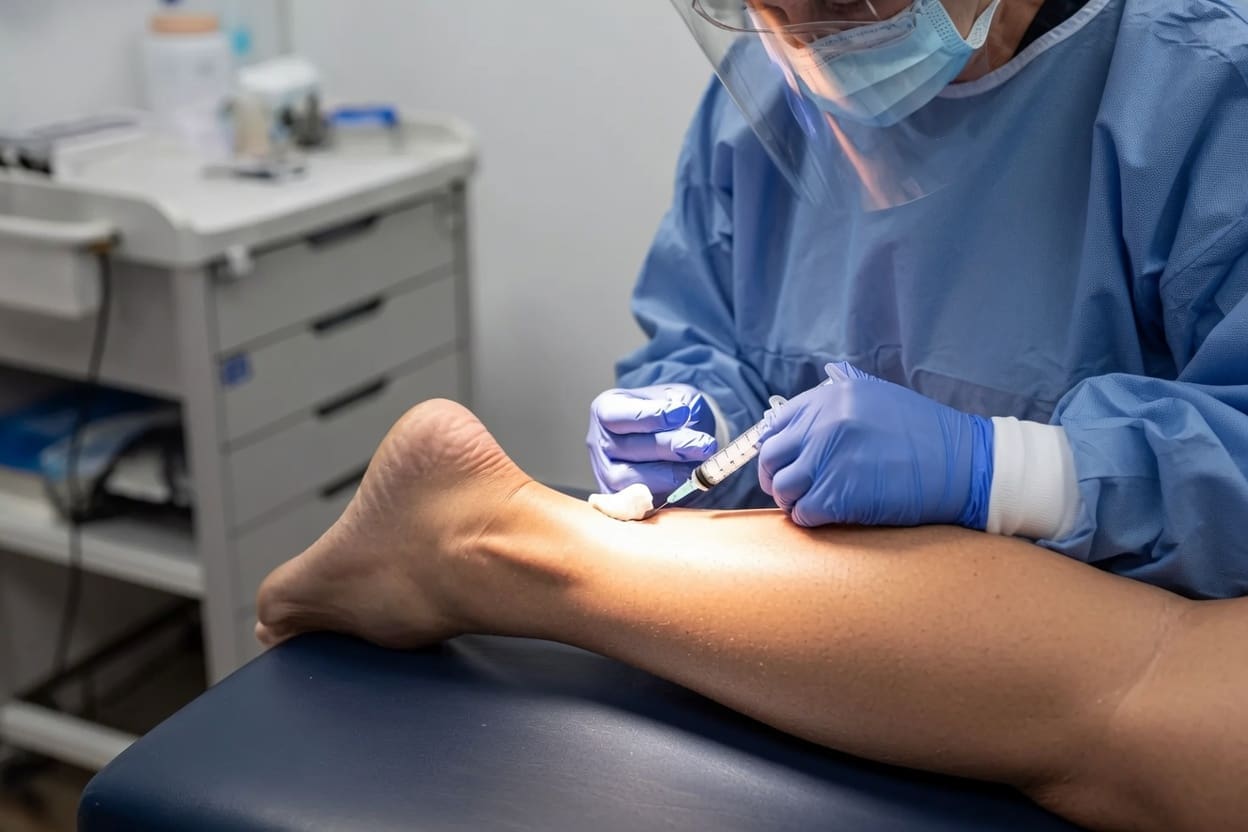
I prefer to make the procedure as easy as possible. I gently relax the patient’s leg and stabilize the foot against my thigh for a controlled setup. With my thumb, I run along the Achilles tendon until I feel the subtle bifurcation-like transition near the musculotendinous junction. This tactile shift tells me I’m near the ideal entry point. I ask the patient to flex the foot slightly to accentuate tendon tension, then I palpate again to confirm the exact spot of maximal tenderness and tissue density.
- I mark the entry point based on palpation and ultrasound, if available.
- With a 5 cc syringe prepared, I plan 2.5 cc for one side and reserve the remainder for the contralateral or distal targets.
- I insert the needle with the bevel up, advancing to half the needle length in the superficial plane.
- I then tip/lean the needle toward the tendon plane, feeling for the tissue change that signals I’m in the correct peritendinous region.
- I inject approximately 1 cc of solution at that locus, proceeding gently, while the patient reports sensation and I monitor for pain or unusual resistance.
Safety in practice:
- I always aspirate before injecting any solution that could cause issues if intravascular, especially a local anesthetic.
- If I see a flashback of blood in the hub, I withdraw, clear the syringe, and re-approach at a slightly adjusted angle or location.
Medial and Lateral Calcaneal Targets: Plantar Fascia Interface
When volume is limited, I prioritize the most tender enthesis, which is commonly medial. I palpate the fan-like spread where the plantar fascia transitions from the calcaneus and identify medial and lateral attachments.
Technique:
- I ask the patient to relax the foot.
- I approach the medial calcaneal attachment with a shallow angle and advance about half the needle length to the periosteal interface.
- I inject approximately 0.5 cc per site, typically medial first, then lateral if needed.
- I aspirate each time to ensure I am not intravascular before injecting.
Rationale:
- The periosteal interface at the calcaneal enthesis is a pain generator in plantar fasciopathy.
- Small-volume, precisely placed injections can modulate nociception and help restore enthesis health while upstream care reduces recurrent stress.
Why Not the Heel Fat Pad: Risks and Long-Term Consequences
Repeated injections into the heel fat pad can accelerate fat pad atrophy, leading to fat pad syndrome—a chronic, difficult-to-treat source of pain. Once the native pad thins, shock absorption diminishes, and walking becomes painful even without plantar fasciitis. Attempts to augment or replace the pad have mixed results and may not restore natural mechanics.
Key points:
- Avoid direct heel pad injections unless absolutely indicated.
- Prefer peritendinous or enthesis-focused approaches with biologics that encourage tissue repair without compromising shock-absorbing structures.
- Emphasize calf-Achilles rehabilitation to reduce plantar fascia strain.
Prolotherapy vs PRP: Practical Protocols and Expectations
- Prolotherapy often requires a series of treatments—commonly weekly for 4 sessions, then every other week for 2–4 more—before significant improvement becomes evident.
- PRP may offer more efficient healing per session due to concentrated biologics, often producing earlier symptomatic relief in some patients.
- Combining PRP with prolotherapy can be synergistic, balancing biologic potency with serial stimulation of healing.
Patient guidance:
- Expect post-injection soreness; avoid anti-inflammatories that could blunt the regenerative cascade unless medically necessary.
- Follow a structured rehabilitation plan to channel new collagen into organized, load-bearing architecture.
- Monitor for red flags (excess swelling, severe pain, signs of infection) and report promptly—Dr. Cardenas oversees medical safety.
Rehabilitation: Eccentric Loading, Stretching, and Motor Control
After initial protection—such as wearing a walking boot for 3 days if indicated—I begin calf stretching and eccentric strengthening:
- Eccentric heel drops on a step: knee straight (gastrocnemius) and knee bent (soleus).
- Dosage: 3 sets of 15 reps twice daily, progressing intensity gradually over several weeks.
- Stretching: gastrocnemius and soleus stretches held 30–60 seconds, repeated 2–3 times per session, avoiding sharp pain.
Reasoning:
- Eccentric loading enhances tendon stiffness, promotes collagen alignment, reduces neovascular ingrowth, and improves functional resilience.
- Stretching restores length-tension relationships, decreasing morning pain by reducing overnight tightness and first-step strain.
- Motor control drills refine foot intrinsic musculature, improving arch support and windlass mechanics.
Clinical Observations and Practice Insights
Drawing on my clinical work and professional notes:
- Many patients with stubborn plantar fasciitis improve when we address Achilles tendinosis and calf dysfunction first, rather than repeatedly injecting the plantar fascia itself.
- Patients often describe ropey tissue over the tendon—this is a palpable marker of degenerative change and a guideline for targeted peritendinous treatment.
- Tactile skill—feeling soft tissue become ropey or a subtle change—is developed through deliberate practice; ultrasound accelerates learning by providing visual feedback.
For further insights, my professional profiles and practice resources share clinical perspectives consistent with this integrated model:
- Chiromed practice resources: https://chiromed.com/
- Professional profile: https://www.linkedin.com/in/dralexjimenez/
Procedure Safety: Aspiration and Injection Checks
I always emphasize to trainees:
- Aspirate before injecting, especially with local anesthetics. If blood returns, you’re in a vessel—withdraw, clear the syringe, and relocate.
- Watch for flashback in the hub; it’s a quick signal you’re not in the right compartment.
- Be mindful of patient feedback—sudden sharp pain, paresthesia, or pressure changes can indicate malposition.
Injectate considerations:
- Volume allocations should reflect clinical targets and patient tolerance.
- Limit total volume per session to avoid compartment pressure spikes.
- Maintain strict sterile technique to reduce infection risk.
Managing Morning Pain: Night Positioning and Behavioral Strategies
Morning pain is often the sharpest due to overnight plantarflexion and fascial shortening. Practical strategies:
- A night splint keeping the ankle in neutral or slight dorsiflexion can reduce first-step pain.
- Gentle pre-load warm-ups upon rising—ankle pumps, calf stretches—prepare tissues for full weight-bearing.
- Footwear with cushioning and supportive arch design, or custom orthoses, protects the fascia during high-load moments.
Functional Medicine Layer: Systemic Influencers of Tendon Healing
Under Dr. Cardenas’s medical oversight, we evaluate systemic factors that impact tissue repair:
- Glycemic control: Hyperglycemia impairs collagen cross-linking and increases advanced glycation end-products, weakening tendons.
- Vitamin D status: Low levels correlate with musculoskeletal pain and impaired healing.
- Thyroid function: Hypothyroidism can contribute to tendinopathy and myofascial pain.
- Lipid management and statins: Myopathy risk warrants medication review when tendon pain is recalcitrant.
- Sleep and stress: Hormonal shifts in cortisol and growth hormone affect repair physiology.
Interventions:
- Nutritional optimization, targeted supplements (e.g., vitamin D, omega-3s, collagen peptides), and sleep hygiene.
- Collaboration with primary care or endocrinology when complex metabolic or thyroid issues are present.
Imaging: Ultrasound Guidance Elevates Precision
Ultrasound enhances safety and outcomes:
- Visualizing tendon architecture, paratenon, bursae, and neovessels guides injection location.
- Dynamic assessment reveals gliding abnormalities and thickening consistent with tendinosis.
- Doppler can highlight neovascularization associated with chronic tendinopathy, targeting biologics where they are most useful.
With ultrasound, I can confirm entry plane and avoid intratendinous core trauma. It also documents baseline thickness, echotexture, and progress over time.
Patient Education: Setting Expectations and Building Confidence
Patients are more confident when they understand:
- Why we are not constantly injecting the heel fascia.
- How treating the calf-Achilles complex reduces downstream stress on the plantar fascia.
- What soreness to expect after PRP or prolotherapy, and why aspiration is a safety step, not an optional detail.
- Why eccentric exercises are central to long-term success.
- How chiropractic care integrates with medical oversight to treat the whole kinetic chain.
We provide written plans, demonstration videos, and follow-up schedules to sustain progress.
Case Flow: A Typical Integrative Visit
- Intake with medical history and systems review under Dr. Cardenas’s protocols.
- Chiropractic musculoskeletal examination: gait, posture, foot mechanics, calf-Achilles palpation.
- Ultrasound imaging when indicated.
- Discuss options: conservative care, PRP or prolotherapy, and rehabilitation.
- Procedure day: exact entry points, needle angles, aspiration, and gentle delivery of injectate.
- Post-procedure plan: short protection phase, then eccentric loading, stretching, and manual therapy if indicated.
- Follow-up with outcome measures, imaging as needed, and load progression, with medical oversight for safety and systemic optimization.
Evidence Threads: Modern, Rigorous Methods
Our practice integrates:
- Randomized controlled trials on eccentric loading for Achilles tendinopathy.
- Comparative studies and meta-analyses on PRP effectiveness in tendinopathies, noting variability based on PRP preparation and injection technique.
- Observational data and pragmatic protocols for prolotherapy, being transparent about time-to-effect and session requirements.
- Sports and rehab literature that underscores load management and biomechanics as pillars of tendon health.
Even when a technique is less represented in literature, we prioritize methodical record-keeping, objective measures, and medical oversight to ensure ethical, data-driven care within the scope of practice.
Clinical Pearls: Tactile Feedback and Tissue Planes
- Feeling the shift from soft subcutaneous tissue to ropey tendon indicates you’re nearing the peritendinous plane.
- Entry with bevel up, then tip the needle to glide along the desired tissue plane.
- Aspirate every time. A quick flashback is your cue to reposition.
- Volume discipline: 0.5–1 cc per focal site minimizes pressure and reduces post-injection discomfort.
- Anchor care with rehab and load management—the biologic injectate initiates healing, but movement directs collagen architecture.
Outcome Targets and Metrics
We track:
- Pain scores at first step in the morning and end of day.
- Tendon thickness and echotexture on ultrasound.
- Calf strength and eccentric capacity over time.
- Functional metrics: return to walking, running, and occupational duties.
When outcomes plateau, we reassess systemic factors, orthoses, and kinetic-chain mechanics, adjusting the plan collaboratively.
Personal Injury Context: Documentation and Communication
For personal injury cases:
- We maintain detailed procedure notes, imaging reports, and functional assessments.
- We coordinate with legal teams on mechanism of injury, causation, and medical necessity.
- Dr. Cardenas oversees medical compliance, including medication management and contraindication screening.
Practical Load Progressions
- Week 1: Protection as needed; gentle ROM; guided stretching.
- Weeks 2–4: Introduce eccentric heel drops, progress volume and load.
- Weeks 4–8: Increase intensity, integrate plyometric precursors if appropriate.
- Beyond 8 weeks: Sport-specific drills; monitor for flare-ups and adjust.
Each stage is customized to the patient’s symptoms, imaging findings, and occupational or sport demands.
Orthoses and Footwear
- Custom orthoses improve arch support, reduce excessive pronation, and modulate plantar fascia load.
- Shoes with cushioned midsoles and appropriate heel-to-toe drop can relieve stress on the Achilles and fascia.
- Transition gradually between footwear to avoid sudden load shifts.
Manual Therapy and Soft Tissue Care
- Instrument-assisted soft tissue mobilization (IASTM) can address fascial restrictions in the calf and foot.
- Joint mobilization of the ankle and subtalar joints improves motion patterns.
- Myofascial release in the posterior chain reduces tension that translates to the foot.
With medical oversight, manual care is matched to tissue tolerance post-injection to avoid over-irritation.
Nerve Considerations: Tibial, Sural, and Plantar Branches
- Heel pain can involve nerve entrapment or irritation—particularly the medial calcaneal branch.
- We assess for neuropathic features (burning, tingling, allodynia) and adjust care accordingly.
- Dr. Cardenas evaluates systemic neuropathic contributors (e.g., diabetes, B12 deficiency) when indicated.
Activity Modification and Return to Sport
- We plan graded return with attention to surface, volume, and intensity.
- Runners: manipulate cadence, stride length, and terrain to reduce Achilles-fascia loads.
- Occupational demands: integrate ergonomic strategies and break scheduling for symptom control.
When Surgery Is Considered
While most cases respond to integrative care, we refer for surgical evaluation if:
- Persistent, debilitating pain despite comprehensive conservative care.
- Advanced structural changes (e.g., partial ruptures, severe enthesopathy) on imaging.
- Functional decline that precludes daily life or vocation.
We collaborate with orthopedic partners to ensure continuity.
Pediatric and Adolescent Considerations
- Growth spurts can transiently alter length-tension relationships, predisposing to tendon pain.
- Education on activity volumes and proper footwear helps protect young athletes.
- Rehabilitative programs emphasize motor control and safe progressions.
Older Adults: Vascular and Comorbidity Awareness
- Age-associated vascular changes and comorbidities influence healing rates.
- Medication review is essential to identify agents that may affect muscle-tendon health.
- Lower-intensity, longer-duration eccentric protocols may suit tissue tolerance.
Practical Troubleshooting
- If soreness persists beyond expected windows, reassess volume, exercise technique, and orthoses.
- If injections provoke disproportionate pain, evaluate placement, tissue plane, and possible nerve irritation.
- Use ultrasound and objective metrics to recalibrate strategies.
Patient Stories and Expectations
I often see relief when we redirect care from the fascia to the Achilles/calf. Patients who struggled with first-step pain report improved mornings as calf flexibility and tendon health recover. Small procedural details—needle bevel orientation, aspiration, gentle delivery—make a big difference. With PRP, some patients notice earlier improvement; with prolotherapy, the gains accumulate across sessions. Rehabilitation determines longevity of results.
How Our Team Works: Roles and Collaboration
- I lead neuromusculoskeletal evaluation and chiropractic rehabilitation, and as an APRN, I coordinate clinical protocols within scope.
- Dr. Cardenas ensures medical safety, diagnostic clarity, and systemic optimization, serving as Medical Director and Collaborative Physician.
- Together, we align functional medicine, rehabilitation, personal injury documentation, and procedural care for consistent outcomes.
Practical Checklist for Clinicians
- Confirm indications and rule out red flags.
- Conduct palpation and ultrasound mapping.
- Prepare injectate and maintain sterility.
- Insert needle bevel up, advance half length, tip to target plane.
- Aspirate before injecting.
- Allocate volumes precisely: e.g., 1 cc per peritendinous target, 0.5 cc per enthesis site.
- Post-care: protection then eccentrics and stretching.
- Track outcomes and adjust with medical oversight.
Research Integration and Continuous Improvement
We continuously synthesize:
- Clinical trial data on eccentrics and PRP.
- Pragmatic studies and case series on prolotherapy.
- Biomechanics literature on windlass mechanism and kinetic-chain influence.
- Functional medicine updates on nutritional and endocrine factors.
This supports our evidence-based, patient-centered model guided by Dr. Cardenas’s medical leadership.
Final Takeaways
- Treat the Achilles/gastrocnemius complex to reduce plantar fascia overload.
- Use ultrasound-guided, aspiration-conscious injection techniques.
- Prefer PRP for potency; use prolotherapy for serial stimulus; combine when feasible.
- Anchor healing with eccentric loading, stretching, orthoses, and integrative chiropractic care.
- Collaborate across disciplines—medical oversight matters for safety and outcomes.
Our multidisciplinary setup—MD medical direction alongside chiropractic care—is common in integrative and injury care clinics and central to our model in El Paso. It makes care safer, more precise, and more effective.
References
- Alfredson, H., Pietilä, T., Jonsson, P., & Lorentzon, R. (1998). Heavy-load eccentric calf muscle training for the treatment of chronic Achilles tendinosis. The American Journal of Sports Medicine, 26(3), 360–366. https://doi.org/10.1177/03635465980260030301
- Andia, I., & Maffulli, N. (2018). Platelet-rich plasma for managing pain and inflammation in osteoarthritis. Nature Reviews Rheumatology, 14(12), 721–730. https://doi.org/10.1038/s41584-018-0083-6
- Andia, I., & Maffulli, N. (2021). New biotechnologies for musculoskeletal injuries. International Journal of Molecular Sciences, 22(3), 1234. https://doi.org/10.3390/ijms22031234
- Bedi, A., Maak, T., Walsh, C., et al. (2012). Cytokines in tendon healing: An overview of basic science and clinical applications. Sports Health, 4(4), 298–303. https://doi.org/10.1177/1941738112449901
- Chen, X., & Jones, I. A. (2020). Tendinopathy biology: Mechanisms and future directions. Journal of Orthopedic Research, 38(7), 1363–1375. https://doi.org/10.1002/jor.24549
- de Vos, R.-J., Weir, A., van Schie, H. T. M., et al. (2010). Platelet-rich plasma injection for chronic Achilles tendinopathy: A randomized controlled trial. JAMA, 303(2), 144–149. https://doi.org/10.1001/jama.2009.1986
- Khan, K. M., Cook, J. L., Kannus, P., Maffulli, N., & Bonar, S. F. (2002). Time to abandon the “tendinitis ” myth: Painful, overuse tendon conditions have a non-inflammatory pathology. BMJ, 324(7349), 626–627. https://doi.org/10.1136/bmj.324.7349.626
- Kaux, J.-F., Drion, P., Croisier, J.-L., et al. (2011). Tendinopathy: Healing and treatment options. Part II: Treatments. Sports Medicine, 41(10), 843–853. https://doi.org/10.2165/11593240-000000000-00000
- Loppini, M., Moverman, T., Zhang, A. L., & Feeley, B. T. (2017). Platelet-rich plasma in the management of tendon injuries: A systematic review and meta-analysis. Orthopedic Journal of Sports Medicine, 5(6), 2325967117712736. https://doi.org/10.1177/2325967117712736
- Munteanu, S. E., & Landorf, K. B. (2015). Plantar fasciitis—Overview and update on treatment. The Journal of Orthopedic & Sports Physical Therapy, 45(9), 775–784. https://doi.org/10.2519/jospt.2015.5324
- Rees, J. D., Stride, M., & Scott, A. (2014). Tendons—Time to revisit inflammation. British Journal of Sports Medicine, 48(21), 1553–1557. https://doi.org/10.1136/bjsports-2014-094813
- Rompe, J. D., Furia, J., & Maffulli, N. (2009). Eccentric loading for treatment of tendinopathies. Sports Health, 1(4), 253–263. https://doi.org/10.1177/1941738109334219
- Scott, A., et al. (2013). Tenocyte mechanobiology: From tendon stretch to cellular response. Journal of Orthopedic Research, 31(6), 861–868. https://doi.org/10.1002/jor.22305
- Zafar, M. S., Hamad, S., & McLean, M. (2020). Ultrasound imaging of the Achilles tendon: A guide for diagnosis and treatment. Insights into Imaging, 11(1), 62. https://doi.org/10.1186/s13244-020-00867-9
SEO tags: Achilles tendinopathy, plantar fasciitis, PRP injections, prolotherapy, integrative chiropractic care, internal medicine oversight, El Paso injury clinic, Dr. Alexander Jimenez DC, Dr. Maria Guadalupe Cardenas MD, ultrasound-guided injections, eccentric loading, calf stretching, kinetic chain, foot orthoses, tendon healing, regenerative medicine
Post Disclaimer
General Disclaimer, Licenses and Board Certifications *
Professional Scope of Practice *
The information herein on "PRP Therapy Overview on Plantar Fasciitis & The Achilles Tendon" is not intended to replace a one-on-one relationship with a qualified health care professional or licensed physician and is not medical advice. We encourage you to make healthcare decisions based on your research and partnership with a qualified healthcare professional.
Blog Information & Scope Discussions
Welcome to El Paso's Premier Wellness and Injury Care Clinic & Wellness Blog, where Dr. Alex Jimenez, DC, FNP-C, a Multi-State board-certified Family Practice Nurse Practitioner (FNP-BC) and Chiropractor (DC), presents insights on how our multidisciplinary team is dedicated to holistic healing and personalized care. Our practice aligns with evidence-based treatment protocols inspired by integrative medicine principles, similar to those on this site and on our family practice-based chiromed.com site, focusing on naturally restoring health for patients of all ages.
Our areas of multidisciplinary practice include Wellness & Nutrition, Chronic Pain, Personal Injury, Auto Accident Care, Work Injuries, Back Injury, Low Back Pain, Neck Pain, Migraine Headaches, Sports Injuries, Severe Sciatica, Scoliosis, Complex Herniated Discs, Fibromyalgia, Chronic Pain, Complex Injuries, Stress Management, Functional Medicine Treatments, and in-scope care protocols.
Our information scope is multidisciplinary, focusing on musculoskeletal and physical medicine; wellness, contributing etiological viscerosomatic disturbances within clinical presentations, associated somato-visceral reflex clinical dynamics; subluxation complexes, sensitive health issues, and functional medicine articles, topics, and discussions.
We provide and facilitate clinical collaboration with specialists across disciplines. Each specialist is governed by their professional scope of practice and licensure jurisdiction. We use functional health & wellness protocols to treat and support care for musculoskeletal injuries or disorders.
Our videos, posts, topics, and insights address clinical matters and issues that directly or indirectly relate to our clinical scope of practice.
Our office has made a reasonable effort to provide supportive citations and has identified relevant research studies that support our posts. We provide copies of supporting research studies upon request to regulatory boards and the public.
We understand that we cover matters that require an additional explanation of how they may assist in a particular care plan or treatment protocol; therefore, to discuss the subject matter above further, please feel free to ask Dr. Alex Jimenez, DC, APRN, FNP-BC, or contact us at 915-850-0900.
We are here to help you and your family.
Blessings
Dr. Alex Jimenez DC, MSACP, APRN, FNP-BC*, CCST, IFMCP, CFMP, ATN
Email: [email protected]
Multidisciplinary Licensing & Board Certifications:
Licensed as a Doctor of Chiropractic (DC) in Texas & New Mexico*
Chiropractic Licenses:
Texas DC License #: TX5807, Verified: TX5807
New Mexico DC License #: NM-DC2182, Verified: NM-DC2182
Nurse Practitioner Licenses:
Texas APRN License #: 1191402, Verified: 1191402 *
New Mexico CNP License #: 90560, Verified 90560
Florida APRN License #: 11043890, Verified: APRN11043890 *
Colorado License #: C-APN.0105610-C-NP, Verified: C-APN.0105610-C-NP
New York License #: N25929, Verified N25929
Georgia APRN License #: GAA-NP005701
Multi-State Advanced Practice Registered Nurse (APRN*) Texas & Multi-States
Multi-state Compact APRN License by Endorsement (43 States)
Compact Status: Multi-State License: Authorized to Practice in 43 States*
Nursing Licensure Compact: Updated Here
DEA Registration: (Drug Enforcement Agency Registered)
All medical (MDs) and family practice providers (FNP-APRN) are registered and licensed to offer various levels of medication.
Verify Providers' DEA Registration Here
License Verification Link: Nursys License Verifier
* Prescriptive Authority Authorized (DEA Registered Providers). Call if Required
Board Certification:
ANCC FNP-BC: Board Certified Nurse Practitioner*
Education:
Graduate with Honors: ICHS: MSN-FNP (Family Nurse Practitioner Program)
Degree Granted. Master's in Family Practice, MSN Diploma (Cum Laude)
Dr. Alex Jimenez, DC, APRN, FNP-BC*, CFMP, IFMCP, ATN, CCST
(Board Certified: Family Practice Nurse Practitioner—Multistate)*
(Licensed Nurse Practitioner & Chiropractor - Multistate)*
Clinical Director
DC & FNP License (Review Above)
Digital Business Card
NPI: 1205907805
Dr. Maria Cardenas, MD
(Board Certified: Internal Medicine)
(Licensed Medical Doctor)
Medical Director, Clinical Director & Collaborative Physician
NPI # 1164426748
MD License #: J2933
Licenses and Board Certifications:
MD: Medical Doctor
DC: Doctor of Chiropractic
APRNP: Advanced Practice Registered Nurse
FNP-BC: Family Practice Specialization (Multi-State Board Certified)
FNP-BC: Family Practice Across Life Span (Neonatal to Geriatrics)
RN: Registered Nurse (Multi-State Compact License)
CFMP: Certified Functional Medicine Provider
MSN-FNP: Master of Science in Family Practice Medicine
MSACP: Master of Science in Advanced Clinical Practice
IFMCP: Institute of Functional Medicine
CCST: Certified Chiropractic Spinal Trauma
ATN: Advanced Translational Neutrogenomics
Family with Primary Care Focus (Family Nurse Practitioner or FNP)
- The Family Nurse Practitioner (FNP) promotes, maintains, and restores health for individuals and families across the lifespan. FNPs also identify health risks, promote wellness, and diagnose and manage acute and chronic illness.
- The FNP focuses on comprehensive primary care, promoting healthy lifestyles for patients across the lifespan in settings such as private practice, physician offices, and community health centers.
Memberships & Associations:
TCA: Texas Chiropractic Association: Member ID: 104311
TNA: Texas Nurse Association: Member ID: 06458222
TNP: Texas Nurse Practitioner Association ID: 2025091511
AANP: American Association of Nurse Practitioners: Member ID: 2198960
ANA: American Nurses Association: Member ID: 06458222 (District TX01)
| Primary Taxonomy | Selected Taxonomy | State | License Number |
|---|---|---|---|
| No | 111N00000X - Chiropractor | NM | DC2182 |
| Yes | 111N00000X - Chiropractor | TX | DC5807 |
| Yes | 363LF0000X - Nurse Practitioner - Family | TX | 1191402 |
| Yes | 363LF0000X - Nurse Practitioner - Family | FL | 11043890 |
| Yes | 363LF0000X - Nurse Practitioner - Family | CO | C-APN.0105610-C-NP |
| Yes | 363LF0000X - Nurse Practitioner - Family | NY | N25929 |
| Yes | 363LF0000X - Nurse Practitioner - Family | NM |
90560 |
| Yes | 363LF0000X - Nurse Practitioner - Family | GA | GAA-NP005701 |
Dr. Alex Jimenez, DC, APRN, FNP-BC*, CFMP, IFMCP, ATN, CCST
(Board Certified: Family Practice Nurse Practitioner—Multistate)*
(Primary Care Across Lifespan—Neonatal / Pediatric / Adult / Geriatrics)
(Licensed Nurse Practitioner & Chiropractor - Multistate)*
Clinical Director
Digital Business Card
NPI: 1205907805
Dr. Maria Cardenas, MD
(Board Certified: Internal Medicine)*
(Licensed Medical Doctor)*
Medical Director, Clinical Director & Collaborative Physician
NPI # 1164426748
MD License #: J2933
📆 Schedule Appointment: Schedule 24/7 (Click Here)