

Why Your Mid-Back Feels Tired Before Your Low Back Does
Abstract: Mid-back fatigue can appear before low-back pain because muscles around the shoulder blades and thoracic spine support the arms, head, and rib cage for hours. Screen work, lifting, carrying, breathing patterns, reduced movement, and limited endurance can contribute to late-day burning or tightness. Coordinated chiropractic care, mobility work, rehabilitation, and strength training may improve tolerance.
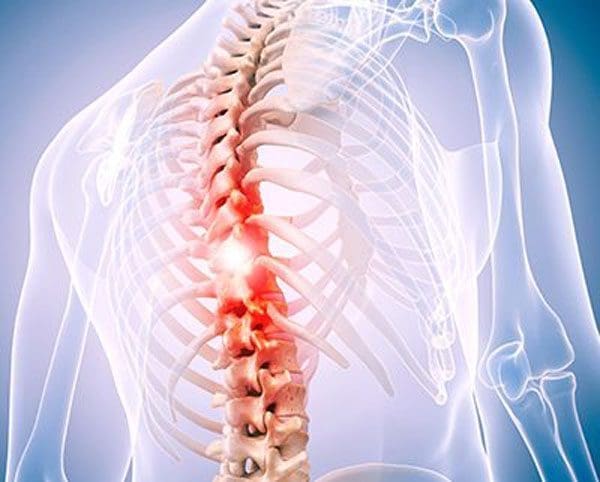
At 8 a.m., your back may feel fine. By lunch, you notice a dull ache between the shoulder blades. By late afternoon, the area feels hot, tight, or simply exhausted. Yet your low back may still feel normal.
That pattern makes sense when you consider what your mid-back does all day.
The thoracic spine is the middle portion of the spine, where the ribs attach. Muscles around it position the shoulder blades, stabilize the upper body, assist breathing, and support repeated arm use. For software engineers, help-desk employees, hybrid workers, data analysts, warehouse associates, and parents, these tissues may work quietly for hours before complaining.
A 2024 systematic review found that computer users commonly experience upper back, neck, shoulder, and low back pain, with prolonged computer use and repetitive or awkward work among reported risk factors (Demissie et al., 2024).
Your Arms Create Work for Your Mid-Back
Typing looks easy, but your arms still need support. Muscles around the shoulder blades make small adjustments to keep your hands positioned over a keyboard, mouse, steering wheel, scanner, phone, or tool.
Away from a desk, carrying a toddler, unloading groceries, stocking shelves, lifting boxes, or holding equipment away from the body increases mid-back demand.
This does not mean these activities are harmful. It means capacity matters. A muscle can tolerate only so much sustained or repeated work before fatigue changes how you move.
Concentration Can Quietly Reduce Thoracic Movement
When people concentrate, they often become still. The head moves closer to the screen, the shoulders may drift forward or upward, and the rib cage may move less freely.
No single posture is automatically “bad.” The bigger problem is often staying in one position for too long.
The thoracic spine normally bends, rotates, and extends. During long blocks of nearly motionless sitting, those opportunities shrink. Later, a stretch, twist, or deep breath may reveal how stiff the region feels.
Breathing Is Part of the Picture
Breathing is not just a lung activity. The ribs, diaphragm, abdominal wall, and muscles around the chest and spine all participate.
During stress or intense concentration, some people use smaller, upper-chest breaths or brace while typing, lifting, or driving. These patterns are not automatically dangerous, but hours of them can leave the ribs and shoulder girdle with fewer chances to relax.
A useful reset is simple: change position, let your shoulders drop, and take several comfortable breaths that let the lower ribs expand without forcing a giant inhale.
Why Endurance Matters More Than “Perfect Posture”
Many people try to solve mid-back fatigue by sitting straighter all day. That can backfire if “straight” becomes rigid.
Research in office workers with chronic neck pain suggests neck, shoulder, and shoulder blade strengthening can reduce pain and disability, although evidence certainty is low (Jones et al., 2024). Another meta-analysis found scapular-focused treatment can reduce pain, while some functional outcomes remain uncertain (Chen et al., 2024).
The practical message is not that everyone needs the same exercise. It is that muscles supporting the neck, shoulders, and thoracic region benefit from gradually increased capacity.
Useful building blocks may include:
- Change positions instead of chasing one perfect posture.
- Use comfortable thoracic rotation and extension.
- Take walking breaks and let the arms swing.
- Add rows, carries, or progressive pulling when appropriate.
- Practice shoulder-blade control without constant bracing.
- Gradually rebuild tolerance for lifting, carrying, reaching, and computer work.
Where Chiropractic Care Fits
Chiropractic evaluation can help determine whether the tired feeling is primarily related to joint restriction, muscle overload, shoulder mechanics, cervical referral, rib movement, or another problem requiring medical assessment.
Manual care may improve comfortable movement and reduce short-term symptoms, making exercise easier. In people with neck pain, thoracic manipulation may improve short-term pain, range of motion, and disability, but this evidence should not be taken as a promise that manipulation alone fixes every case of mid-back fatigue (Yang et al., 2024).
That distinction supports both beneficence and autonomy: care should help you move toward meaningful goals while giving you enough information to decide what fits your preferences.
At ChiroMed, care can combine chiropractic assessment, rehabilitation, and appropriate MD/NP evaluation. Dr. Alex Jimenez, DC, APRN, FNP-BC, CFMP, IFMCP, bridges chiropractic care, diagnostics, physical medicine, and functional health. Dr. Maria Guadalupe Cardenas, MD, provides internal medicine oversight when needed.
Acupuncture Can Be an Adjunct, Not the Finish Line
If persistent muscle tension or musculoskeletal pain makes it difficult to participate in mobility or strengthening, acupuncture or electroacupuncture may sometimes be added to the plan.
A 2024 systematic review found that acupuncture used as an adjunct for chronic neck pain may provide sustained pain relief in some patients, while comparisons with sham acupuncture were not consistently superior (Fang et al., 2024).
That is why acupuncture should be framed as a possible symptom-modulating tool, not a substitute for rebuilding strength, endurance, movement confidence, and work tolerance.
When Mid-Back Fatigue Deserves Medical Evaluation
Most late-day muscular fatigue is not an emergency, but unusual thoracic pain deserves attention. Seek prompt evaluation after significant trauma or with progressive weakness, numbness, difficulty walking, bowel or bladder changes, fever, unexplained weight loss, known cancer, immune suppression, or severe pain unlike ordinary musculoskeletal discomfort.
The American College of Radiology notes that thoracic pain with neurological findings, trauma risks, or concern for infection or cancer may warrant imaging based on the clinical picture (American College of Radiology, 2024).
Chest pressure, shortness of breath, fainting, or pain accompanied by other concerning heart or lung symptoms should be treated as a medical issue rather than assumed to be “just the back.”
Build a Back That Lasts Through the Day
The goal is not to make your mid-back perfectly still. It is to help it tolerate your life.
For one person, that means computer work without burning between the shoulder blades. For another, it means carrying a child, stocking a shelf, driving, or cooking dinner without feeling that the upper back has already finished its shift.
A coordinated plan can address mobility, strength, endurance, workstation habits, lifting mechanics, recovery, and medical factors. Non-invasive options such as chiropractic care, exercise, and selected acupuncture approaches may reduce reliance on more invasive strategies when appropriate, while patients can coordinate decisions with their healthcare team.
Schedule a ChiroMed multidisciplinary evaluation to identify what is overloaded, what is not moving well, and what needs more capacity. A good plan should explain what is happening, restore comfortable movement, and build resilience for work, family, and valued activities with coordinated care.
References
American College of Radiology. (2024). Thoracic back pain: ACR Appropriateness Criteria.
Chen, Y., Yang, C., Nie, K., Huang, J., Qu, Y., & Wang, T. (2024). Effects of scapular treatment on chronic neck pain: A systematic review and meta-analysis of randomized controlled trials. BMC Musculoskeletal Disorders, 25, 252.
Demissie, B., Bayih, E. T., & Demmelash, A. A. (2024). A systematic review of work-related musculoskeletal disorders and risk factors among computer users. Heliyon, 10(3), e25075.
Fang, J., Shi, H., Wang, W., Chen, H., Yang, M., Gao, S., Yao, H., Zhu, L., Yan, Y., & Liu, Z. (2024). Durable effect of acupuncture for chronic neck pain: A systematic review and meta-analysis. Current Pain and Headache Reports, 28, 957–969.
Jones, L. B., Jadhakhan, F., & Falla, D. (2024). The influence of exercise on pain, disability and quality of life in office workers with chronic neck pain: A systematic review and meta-analysis. Applied Ergonomics, 117, 104216.
Yang, J., Zhao, S., Zhang, R., Huang, C., Huang, K.-Y., Cheng, Y., He, C.-Q., & Li, L.-X. (2024). Effectiveness and safety of thoracic manipulation in the treatment of neck pain: An updated systematic review and meta-analysis. Technology and Health Care, 32(S1), 385–402.
Post Disclaimer
General Disclaimer, Licenses and Board Certifications *
Professional Scope of Practice *
The information herein on "Why Your Mid-Back Feels Tired Before Your Low Back Does" is not intended to replace a one-on-one relationship with a qualified health care professional or licensed physician and is not medical advice. We encourage you to make healthcare decisions based on your research and partnership with a qualified healthcare professional.
Blog Information & Scope Discussions
Welcome to El Paso's Premier Wellness and Injury Care Clinic & Wellness Blog, where Dr. Alex Jimenez, DC, FNP-C, a Multi-State board-certified Family Practice Nurse Practitioner (FNP-BC) and Chiropractor (DC), presents insights on how our multidisciplinary team is dedicated to holistic healing and personalized care. Our practice aligns with evidence-based treatment protocols inspired by integrative medicine principles, similar to those on this site and on our family practice-based chiromed.com site, focusing on naturally restoring health for patients of all ages.
Our areas of multidisciplinary practice include Wellness & Nutrition, Chronic Pain, Personal Injury, Auto Accident Care, Work Injuries, Back Injury, Low Back Pain, Neck Pain, Migraine Headaches, Sports Injuries, Severe Sciatica, Scoliosis, Complex Herniated Discs, Fibromyalgia, Chronic Pain, Complex Injuries, Stress Management, Functional Medicine Treatments, and in-scope care protocols.
Our information scope is multidisciplinary, focusing on musculoskeletal and physical medicine; wellness, contributing etiological viscerosomatic disturbances within clinical presentations, associated somato-visceral reflex clinical dynamics; subluxation complexes, sensitive health issues, and functional medicine articles, topics, and discussions.
We provide and facilitate clinical collaboration with specialists across disciplines. Each specialist is governed by their professional scope of practice and licensure jurisdiction. We use functional health & wellness protocols to treat and support care for musculoskeletal injuries or disorders.
Our videos, posts, topics, and insights address clinical matters and issues that directly or indirectly relate to our clinical scope of practice.
Our office has made a reasonable effort to provide supportive citations and has identified relevant research studies that support our posts. We provide copies of supporting research studies upon request to regulatory boards and the public.
We understand that we cover matters that require an additional explanation of how they may assist in a particular care plan or treatment protocol; therefore, to discuss the subject matter above further, please feel free to ask Dr. Alex Jimenez, DC, APRN, FNP-BC, or contact us at 915-850-0900.
We are here to help you and your family.
Blessings
Dr. Alex Jimenez DC, MSACP, APRN, FNP-BC*, CCST, IFMCP, CFMP, ATN
Email: [email protected]
Multidisciplinary Licensing & Board Certifications:
Licensed as a Doctor of Chiropractic (DC) in Texas & New Mexico*
Chiropractic Licenses:
Texas DC License #: TX5807, Verified: TX5807
New Mexico DC License #: NM-DC2182, Verified: NM-DC2182
Nurse Practitioner Licenses:
Texas APRN License #: 1191402, Verified: 1191402 *
New Mexico CNP License #: 90560, Verified 90560
Florida APRN License #: 11043890, Verified: APRN11043890 *
Colorado License #: C-APN.0105610-C-NP, Verified: C-APN.0105610-C-NP
New York License #: N25929, Verified N25929
Georgia APRN License #: GAA-NP005701
Multi-State Advanced Practice Registered Nurse (APRN*) Texas & Multi-States
Multi-state Compact APRN License by Endorsement (43 States)
Compact Status: Multi-State License: Authorized to Practice in 43 States*
Nursing Licensure Compact: Updated Here
DEA Registration: (Drug Enforcement Agency Registered)
All medical (MDs) and family practice providers (FNP-APRN) are registered and licensed to offer various levels of medication.
Verify Providers' DEA Registration Here
License Verification Link: Nursys License Verifier
* Prescriptive Authority Authorized (DEA Registered Providers). Call if Required
Board Certification:
ANCC FNP-BC: Board Certified Nurse Practitioner*
Education:
Graduate with Honors: ICHS: MSN-FNP (Family Nurse Practitioner Program)
Degree Granted. Master's in Family Practice, MSN Diploma (Cum Laude)
Dr. Alex Jimenez, DC, APRN, FNP-BC*, CFMP, IFMCP, ATN, CCST
(Board Certified: Family Practice Nurse Practitioner—Multistate)*
(Licensed Nurse Practitioner & Chiropractor - Multistate)*
Clinical Director
DC & FNP License (Review Above)
Digital Business Card
NPI: 1205907805
Dr. Maria Cardenas, MD
(Board Certified: Internal Medicine)
(Licensed Medical Doctor)
Medical Director, Clinical Director & Collaborative Physician
NPI # 1164426748
MD License #: J2933
Licenses and Board Certifications:
MD: Medical Doctor
DC: Doctor of Chiropractic
APRNP: Advanced Practice Registered Nurse
FNP-BC: Family Practice Specialization (Multi-State Board Certified)
FNP-BC: Family Practice Across Life Span (Neonatal to Geriatrics)
RN: Registered Nurse (Multi-State Compact License)
CFMP: Certified Functional Medicine Provider
MSN-FNP: Master of Science in Family Practice Medicine
MSACP: Master of Science in Advanced Clinical Practice
IFMCP: Institute of Functional Medicine
CCST: Certified Chiropractic Spinal Trauma
ATN: Advanced Translational Neutrogenomics
Family with Primary Care Focus (Family Nurse Practitioner or FNP)
- The Family Nurse Practitioner (FNP) promotes, maintains, and restores health for individuals and families across the lifespan. FNPs also identify health risks, promote wellness, and diagnose and manage acute and chronic illness.
- The FNP focuses on comprehensive primary care, promoting healthy lifestyles for patients across the lifespan in settings such as private practice, physician offices, and community health centers.
Memberships & Associations:
TCA: Texas Chiropractic Association: Member ID: 104311
TNA: Texas Nurse Association: Member ID: 06458222
TNP: Texas Nurse Practitioner Association ID: 2025091511
AANP: American Association of Nurse Practitioners: Member ID: 2198960
ANA: American Nurses Association: Member ID: 06458222 (District TX01)
| Primary Taxonomy | Selected Taxonomy | State | License Number |
|---|---|---|---|
| No | 111N00000X - Chiropractor | NM | DC2182 |
| Yes | 111N00000X - Chiropractor | TX | DC5807 |
| Yes | 363LF0000X - Nurse Practitioner - Family | TX | 1191402 |
| Yes | 363LF0000X - Nurse Practitioner - Family | FL | 11043890 |
| Yes | 363LF0000X - Nurse Practitioner - Family | CO | C-APN.0105610-C-NP |
| Yes | 363LF0000X - Nurse Practitioner - Family | NY | N25929 |
| Yes | 363LF0000X - Nurse Practitioner - Family | NM |
90560 |
| Yes | 363LF0000X - Nurse Practitioner - Family | GA | GAA-NP005701 |
Dr. Alex Jimenez, DC, APRN, FNP-BC*, CFMP, IFMCP, ATN, CCST
(Board Certified: Family Practice Nurse Practitioner—Multistate)*
(Primary Care Across Lifespan—Neonatal / Pediatric / Adult / Geriatrics)
(Licensed Nurse Practitioner & Chiropractor - Multistate)*
Clinical Director
Digital Business Card
NPI: 1205907805
Dr. Maria Cardenas, MD
(Board Certified: Internal Medicine)*
(Licensed Medical Doctor)*
Medical Director, Clinical Director & Collaborative Physician
NPI # 1164426748
MD License #: J2933
📆 Schedule Appointment: Schedule 24/7 (Click Here)